Crossing Into Tomorrow: Tonga and Fiji
By Victoria Hardy (ship's cook) The Kingdom of Tonga We passed Tongan islands for days before we reached our destination, Neiafu, the capital of the Vava'u island group. Although the international dateline is technically after Tonga, the…
By Victoria Hardy (ship’s cook)
The Kingdom of Tonga
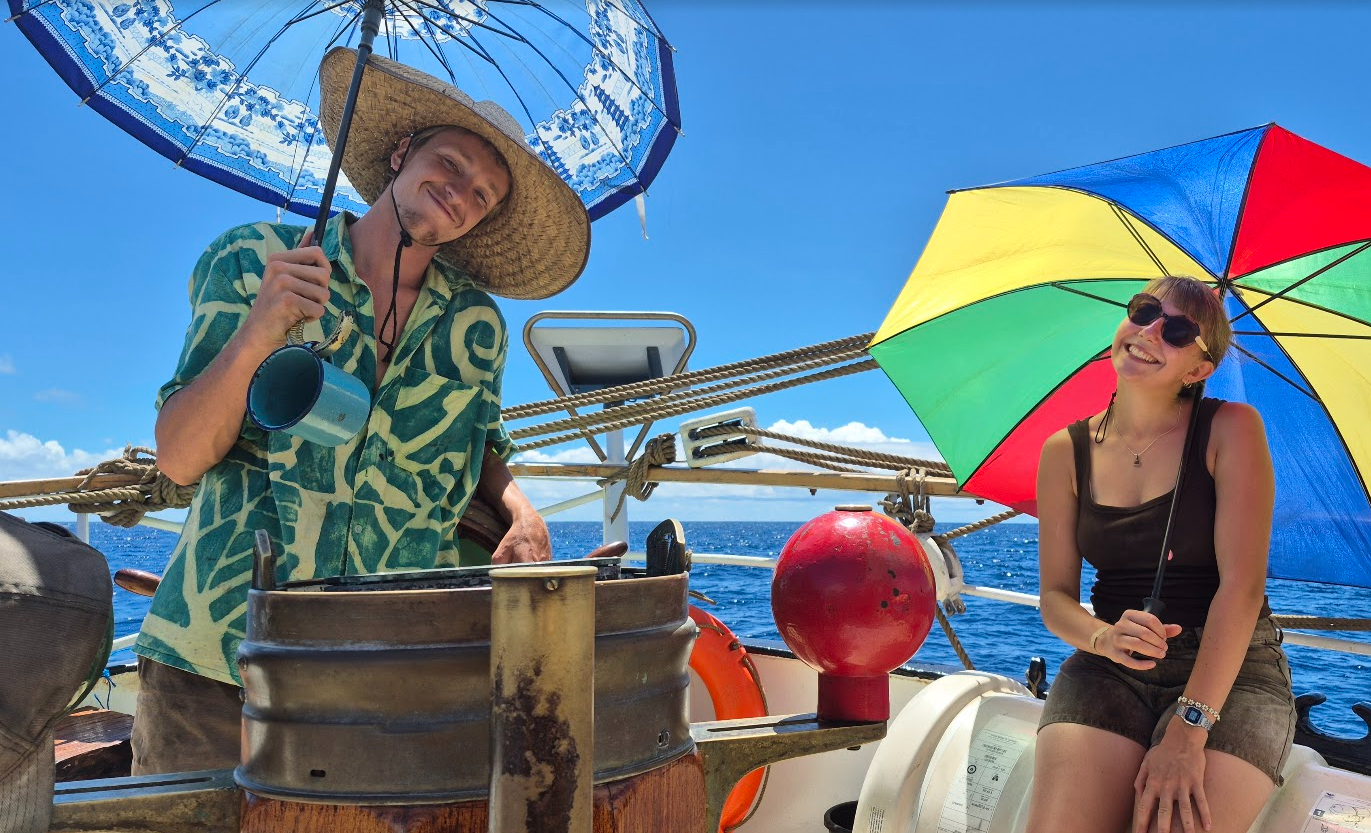
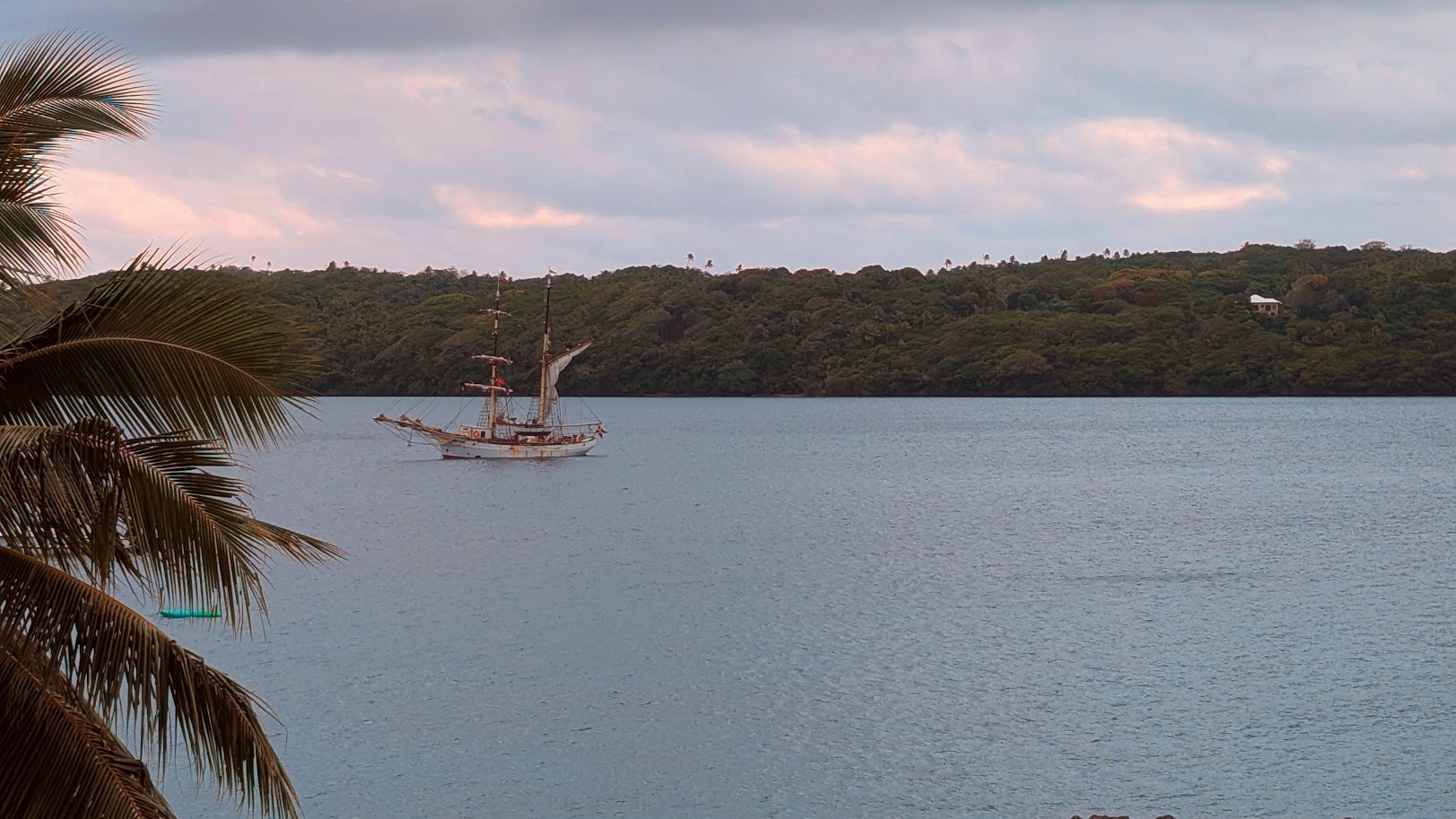
We passed Tongan islands for days before we reached our destination, Neiafu, the capital of the Vava’u island group. Although the international dateline is technically after Tonga, they have chosen to align their time with Fiji, so we set our clocks one day forward when we arrived. We celebrated with a dateline crossing party (combined with a birthday party). For the rest of the voyage, us North Americans will remain one day ahead of our friends and families back home. After dropping anchor in the harbor, a familiar face greeted us at the check-in – Vai, another Picton Castle and training ship Danmark graduate, back on her home turf.
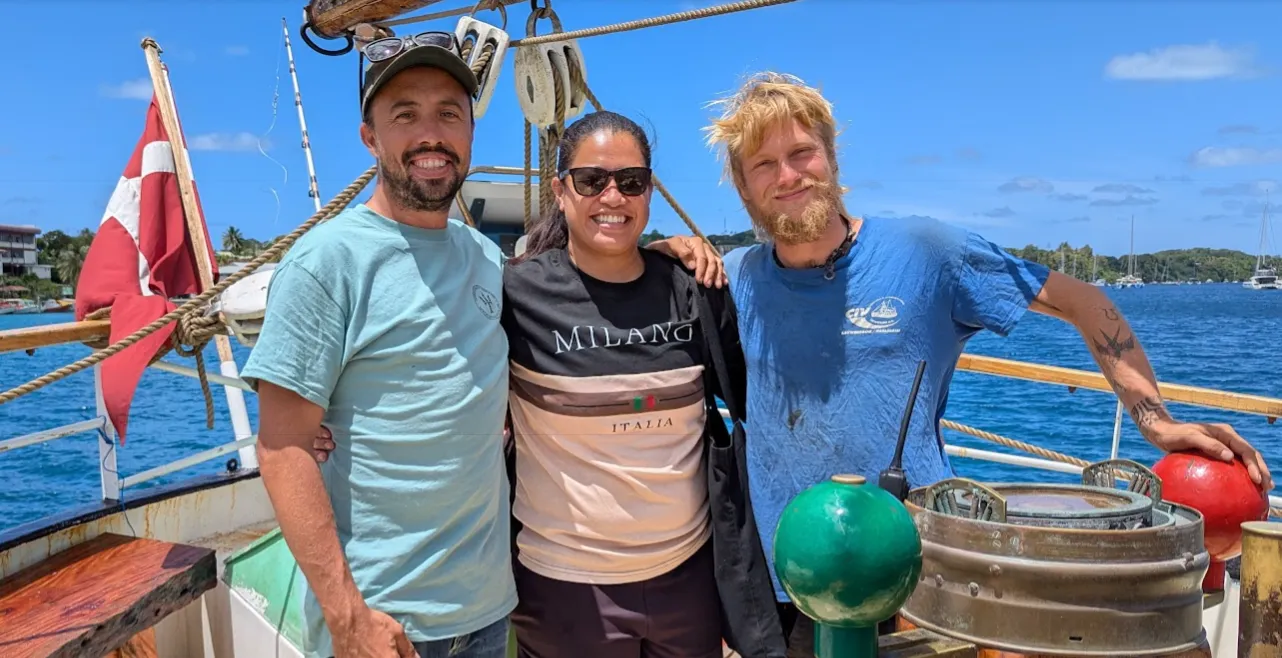
Captain Anders, Vai, and Chief Mate James sailed together on Picton Castle.
Vai organized a tour of the island, swimming with humpback whales, and a feast for us. We climbed to the top of Mount Talau, which local legend says used to be the tallest mountain around until evil night spirits tried to steal the top of it to make their own home taller. They were scared away by the goddess of Tonga, who flashed her behind which they mistook for the sun. Since the spirits could only go out at night, they fled and dropped the mountaintop in the water to form a new island.
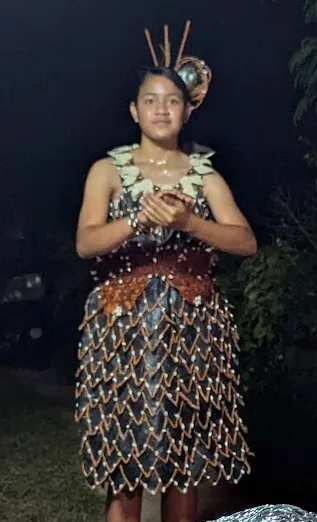
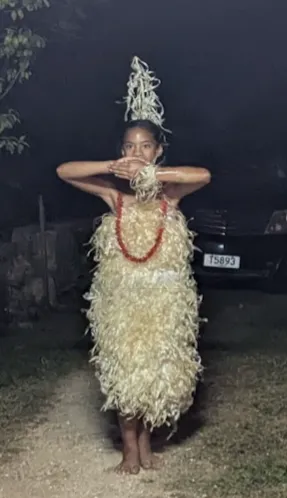
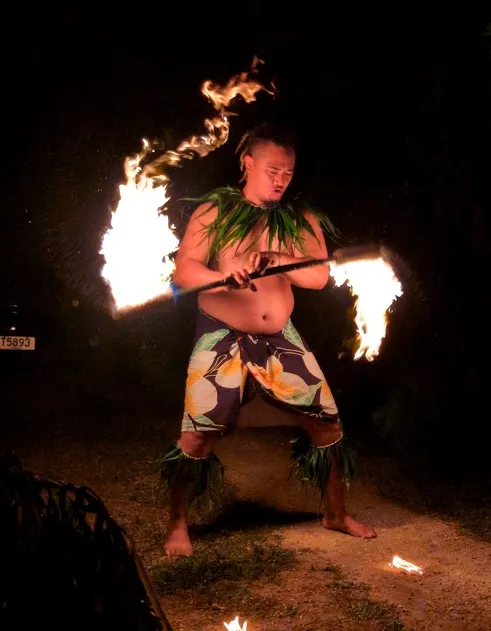
At the end of the day we arrived at Vai’s family home for a feast of roasted pig, stuffed taro leaves, breadfruit, fish cooked in coconut milk and soursop juice. Vai’s sisters performed a traditional dance wearing dresses created by their grandmother, and her partner Latu impressed us with a dramatic fire dance.
Neiafu is a small town, but we were still able to acquire the most important item on our shopping list – a new fishing reel! As soon as we left Tonga we caught a massive yellowfin tuna that filled our freezer, the heaviest fish we have ever caught on the ship.
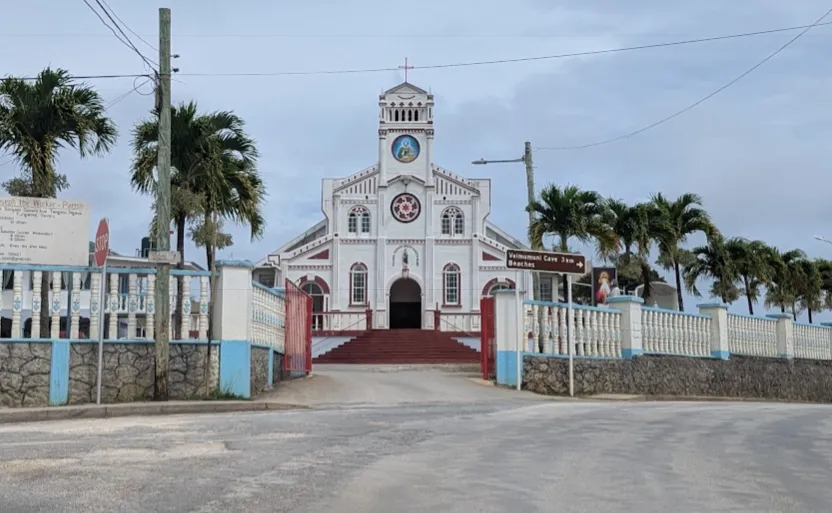
A few of us attended a Sunday church service at the Catholic church in town. While French missionaries brought the religion 180 years ago, Tongans have retained many traditional elements in both the service and the music. The pews were filled with elegantly dressed men and women sporting ta’ovalas and keikeis. These waist garments woven from pandanus leaves represent a deep connection to the land and are worn on formal occasions, although it is common to see schoolboys wearing more simple ta’ovalas as well.
Suva, Fiji
Amidst a graveyard of wrecked and abandoned ships, we drop anchor in the harbor of Fiji’s capital, Suva. The island is the biggest landmass we have seen since we left Mexico in May – it’s a little less than half the size of NEPTUN’s home country Denmark. Suva is a melting pot of different indigenous Pacific groups, Indian, and Chinese. The people of Suva were extraordinarily helpful: when we looked lost on the street, they stopped to ask what we were looking for and provided directions. When we had heavy bags to carry, someone always dropped what they were doing to assist. We arrived a few days before Fiji Day, a celebration of independence, and the city was flooded with blue flags and clothing.
The municipal market on the waterfront was a spectacular sight, one of the best I have seen on the voyage. On the ground floor, over a hundred vendors sold fruits (watermelon, pineapple, papaya, mango) and vegetables (okra, napa cabbage, bok choy, pumpkin, taro root) and I picked up some homemade kimchi and tofu. Kava root, dried beans, and spices could be found on the second floor. Surrounding the market are even more vendors selling baked goods, various confections, and juices. It was a dream come true, especially for a cook on a mission to provision for two more months.
Nadi, Fiji
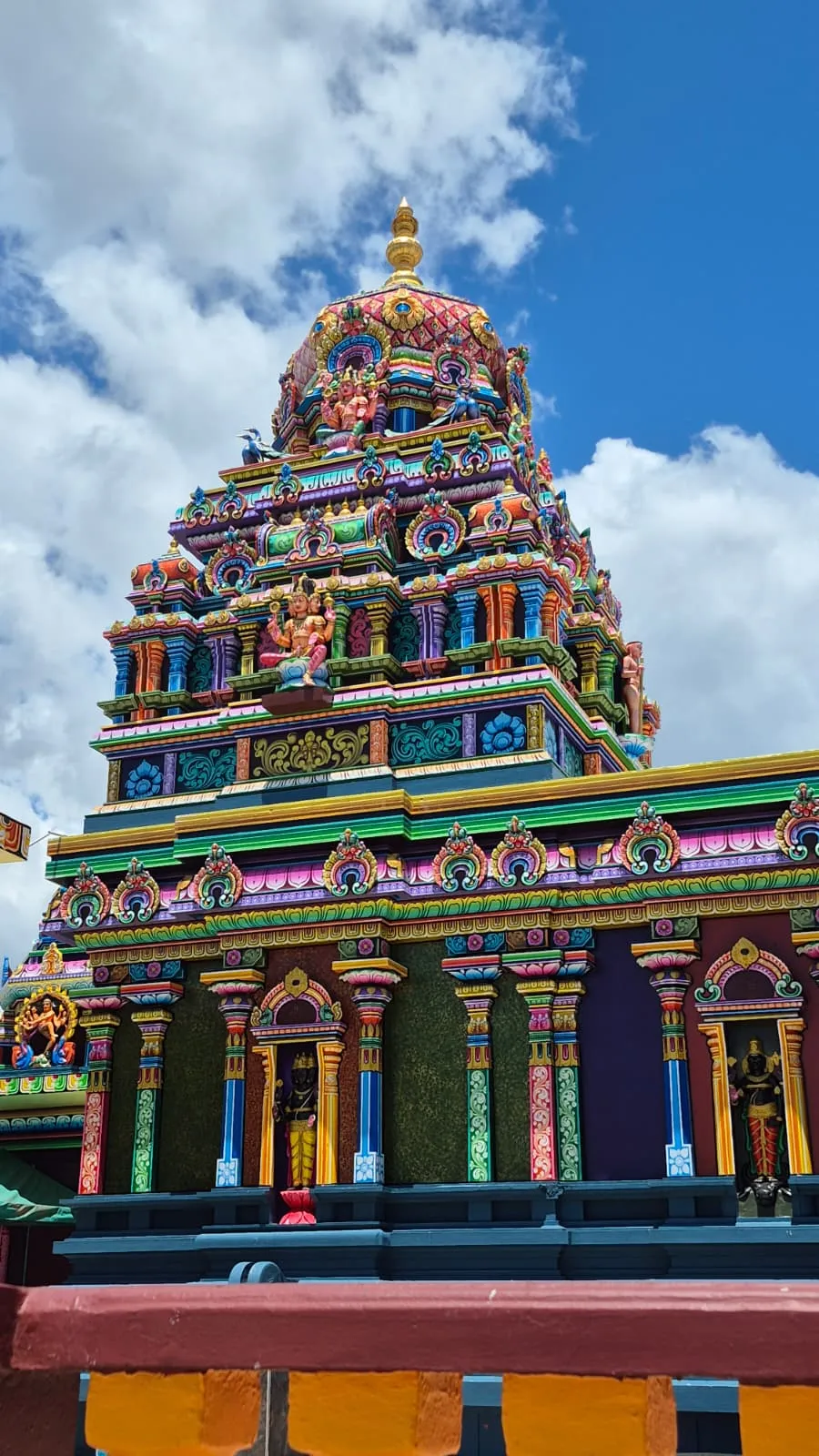
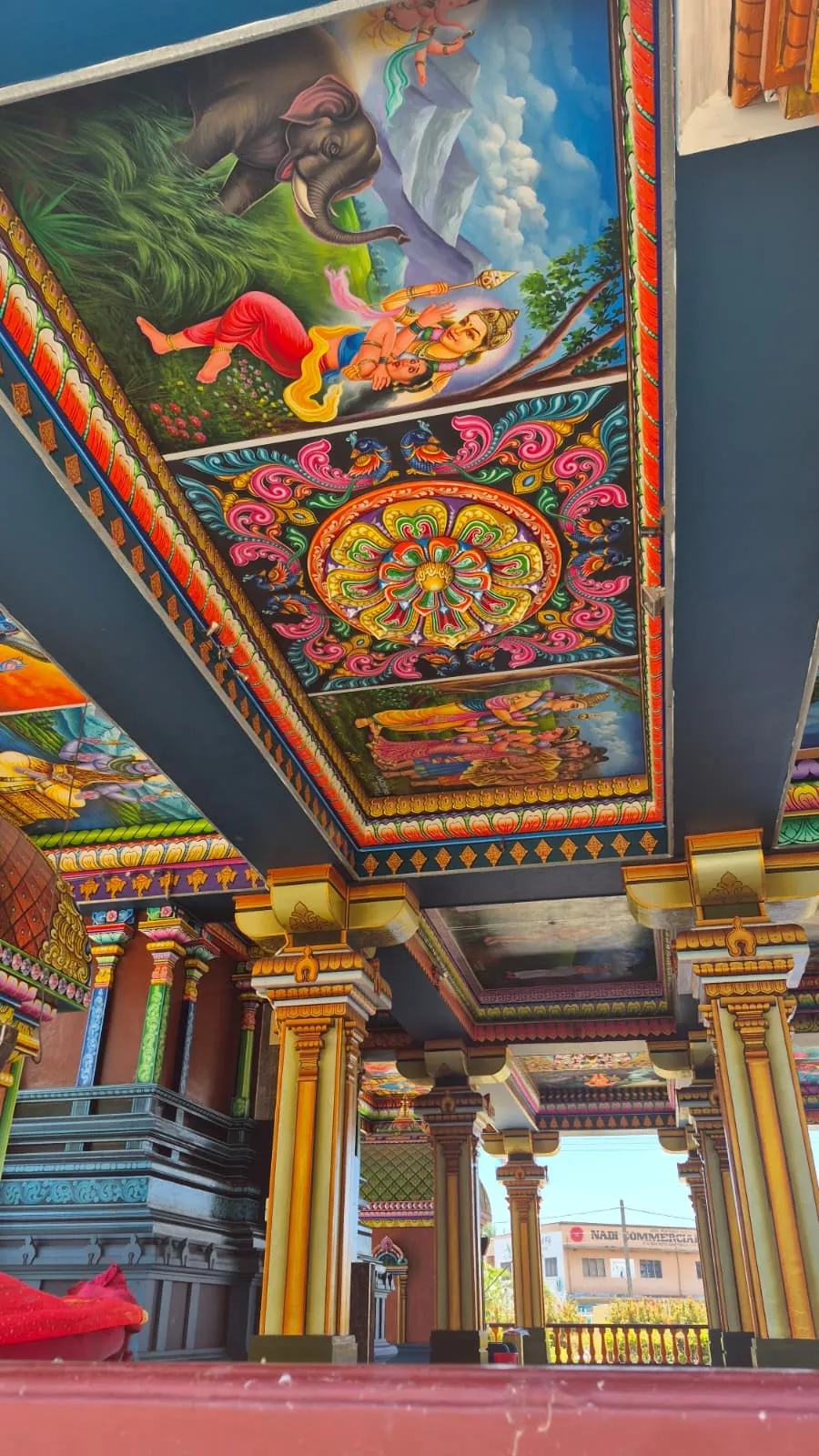
A four hour bus ride along the coast takes you to the opposite side of the main island, the tourist destination of Nadi (pronounced Nahn-dee). We visited the hot springs, and painted ourselves in the mineral-rich mud before washing it off in the geothermal pools. Then we hiked through the Garden of the Sleeping Giant, a beautiful botanical park that is home to a beautiful family of cats. After a lengthy debate, we (reluctantly= decided not to bring the ginger kitten back to the ship. At dinner, I sampled ota, young wild fern, and purple kumala, or sweet potato. With a quick stop at the Hindu temple of Shiva to finish off the trip, we headed back to Suva.
Want to cross your own dateline at sea?
Tonga and Fiji are weeks of ocean from anywhere. NEPTUN’s circumnavigation calls at ports like these across three oceans, and trainee berths open every year.