Farewell in Palau
By Victoria Hardy (ship's cook) Thirty-six days at sea. Thirty-six spectacular sunsets. Thirty-six days of blistering heat, punctuated by sudden squalls and violent downpours, the shifting weather mimicking the wild swings between euphor…
By Victoria Hardy (ship’s cook)
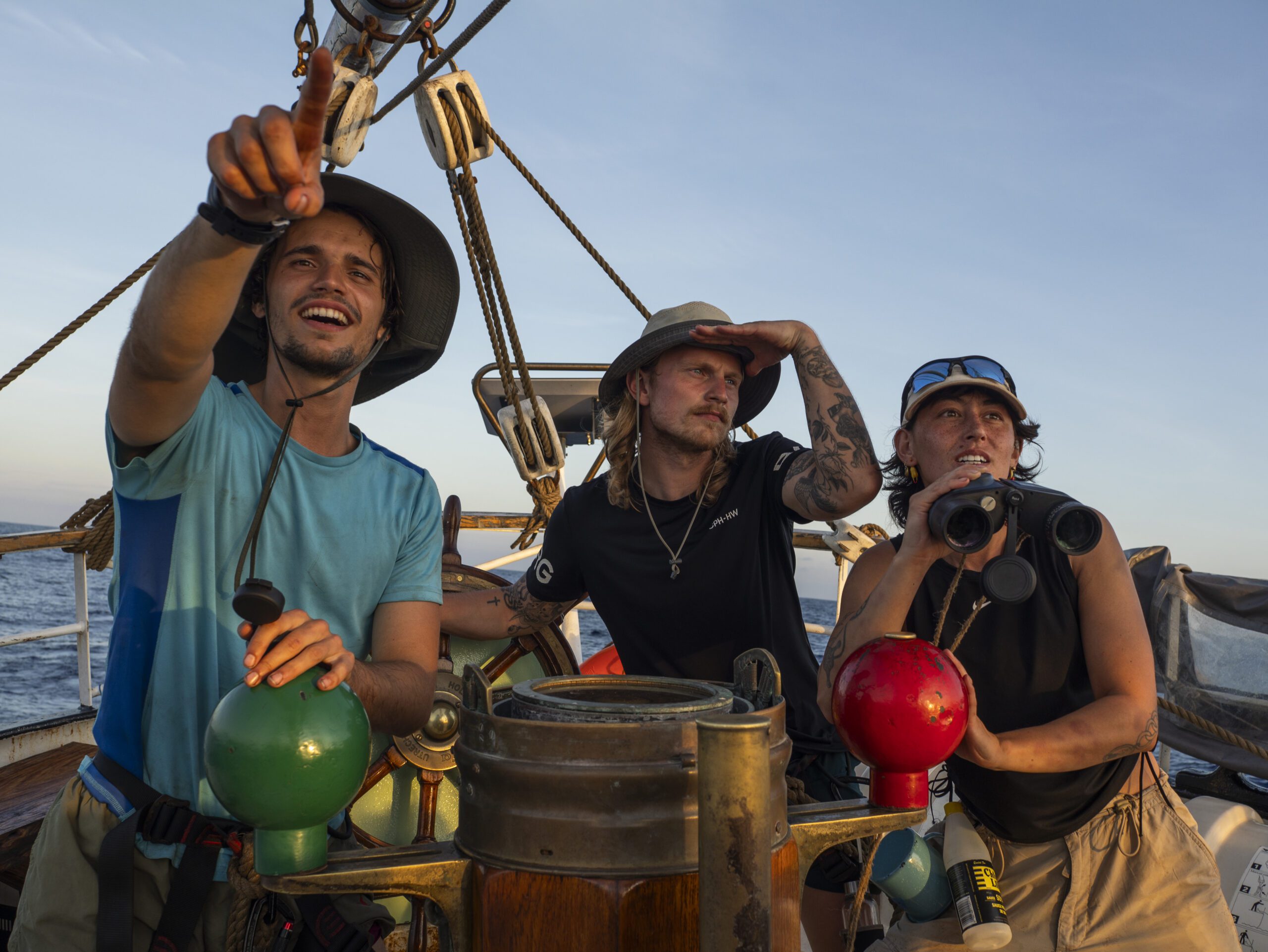
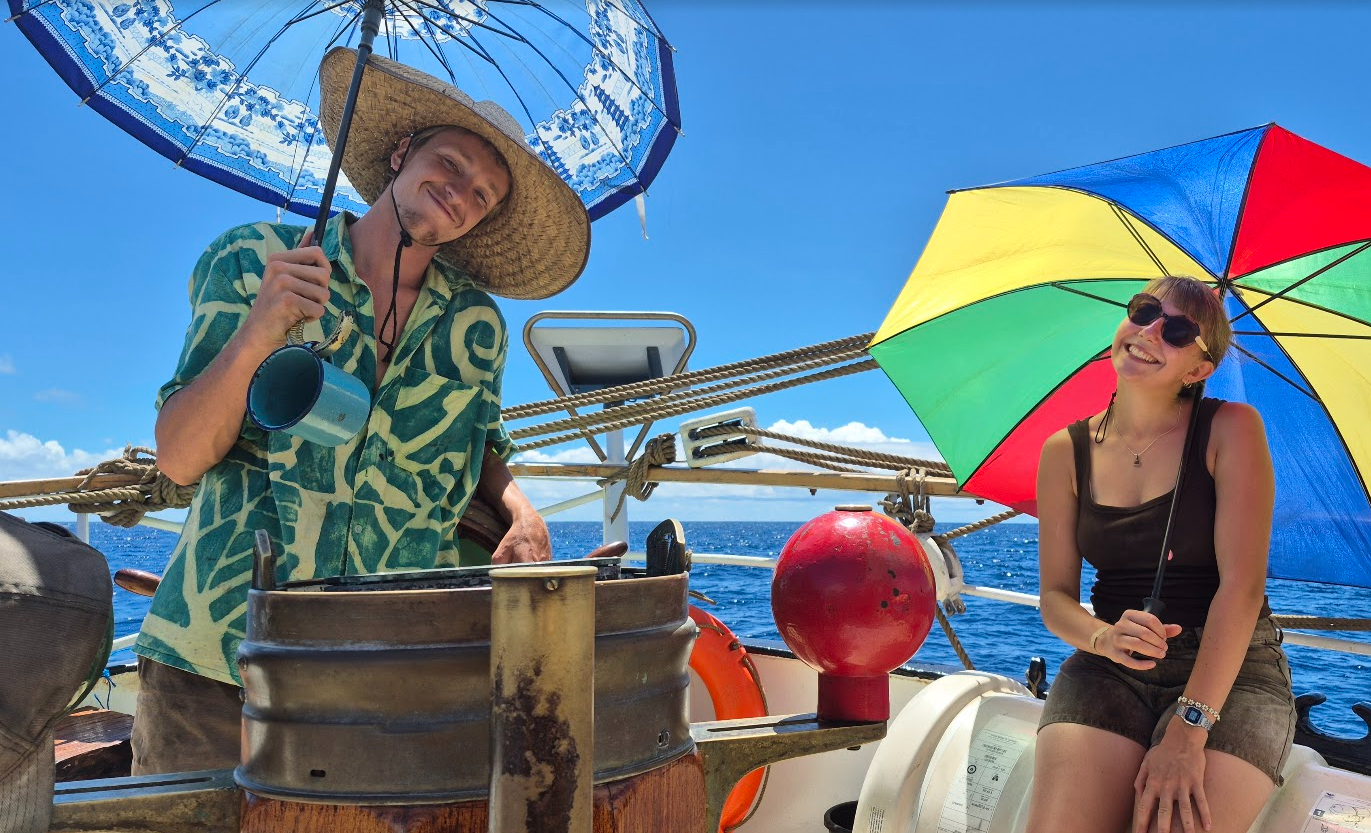
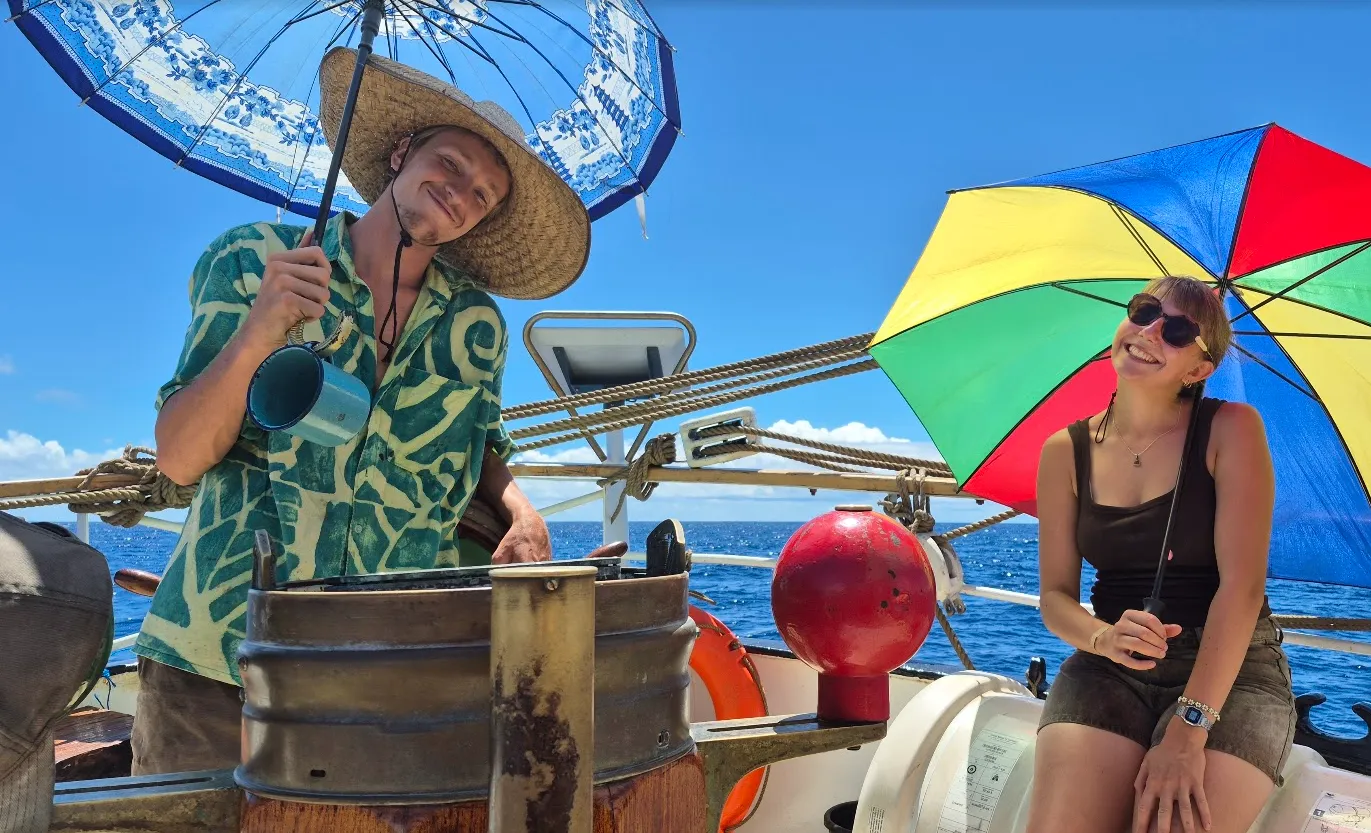
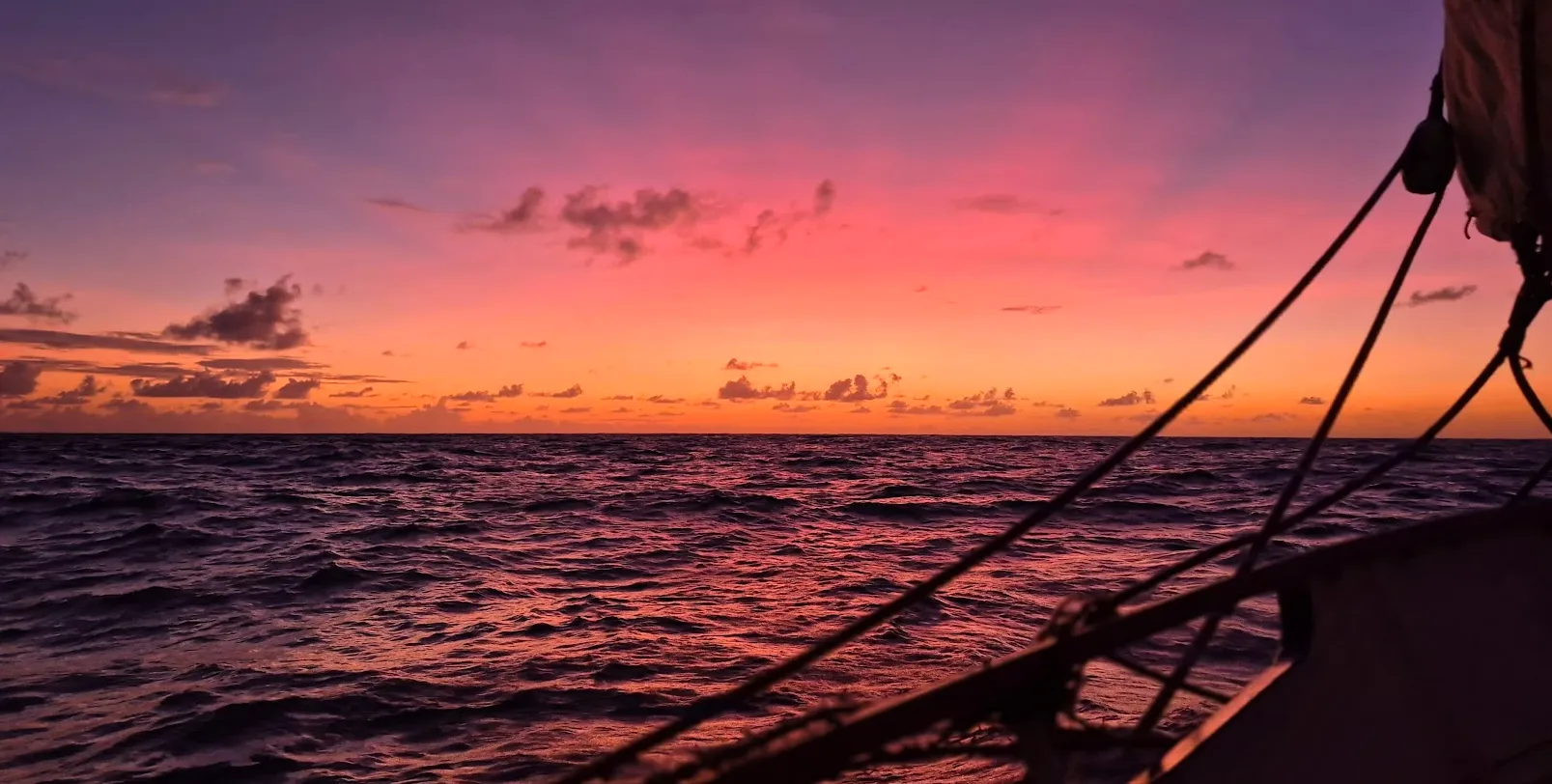
Thirty-six days at sea. Thirty-six spectacular sunsets. Thirty-six days of blistering heat, punctuated by sudden squalls and violent downpours, the shifting weather mimicking the wild swings between euphoria and malaise felt by the crew. A deck so hot that if we had caught a fish, it would have been cooked through before it could be filleted. Seamen superstitions set aside, the helmsmen took to wearing a big hat AND carrying an umbrella to avoid the powerful equatorial sun rays. Our final crossing of the year was the longest by far at 3600 nautical miles.
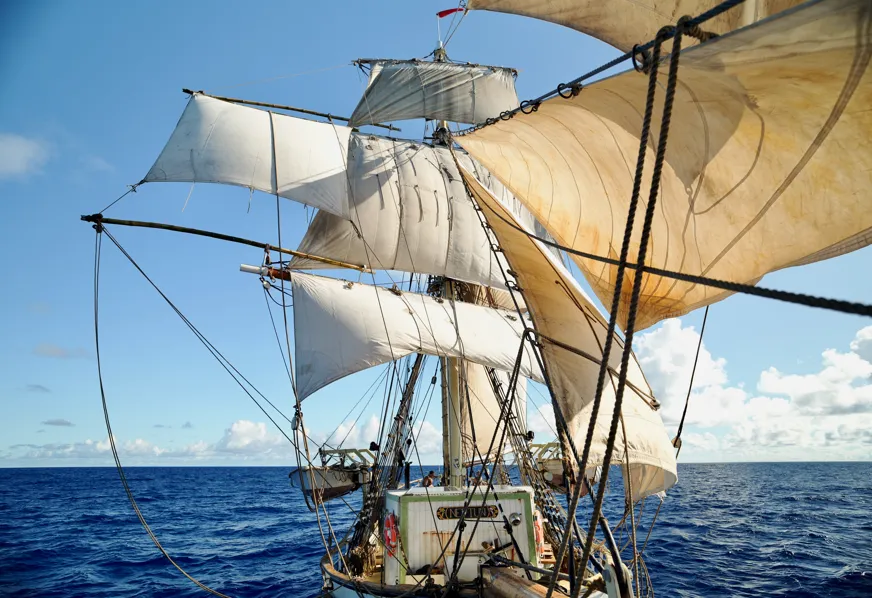
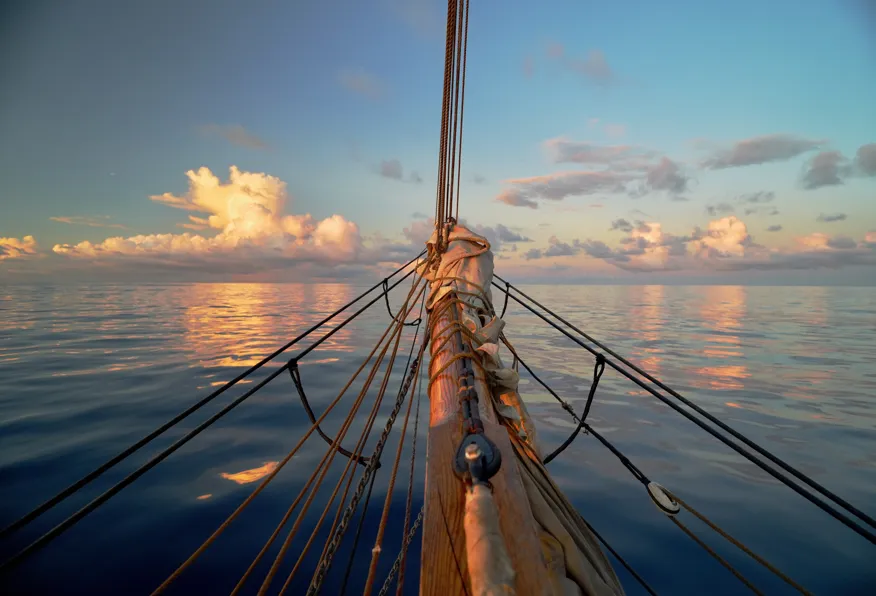
The first week we hardly made any progress at all as we bobbed around in the doldrums. The air was so still that the surface of the sea reflected the sky like a mirror, so that it appeared we were sailing among the clouds. Despite the beauty, morale was low as the navigation computer displayed our ETA some time in February or March of 2026. The high point of that first seven days was a man overboard drill that turned into a swim call, followed by a mango-eating frenzy. In a desperate attempt to catch any extra breath of a breeze, we rigged up a temporary stunsail boom from a giant piece of bamboo we had picked up in Banam Bay. It didn’t last long but it boosted our speed by about half a knot.
Around day 10, we crossed the equator. Although I am sworn to secrecy about the details, I am permitted to say that we hosted King Neptun and his court so they could transform our five lowly pollywogs into shellbacks. With the sea regent satisfied, a steady wind finally began to fill our sails.
Two weeks into the crossing our main generator died. After three days of repair attempts, it was concluded that a part not to be found on the ship was required. While we have a backup generator, it can’t run for as many hours as the main. That meant electricity would be in limited supply until we reached Palau. No more internet, no more induction cooktops, no more washing machine, and no more using fresh water for laundry or showering. To everyone’s immense relief, we still had enough power to keep our bunk fans running at night – if not, we may have ended up with a mutiny on our hands!
More problems popped up as quickly as we could solve them. The mainsail ripped twice and needed to be patched in a hurry, as every square foot of canvas was crucial to get us to our destination on time. The backup generator broke and broke and broke again, and each time we wondered how we would survive with no electricity at all, but each time we managed to get it going. One night at 2am the steering gear failed and several tense starlit hours were spent on repairs before we could resume sailing.
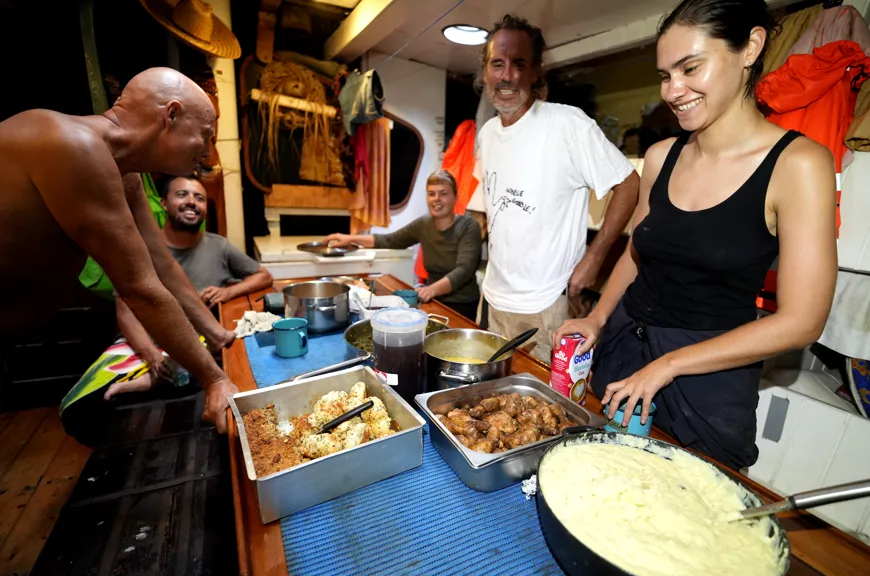
It may sound bad, but we had plenty of happy occasions as well. On the last Thursday of November, I prepared an American Thanksgiving feast (with the help of most of the crew). We had corned beef hash with eggs, apple crisp, and seeded buns for breakfast and chicken drumsticks, salmon, mashed taro and potatoes, creamed corn, stewed taro leaves, and cranberry sauce for dinner, with a giant pumpkin pie for dessert. It ended up raining most of the day, so we had our meals at the big table in the salon. It may be a bit more crowded but it’s also a lot cozier than eating on deck.
Danes love Christmastime, and they have a LOT of traditions. November 30th was the first Sunday of advent, so we lit the first candle on our small advent wreath, fashioned from a rope grommet and some birthday candles. Then on December 1st, we had risengrød for dinner, a rice porridge made with milk and sugar. The leftovers were then used to make risalamande – a rice pudding that is topped with cherry sauce and filled with chopped almonds (plus a single whole almond). Whoever gets the whole almond in their bowl is awarded a gift, which is often a candy pig. For us, it was a Neptun Pacific Voyage 2025 t-shirt. Risengrød leftovers were also used to make klatkager, rice porridge pancakes. We drew names for nisseven, the Danish version of Secret Santa, and many hours were spent on creating gifts from what little remained to us after three weeks at sea.
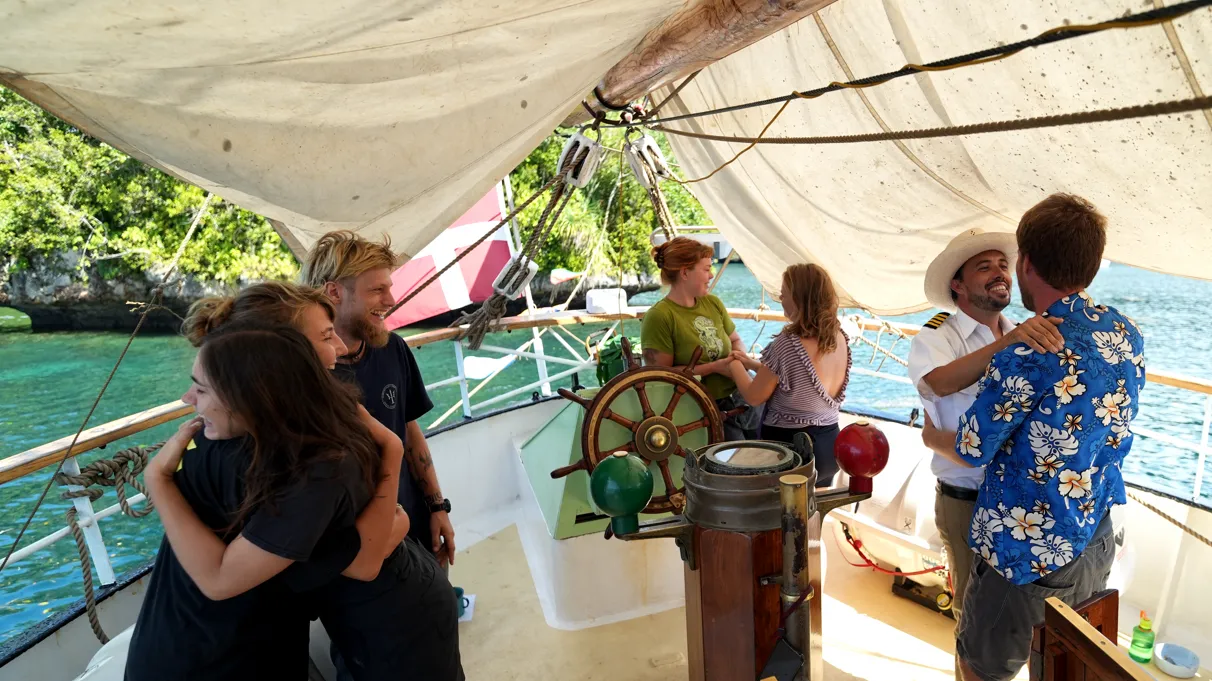
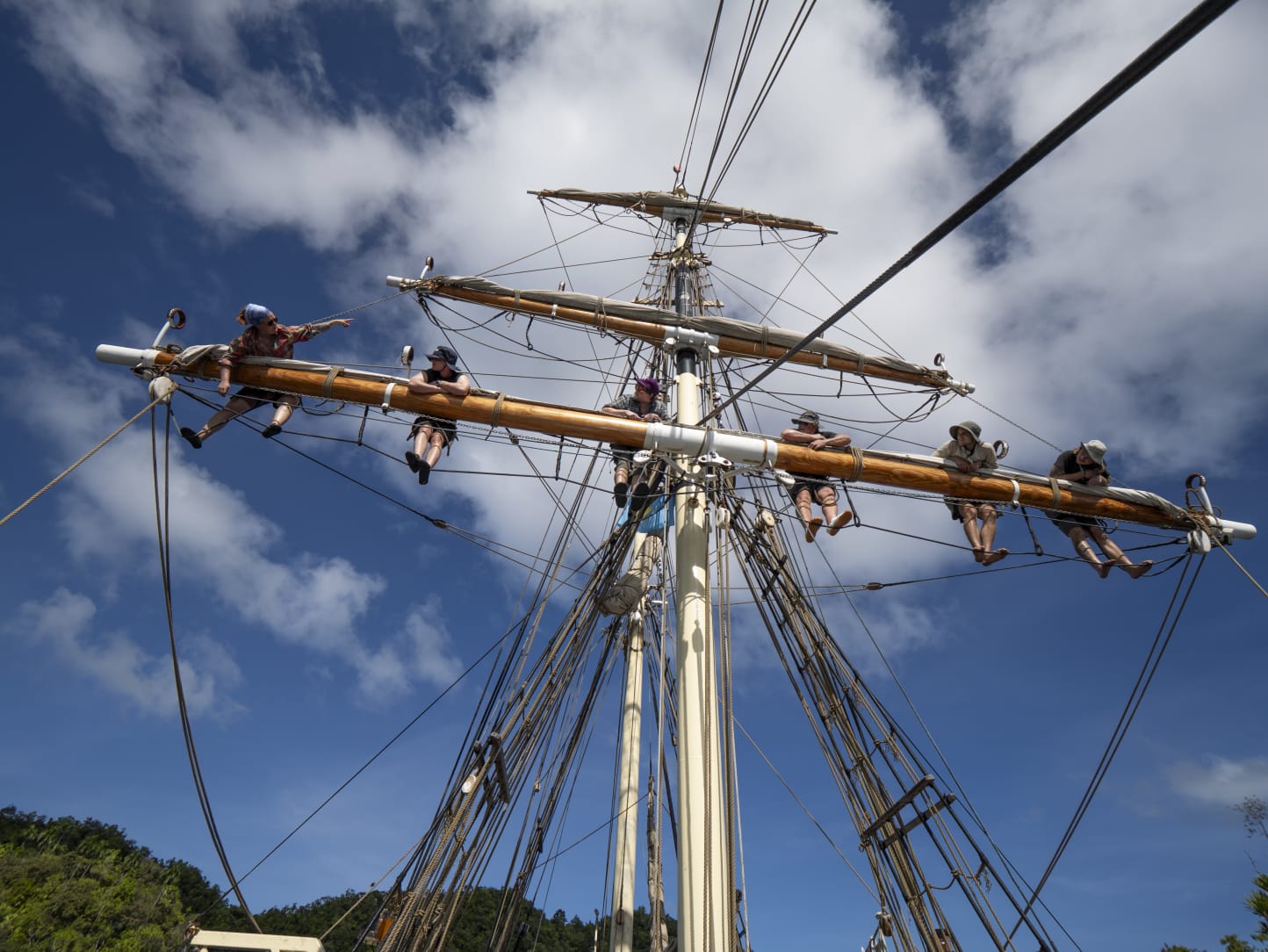
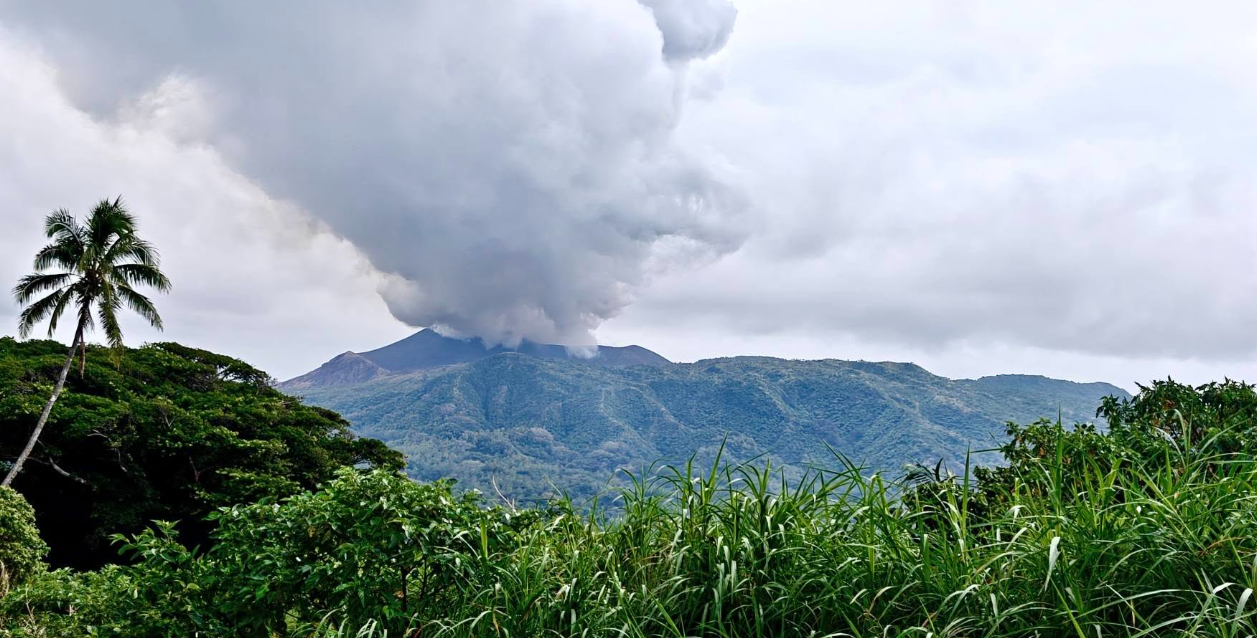
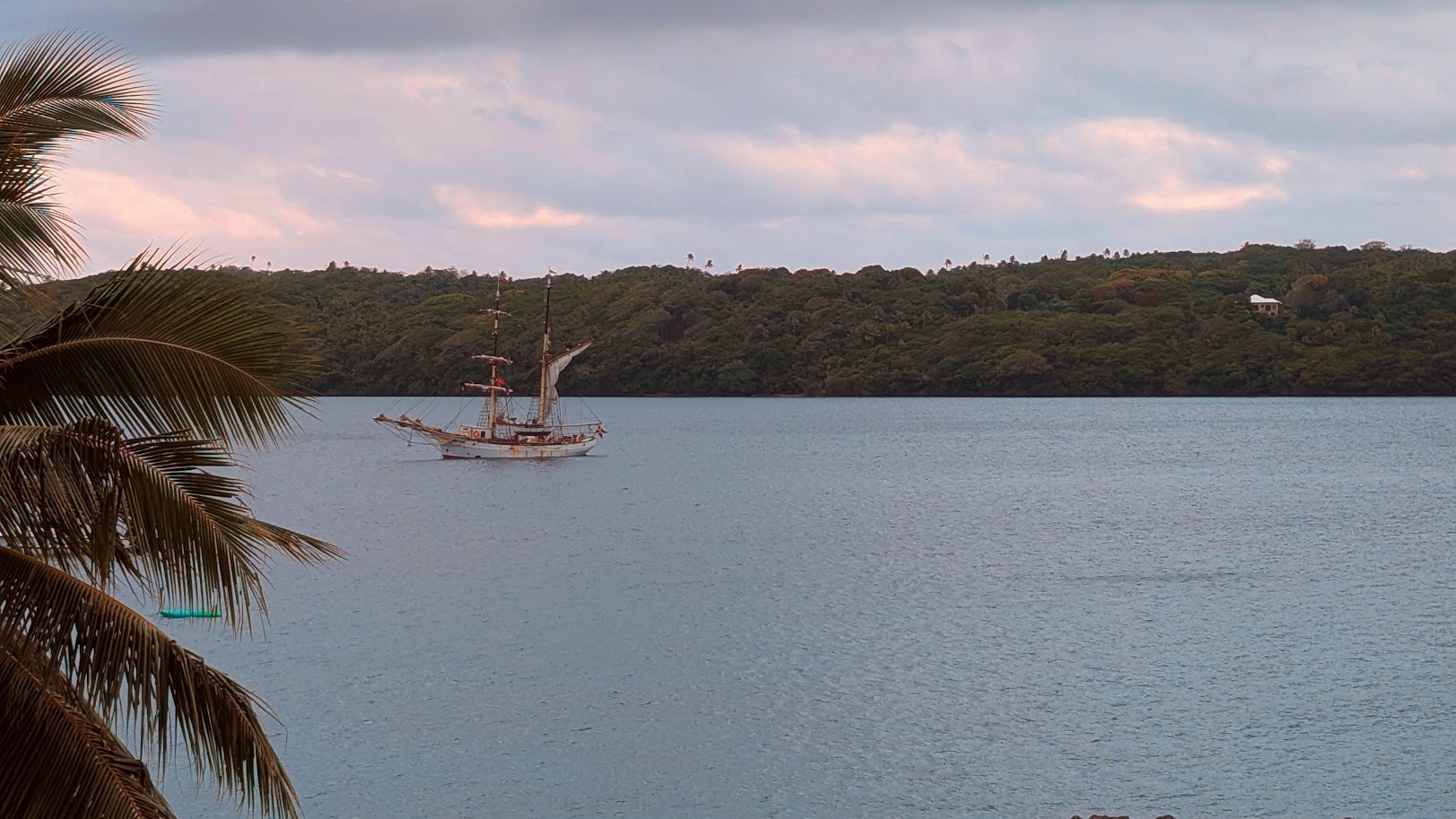
Exhausted, filthy, and relieved, on December 13th we finally arrived in Palau. We anchored in a stunning bay filled with limestone islets: small domes crowned in dense green foliage, erosion narrowing the waterline into an hourglass shape. A short two days later we held our last sign-off ceremony. In a whirlwind of hugs, laughter, and tears, ten of the crew said their goodbyes and headed for shore, and for home. Goodbyes weren’t easy – many of us have lived and worked together for eleven straight months, from the struggles of the shipyard and imminent bankruptcy, to the horror of the first crossing, to the wonders of Pitcairn, Palmerston, and Vanuatu. We have fought, cried, loved, hated, advised, and supported each other. We have swum with whales and looked into the mouth of an active volcano together. We have struggled to find reasons to stay, and yet stay we did. All of us have emerged from this adventure thoroughly transformed, both physically and mentally.
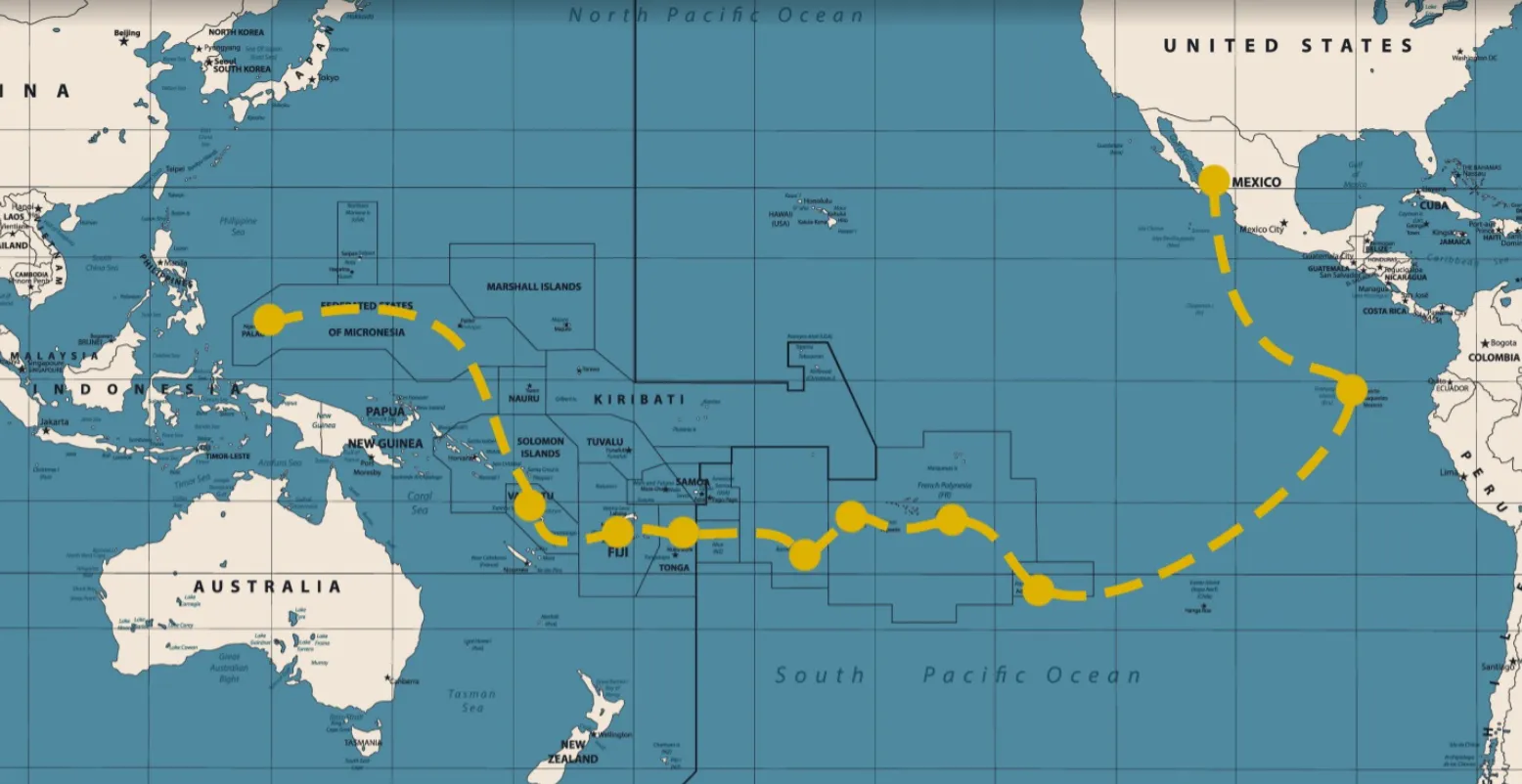
Our journey starting in May from Mazatlan, Mexico and ending in Koror, Palau.
Just three of us remain on the quiet ship alone now: the cook, the captain, and the videographer. We will stay here until the beginning of the new year, when the next crew arrives to begin their own adventure. In the meantime, we will complete some small repairs, explore Palau, and try to process everything that we have experienced in the last year.
Could you sign on for the next 3,600-mile crossing?
Eleven months at sea, hand-hauling anchors, hosting King Neptune at the equator, finishing in a limestone bay in Palau. The world voyage is open to trainee crew, no experience required.