From Palau to Sea
First, I would like to introduce myself. Meg Watt, Captain of SV Neptun af Marstal. I come originally from Australia, and started to work at sea in 2008. Since then, I have spent most of my time on boats, in many different vessels, in ma…
First, I would like to introduce myself. Meg Watt, Captain of SV Neptun af Marstal.
I come originally from Australia, and started to work at sea in 2008. Since then, I have spent most of my time on boats, in many different vessels, in many different parts of the world.
I came to join Neptun in Palau, an exciting reunion after seeing her coming together in Marstal, and watching her depart for the first leg of the circumnavigation. Getting my first glimpse of her at anchor when I arrived in Palau I was impressed to see how far she has come, both by distance and in reference to the incredible amount of work that has been put into her over the intervening months.
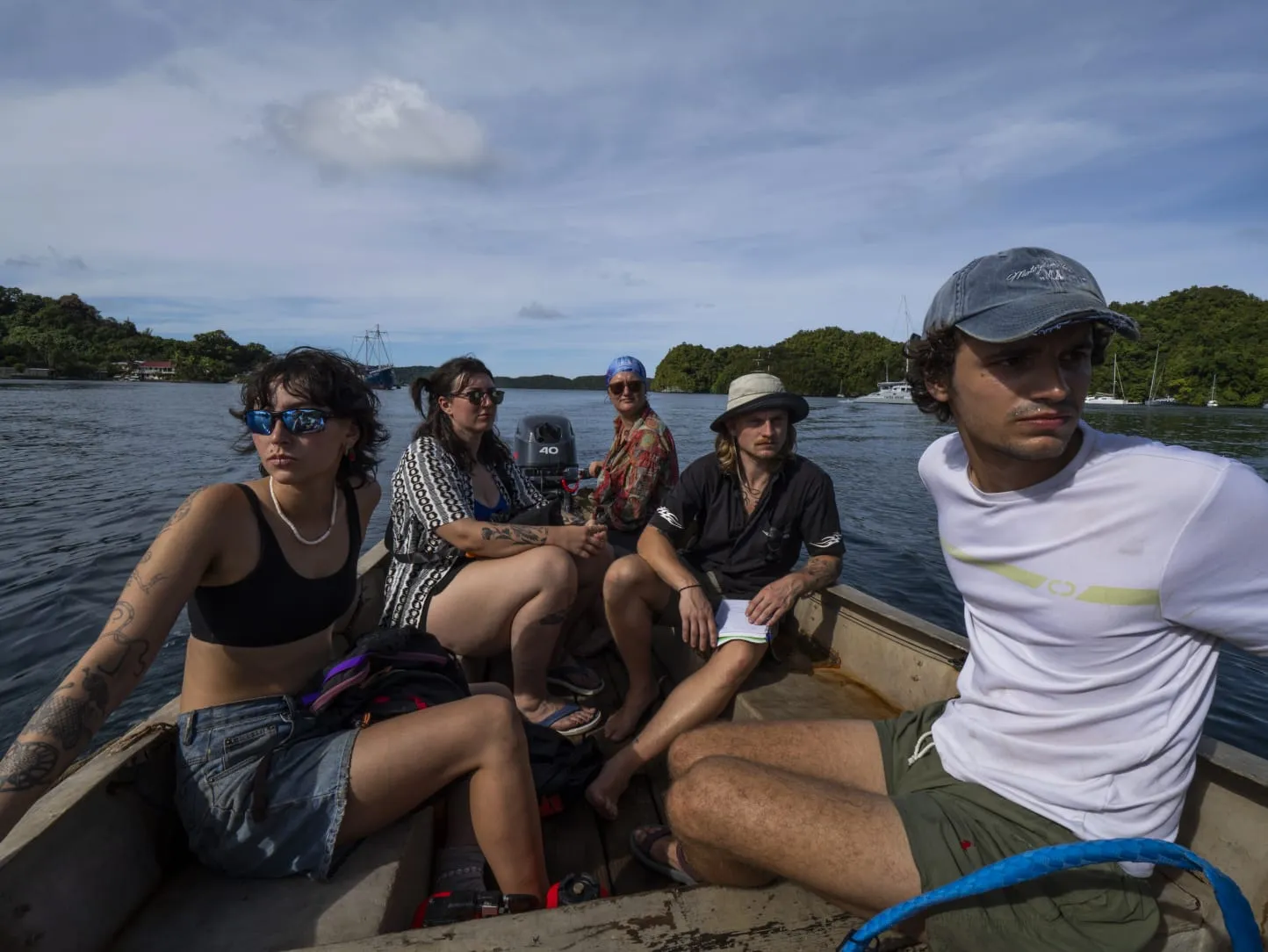
Through the late days of December and the holidays the on-signing crew started to arrive. Some came early to explore Palau, making the most of a once-in-a-lifetime destination by exploring with friends, kayaking with family, or getting familiar with the underwater world in Scuba gear.
By New Years Eve most of the crew had either moved onto the ship, or were staying ashore. We met up to see in the New Year together, which was a pretty calm affair by most standards. The next few days were spent finding the best places to hang hammocks, running errands for the ship, exploring by car the far reaches of the island and exploring closer to home by snorkeling on the wrecks in the anchorage. That’s where I had my first, and hopefully last, encounter while snorkeling with a salt water crocodile. Yikes.
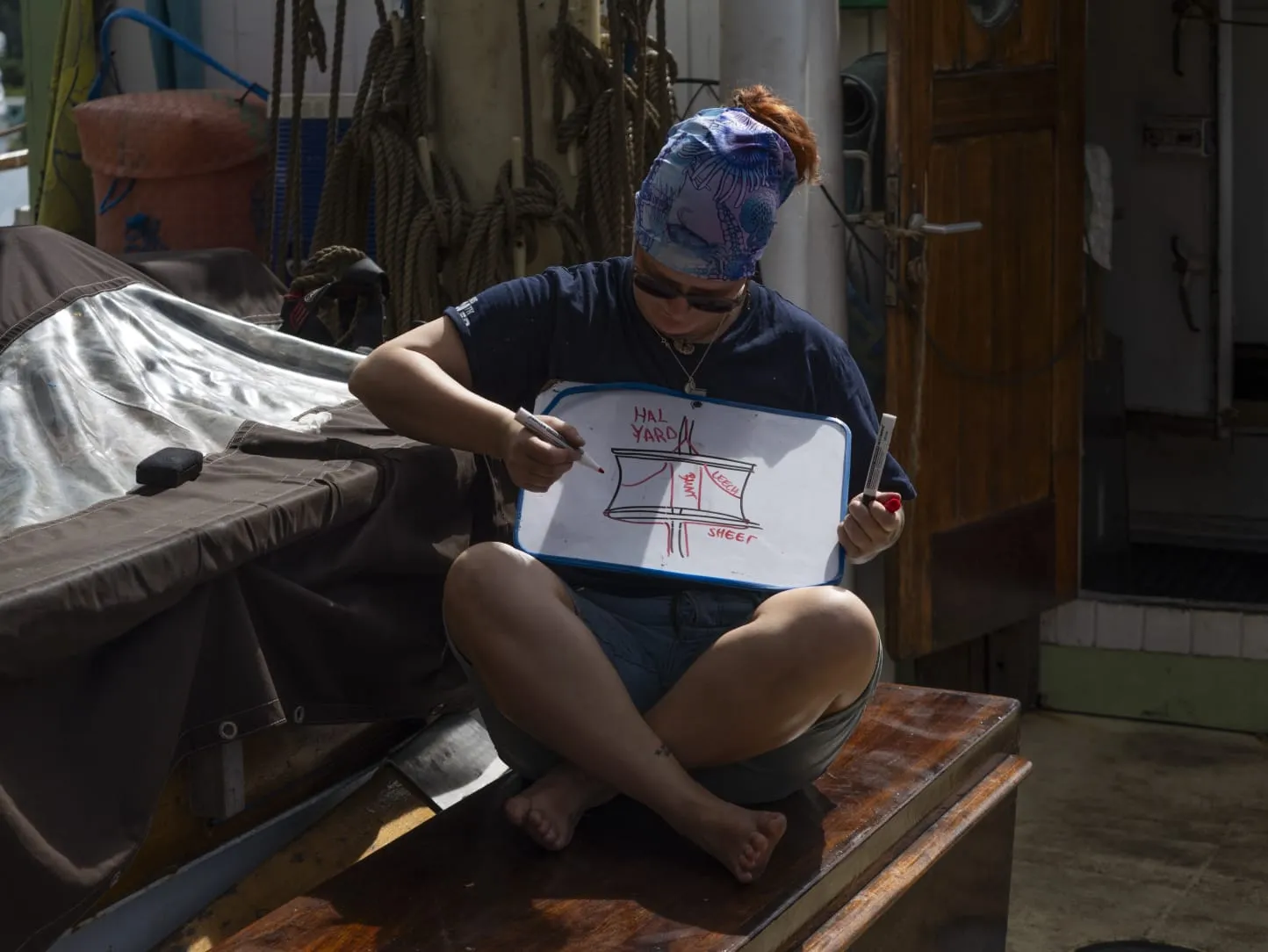
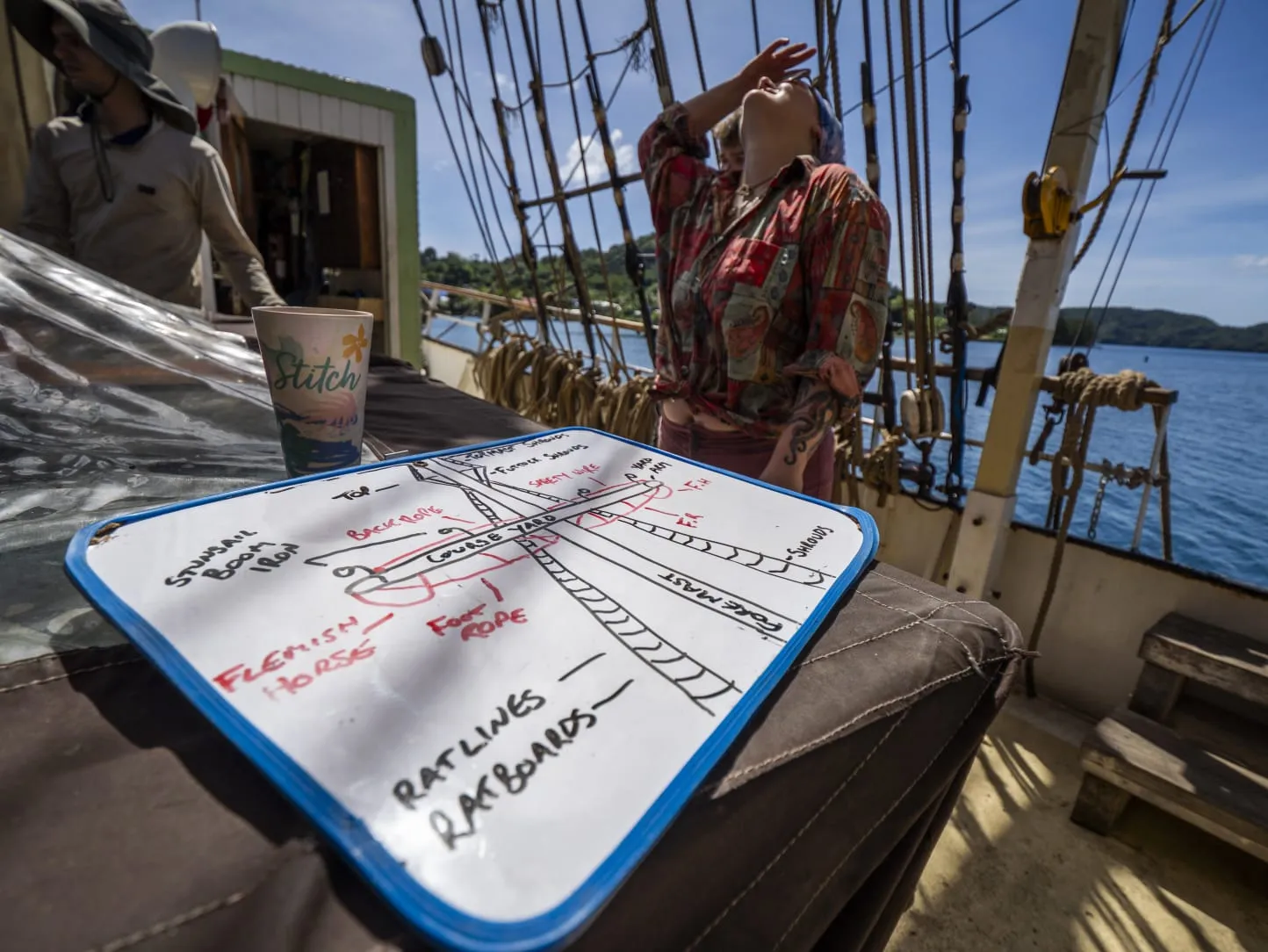
The last on-signing crew member arrived on the 5th January, and from then it was into full swing with training and preparations for the trip. So many new things to learn about life onboard, how to live as a team, what all the sails and lines are called and how they work.
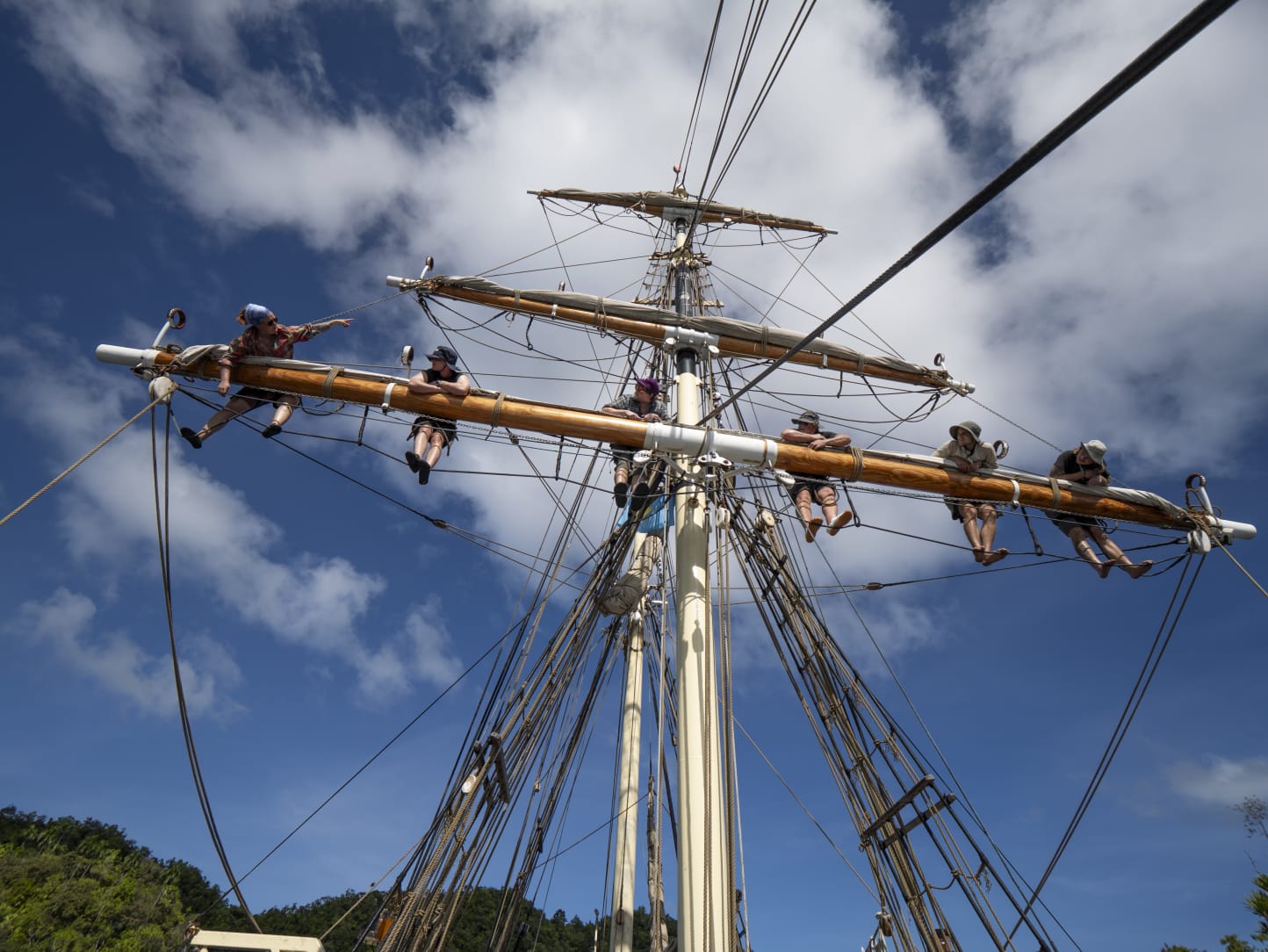
We practiced going aloft and working with the sails, learning how to loose, furl and reef the topsail.
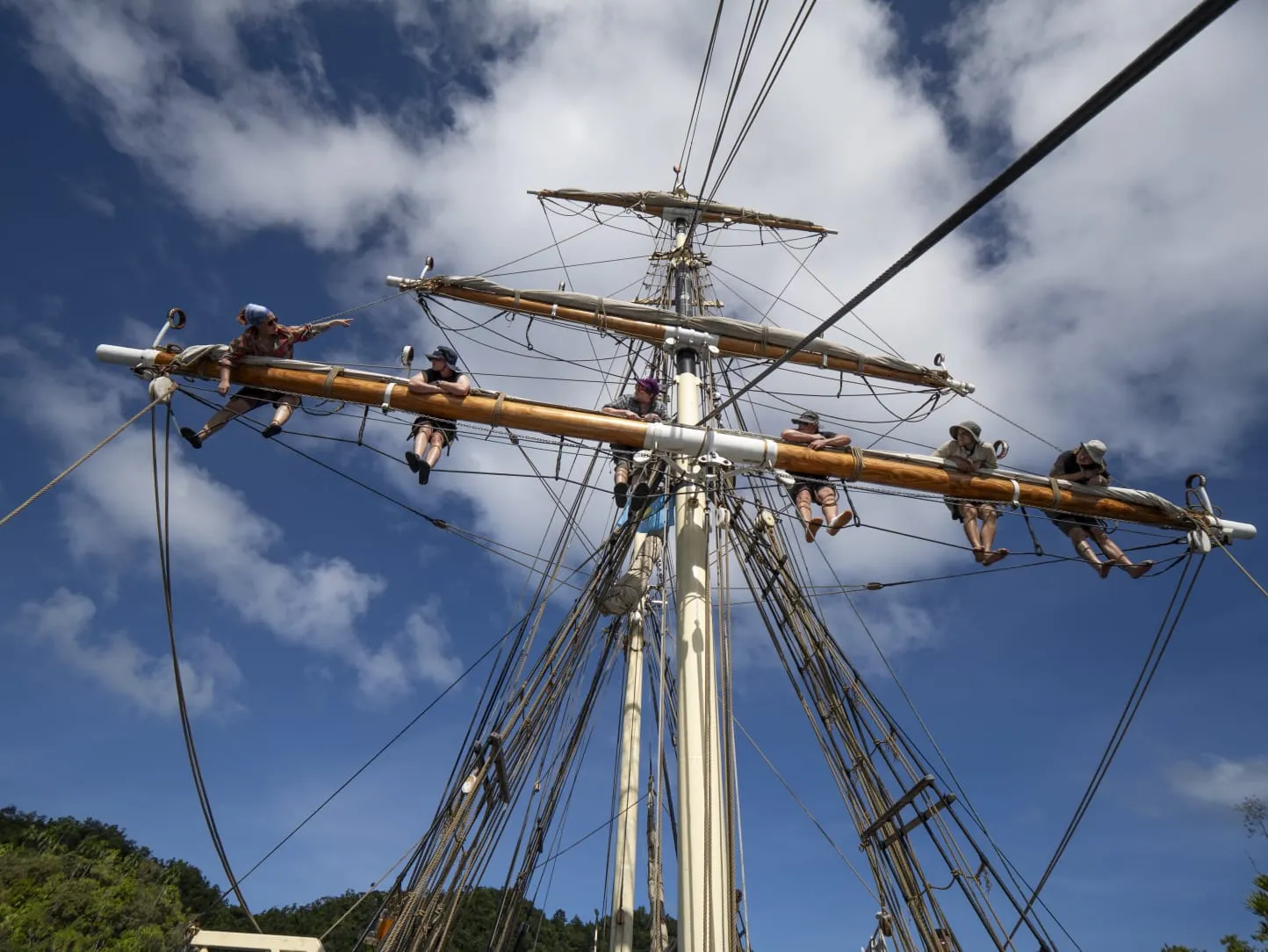
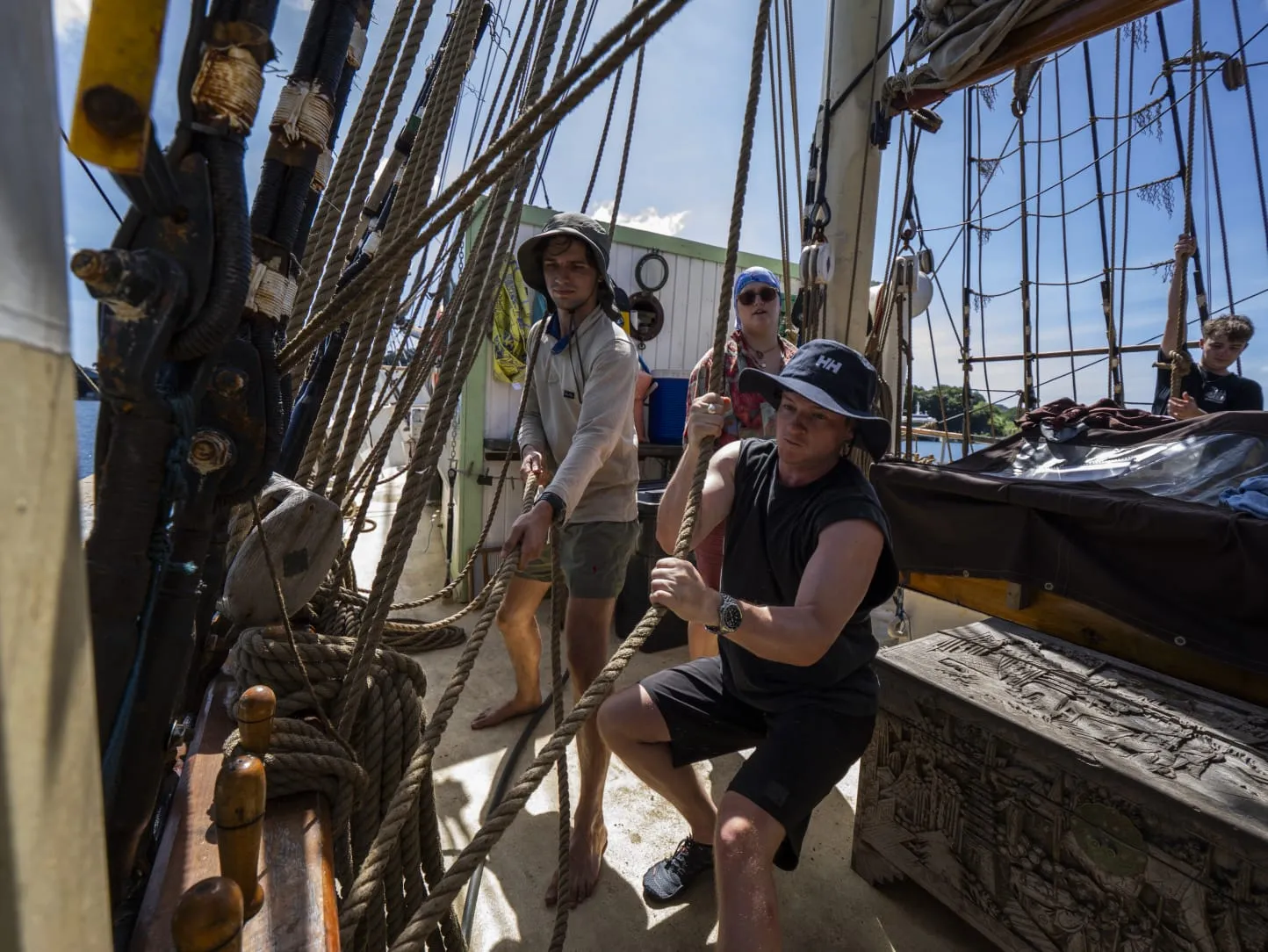
We practiced bracing and working with lines. We cleaned and sorted the food storage areas, made our shopping lists an visited the local fresh produce market to get everything we needed for the upcoming time at sea. Familiarisation with the safety equipment and safety procedures onboard was a top priority, and talking about the watch routines and what to expect.
We also had to bend on 2 sails that had been getting repairs on the island, the inner jib and the spanker, or mainsail. No amount of talking to can really prepare someone for what life is really like at sea though, that is something you have to live to experience truly.
On the 10th January it was departure day. We were ready, the ship was ready. The paperwork was done. It was time to head out of our cozy anchorage and take our ship to sea. The whole day was spent on preparation. We had to remove our mooring lines from the shipwreck they were anchored to, where they had been run from our stern to stop us swinging in the anchorage. This was a pretty tricky job which involved freediving underwater to undo some bulldog clamps holding a wire strop the previous crew had made through some holes in the wreck. Taylor and Connor got chosen as the most mermaidlike crew to do this job.
Meanwhile, our engineer Hans started up our engine and we gave it a chance to warm up and get running.
On deck we pulled the slimy, algae covered ropes back up and lay them out to sort out later.
When the passports were stamped and the documents handed over, we were done with our skiff, Nemo, and it was time to pull her up and lash her. This is a heavy job that will get to be routine, but for our new crew, it was our first chance to do it for real.
While the boat was being lifted and lashed, we started to heave the anchor. Our windlass is manual, and pulling up the anchor is a pretty labour intensive job. We had the whole length of the anchor chain out, and after being moored there for almost a month, since the 13th December, it was hard going to get it back onboard again.
We had guessed it might take about 2 hours, but it was more like 3 and a half. I bet in a couple of months we will get faster though.
When we were free of the ground and the anchor came home we headed out through the narrow passage, through the reef and into the big lagoon on our way out to sea.
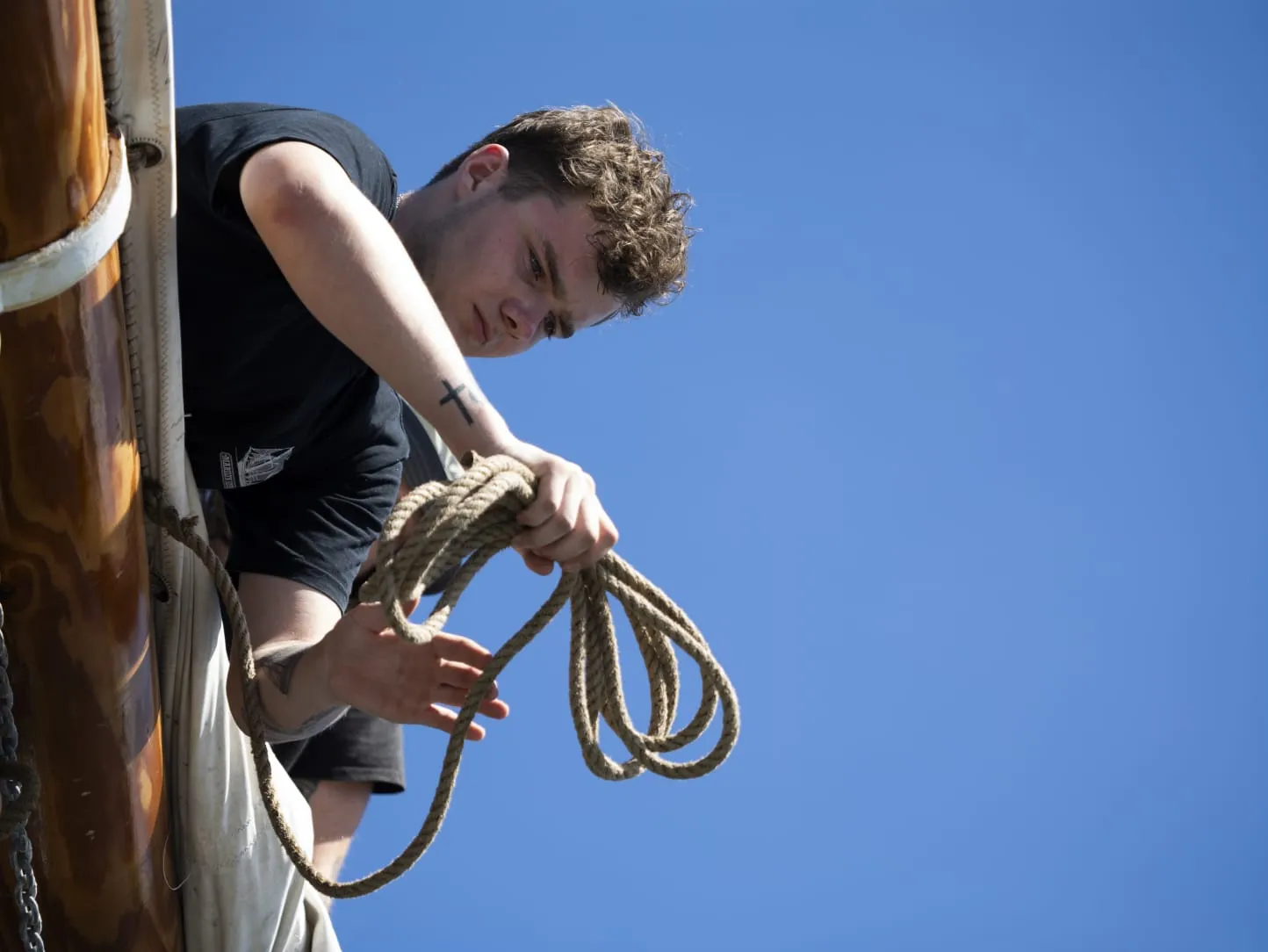
Palau is an atoll, surrounded by fringing reef. This meant we had sheltered waters for the first 15 nautical miles as we navigated through the lagoon, around coral heads and islands, and then finally through the West Passage.
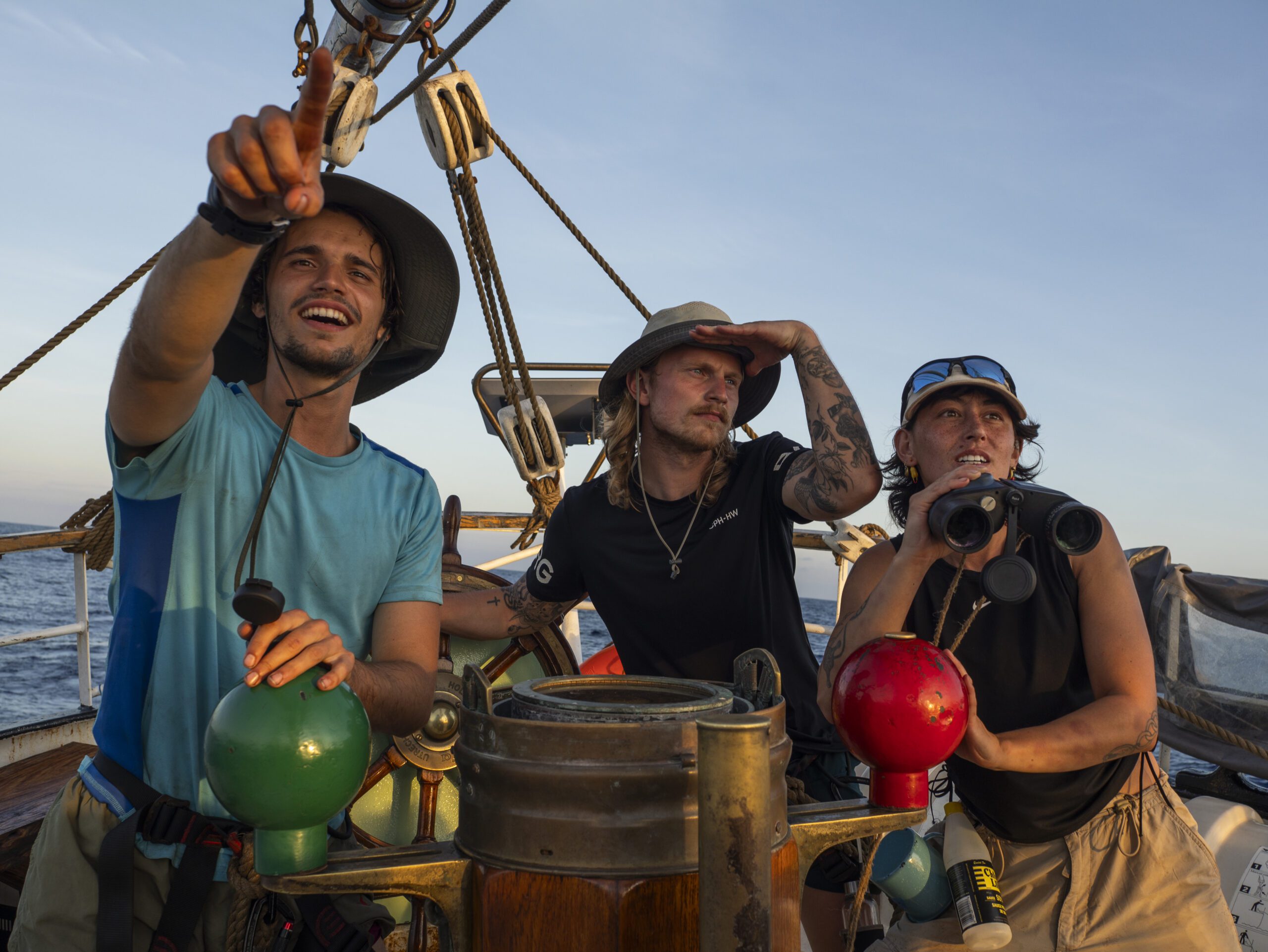
People had their first opportunity to steer the ship using the helm, and following helm orders.
It was important to hold a good course as some parts of the channel were pretty narrow! It had gotten dark by this point, and we were able to steer using the red and green channel markers to show us the way out.
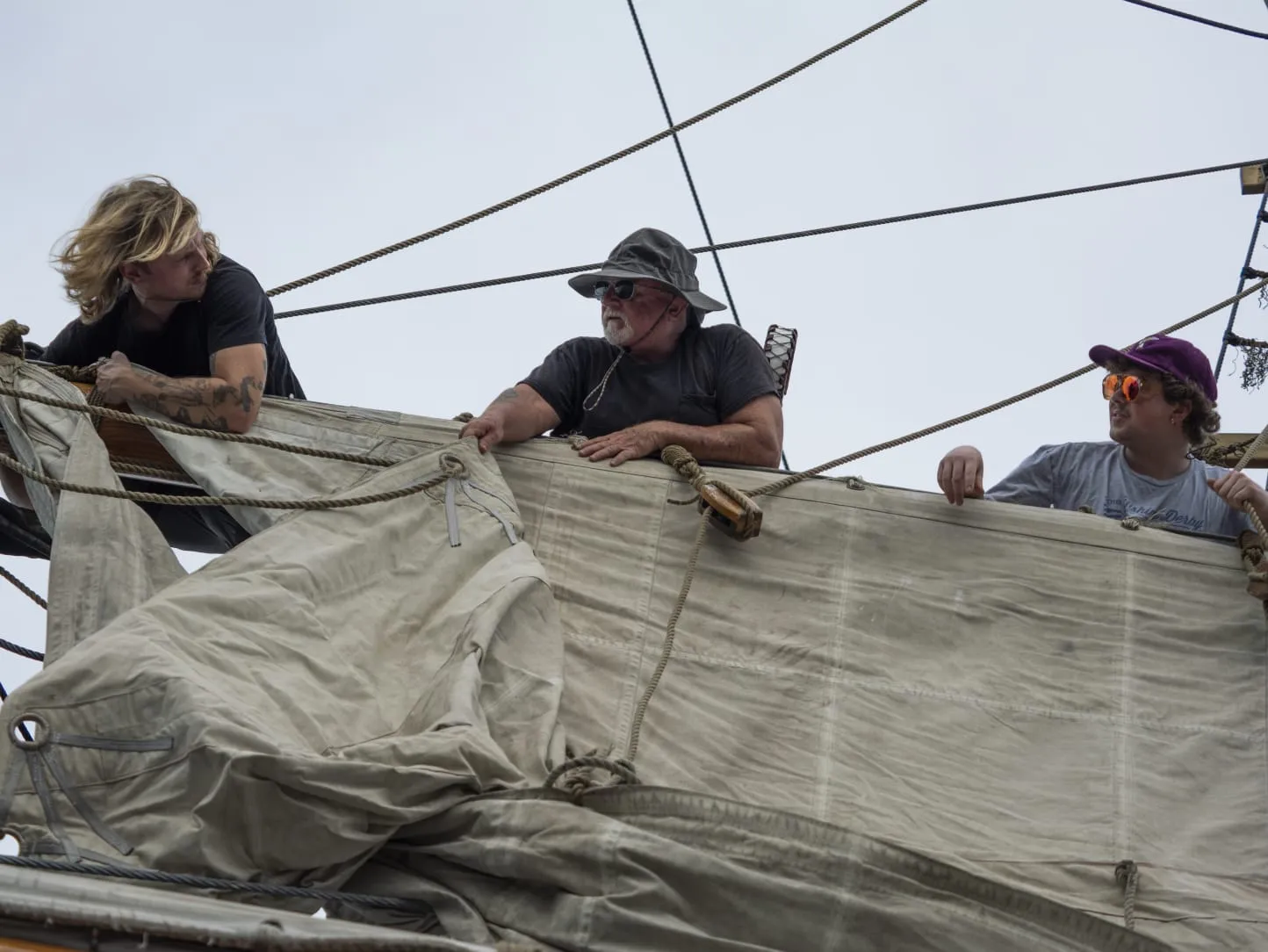
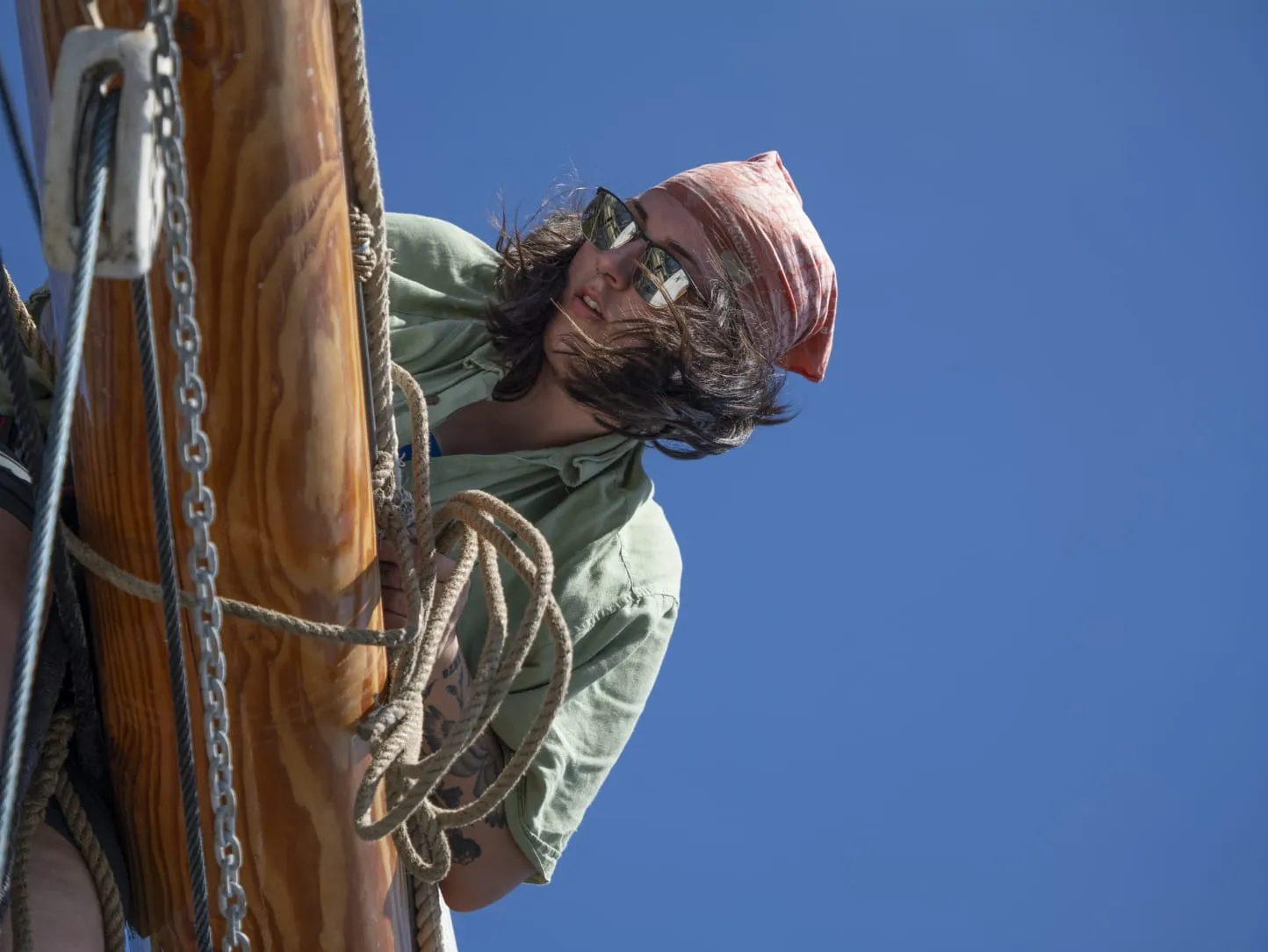
When we were clear of the reefs it was time to set sail, but first we had to prepare them. Some of our crew climbed aloft to loose the topsail and forecourse, while others prepared the jib and forestaysail, and on deck, we also prepared to set the main staysail.
The sails went up, billowing canvas filled with wind, and we brought the engine back down to idle, and then finally switched it off. Then the wonderful sound of only sailing unfolded, engine noise from the rigging, and the sound of the sea as it rushes past the hull. A sky full of stars.
Its time now to break into watches and begin our adventure at sea.
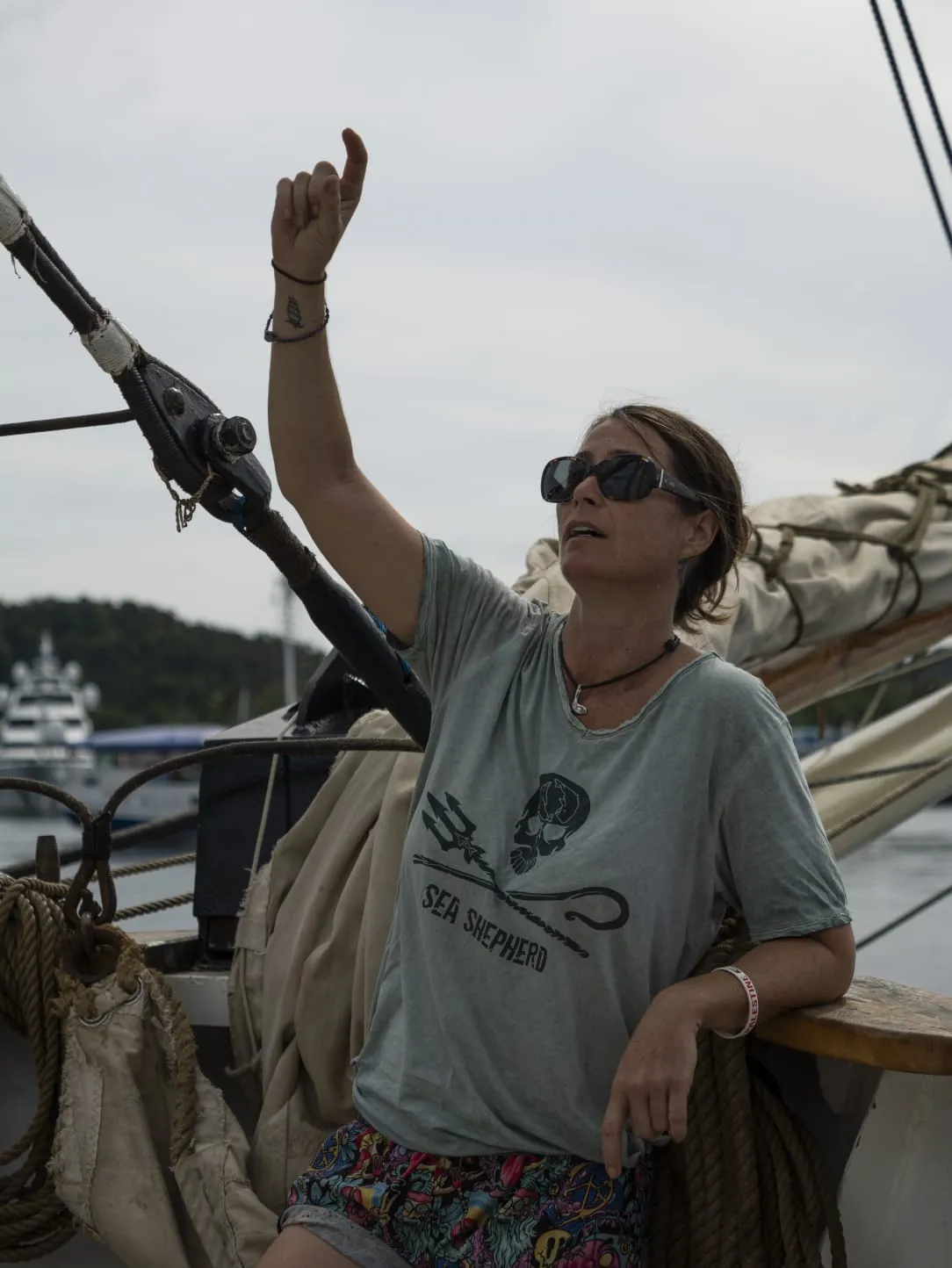
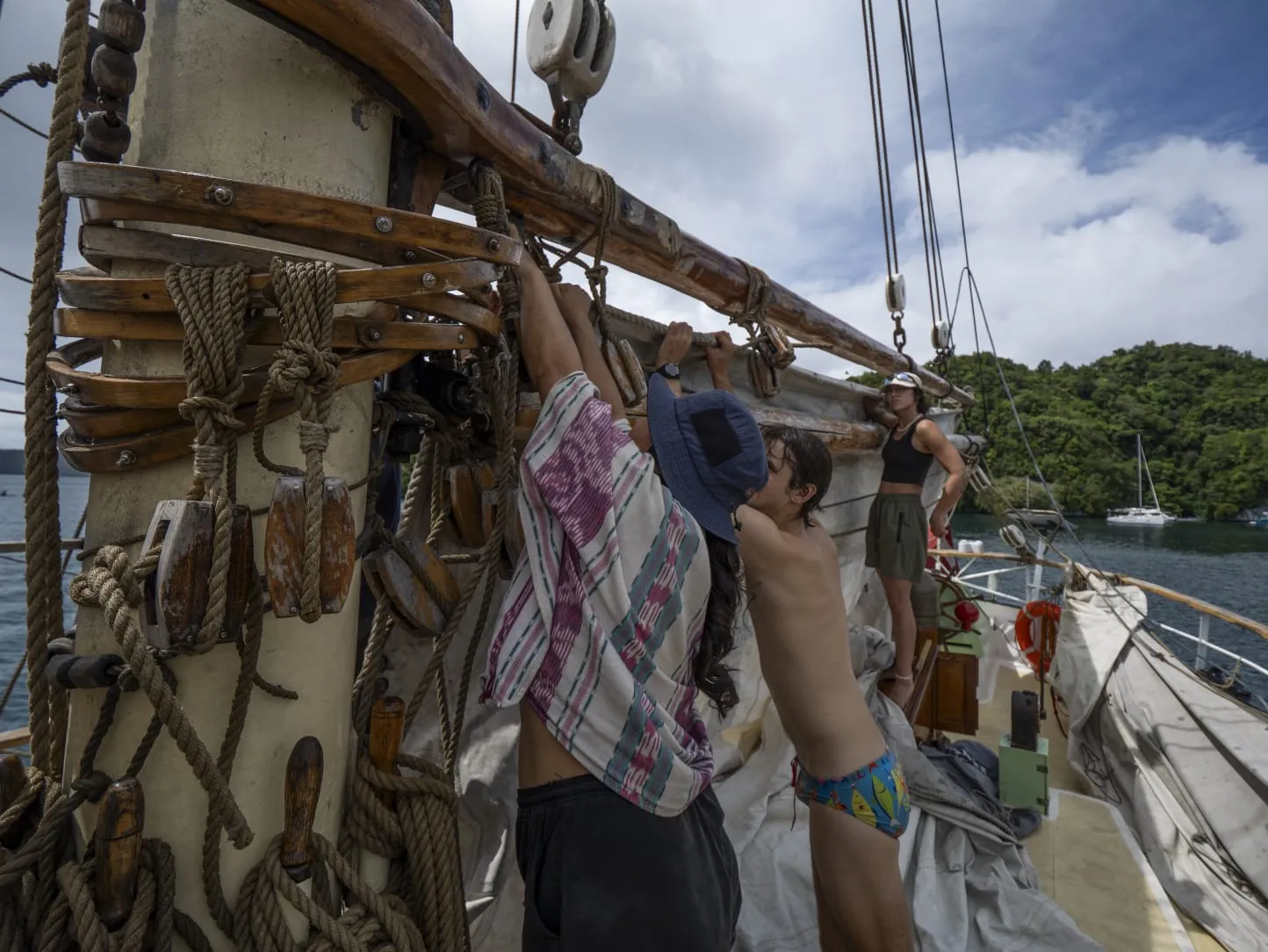
Could your first sea passage look like Meg’s?
The Palau crew had never set a topsail together before leaving the lagoon, they learned on the ship, on the way out. Trainee berths on the world voyage all start the same way.