Making Waves in the Cook Islands
By Victoria Hardy (ship's cook) Alongside again in sunny Avatiu, Rarotonga, the ship hooked up to shore power, and the crew relishing hot showers in the shore facilities – our first impression of the Cook Islands was a good one. On day o…
By Victoria Hardy (ship’s cook)
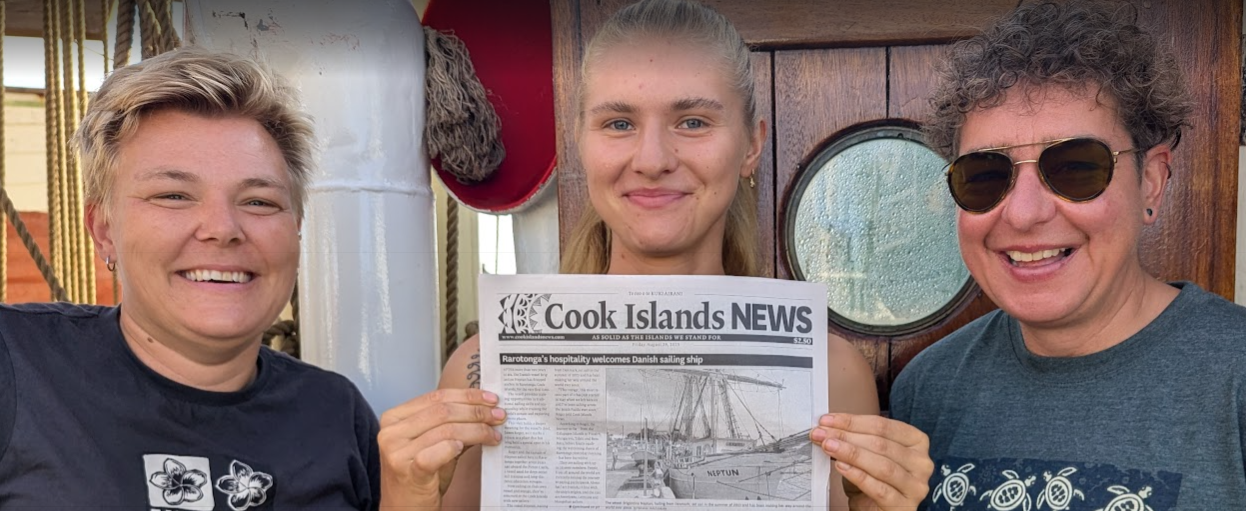
Alongside again in sunny Avatiu, Rarotonga, the ship hooked up to shore power, and the crew relishing hot showers in the shore facilities – our first impression of the Cook Islands was a good one. On day one, before we even cleared customs, the chief mate was interviewed by the local newspaper and the next day we made the front page! Throughout the week we had dozens of curious visitors, including quite a few small children delighted by the “real pirate ship”.
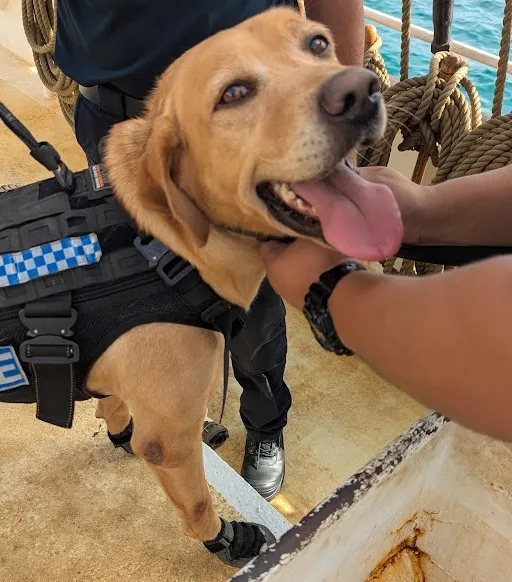
Police dog Chester – the only time getting searched by the police was a happy experience
Second mate Sarah shows our newspaper article
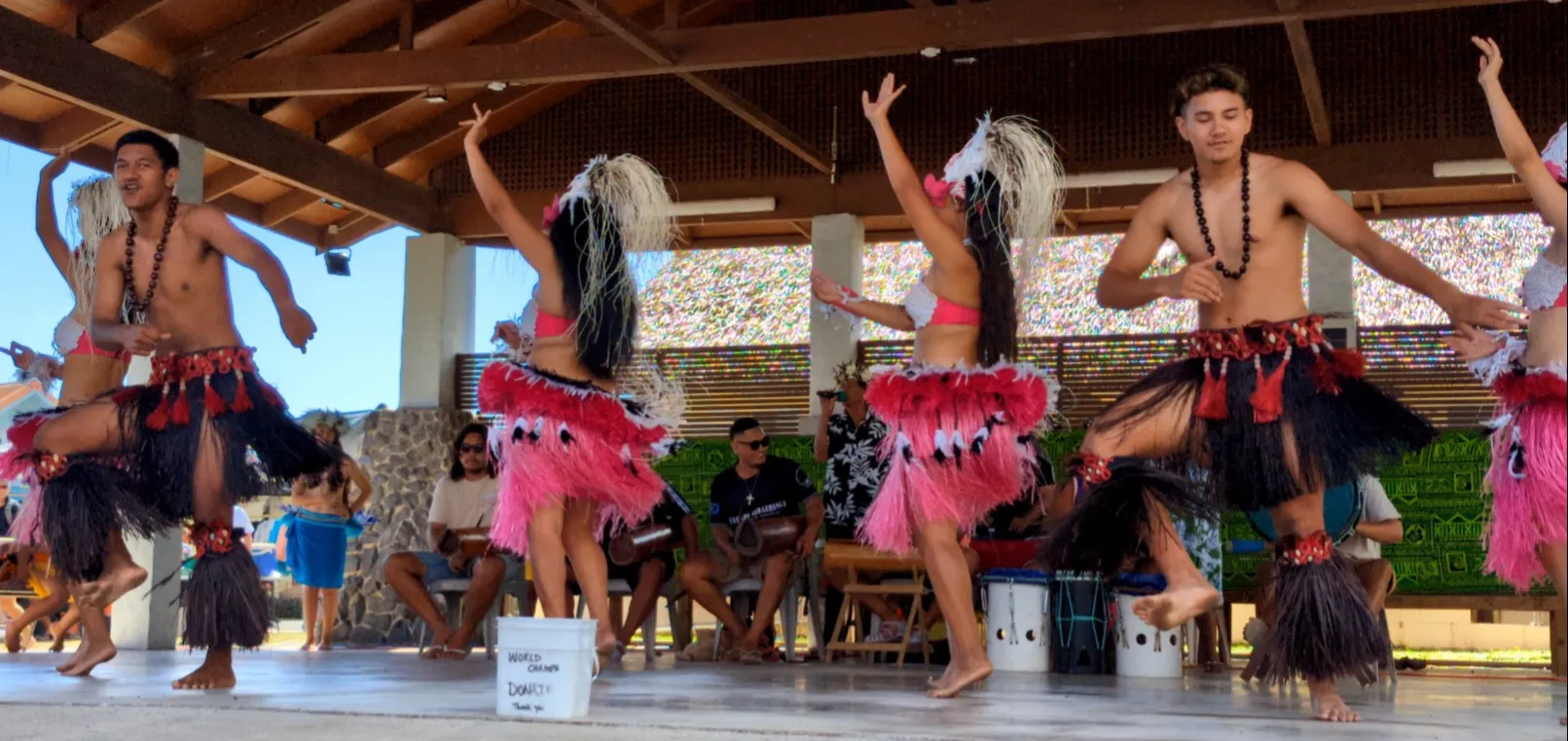
Saturday morning we visited the market and saw a traditional Polynesian dance. We tried a local specialty, fermented noni juice, reputed to have some medicinal properties. The fruit is known by a hundred different names around the world, but “vomit fruit” and “rotten cheese fruit” given the best idea of the flavor.
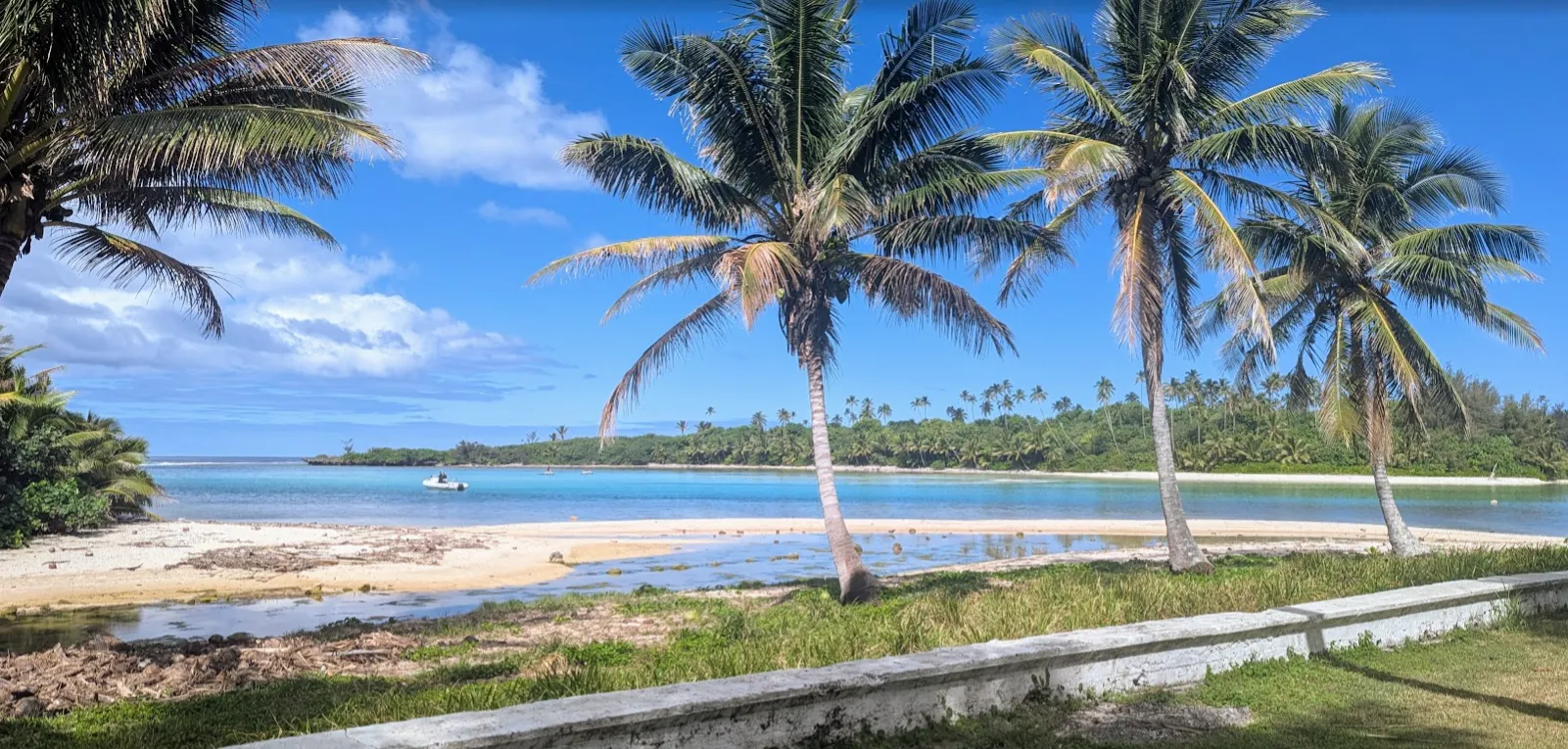
Snorkeling in the clear lagoon waters yielded some interesting sights. Stingrays, colorful fish, and a plethora of sea cucumbers, including one type that resembles a sand worm out of a science fiction novel. The Polynesians call it rori and it is eaten either raw or cooked in butter and garlic, but I was not able to find it on the menu anywhere. A group of us visited a cat rescue to see if we might find a new ship cat, and although that mission was unsuccessful, we did manage to pet quite a few sweet kitties. Local dogs have learned to adopt tourists for a few hours or even the whole length of their stay and many of us made some furry friends that we were sad to leave behind.
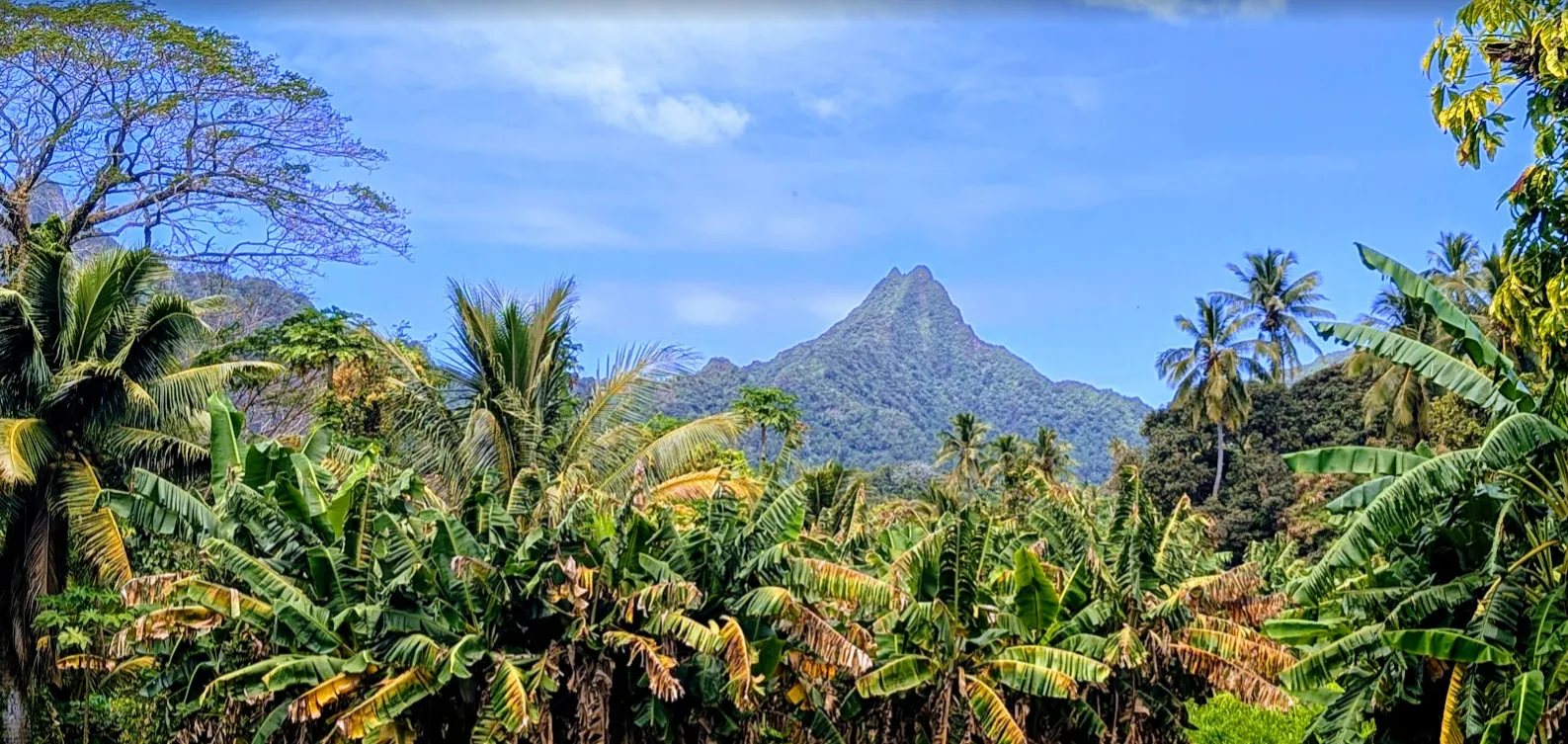
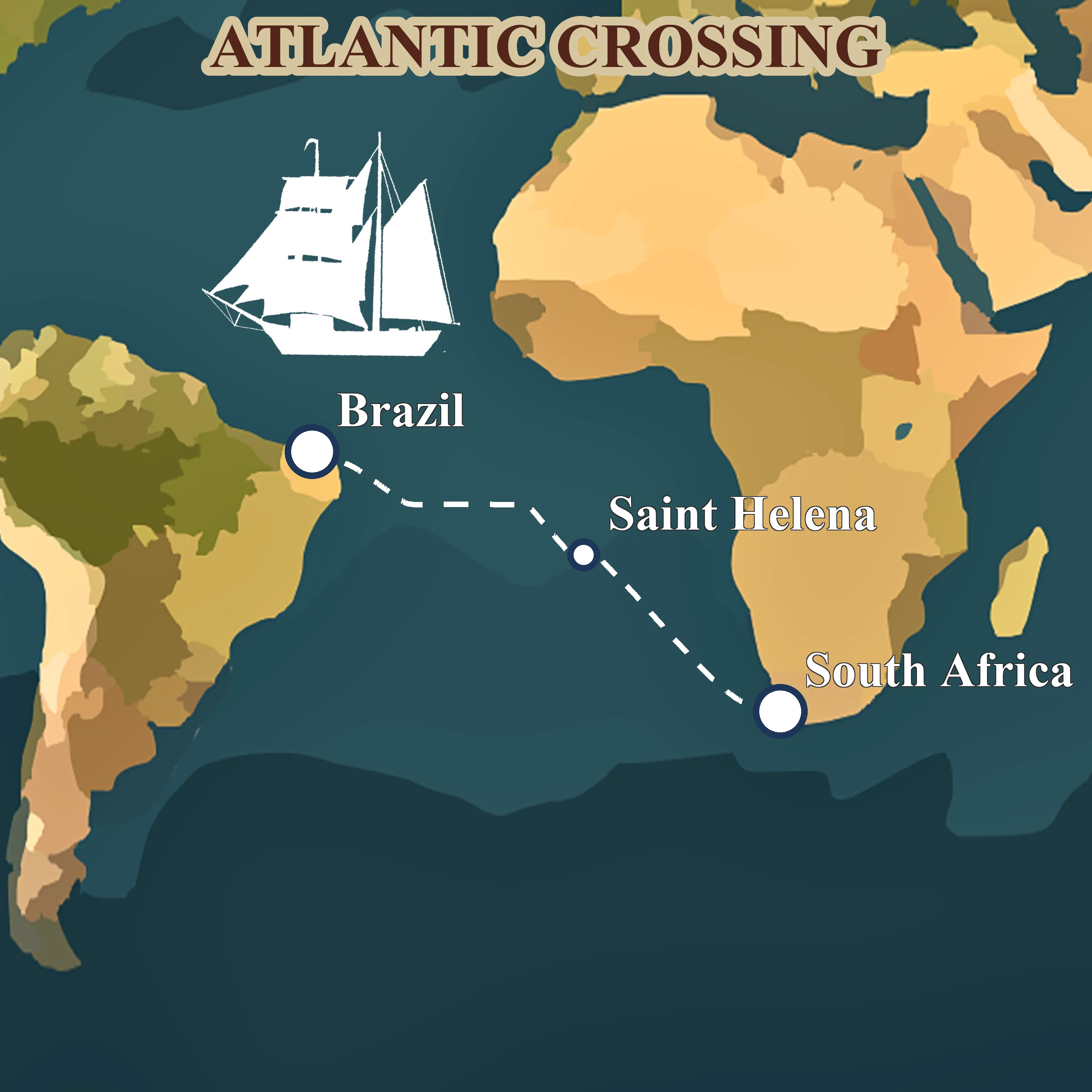
Over the last few days of our stay in Rarotonga, packages of various shapes and sizes were dropped off for us to to transport to our next destination, the remote island of Palmerston. Since they usually get a cargo ship just once a month, an extra delivery is always welcome. We packed more than we ever thought possible into every nook and cranny of NEPTUN – even a 90 kilo headstone! It was only three days sail between the two islands, but it was a harrowing crossing. The rough, choppy seas made something as simple as walking a few steps a major challenge, and a rogue wave in the aft cabin resulted in the destruction of the navigation computer, three keyboards, a printer, and my cell phone. An issue with the generator meant that all meals had to be cooked solely using the propane powered oven, adding an extra level of difficulty. Fortunately I had been prepared for such a situation during our Atlantic crossing last year, when I had to make four days worth of meals for hungry sailors without stoves OR an oven, so the resulting meals weren’t too bad. With a sigh of relief we put down the anchor just outside of Palmerston’s coral atoll.
Palmerston
After the first group went ashore, five of us were left onboard for anchor watch. Our relief dissipated quickly as things continued to go wrong. The water pump broke. The replacement monitor for the navigation computer broke. The new laundry machine caught on fire. The water pump broke again. The line chafed through on our second anchor and was lost 60 meters under the sea. For two days every time we cut off a sea serpent head, two new ones sprouted in their place. Then the wind changed direction and we were blown towards the rocks that mark the boundary of the reef and certain destruction. We spent one tense night with the engine running, ready to motor away if our remaining anchor did not hold, while groaning from the anchor chain and wind whistling in the davits haunted us with a ghostly chorus.
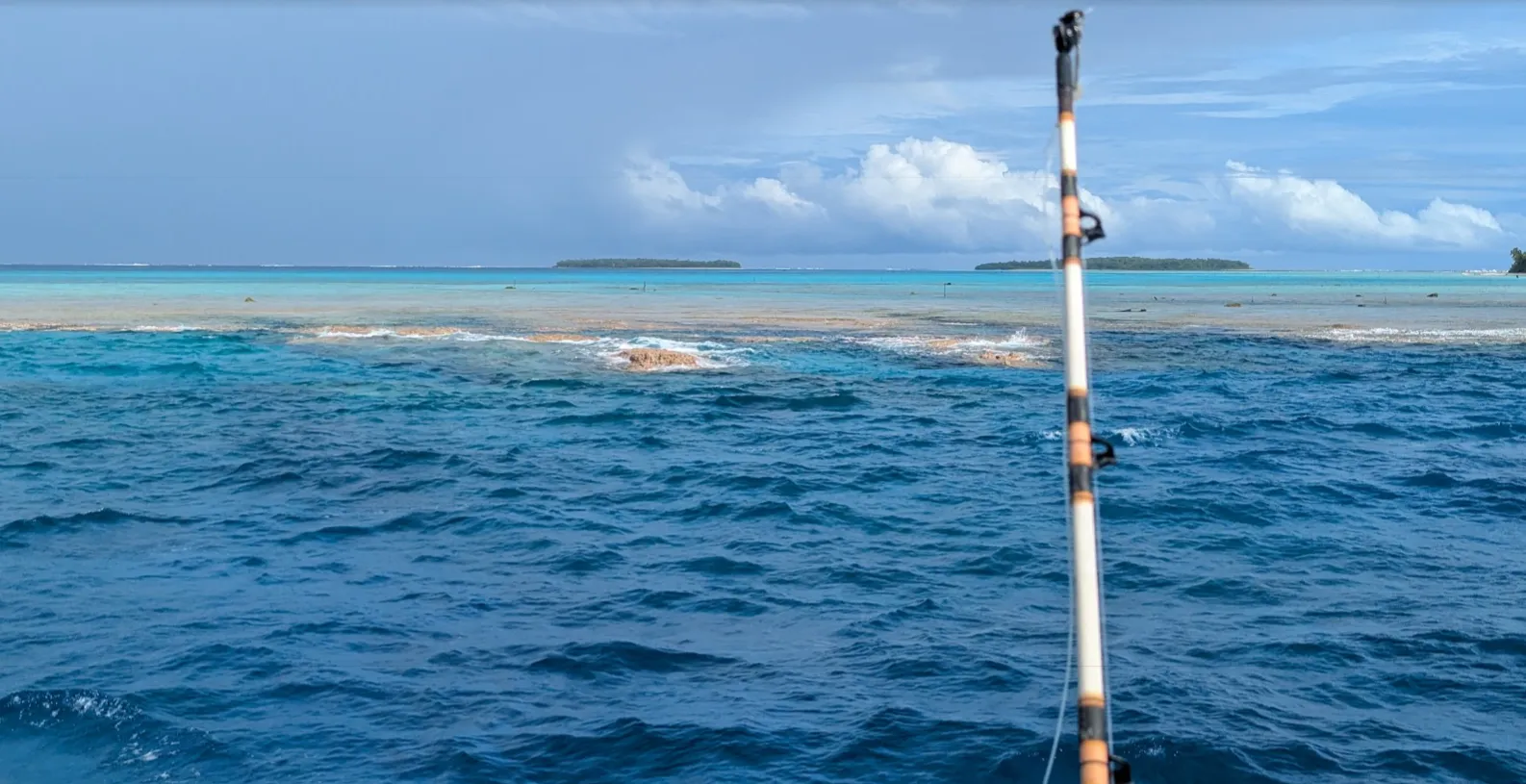
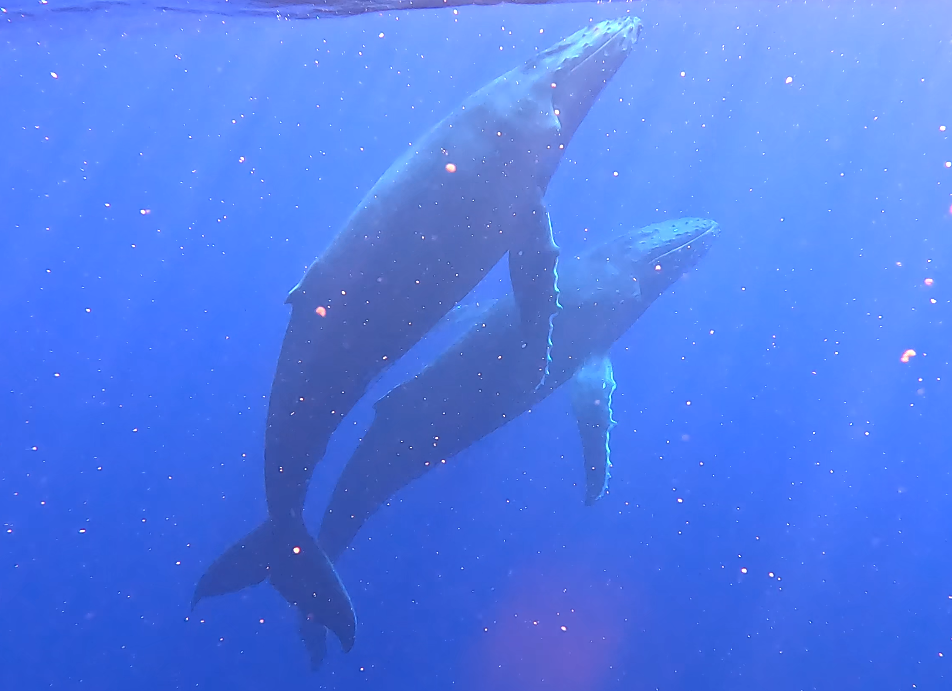
Suddenly it’s all over. After Danish pancakes for breakfast and another humpback whale sighting, it’s our turn to go ashore. The contrast between outside the reef and inside it is breathtaking. Here is a small tropical paradise, relaxed and peaceful. We land on a white sand beach lined with coconut palms, and are greeted by our hosts who promptly take us home and begin feeding us. There is no break in the parade of food for the next four days. Chocolate cake with ice cream, uto (the marshmallow-like insides of a sprouted coconut), lots of parrot fish, tender chicken thighs slow-cooked in a ground oven…
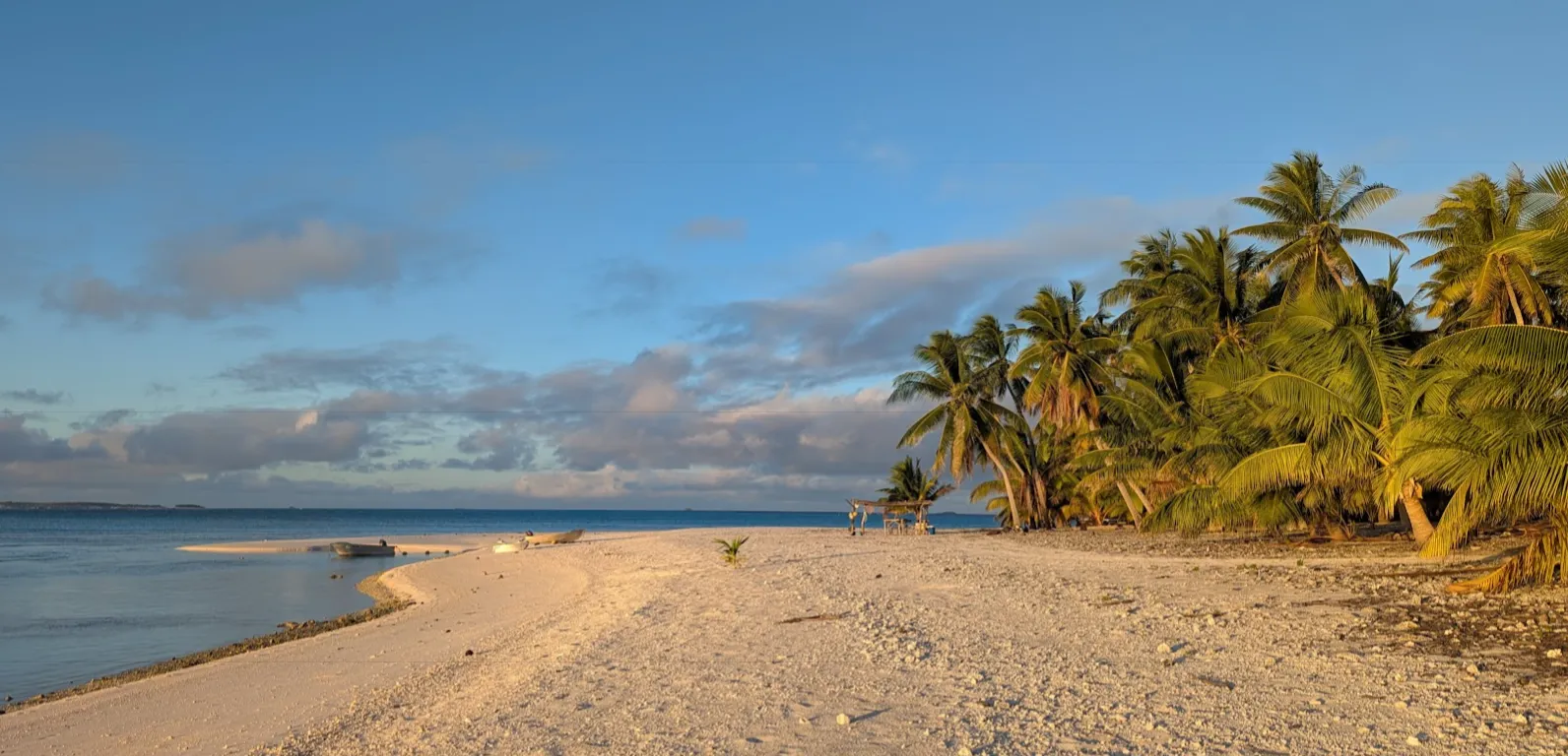
A tour of the whole community is completed in an hour, and only took so long because we stopped to chat a few times. Almost all of the 28 residents are descended from one Englishman, William Marsters, and his three Polynesian wives, who settled the island in 1863. Several of us had the good fortune to be hosted by Julianna Marsters, who made us feel immediately as though we were part of the family. She fed us until we were close to bursting, filled us in on the island tea, and even dressed us in her absent family members’ clothing so we could go to church on Sunday. The headstone we delivered turned out to be for her father, who passed two years ago. Those of us who had visited the island in 2018 with Picton Castle remembered Bill Marsters well for his hospitality and passion for life on Palmerston (and for his army camouflage outfits!).
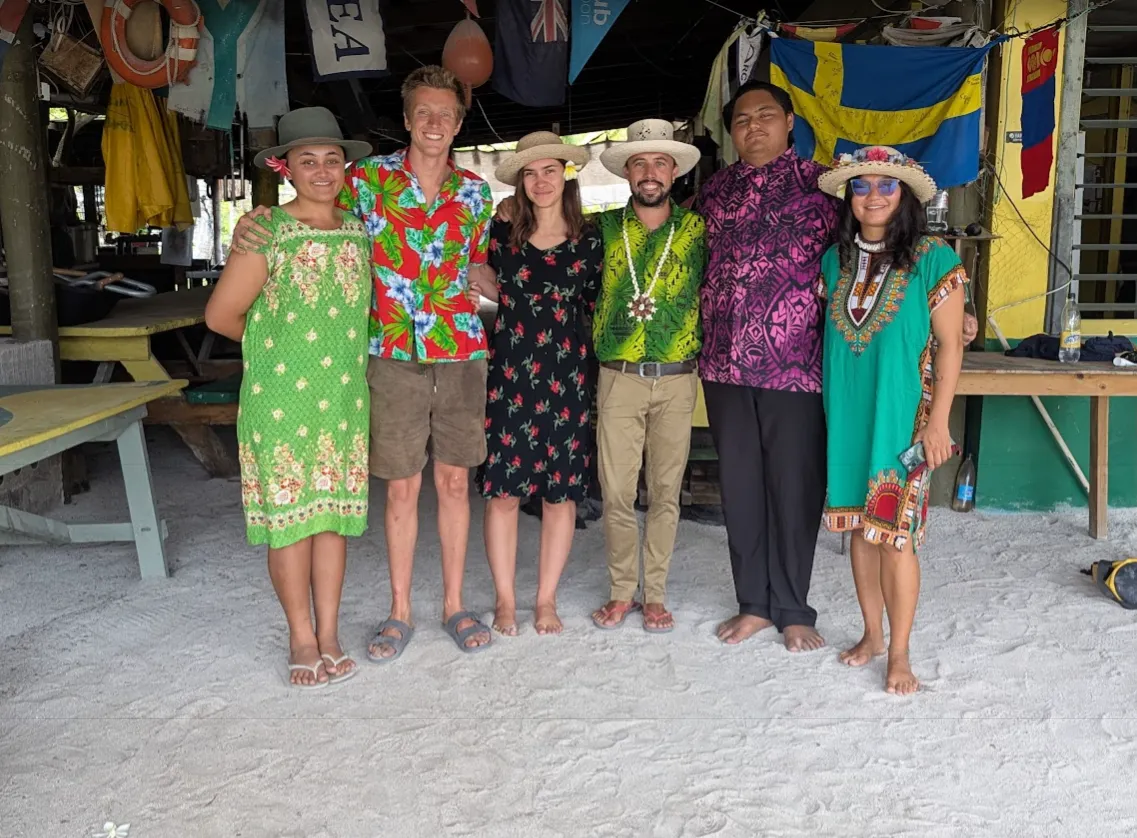
From left to right in our Sunday best: Julianna Marsters, third mate Jacob Eggert, me (Victoria Hardy), captain Anders Bischoff, Julianna’s brother Sid (Tamatoa) Marsters, and Neptun videographer Ariuka Ganbaatar
The other highlights of our visit included playing volleyball with the whole community in the evenings, getting our butts kicked (kindly) by Sid Marsters in checkers, community gatherings for music and singing, and coconut crabbing with Edward Marsters. Hunting for coconut crabs is an arduous process that begins with a short boatride across the lagoon to one of the other motus (small islands of the coral atoll). Then we hike through the bush to look for the tell-tale signs of the massive crustaceans – coconuts recently cracked open by their strong claws. We find four of them – the final crab puts up quite a fight and Eddie is forced to stick his arm blindly into a hole to draw it out. In the end, the humans are victorious. After one more stop to fill a couple bags with the smaller mud crabs, we travel back to the main island to feast on our prizes.
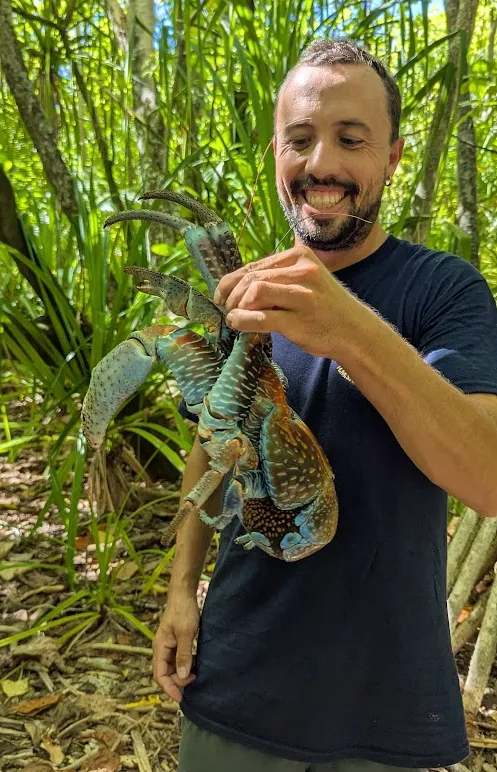
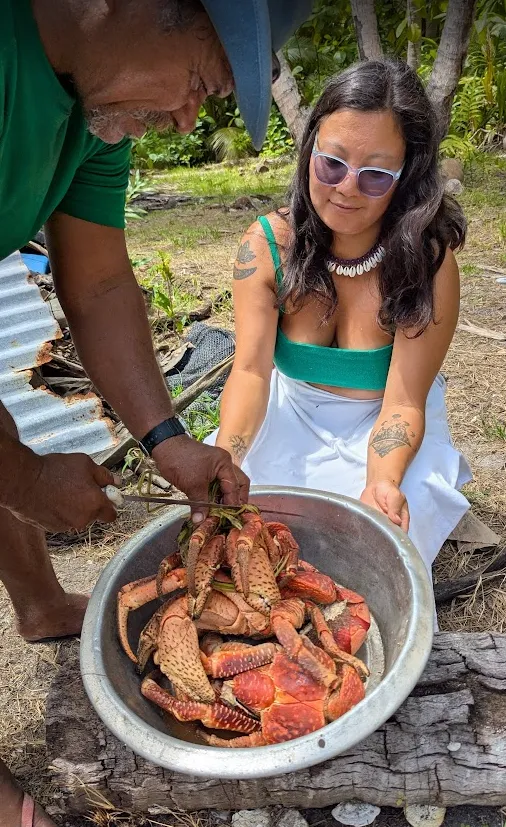
On our last day, we say an emotional goodbye to Palmerston at a community kai kai, or feast. Once again we are presented with an enormous amount of food, and more traditional Cook Islands music. The Neptun shanty choir, accompanied by our captain on the accordion, gives a valiant effort in repaying the favor. Unfortunately we have only learned one song so far – Leave Her Johnny. Then it’s back onto the ship to heave up the anchor. For the first time on this voyage we get underway completely under sail, without ever turning the engine on, and start our crossing to the Kingdom of Tonga.
Want to bring mail to a 28-person island?
The few tall ships that still call at Palmerston do it because they can, small crew, shallow draft, patience for the weather. NEPTUN’s world voyage keeps stopping at places like this.