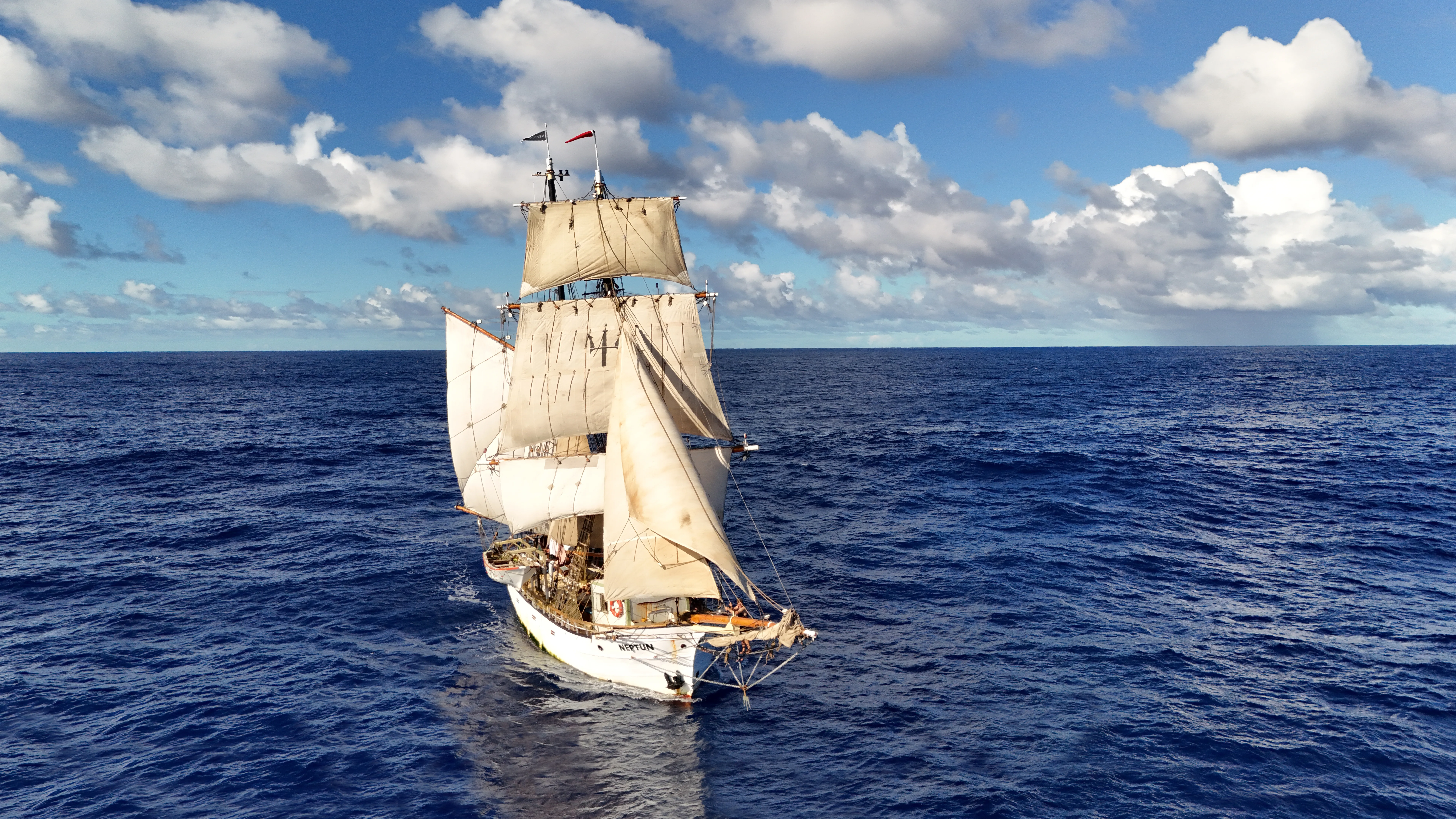
We spent a month sailing in the Caribbean last spring, 418 nautical miles, four anchorages, one brigantine, ten trainees who mostly did not know what they were doing. Leg 7 of the 2027 voyage runs from Chaguaramas in Trinidad to English Harbour in Antigua, through the Windward Islands, and it takes twenty-seven days. Half of us had come straight from the South Atlantic crossing and still had the ocean in our legs. The other half had flown into Port of Spain the week before and were looking at NEPTUN for the first time, trying not to stare.
This is what the four weeks actually looked like, anchorage by anchorage, from the perspective of the ten who showed up and sailed her north.
Week 1, Trinidad to Carriacou
Chaguaramas is not the Caribbean of brochures. It is the Caribbean of oil rigs, steel pan, and boatyards, a busy working harbour on the west side of Trinidad where every long-distance sailor in the Atlantic eventually ends up because there are no hurricanes and there is always a welder. We spent three nights alongside, stowing stores, fuelling up, and washing the yard dust off the decks with long saltwater hoses. Port of Spain was a forty-minute taxi ride away. We ate doubles from a street vendor on Ariapita Avenue for two Trinidad dollars each, and nobody could believe how good they were.
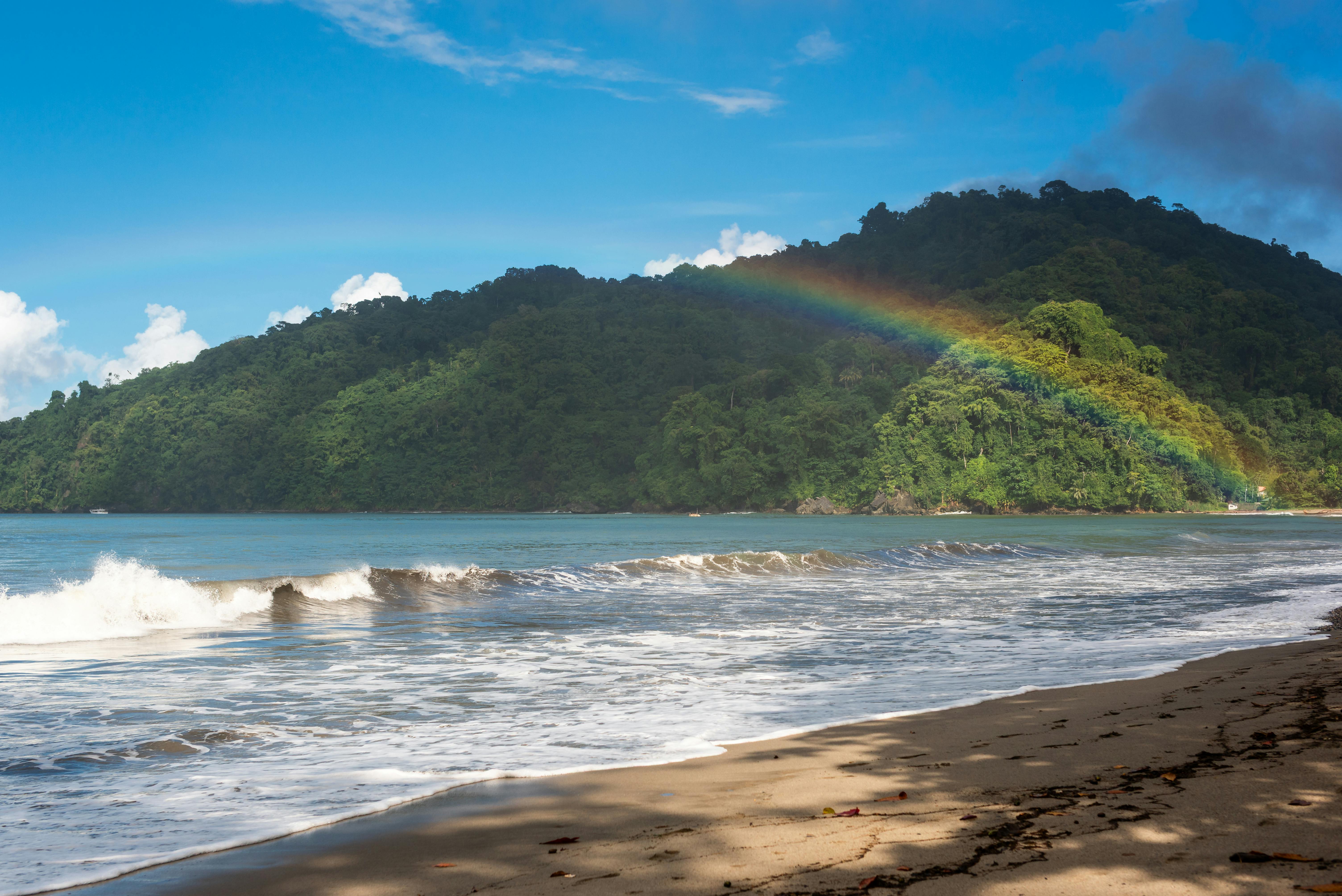
We let go of the lines on a Saturday morning, motored out past the oil platforms at the mouth of the Gulf of Paria, and hoisted sail into a fifteen-knot easterly. The wind stayed at fifteen all day. It stayed at fifteen all night. You can read about trade winds in a book, but it is a different thing to feel one come on and not leave. For two days and two nights NEPTUN close-reached north under topsails, the lower yards braced sharp, the log reading seven knots hour after hour after hour.
That first night watch was also the first night watch many of us had ever stood. We were paired with the bosun and a veteran deckhand who had been with the ship since Palau, and their job was mostly not to rescue us. The wind in your ear. The running rigging creaking against the pinrail. The Southern Cross sitting low off the starboard quarter because we were still below ten degrees north. Every twenty minutes someone would rotate up to the helm and try to hold the ship within five degrees of her course, and fail, and adjust, and fail a bit less, and eventually learn to feel the weather shoulder of the mainsail rather than stare at the compass card.
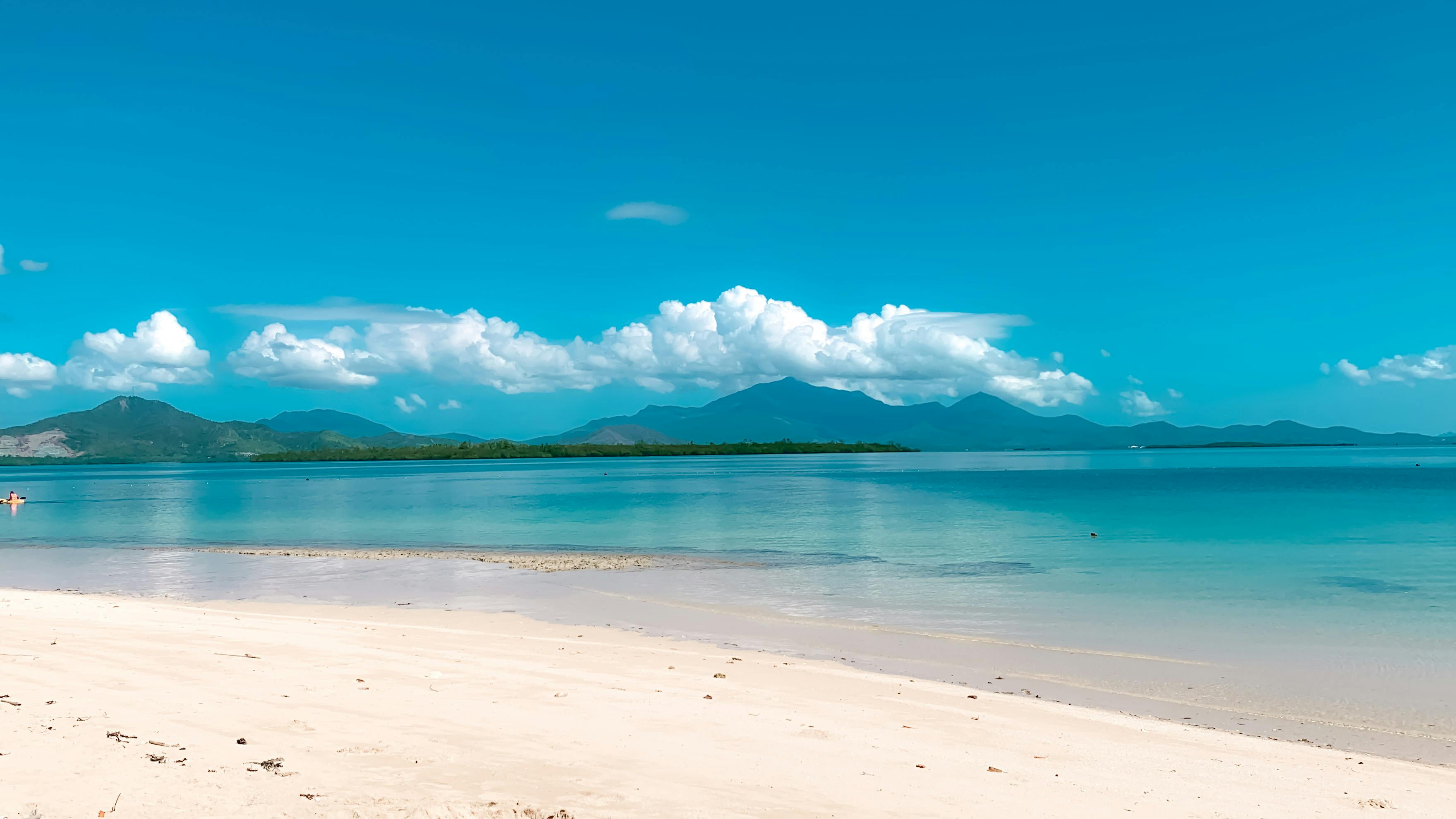
Carriacou appeared on the horizon at three in the afternoon on the second day. We dropped anchor in Tyrrel Bay off a long beach of crushed coral, the water the colour of a swimming pool, and swam off the bow before the kettle was boiling. The first Caribbean anchorage was not a postcard. It was better than a postcard, because you had just sailed there.
Week 2, the Grenadines and down-island rhythm
Carriacou is eighteen square miles of hill, goat, and wooden-boat-building tradition. The Grenadines are not what you picture when you picture the Caribbean, they are quieter, poorer, and further down the economic ladder than the glossy islands to the north, and because of it they are the Caribbean most sailors never leave once they find it.
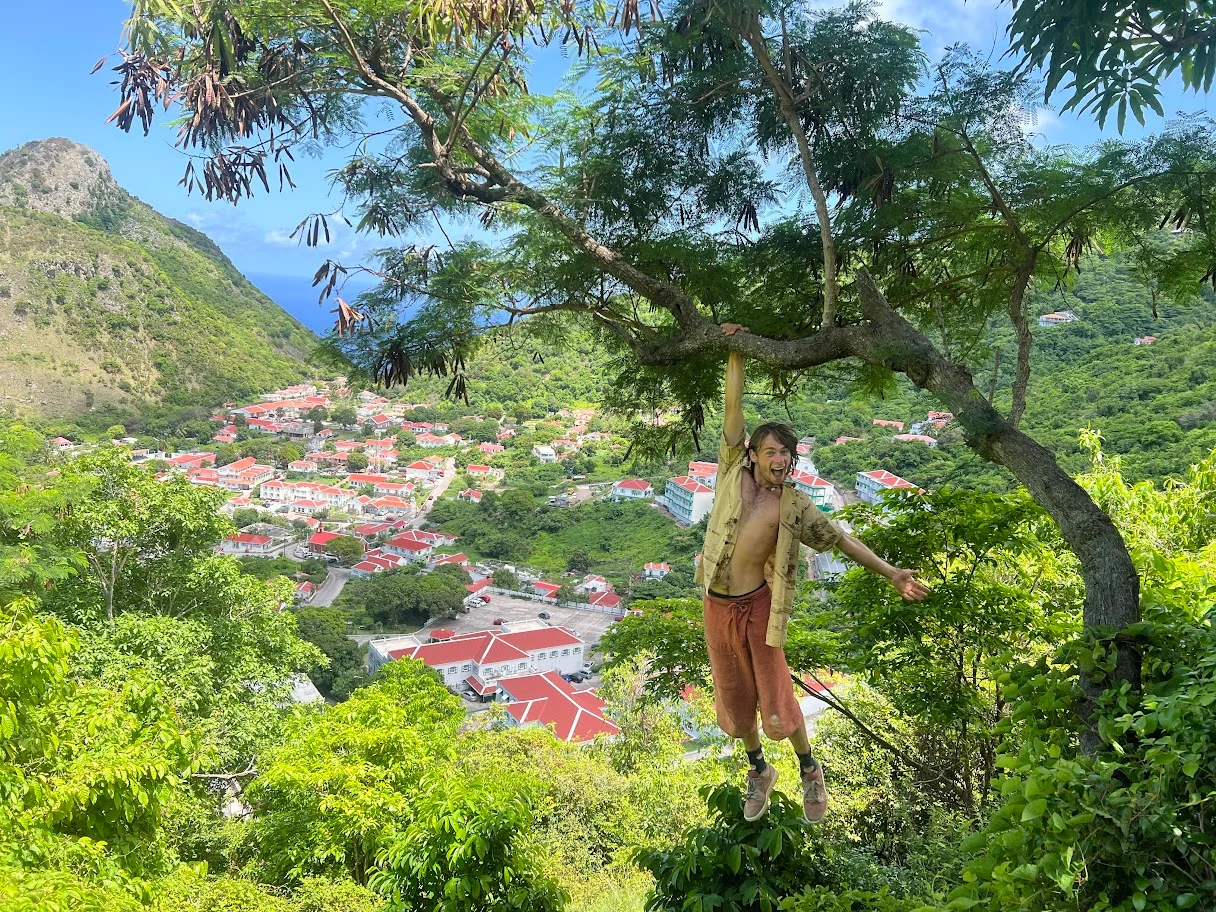
We stayed six nights. We walked up to Belair at dawn for the view across to Union Island. We dove the wall at Sandy Island, where the reef falls away to forty metres and the fan coral grows sideways out of the blue. The dive shop lent us tanks for twenty US dollars a fill. In Windward village on the east side of the island, three brothers were still building a forty-foot sloop on the sand, no plans, no yard, bones first, the way they have been built since the 1800s. We sat on an overturned dinghy and watched them plane a frame for an hour, and nobody asked us what we were doing there.
Evenings on Carriacou ended at Paradise Beach. There are three bars along a quarter-mile of sand and each of them is a plank between two oil drums. Jack Iron rum is poured from a plastic jug over ice that may or may not be water from a sink. After ten days of sobriety and watchkeeping, a half-inch of Jack Iron hits you in a way that is difficult to explain to your friends at home.
The boring parts were real too. On the fourth day the watermaker's high-pressure pump started leaking at a seal that was not supposed to fail, and the chief engineer spent a whole afternoon stripped to his t-shirt with an O-ring kit spread out on the salon table. We ate rice and tinned mackerel that night because the last of the fresh provisions had gone in a curry the day before and the next shop was in Martinique. Squalls came through in the evening, the kind where the rain is horizontal and every hatch you forgot to close soaks a bunk, and we rigged awnings in fifteen minutes because by week two we knew what a squall looked like coming.
A crew pattern had started to settle. Four hours on, eight hours off. Breakfast at seven, lunch at noon, dinner at six. Dishes in pairs. Muster on the quarterdeck every morning for the day's orders, and a new person each week assigned to the cook as mess deck. Nobody told you that the best hour of your day would be the ten minutes after your watch ended at 0400, when the whole ship was asleep and you could sit on the charthouse step with a cup of tea and watch the stars start to fade.
Week 3, the open-water leg to Martinique
The leg from Carriacou to Martinique is only 129 nautical miles, nothing, by open-ocean standards. On a trade-wind reach NEPTUN does it in a long day and a half. But it is the longest single run of the whole Caribbean leg, and it is where the trainees who had come straight from the airport finally understood what the ocean watches had been trying to teach them.
We left Tyrrel Bay at dawn, sailed past Union Island and the Tobago Cays, crossed the channel between Saint Vincent and Saint Lucia in the middle of the night, and raised Martinique off the port bow just after sunrise the next day. That middle-of-the-night piece is what I mean.
Standing a four-hour watch at 0200 in open water is not glamorous and it is not dramatic. Your body is tired in a specific way that only happens on a ship. The deck is moving in three directions at once and you are trying to remember whether the starboard navigation light means the boat you can see is coming toward you or going away. The ship is making six and a half knots through water that is absolutely black, and there is no land anywhere, and the wind is blowing fifteen steady out of the east the way it has been blowing since Genesis. The veteran deckhand you are paired with is smoking a roll-up at the helm and humming a Tom Waits song and you slowly realise that he is not actually doing anything dramatic, he is just paying very close attention, and that this is what a sailor is.
Nothing broke that night. The mainsail stayed set, the wind held, the only thing that happened was that a pod of dolphins came through the bow wave at about 0330 and stayed for twenty minutes, and the bow wave was lit up green-white with phosphorescence so that each dolphin was a comet underwater. We leaned over the catheads and watched them, four crew on watch plus whoever else had woken up and climbed out of their bunk in their pyjamas to come forward, and nobody said very much because there was nothing to say.
Martinique came out of the dawn looking like France had been dropped on a volcano. We anchored off Saint-Pierre in the shadow of Mont Pelée, dinghied ashore before seven, and ate warm pain au chocolat at a boulangerie a block from the waterfront. The patissière said bonjour in a way nobody in Carriacou had said hello. The shift had happened overnight: we had crossed from one Caribbean to another without quite knowing we had.
Week 4, Antigua, and what changes
The last leg was 160 nautical miles up through the Guadeloupe passage to English Harbour, Antigua. Two days of trade-wind reaching past Dominica's peaks, the ship smelling of the bread the cook had baked that morning, the crew now sailing her instead of being sailed by her. You could see it in the small things. Someone would call ready about and the foredeck moved without being told. Lines came down off the pinrail into neat Flemish coils. The trainee who on day one had tied a reef knot upside-down three times in a row was, on day twenty-five, climbing to the foretop to clear a snagged buntline without looking down.
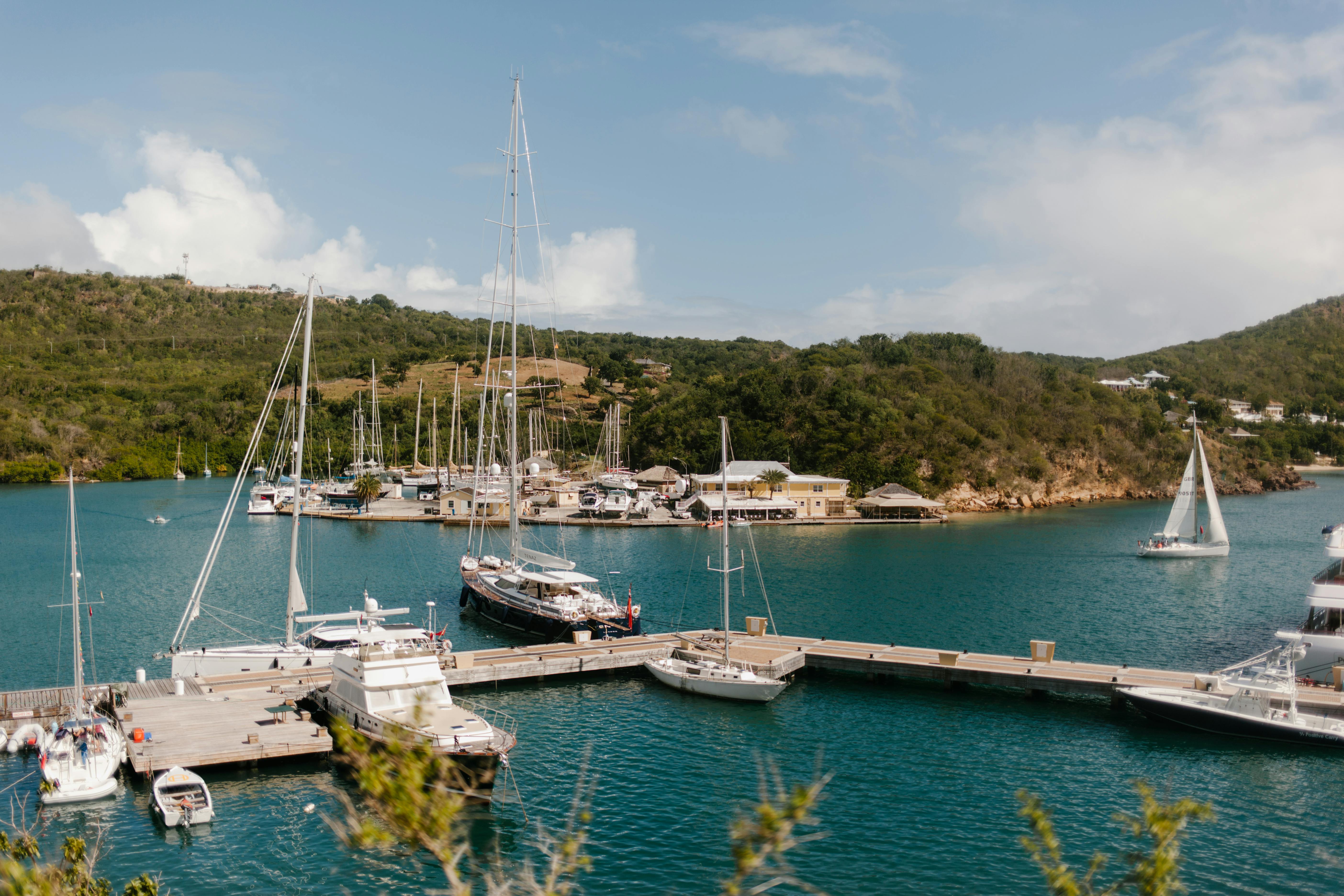
We rounded Cape Shirley into English Harbour at four in the afternoon on a Thursday. The Classic Yacht Regatta was starting the next week and the harbour was already filling, J-Class yachts from Newport, gaff schooners from Maine, a big Brittany cutter tied stern-to the Dockyard quay with her topmast rigged for a regatta mainsail. Nelson's Dockyard itself is the only working Georgian naval base still in use, and sliding into it on a working brigantine on a Thursday afternoon with the trades still blowing was the closest any of us had ever come to stepping out of our own century.
There were three nights ashore. We hiked the ridge to Shirley Heights on Sunday for the weekly steel-pan session and watched the sun go down behind Montserrat with a rum punch in a plastic cup. One of us proposed to another of us on the wall looking east toward Guadeloupe. The captain held a last watch-change supper in the Admiral's Inn and the whole crew was there and nobody wanted it to end.
Re-entry is the thing nobody warns you about. Coming off a month of sailing in the Caribbean, four anchorages, 418 miles, roughly 110 hours standing watch, and getting in a taxi to the airport at V. C. Bird International, you realise how much of your life on land has been spent being very slightly anxious about things that do not matter. The ship gave you a rhythm. Watches, meals, weather, sleep. You slept when it was your turn to sleep and you woke when it was your turn to wake and the wind blew or did not blow and there was nothing in between to worry about. Getting back into a world where the wifi works and the traffic is loud and someone wants an answer by end of day took weeks to shake. Some of us are not sure we ever shook it. Several of us signed up to come back for the transatlantic on Leg 8.
Want to sail the Caribbean yourself?
The brigantine sails the Caribbean every spring between the South Atlantic crossing and the transatlantic home. Leg 7, Trinidad to Antigua, through the Windward Islands, is the four-week version described above. Shorter and longer options run either side of it.
You do not need sailing experience. The full itinerary, prices, and dates for the 2027 season are live, and the 2026 season is still running across the Indian Ocean and around the Cape if you want to join the ship further out. Whatever leg you pick, you show up as trainee crew, not passenger, and you learn as you go.
Read more about what sailing in the Caribbean as crew on a tall ship actually involves, or, if you have been on the fence for a while and you know, join the crew and apply for a berth. We will write back within a week.
If you like this kind of thing, you might also like Pitcairn Island: a Homecoming, the same ship, a very different ocean.