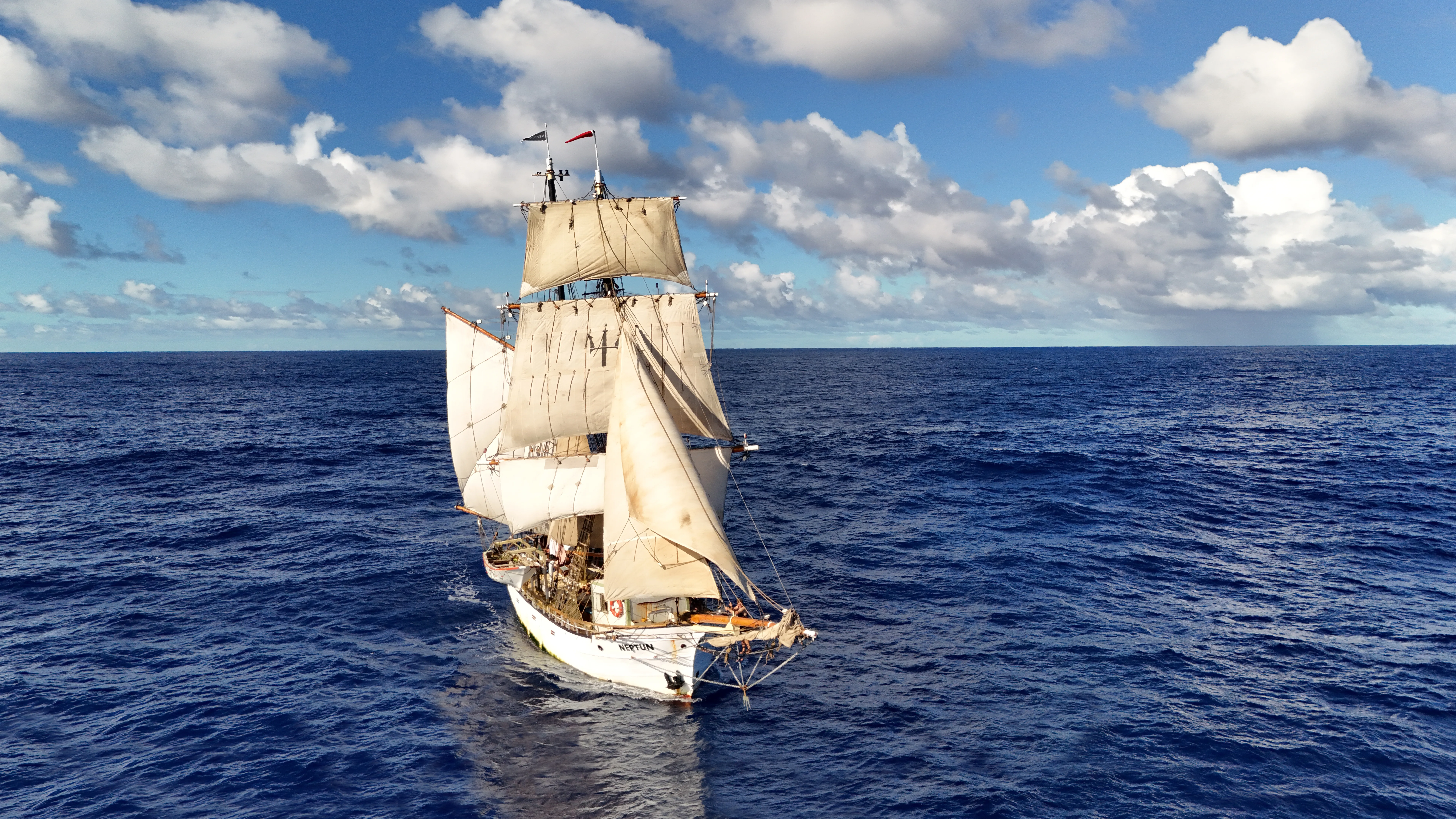
The honest answer depends on which boat you're on
How long does it take to sail around the world? Bernard Moitessier did it non-stop in 1968–69 with 37,455 nautical miles under his keel. Francis Joyon and five crew did it in 40 days, 23 hours in 2017 aboard IDEC Sport. The typical modern cruising family takes three to five years. The honest answer to circumnavigation duration depends on one question, do you own the boat, charter it, or join a ship that is already going?
This guide gives realistic timelines for all three routes, the records that frame the extremes, and the one timeline most articles leave out: how long it takes when you join as crew with no experience on a tall ship like Brigantine NEPTUN for a single leg or the full arc.
Already decided you want to sail a circumnavigation as crew? Apply for a berth on a 2026-2027 leg or browse the nine legs of the voyage first.
On this page
- The honest answer depends on which boat you're on
- What "around the world" actually means
- Three timelines, three commitments
- Records and the stories behind them
- Why timelines stretch or compress
- FAQ
- Read also
What "around the world" actually means
Before we talk about time, we need to agree on distance. The World Sailing Speed Record Council's definition of a true circumnavigation has three requirements: cross every meridian of longitude, cross the equator, and start and finish at the same point. The minimum great-circle distance is 21,600 nautical miles, a beautifully round number, because historically one minute of latitude was defined as one nautical mile, and 60 minutes × 360 degrees = 21,600.
Route stretches the distance
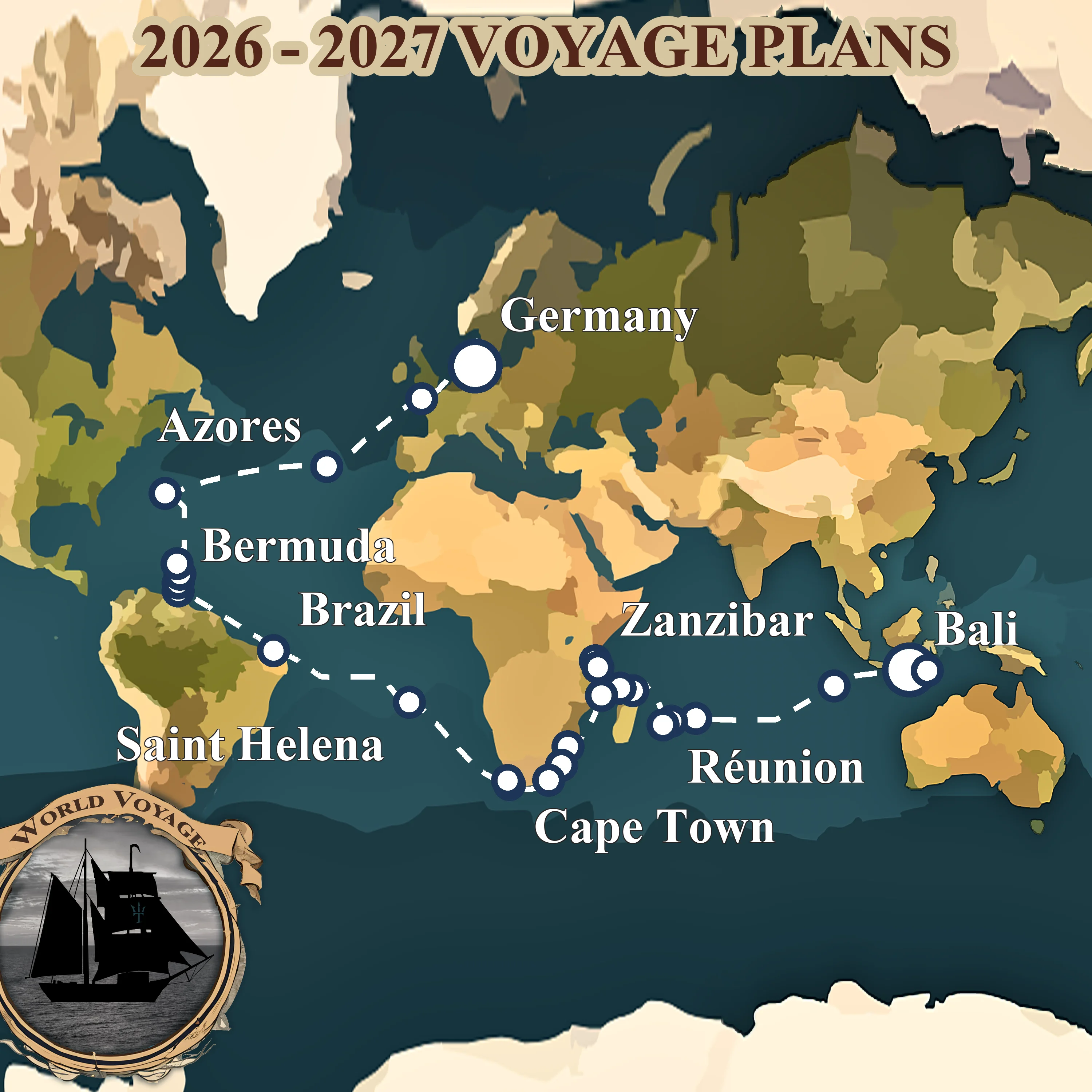
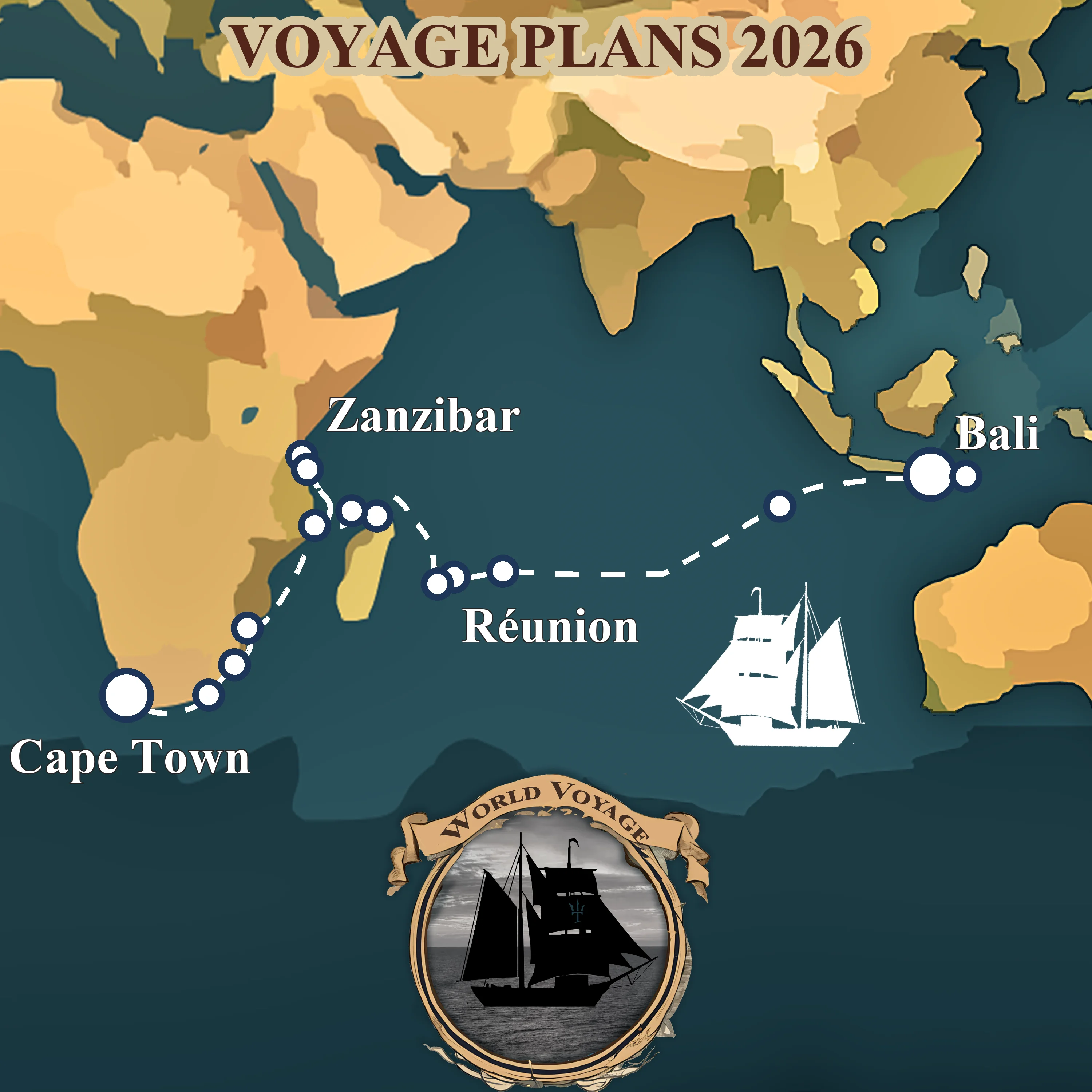
You cannot sail a perfect great-circle track around the globe. Trade winds, cyclone seasons, the Panama Canal height limit (prohibitive for any tall ship with standing rigging), cargo traffic, and political closures (the Red Sea since late 2023, Chagos BIOT from April 2026) all add miles. A realistic Panama-route cruise sails around 27,000 nm. A Cape-of-Good-Hope route sails 30,000 to 34,000 nm. NEPTUN's 482-day route from Bali to Kiel covers over 30,000 nm of water across the nine legs of the voyage.
The geometry of sailing around the world
Three timelines, three commitments
Once you know the distance, the question of how long becomes a question of how you intend to cover it. There are three honest models, and they produce wildly different timelines.
Own the boat, 3 to 5 years
The median answer on the entire internet is three to five years. That is the typical cruising family in a 40- to 50-foot yacht, averaging four to six knots when underway, stopping at every landfall that looks interesting, refitting where it's cheap, waiting out cyclone seasons, waiting out hurricane seasons, and treating the voyage as a lifestyle rather than an expedition. The UK Sail Training Association, Improve Sailing, and Deckee all converge on the same band.
Three and a half years is the most commonly cited median. Some take ten, the Oyster World Rally's own fleet anecdotes include boats that circle the planet more than once before coming home. A rally package like Oyster's runs £40,000 to £70,000 in fees alone for 16 months, on top of the yacht itself. Jimmy Cornell's canonical World Cruising Routes is the reference every owner reaches for.
This is the model the entire search result is written for. It is also the model 99% of readers will never do, because it assumes you already own an ocean-capable yacht, or that you have the 10-year horizon and the €300,000 to €500,000 budget to buy, outfit, and sustain one.
Charter or rally, 15 to 18 months
The middle option is a fleet circumnavigation. The World ARC departs Saint Lucia every January, covers roughly 26,000 nm in 15 months via Panama, and arrived home in 2026 with twenty boats completing the full loop. Oyster's rally is longer, 27,000 nm over 16 months, and restricted to the Oyster yacht class. Both are turn-key in the way that a Himalayan expedition is turn-key: bring your own vessel (or buy one from the organiser), pay the fee, and logistics, permits, weather-routing, and social programme come bundled.
The cost anchor is sobering. Oyster's 16-month package is £40,000 to £70,000 in rally fees alone. The yacht itself is the real number. Rallies suit the owner-operator who wants the social and logistical support of a fleet without committing to a decade-long lifestyle, a compressed, guided version of the owner model.
Join an existing voyage as crew, 3 weeks to 14 months
There is a third model that the boat-ownership blogs almost never mention. A tall-ship trainee berth. No ownership. No yacht purchase. No visa-handling burden you don't already have from your passport. Join one leg of a voyage that is already going, typically three to ten weeks, or string several together.
Picton Castle has sailed around the world seven times; her typical world voyage runs about 14 months and opens every leg to trainees. Brigantine NEPTUN is sailing 482 days from Bali to Kiel across nine legs in 2026 and 2027, with trainees joining per leg or stringing several together. One leg can be as short as 27 days (Trinidad → Antigua) or as long as 92 days (Bali → Réunion across the Indian Ocean). The full voyage is 1.3 years.
This is the only model where "sail around the world" fits inside a sabbatical, a gap year, or a single summer holiday, and the only one where a beginner can do it.
Pick a leg
Duration is a slider, not a fixed answer
A leg can be as short as three weeks or as long as the whole voyage.
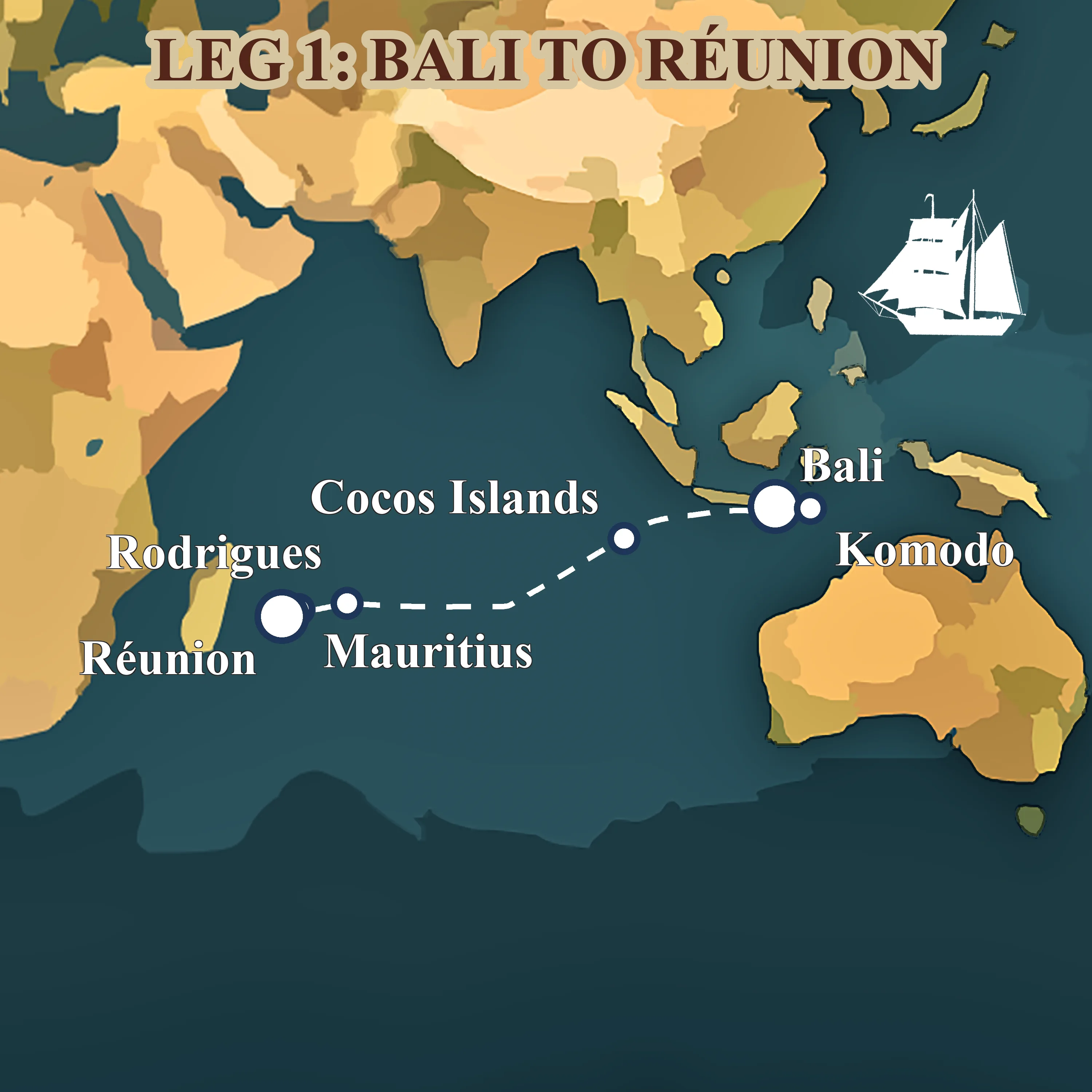
Leg 1: from Bali to Réunion across the Indian Ocean
May 2026 — Aug 2026 · Bali, Indonesia → Réunion, France
The opening chapter of Neptun's 482-day world voyage, a 4,078-nm trade-wind passage from the temples of Bali to the volcanic cliffs of Réunion.
Read more about this leg → about Leg 1: from Bali to Réunion across the Indian Ocean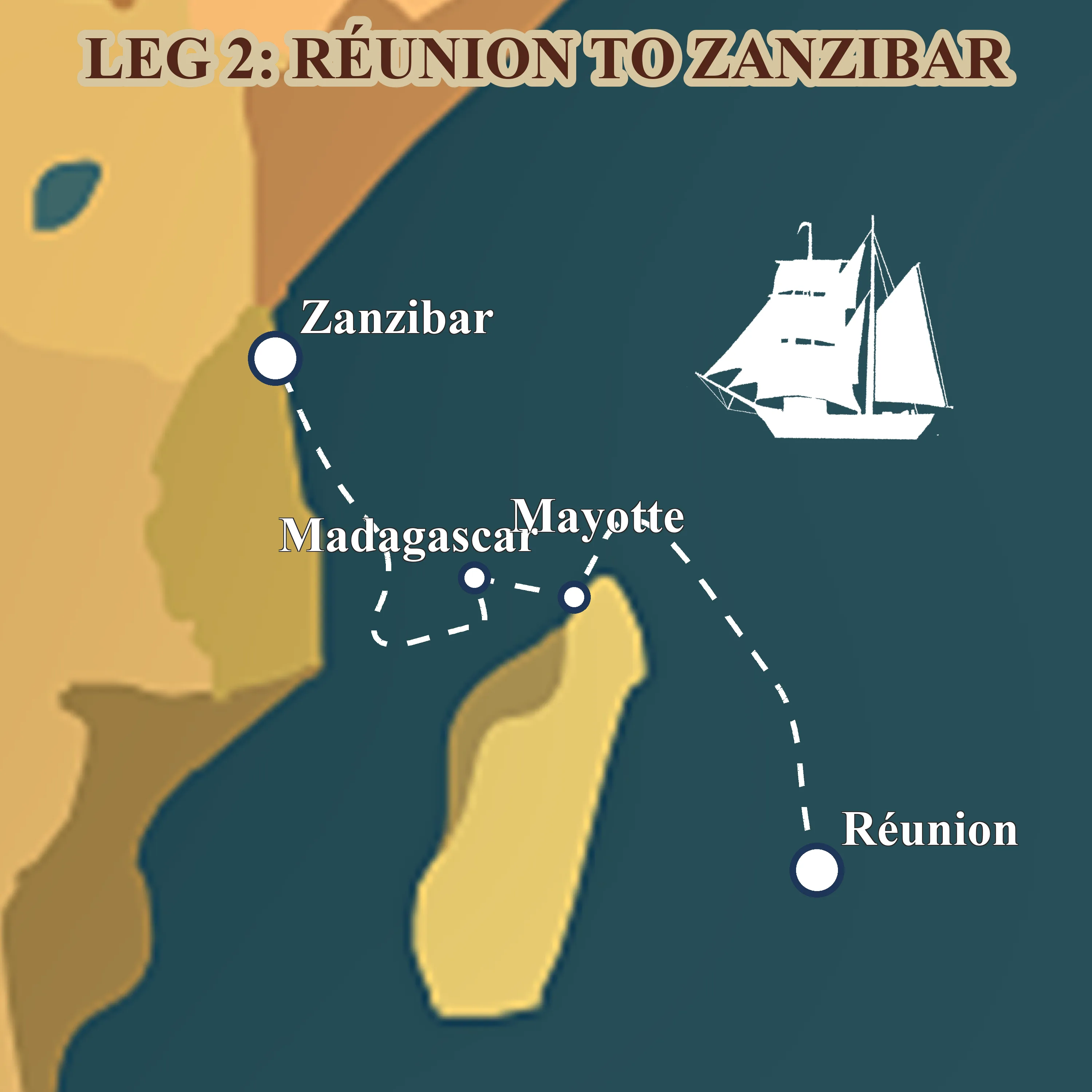
Leg 2: from Réunion to Zanzibar via Madagascar
Aug 2026 — Sept 2026 · Réunion, France → Zanzibar, Tanzania
Forty days across the western Indian Ocean, volcanic Réunion, lemur-haunted Nosy Be, the Mozambique Channel, and the spice-scented stone alleys of Zanzibar.
Read more about this leg → about Leg 2: from Réunion to Zanzibar via Madagascar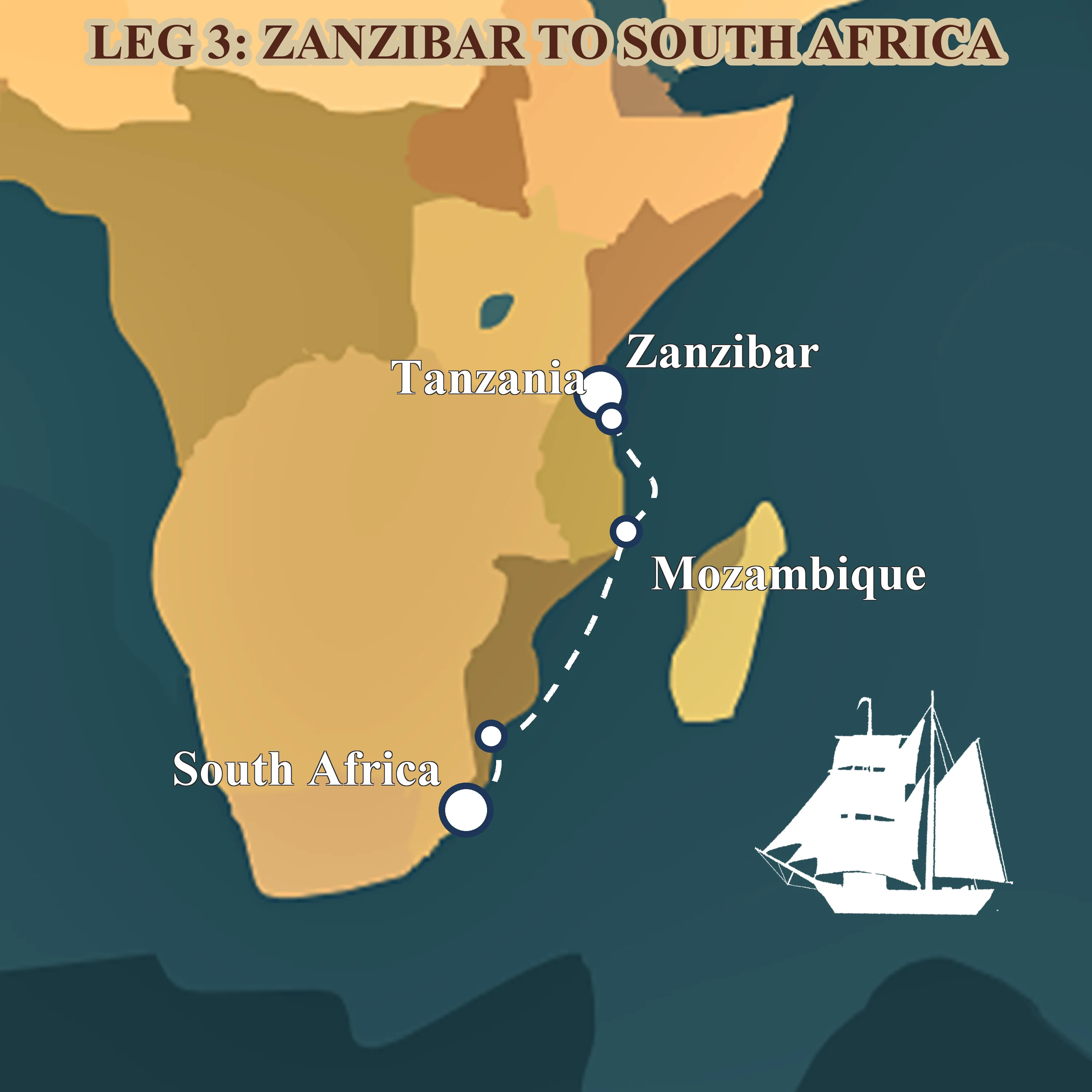
Leg 3: from Zanzibar to Durban down the Mozambique Channel
Sept 2026 — Nov 2026 · Zanzibar, Tanzania → Durban, South Africa
Sixty-three days coasting the African shore, spice islands, mangrove anchorages, Portuguese praças and the long trade-wind run down the Mozambique Channel to Durban.
Read more about this leg → about Leg 3: from Zanzibar to Durban down the Mozambique Channel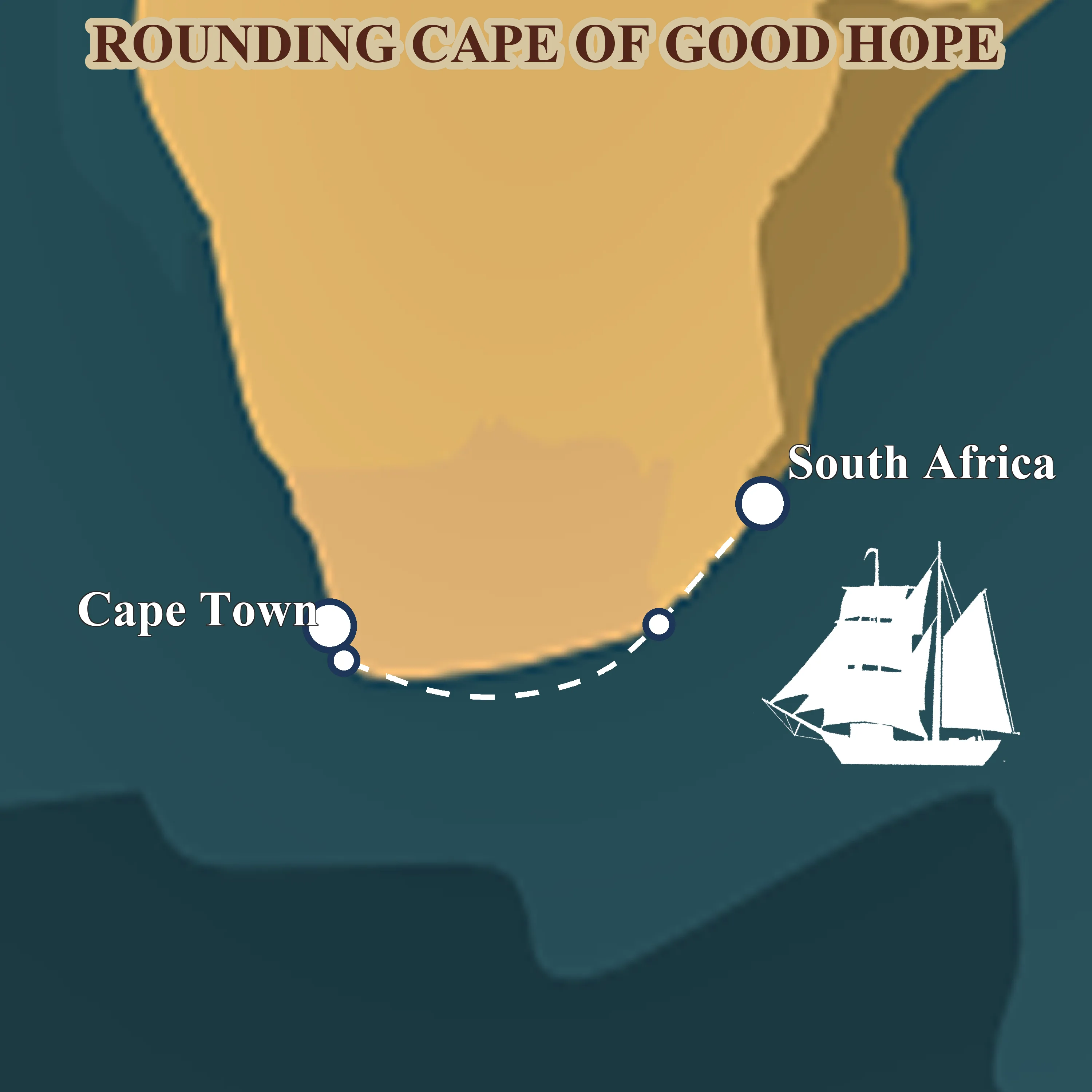
Leg 4: from Durban around the Cape of Good Hope
Nov 2026 — Dec 2026 · Durban, South Africa → Cape Town, South Africa
Thirty-eight days of serious seamanship, the Agulhas current, the Cape of Good Hope and the Southern Ocean at the tip of Africa, finishing quietly in Cape Town for Christmas.
Read more about this leg → about Leg 4: from Durban around the Cape of Good HopeThe full arc
482 days, one ship, nine legs
NEPTUN's 2026-2027 voyage is the full arc from Bali to Kiel, over 30,000 nm across four oceans. Or join one 3-week leg. Either way, no prior sailing experience is required.
Records and the stories behind them
It helps to know the extremes. The records frame what is physically possible; the typical cruiser frames what most people actually do. Six markers tell the history in one glance.
Joshua Slocum, Spray, 1895–1898
3 years, 2 months, 2 days. First solo circumnavigation. Sailed from Boston on 24 April 1895, returned to Newport, Rhode Island on 27 June 1898, roughly 46,000 miles at an average of 100 miles a day in a 36 ft 9 in gaff-rigged oyster sloop he rebuilt himself.
Robin Knox-Johnston, Suhaili, 1968–1969
312 days. First non-stop solo circumnavigation, and the only finisher of nine starters in the Sunday Times Golden Globe. Departed Falmouth on 14 June 1968, arrived 22 April 1969. 32-foot ketch. Rounded Cape Horn on 17 January 1969.
Bernard Moitessier, Joshua, 1968–1969
Had the fastest time in the Golden Globe field and then abandoned the race to keep sailing, rounding the Cape of Good Hope a second time and making landfall at Tahiti on 21 June 1969. 37,455 nautical miles non-stop in roughly ten months. The sailor who turned down winning.
Ellen MacArthur, B&Q/Castorama, 2005
71 days, 14 hours, 18 minutes. Fastest solo circumnavigation at the time. 27,354 miles at an average of about 16 knots in a purpose-built 75-foot trimaran. Beat Francis Joyon's previous record by 1 day, 8 hours.
Francis Joyon & crew, IDEC Sport, 2017
40 days, 23 hours, 30 minutes. Crewed Jules Verne Trophy record-holder for nine years. Averaged 22.84 knots in a 31.5 m trimaran, a number that still feels impossible when you look at a chart.
The typical cruiser, 3 to 5 years
The median answer in every cruising-world survey. Slow by design: four to six knots when underway, plus months at anchor. Jimmy Cornell's World Cruising Routes is the canonical reference; the World Cruising Club's rally data is the statistical anchor.
40 days or 40 years, the ocean doesn't care.
Why timelines stretch or compress
Two crews, same route, can finish months apart. Six variables explain almost all the spread.
Hull speed
A 40-foot monohull cruising averages about 6 knots; a 75-foot racing trimaran averages 20+; a tall ship like NEPTUN settles at 6 to 8 knots in trade-wind trim. Speed multiplies distance into time.
Stops
Every day ashore is a day off the clock. Racers sail 24/7 and never touch land. Cruisers spend 30 to 60% of a circumnavigation at anchor. The time you spend in Zanzibar is not time you spend at sea.
Season
Cyclone season in the Indian Ocean (Dec–Apr), hurricane season in the Atlantic (Jun–Nov), Southern Ocean storms in austral winter. Each closes a route and adds waiting time, or forces a detour.
Route choice
Panama shortcut vs Cape of Good Hope adds roughly 4,000 nm. Cape Horn vs Panama adds another 2,000+. The Red Sea closure (2023 onward) forces every sailing yacht the long way round Africa.
Crew size
Short-handed boats must rest more. A tall ship with a 3-watch system can sail 24/7 for weeks without exhausting anyone, one reason [sail training](/sail-training) aboard a square-rigger teaches what a real ocean passage feels like.
Wind and current
20 days riding the SE trades on your quarter versus 20 days beating into westerlies can double or halve the distance made good. Classic routing is the art of letting the planet work for you.
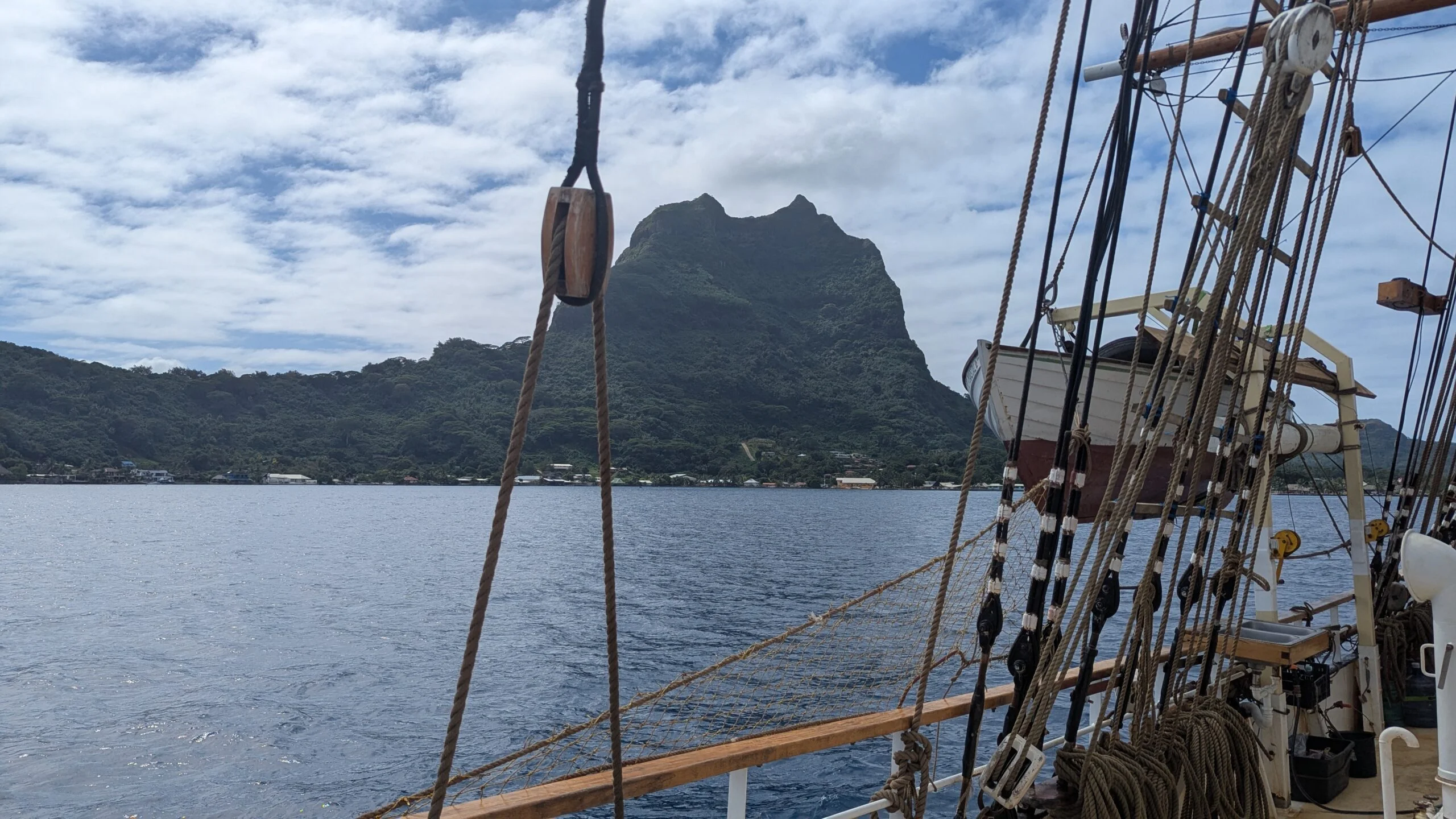
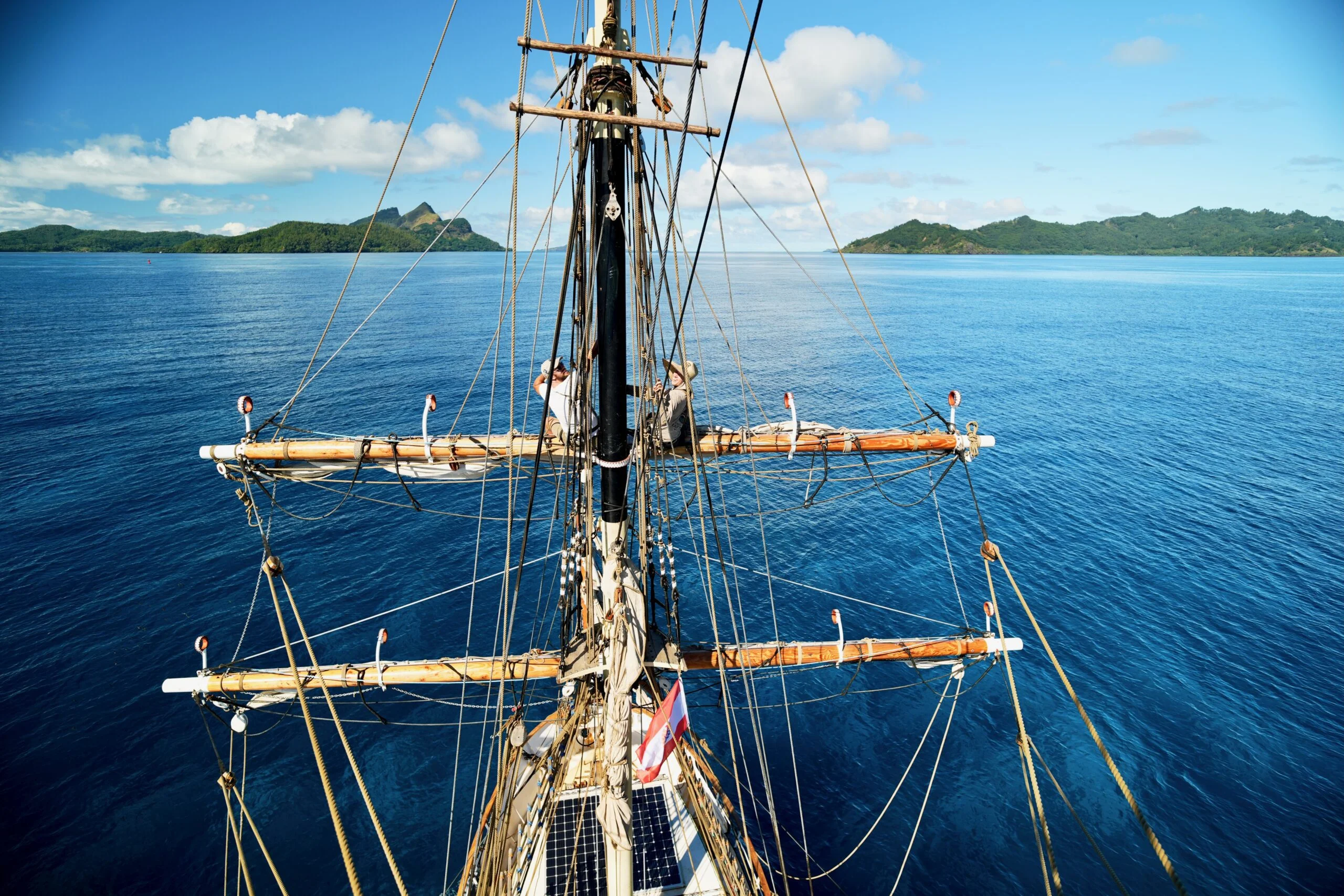
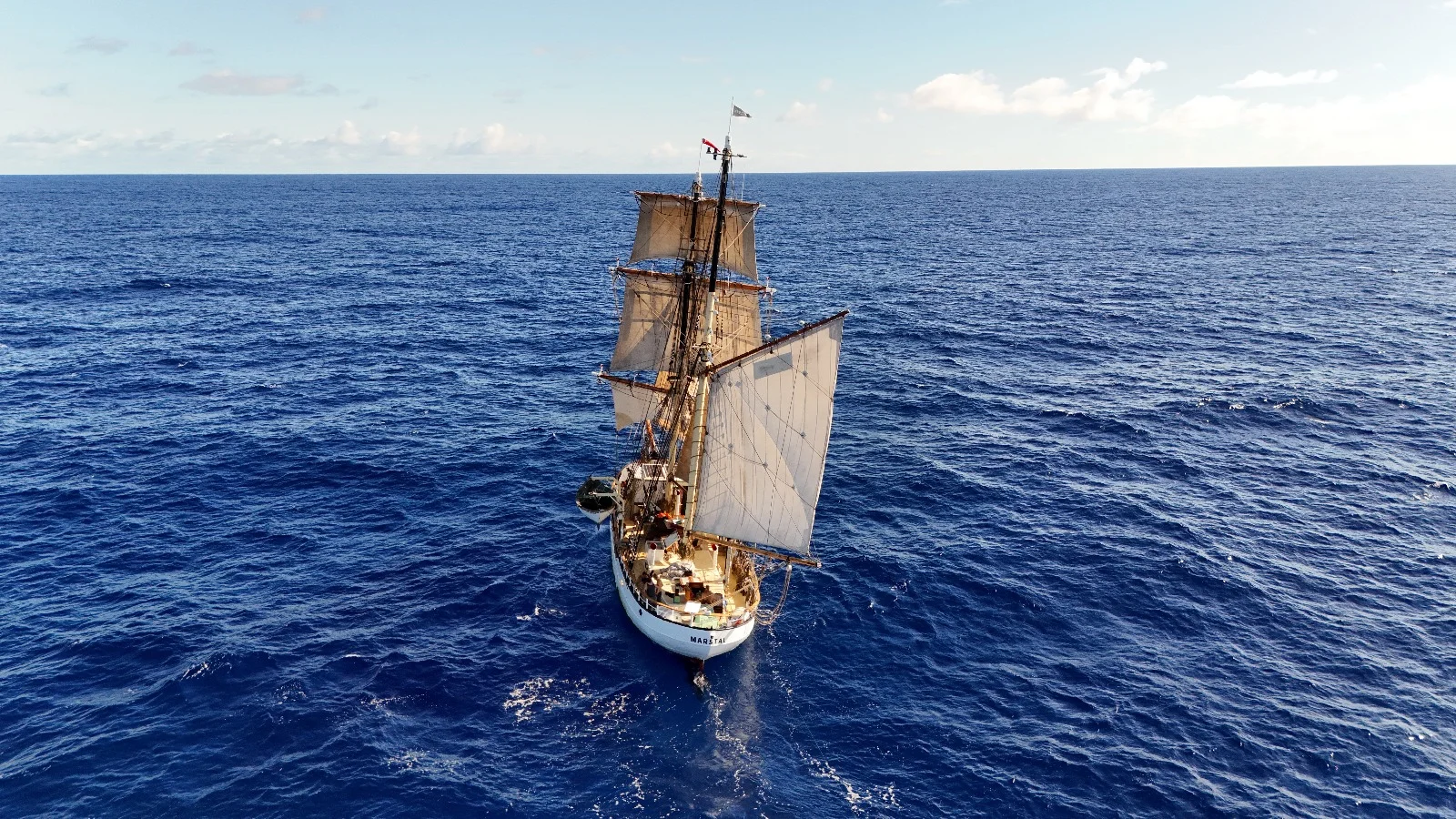
A summer holiday can become a circumnavigation chapter
The only model where you don't need to own a boat, a decade, or a six-figure budget, trainee crew on a tall ship.
FAQs
Common questions
How long does it take to sail around the world?
It depends on the model. Record-chasing trimarans can do it in 40 days; solo record-chasers in 71; non-stop solo sailors take 300+ days; cruising couples take 3 to 5 years; rally fleets take 15 to 16 months. Joining a tall ship as trainee crew lets you do anywhere from 3 weeks to 14 months, on someone else's schedule.
What's the fastest circumnavigation on record?
For a single-handed solo sailor: Ellen MacArthur's 71 days, 14 hours, 18 minutes in 2005 (since broken by François Gabart in 2017 at 42 days). For a crewed sailing vessel under the Jules Verne Trophy: Francis Joyon's IDEC Sport at 40 days, 23 hours, 30 minutes stood for nine years and is still the cultural benchmark.
How far is it to sail around the world?
The minimum great-circle distance recognised as a true circumnavigation is 21,600 nautical miles, equal to the Earth's polar circumference. In practice, sailors sail about 27,000 nm on the Panama Milk Run or 30,000 to 34,000 nm on the Cape of Good Hope route. NEPTUN's 2026–2027 voyage covers over 30,000 nm in 482 days.
Do you go east or west when sailing around the world?
Most recreational circumnavigators go west-about. Trade winds, the Panama Canal, and warm weather all favour it. East-about via the Southern Ocean is faster for record-chasers because the prevailing westerlies push you along; it is also colder, stormier, and much more demanding. NEPTUN goes west-about via the Cape of Good Hope in 2026–2027.
Can a beginner sail around the world?
As owner-skipper: no, not without years of preparation, a qualification stack, and an ocean-capable boat. As trainee crew on a tall ship: yes. Ships like Brigantine NEPTUN accept trainees with no prior sailing experience, you learn the ropes on the voyage itself, standing watches with mentors. It is the only realistic route for a first-time sailor.
How much does it cost to sail around the world?
As owner: €100,000 to €500,000+ all-in over 3 to 5 years (boat, provisioning, maintenance, moorings). As a charter rally: Oyster's fees alone are £40,000 to £70,000 for 16 months, on top of the yacht. As trainee crew: you pay per leg, typically €2,000 to €7,300 for a 3- to 13-week segment on NEPTUN. See the full tall ship voyage cost breakdown.
Read also
- Square sails explained, how a tall ship actually works
- What a tall ship voyage actually costs
- How to join a tall ship crew without experience
- Voyages 2026, five legs, five oceans
- Voyages 2027, Cape Town, Atlantic, and home
- The full 2026-2027 voyage, all nine legs
- Apply now, join a leg as trainee crew
All nine legs of the world voyage
The 2026-2027 voyage spans 482 days, over 30,000 nautical miles, and four oceans.
Leg 1: from Bali to Réunion across the Indian Ocean
May 2026 — Aug 2026 · Bali, Indonesia → Réunion, France
The opening chapter of Neptun's 482-day world voyage, a 4,078-nm trade-wind passage from the temples of Bali to the volcanic cliffs of Réunion.
Read more about this leg → about Leg 1: from Bali to Réunion across the Indian OceanLeg 2: from Réunion to Zanzibar via Madagascar
Aug 2026 — Sept 2026 · Réunion, France → Zanzibar, Tanzania
Forty days across the western Indian Ocean, volcanic Réunion, lemur-haunted Nosy Be, the Mozambique Channel, and the spice-scented stone alleys of Zanzibar.
Read more about this leg → about Leg 2: from Réunion to Zanzibar via MadagascarLeg 3: from Zanzibar to Durban down the Mozambique Channel
Sept 2026 — Nov 2026 · Zanzibar, Tanzania → Durban, South Africa
Sixty-three days coasting the African shore, spice islands, mangrove anchorages, Portuguese praças and the long trade-wind run down the Mozambique Channel to Durban.
Read more about this leg → about Leg 3: from Zanzibar to Durban down the Mozambique ChannelLeg 4: from Durban around the Cape of Good Hope
Nov 2026 — Dec 2026 · Durban, South Africa → Cape Town, South Africa
Thirty-eight days of serious seamanship, the Agulhas current, the Cape of Good Hope and the Southern Ocean at the tip of Africa, finishing quietly in Cape Town for Christmas.
Read more about this leg → about Leg 4: from Durban around the Cape of Good Hope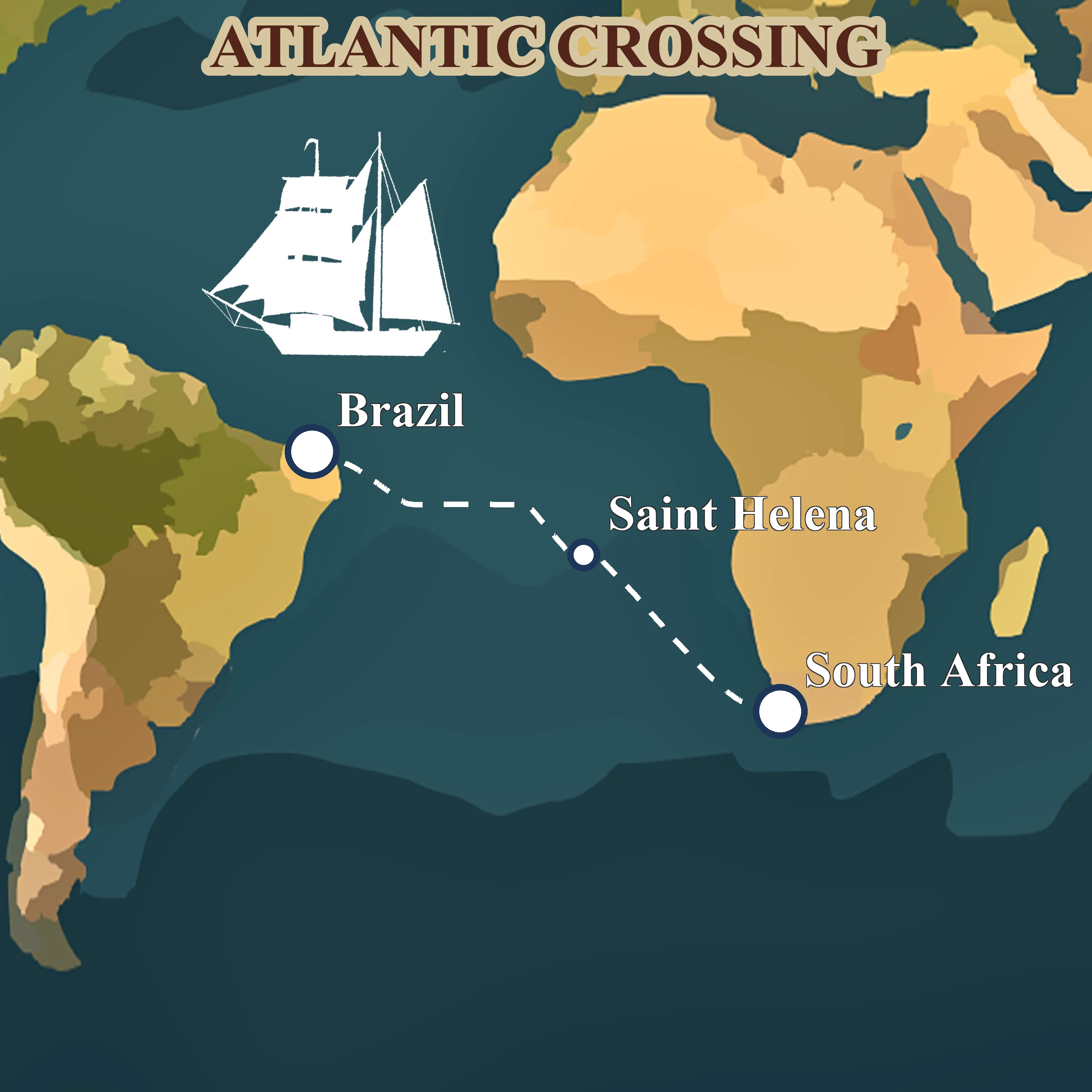
Leg 5: across the South Atlantic from Saldanha to Fortaleza
Jan 2027 — Mar 2027 · Saldanha Bay, South Africa → Fortaleza, Brazil
Forty-four days before the southeast trades, Napoleon's exile at St. Helena, the equator crossing, and landfall in tropical Brazil. The ocean chapter of the voyage.
Read more about this leg → about Leg 5: across the South Atlantic from Saldanha to Fortaleza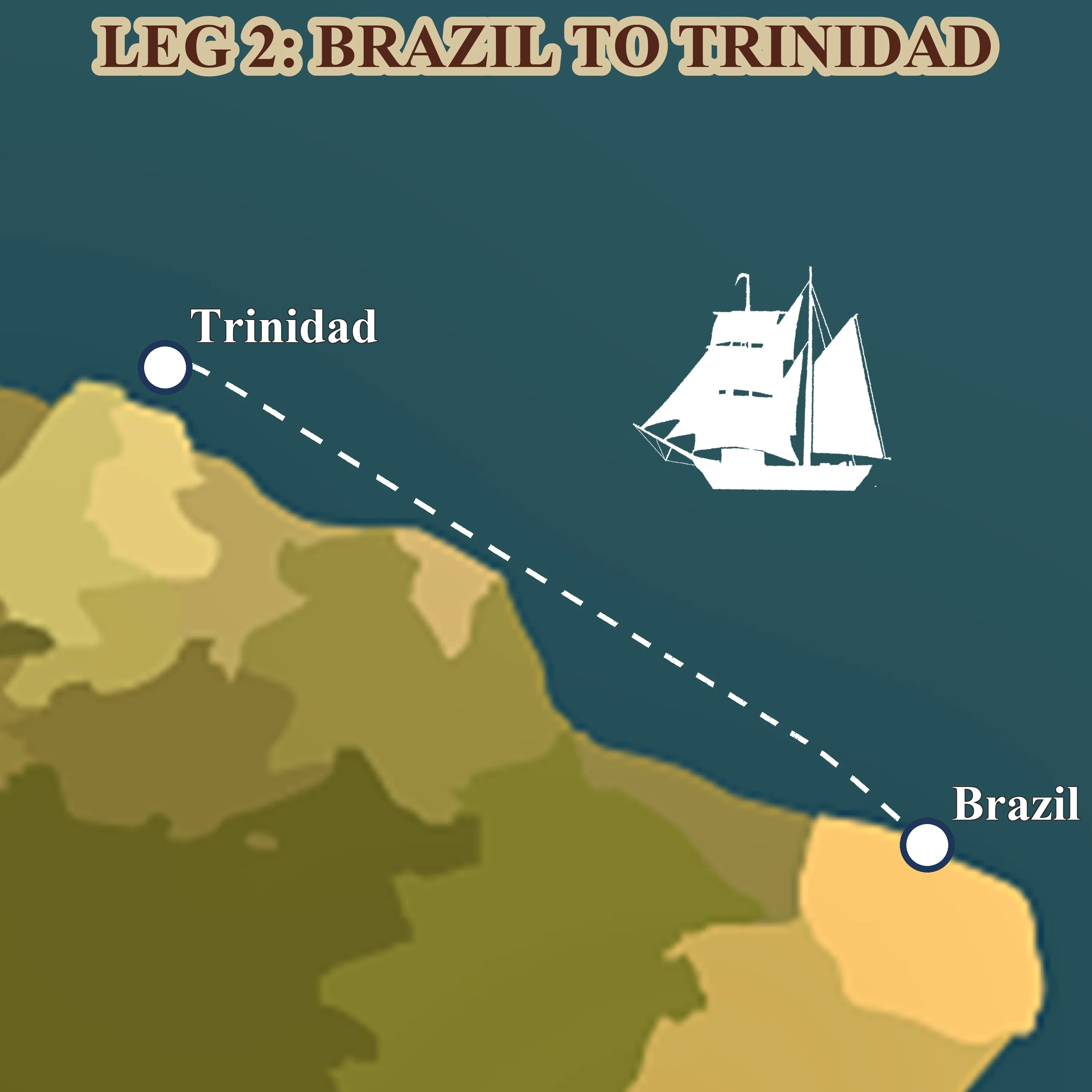
Leg 6: from Fortaleza to Trinidad along South America
Mar 2027 — Apr 2027 · Fortaleza, Brazil → Trinidad
A thousand miles of downwind trade running, the Amazon's brown water under the hull, the Guianas smudged on the horizon, and Trinidad's steelpan waiting at the end.
Read more about this leg → about Leg 6: from Fortaleza to Trinidad along South America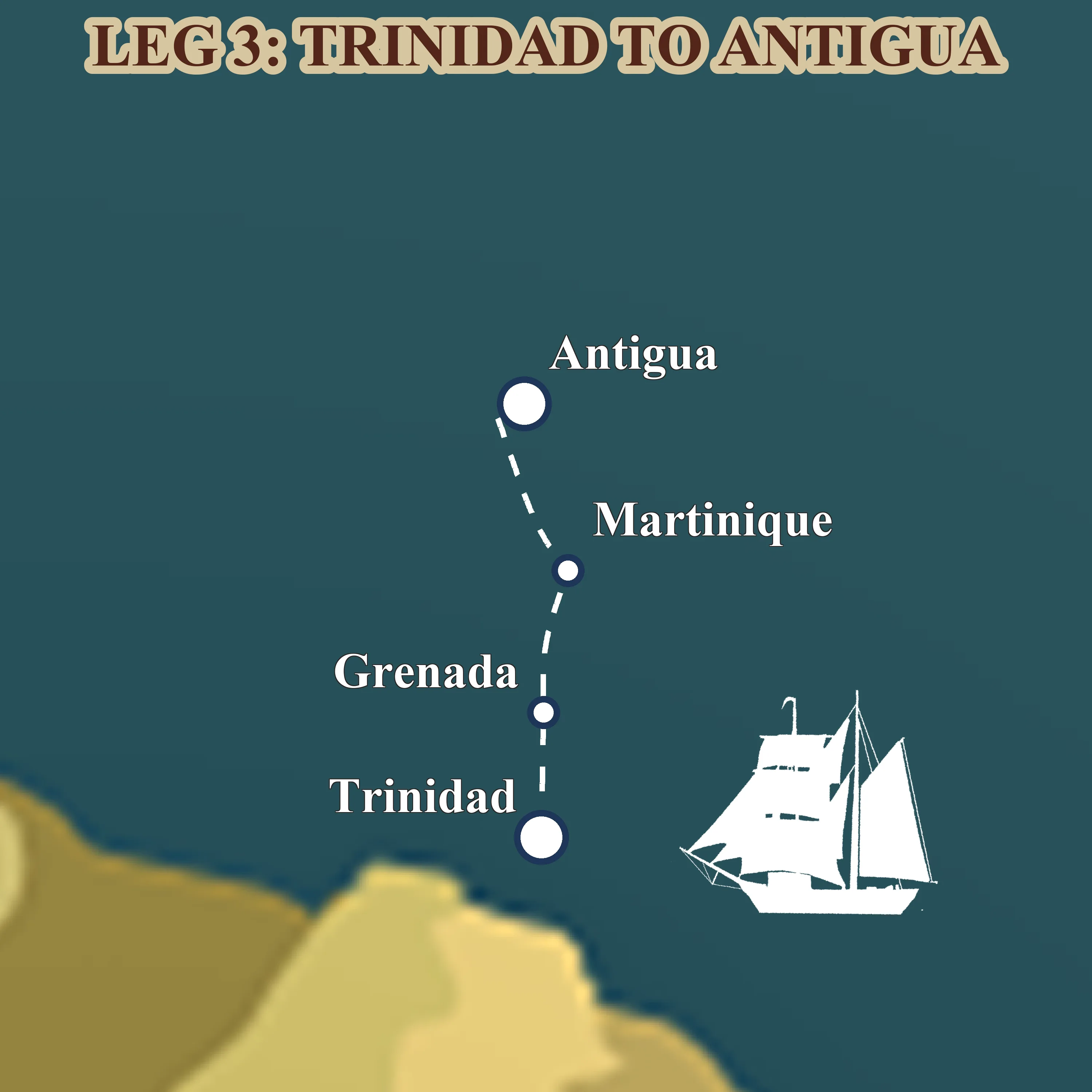
Leg 7: through the Windward Islands from Trinidad to Antigua
Apr 2027 — May 2027 · Trinidad → Antigua
Four weeks of short trade-wind daysails through the Lesser Antilles, turquoise anchorages, rum shops on the sand, French-Creole Martinique and the tall-ship scene in Antigua.
Read more about this leg → about Leg 7: through the Windward Islands from Trinidad to Antigua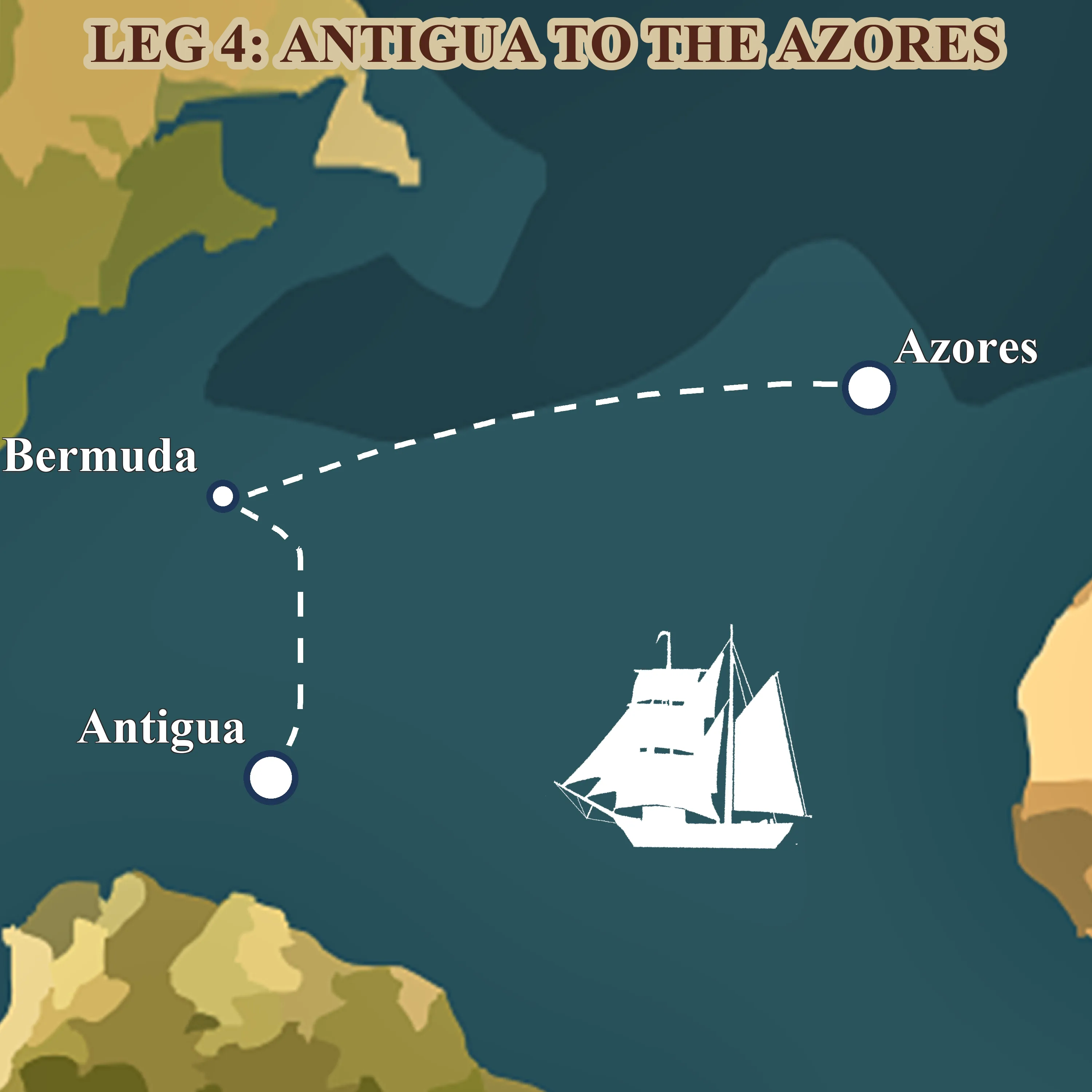
Leg 8: across the North Atlantic from Antigua to the Azores
May 2027 — Jul 2027 · Antigua → Ponta Delgada, Azores
Fifty-six days on the classic spring tall-ship route home, Antigua, a long reach to Bermuda's pink sand, then three weeks of open ocean to the volcanic Azores.
Read more about this leg → about Leg 8: across the North Atlantic from Antigua to the Azores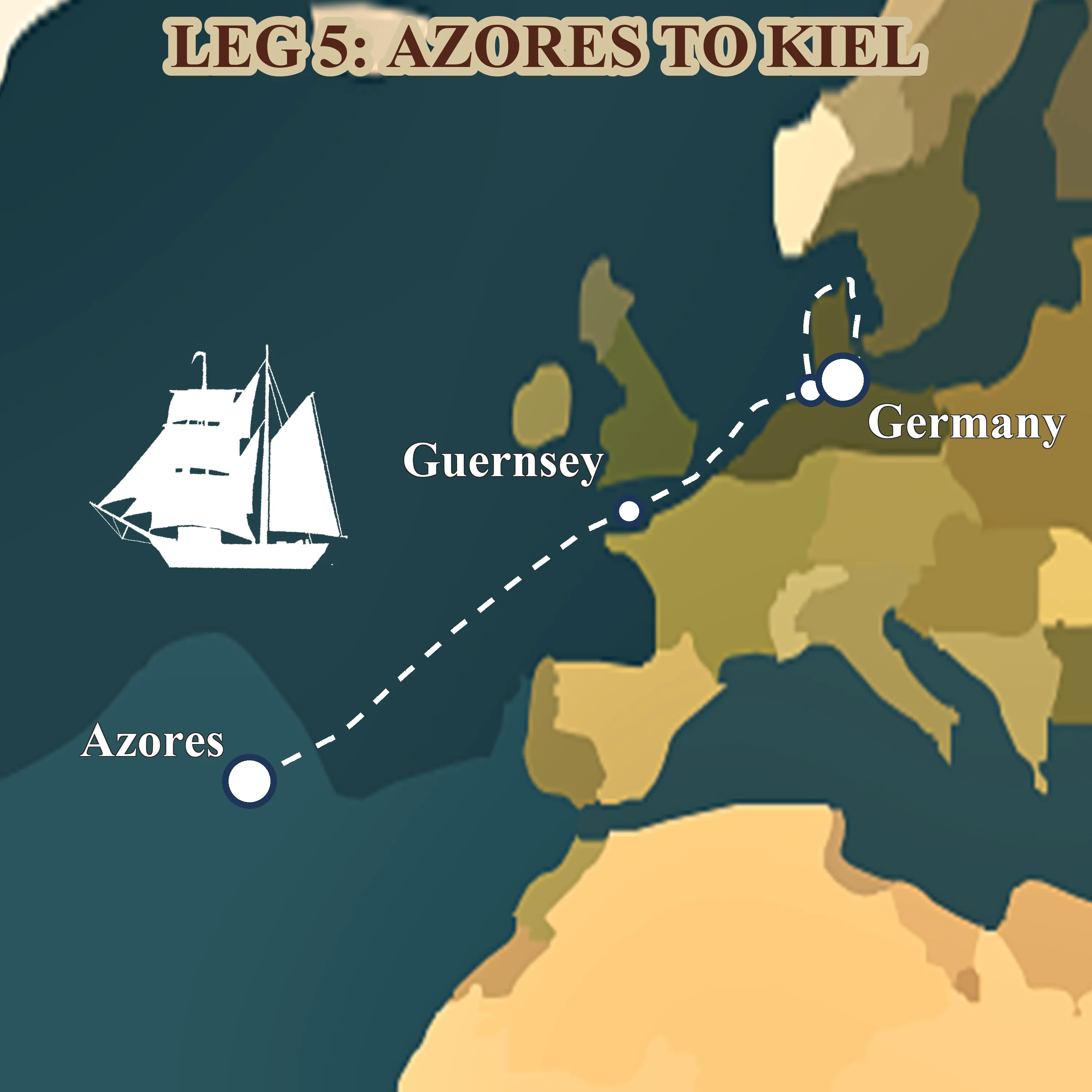
Leg 9: homecoming from the Azores to Kiel
Jul 2027 — Aug 2027 · Ponta Delgada, Azores → Kiel, Germany
The final 1,878 nm, from volcanic São Miguel to the Baltic, up the English Channel through the Dover TSS, past Helgoland's red cliffs and home to Kiel.
Read more about this leg → about Leg 9: homecoming from the Azores to KielWant to sail around the world for real? Brigantine NEPTUN is a non-profit training ship, every voyage takes 10 crew members through real ocean sailing, no experience needed. Apply for a berth or read about the voyages first.