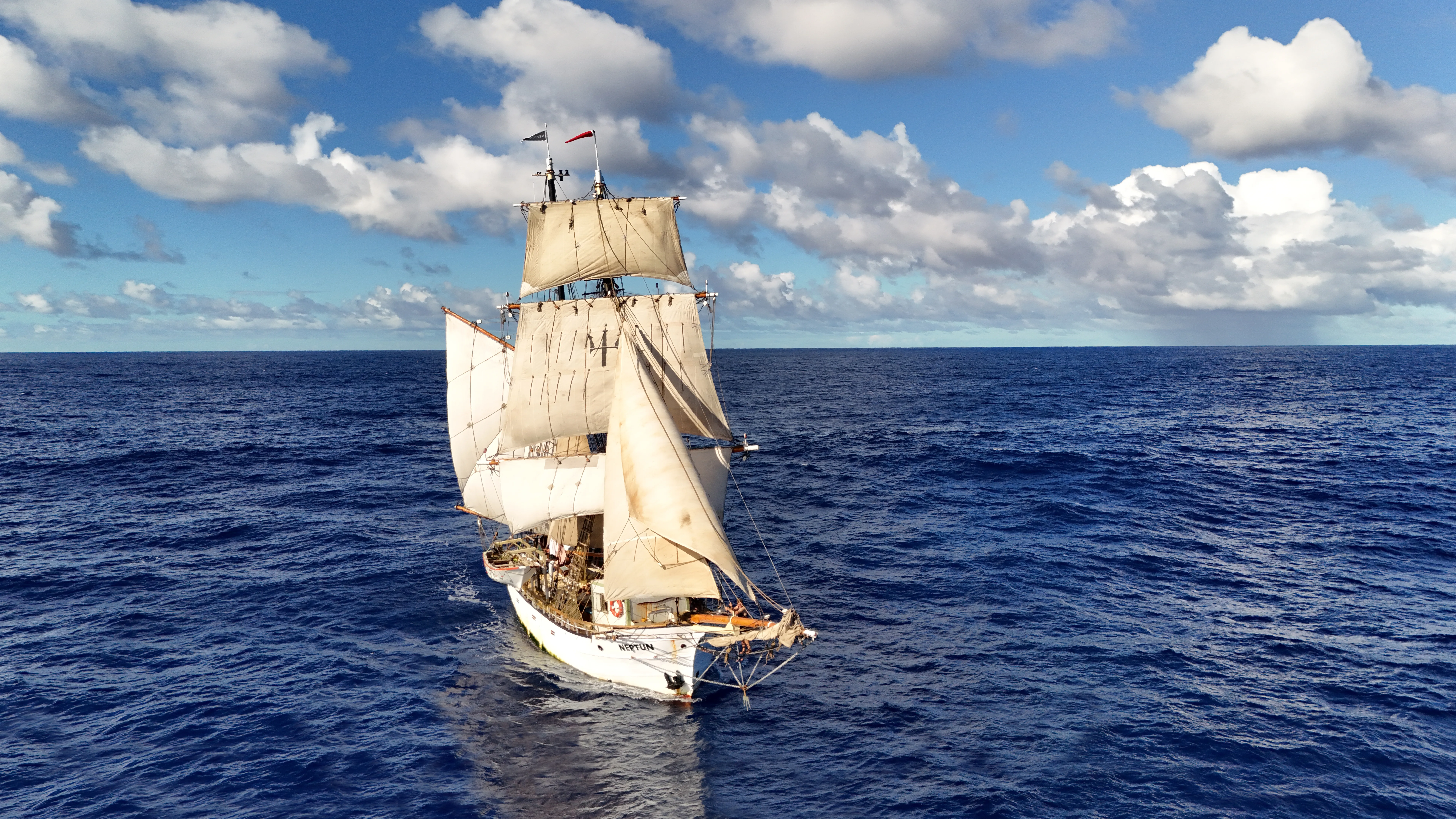
A tall ship voyage on Brigantine NEPTUN costs €79 per day as trainee crew, which works out to roughly €2,100 for a short 27-day Caribbean leg, up to €7,300 for a 92-day Indian Ocean crossing, plus a €67 annual membership in the nonprofit that owns the ship.
Already comparing prices and ready to commit? Apply for a berth, we reply within a week. Or browse the nine legs and pick the dates that fit.
On this page
- The NEPTUN price range
- What's included
- What's NOT included
- Why it costs what it costs
- How it compares to alternatives
- Payment, deposit, and cancellation
- FAQ
- Read also
The NEPTUN price range
The tall ship voyage cost on NEPTUN is refreshingly simple. There is one per-day rate, €79 per day, and it applies to every leg of the 2026 and 2027 voyages, regardless of route, season, or destination. The rate is flat because the cost of running the ship is flat: she burns the same fuel and pays the same professional crew whether she is crossing the South Atlantic or anchored off a Caribbean island.
The cost in four numbers
Per-leg totals depend only on how many days you sail with us. Published rates as of this writing:
- Trinidad → Antigua, 27 days (Apr–May 2027), €2,100
- Brazil → Trinidad, 30 days (Mar–Apr 2027), €2,400
- Durban → Cape Town, 38 days (Nov–Dec 2026), €3,000
- Réunion → Zanzibar, 40 days (Aug–Sep 2026), €3,200
- Azores → Kiel, 41 days (Jul–Aug 2027), €3,200
- Antigua → Azores (transatlantic), 56 days (May–Jul 2027), €4,400
- Zanzibar → Durban, 63 days (Sep–Nov 2026), €5,000
- South Africa → Brazil, 71 days (Jan–Mar 2027), €5,600
- Bali → Réunion, 92 days (May–Aug 2026), €7,300
Most trainees book one leg of three to six weeks and pay €2,000 to €4,500 for the berth itself. Ocean-crossing legs are longer by nature and sit at the upper end of the range. You can stack legs: a trainee joining in Zanzibar and staying to Cape Town does two consecutive legs for the combined total.
On top of the berth, every trainee pays a €67 annual membership in Foreningen Neptun, the nonprofit that owns the ship. Membership is the governance mechanism that makes the whole thing work, members own the program and elect the board. Specific dates and live availability are on the 2026 voyage page and the 2027 voyage page.
Shortest first
Pick the leg that fits your budget
Nine legs, sorted by length and total cost, start with three weeks or stack the long ocean crossings.
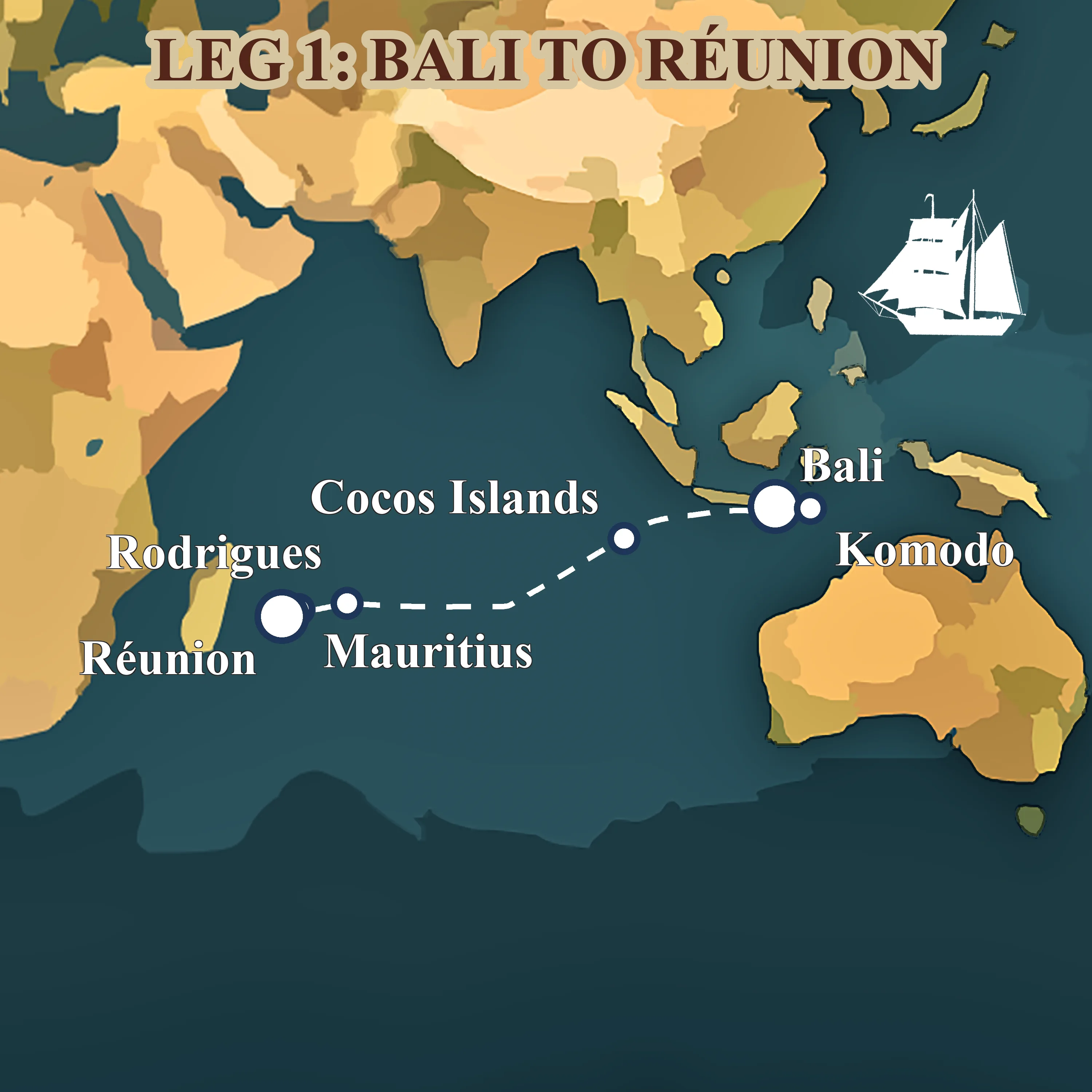
Leg 1: from Bali to Réunion across the Indian Ocean
May 2026 — Aug 2026 · Bali, Indonesia → Réunion, France
The opening chapter of Neptun's 482-day world voyage, a 4,078-nm trade-wind passage from the temples of Bali to the volcanic cliffs of Réunion.
Read more about this leg → about Leg 1: from Bali to Réunion across the Indian Ocean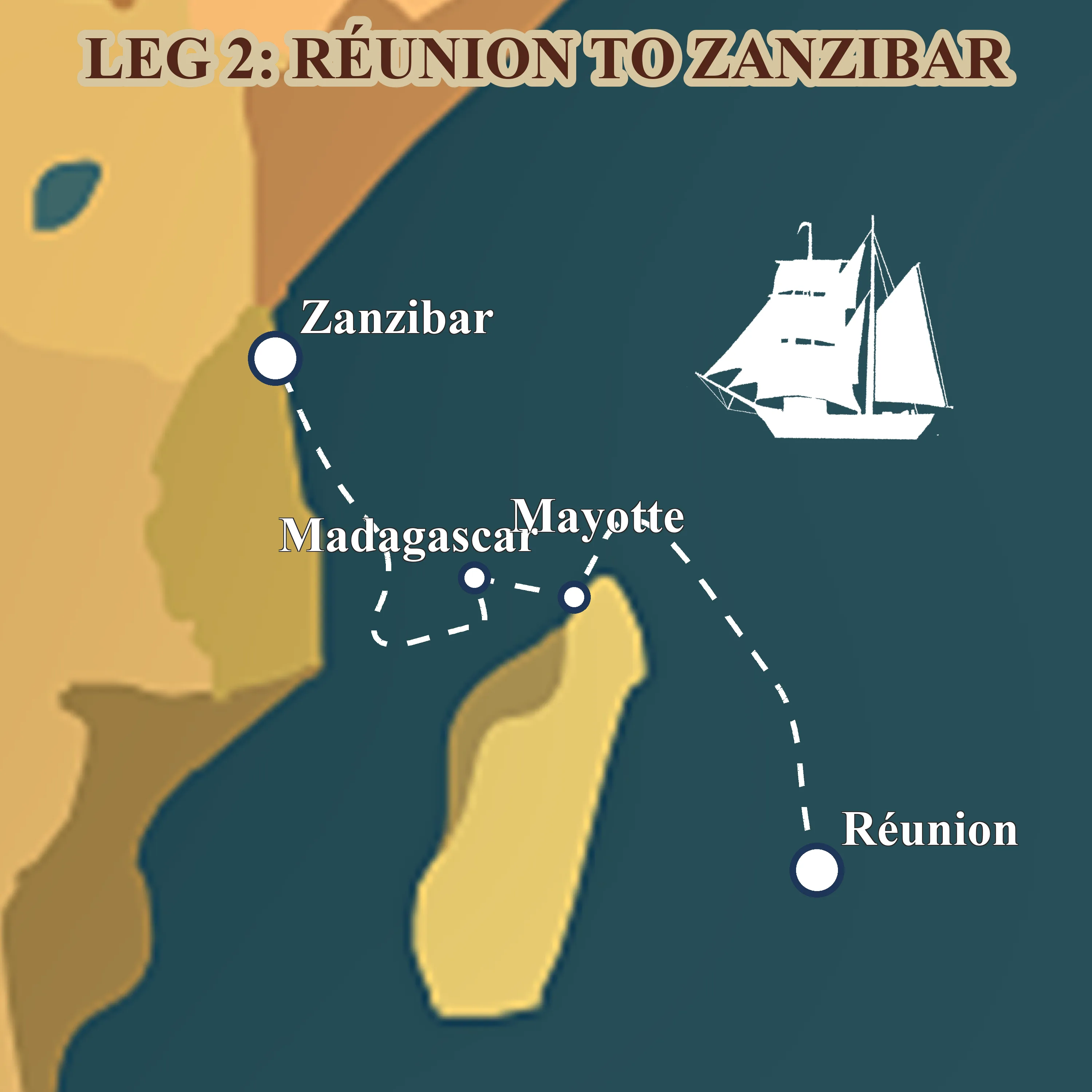
Leg 2: from Réunion to Zanzibar via Madagascar
Aug 2026 — Sept 2026 · Réunion, France → Zanzibar, Tanzania
Forty days across the western Indian Ocean, volcanic Réunion, lemur-haunted Nosy Be, the Mozambique Channel, and the spice-scented stone alleys of Zanzibar.
Read more about this leg → about Leg 2: from Réunion to Zanzibar via Madagascar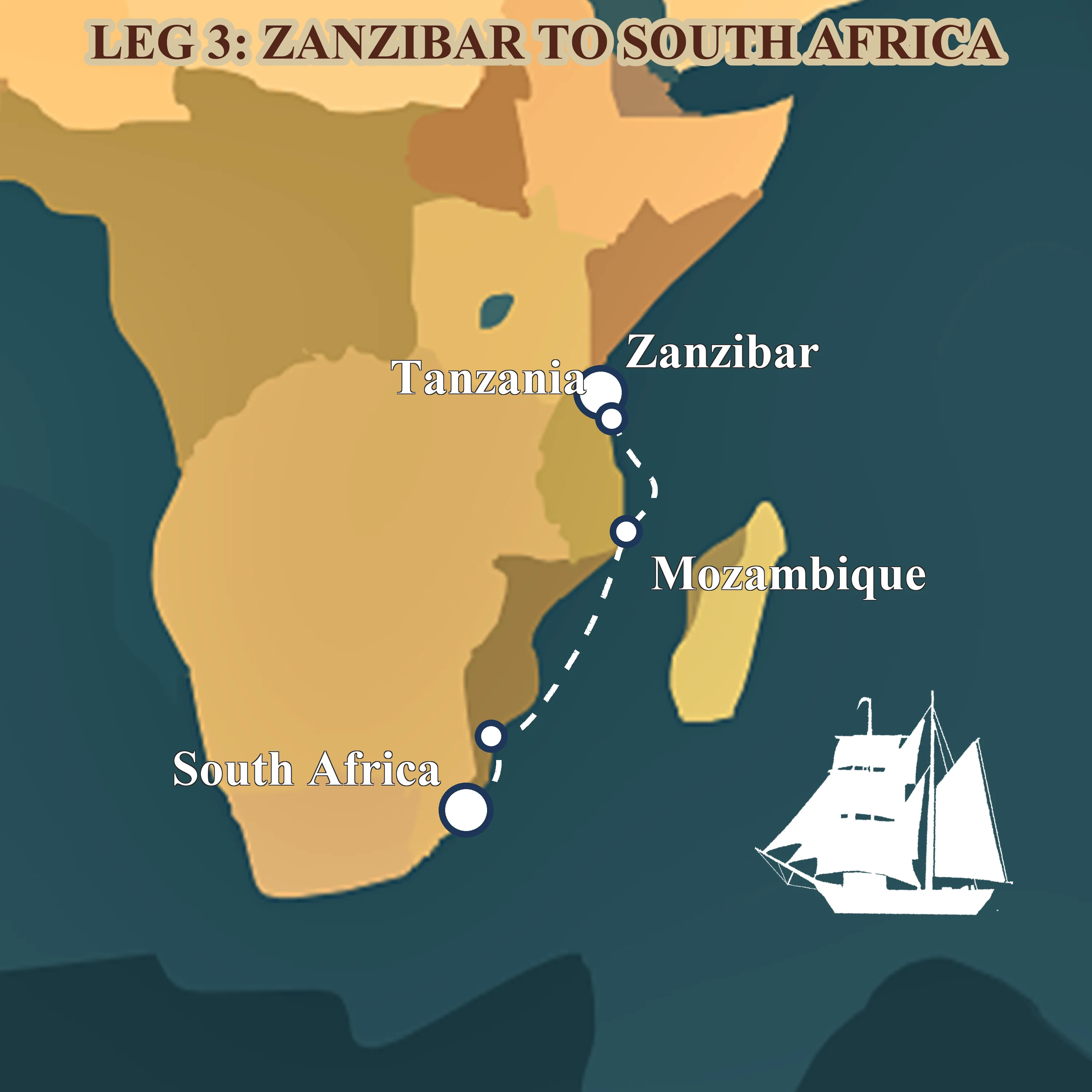
Leg 3: from Zanzibar to Durban down the Mozambique Channel
Sept 2026 — Nov 2026 · Zanzibar, Tanzania → Durban, South Africa
Sixty-three days coasting the African shore, spice islands, mangrove anchorages, Portuguese praças and the long trade-wind run down the Mozambique Channel to Durban.
Read more about this leg → about Leg 3: from Zanzibar to Durban down the Mozambique Channel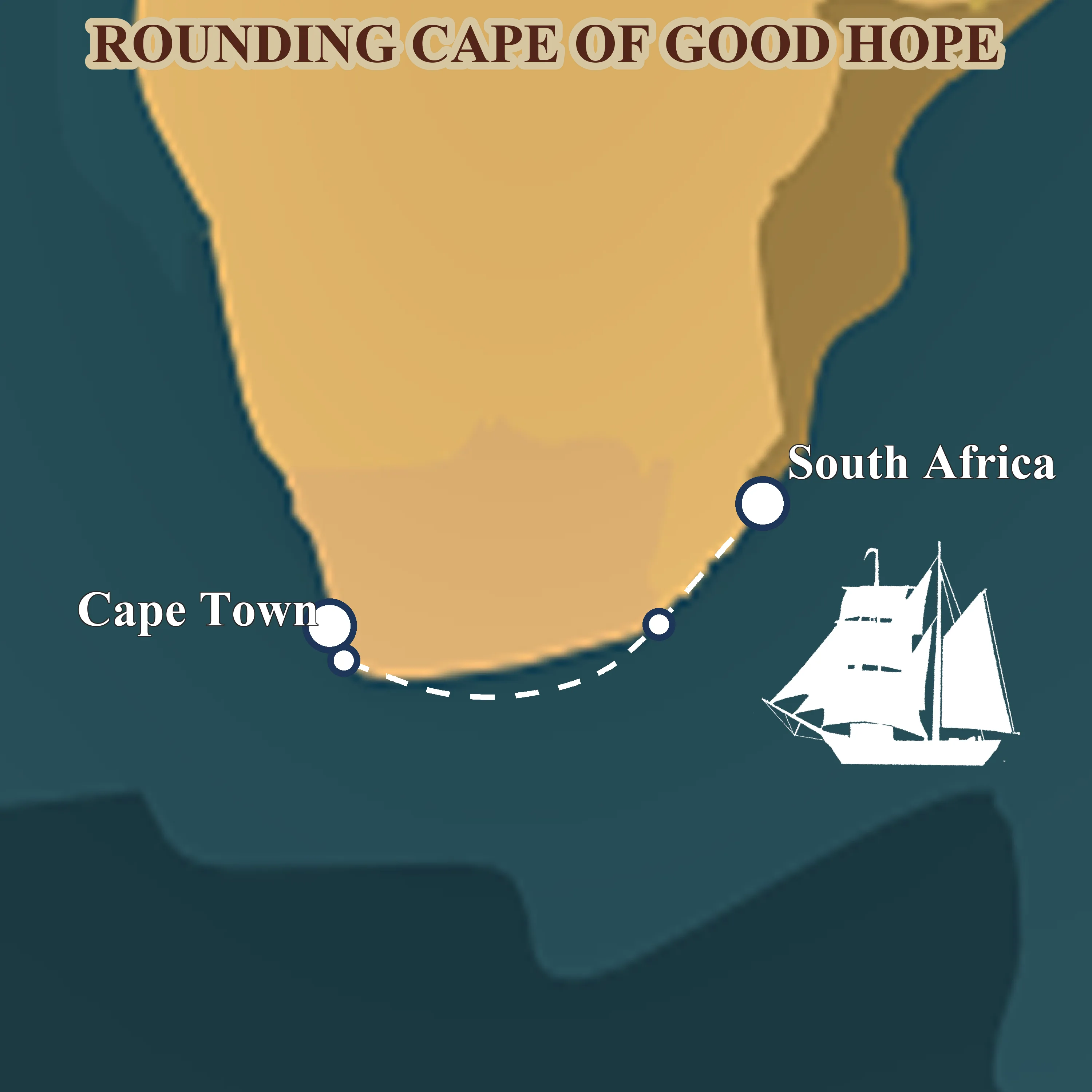
Leg 4: from Durban around the Cape of Good Hope
Nov 2026 — Dec 2026 · Durban, South Africa → Cape Town, South Africa
Thirty-eight days of serious seamanship, the Agulhas current, the Cape of Good Hope and the Southern Ocean at the tip of Africa, finishing quietly in Cape Town for Christmas.
Read more about this leg → about Leg 4: from Durban around the Cape of Good Hope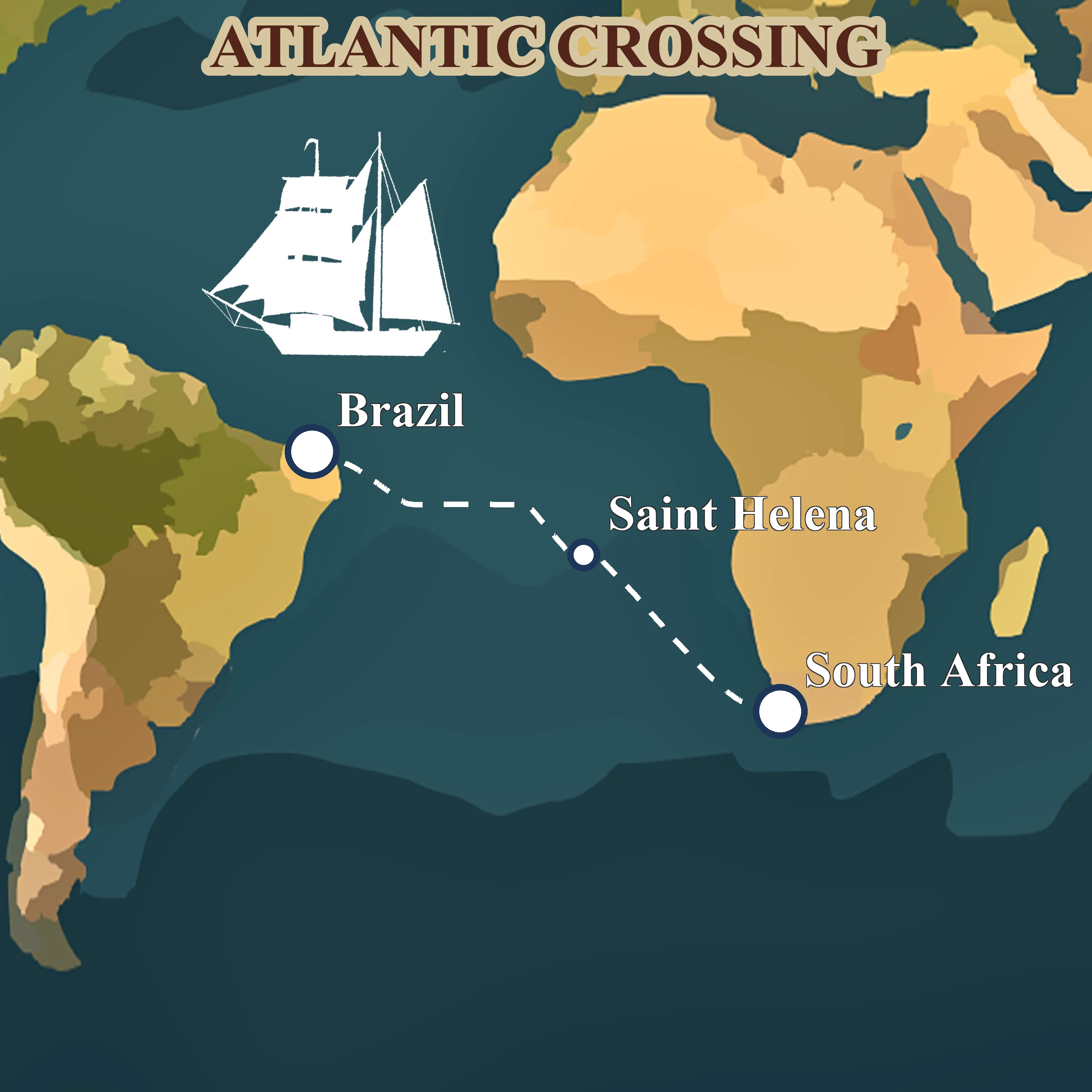
Leg 5: across the South Atlantic from Saldanha to Fortaleza
Jan 2027 — Mar 2027 · Saldanha Bay, South Africa → Fortaleza, Brazil
Forty-four days before the southeast trades, Napoleon's exile at St. Helena, the equator crossing, and landfall in tropical Brazil. The ocean chapter of the voyage.
Read more about this leg → about Leg 5: across the South Atlantic from Saldanha to Fortaleza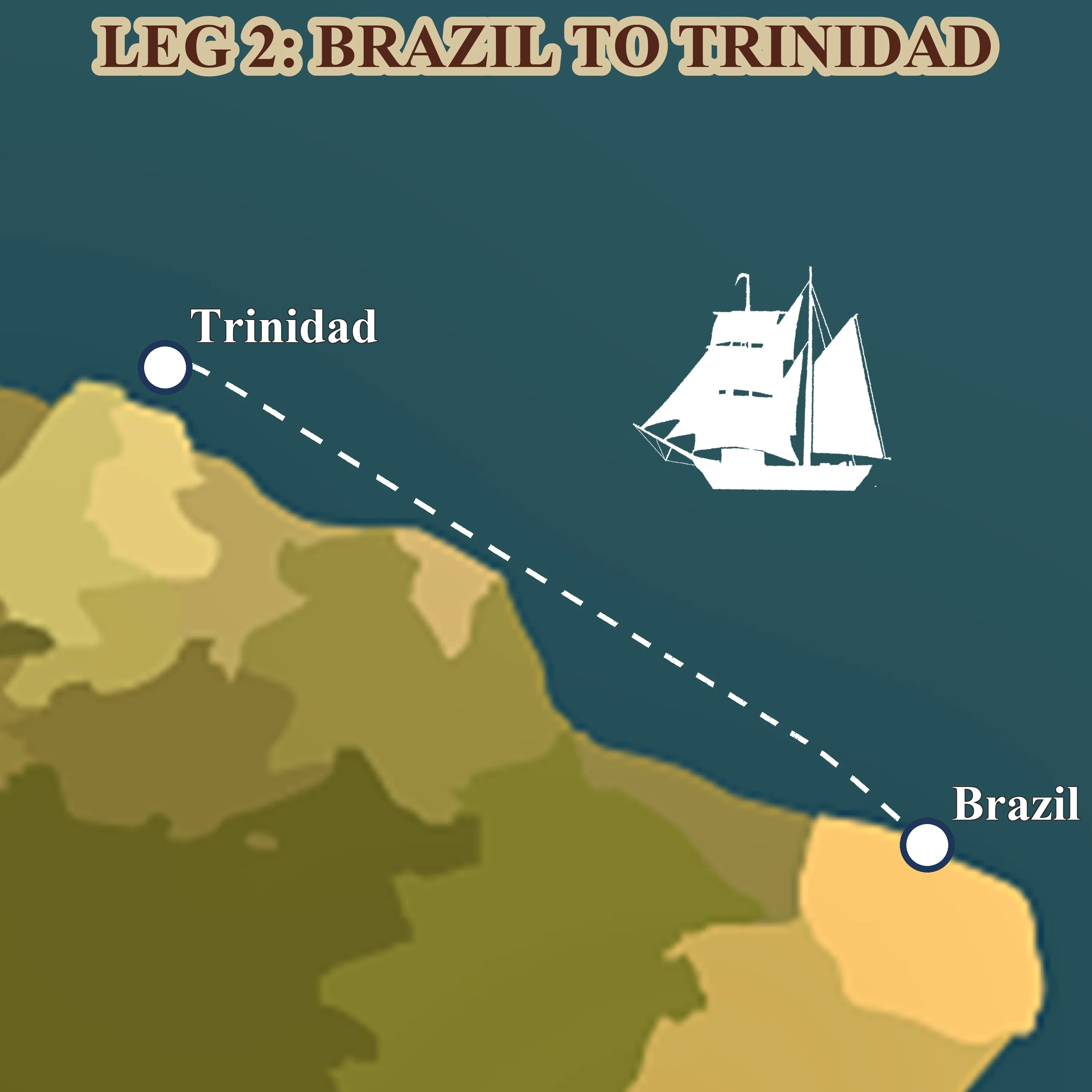
Leg 6: from Fortaleza to Trinidad along South America
Mar 2027 — Apr 2027 · Fortaleza, Brazil → Trinidad
A thousand miles of downwind trade running, the Amazon's brown water under the hull, the Guianas smudged on the horizon, and Trinidad's steelpan waiting at the end.
Read more about this leg → about Leg 6: from Fortaleza to Trinidad along South America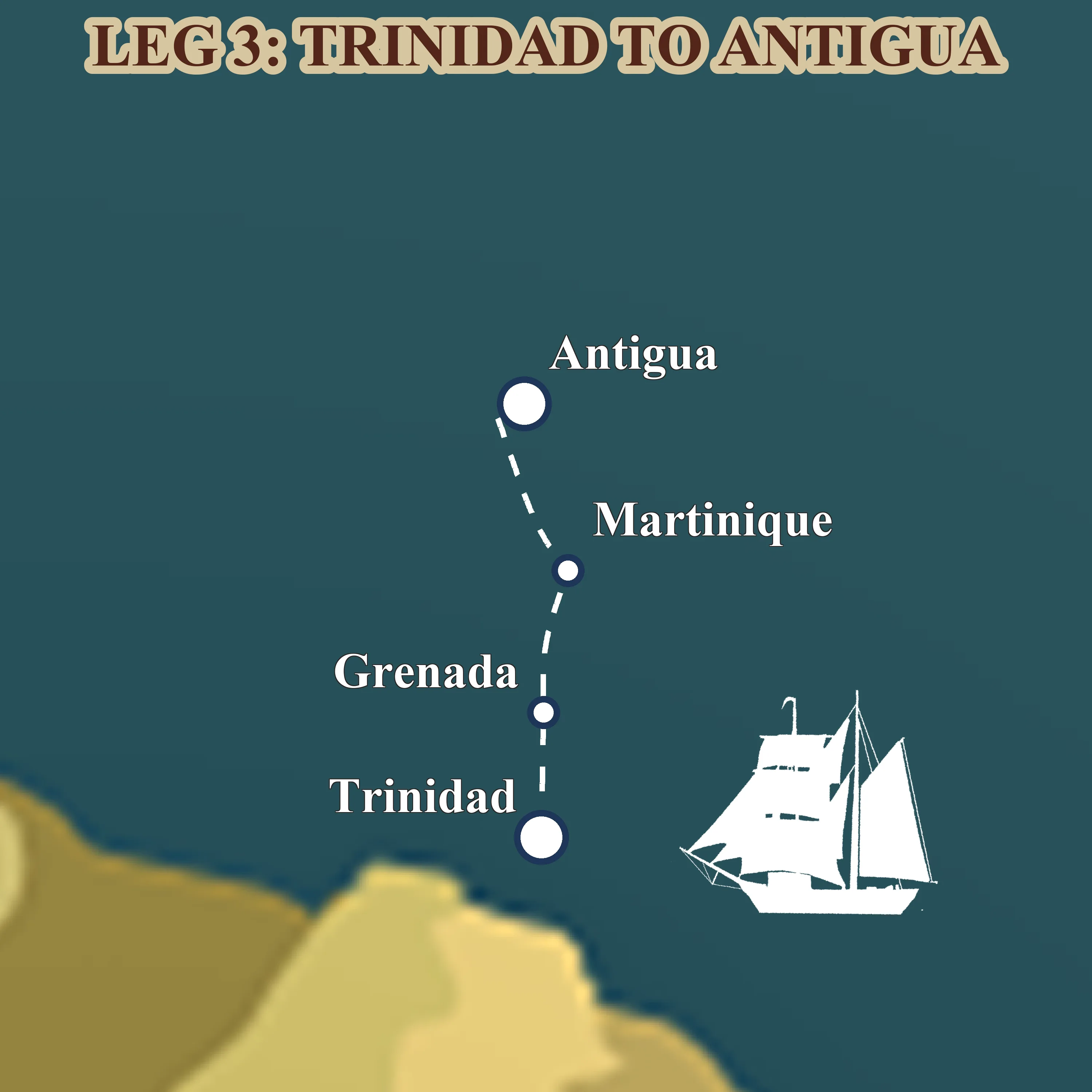
Leg 7: through the Windward Islands from Trinidad to Antigua
Apr 2027 — May 2027 · Trinidad → Antigua
Four weeks of short trade-wind daysails through the Lesser Antilles, turquoise anchorages, rum shops on the sand, French-Creole Martinique and the tall-ship scene in Antigua.
Read more about this leg → about Leg 7: through the Windward Islands from Trinidad to Antigua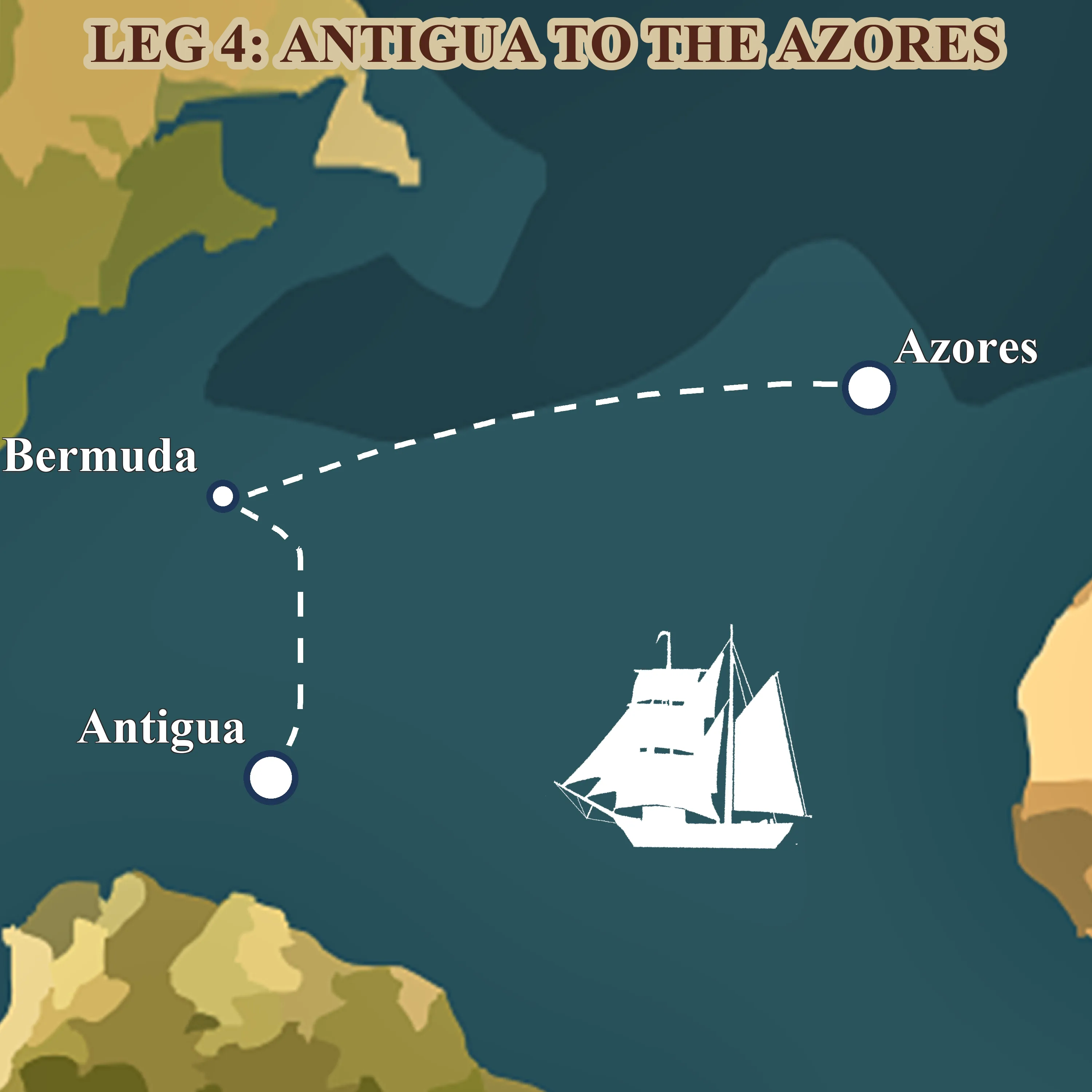
Leg 8: across the North Atlantic from Antigua to the Azores
May 2027 — Jul 2027 · Antigua → Ponta Delgada, Azores
Fifty-six days on the classic spring tall-ship route home, Antigua, a long reach to Bermuda's pink sand, then three weeks of open ocean to the volcanic Azores.
Read more about this leg → about Leg 8: across the North Atlantic from Antigua to the Azores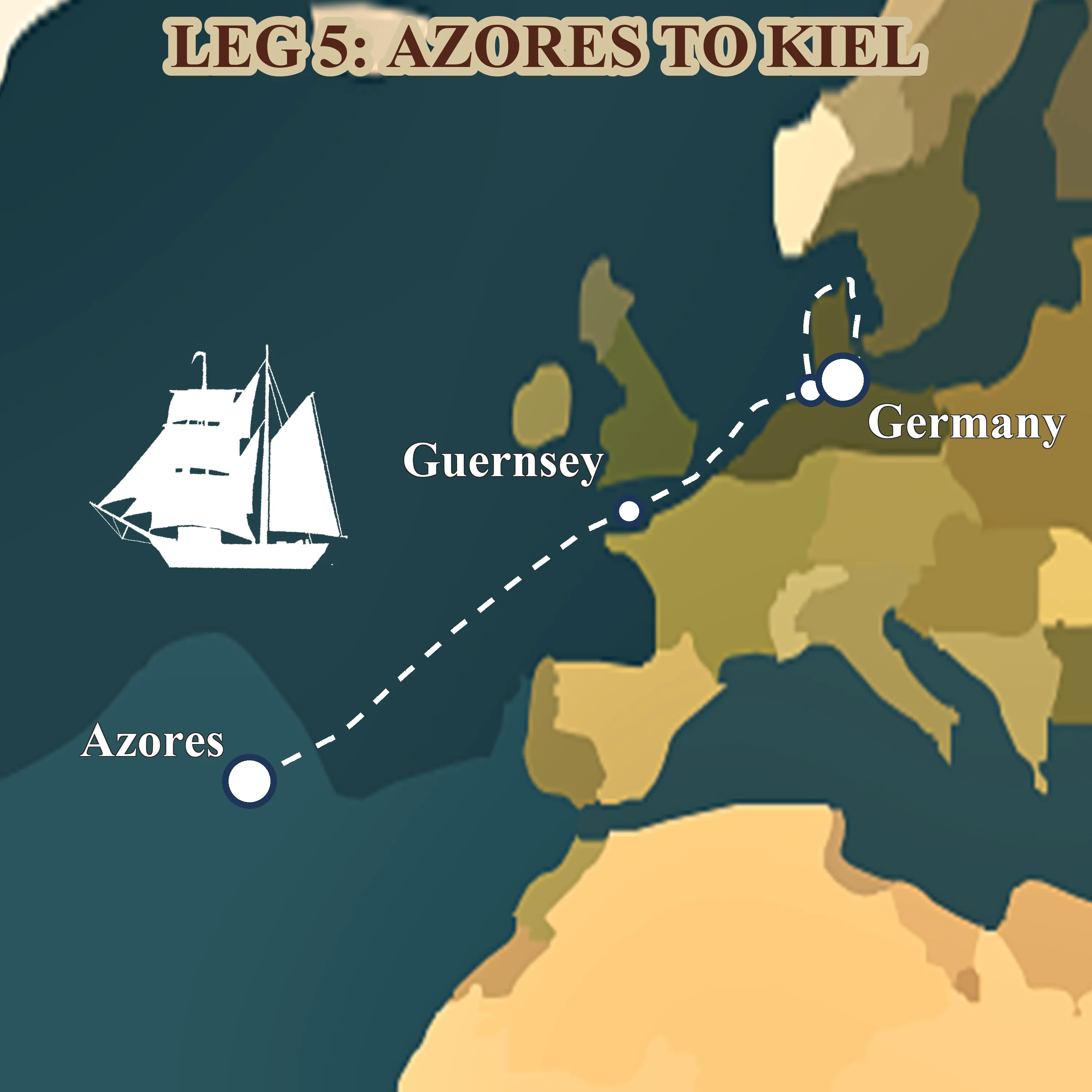
Leg 9: homecoming from the Azores to Kiel
Jul 2027 — Aug 2027 · Ponta Delgada, Azores → Kiel, Germany
The final 1,878 nm, from volcanic São Miguel to the Baltic, up the English Channel through the Dover TSS, past Helgoland's red cliffs and home to Kiel.
Read more about this leg → about Leg 9: homecoming from the Azores to KielNeed more detail on logistics? Read how to join a tall ship crew for the full path from first email to first day aboard.
What's included
The €79-per-day rate is all-inclusive for the time you are part of the ship's company:
- Your berth, a bunk in a shared cabin of two to four people, with bedding and personal stowage.
- All meals, three hot meals a day cooked by the ship's cook. Vegetarian and common dietary needs accommodated.
- Every hour of sail training, watchkeeping, helm time, line handling, sail setting, celestial navigation demonstrations, rigging work. See the traditional seamanship article for the full curriculum.
- All safety equipment, lifejacket with tether, climbing harness for aloft work, first-aid access.
- All sailing, no "sailing day" surcharges. The ship sails; you are crew.
- Harbour fees, fuel, engine hours, and ship operating costs, everything the ship needs to pay is covered by the organisation, not by you.
What's NOT included
Cost transparency matters more than marketing. Budget for all of the below on top of the per-leg rate.
What's included
Berth, all meals, every hour of sail training, all safety equipment, harbour fees, fuel, engine hours, and ship operating costs. The €79/day rate covers everything onboard.
Not included
Flights to and from the leg ports, visas and entry fees, travel insurance with offshore cover, personal sailing gear, shore-day spending, alcohol, vaccinations, and the €67 annual membership.
Optional add-ons
Trip-cancellation insurance taken with your deposit, a shore-day budget of €30–€60/day, an offshore-grade insurance policy at €150–€400, and personal kit at €300–€600 starting from zero.
- Flights to the departure port and home from the arrival port. You book your own travel. Departure and arrival ports for 2026-2027 include Bali, Réunion, Zanzibar, Durban, Cape Town, Salvador, Trinidad, Antigua, Ponta Delgada, and Kiel. A Bali-to-Europe return can be €900, an Azores-to-Copenhagen one-way €300, build a realistic flight budget before committing.
- Visas and entry fees. Depending on your passport you may need visas for Indonesia, Tanzania, South Africa, Brazil, Trinidad, or Schengen. Plan early, some take weeks.
- Travel insurance. Every trainee must carry insurance that covers offshore sailing and international medical evacuation. Standard travel policies usually exclude sailing beyond coastal waters, so budget €150 to €400 for an offshore-capable policy.
- Personal sailing gear. Seaboots, oilskins, thermal base layers, a decent headtorch. Starting from zero, budget €300 to €600. Our packing list for a tall ship voyage shows exactly what to bring.
- Shore excursions on rest days. Hikes, dives, museum tickets, restaurant meals ashore. A comfortable daily ashore budget is €30 to €60.
- Alcohol. The ship's pantry provides meals, not bar service.
- The €67 annual membership, small, but separate from the berth fee.
- Medical costs. Routine prescriptions and any vaccinations you need (yellow fever for some Indian Ocean ports). For physical readiness, see getting fit for a voyage.
Realistically, a six-week leg ends up costing most trainees €5,000 to €8,000 all-in once you layer flights, insurance, visas, gear, and shore spending onto the berth fee. For a twelve-week leg, budget €8,000 to €12,000. That is genuinely the honest number, we would rather say it up front.
Ready to apply for a berth?
One per-day rate, nine legs, no hidden fees. Apply now and we'll confirm availability within a week.
Why it costs what it costs
People sometimes ask why sail training on a nonprofit tall ship costs several thousand euros when the wind is free. The answer is that the wind is free but a 35-metre certified ocean-going brigantine is not, and running one is genuinely expensive.
The real cost centres, roughly in order of size:
- Professional crew salaries, a master, two mates, an engineer, a cook, and a medic. These are qualified mariners with decades of ocean experience, and we pay them accordingly. This is the single biggest line on the operating budget.
- Insurance, hull, machinery, and liability cover on a commercially certified tall ship crossing three oceans runs into tens of thousands of euros per year.
- Annual survey and maintenance, NEPTUN is surveyed every year and refitted periodically. The 2027 mid-voyage yard period in Trinidad is an eight-day haul-out. None of that is cheap.
- Fuel, port fees, and pilotage. Every harbour charges.
- Provisioning, three hot meals a day for fifteen to twenty people across an ocean crossing is thousands of euros of food loaded at each port call.
Divide the annual total by the number of trainee-days we can realistically sell, and you land around €79 per trainee-day. There is no shareholder margin and no corporate parent, Foreningen Neptun is a registered Danish nonprofit and every euro of income goes back into keeping the ship sailing. A commercial crewed charter on a comparable traditional vessel typically runs €500 to €1,500 per person per day, five to fifteen times our rate. The trade-off is real: you work harder on NEPTUN, and you pay a fraction of the price.
Where the money goes
A nonprofit tall ship, not a charter
Every euro of trainee income goes back into the ship, crew salaries, insurance, annual survey, fuel, and the provisioning that fuels three hot meals a day across four oceans. There is no shareholder margin. Membership in Foreningen Neptun is the governance mechanism: members own the program and elect the board.
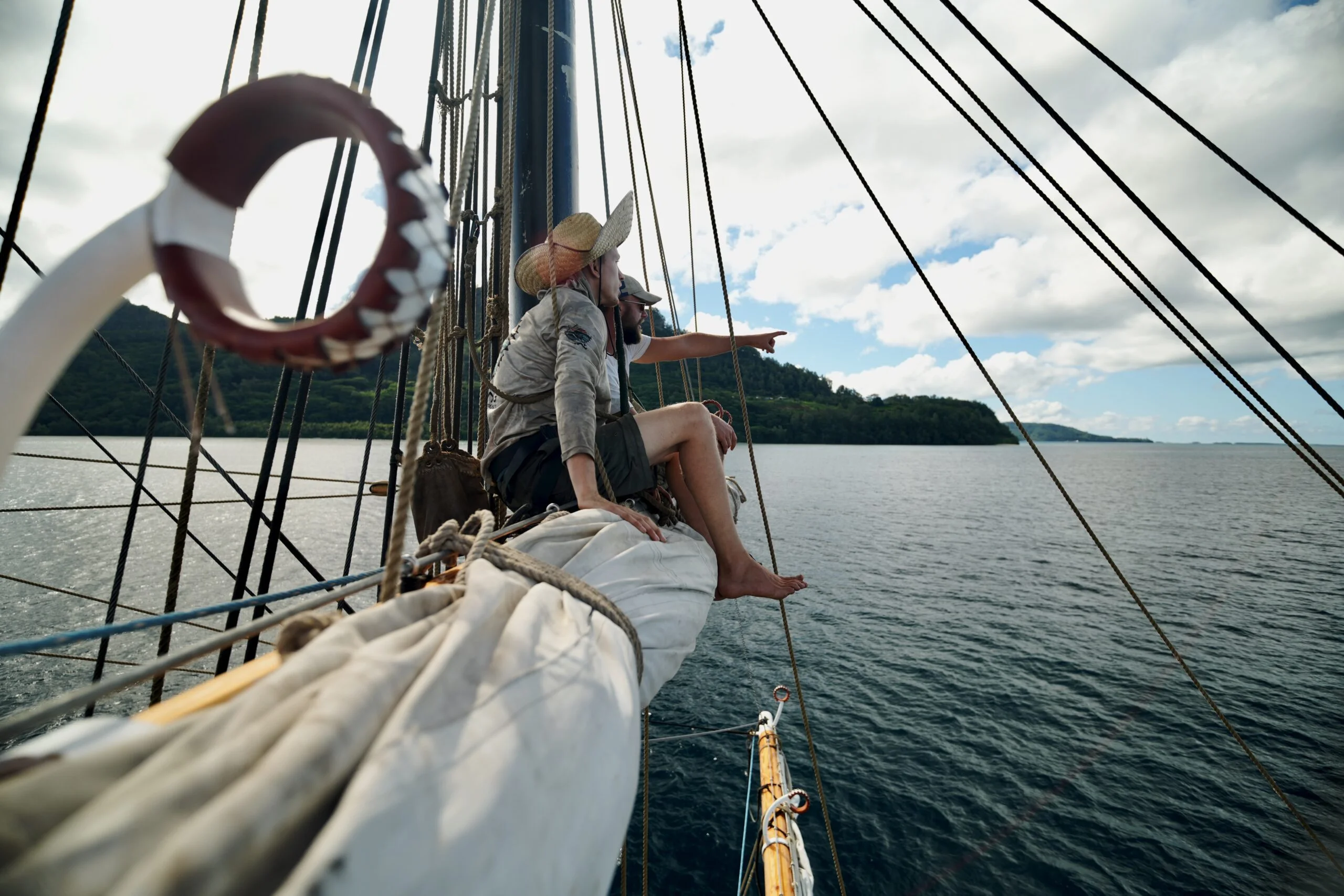
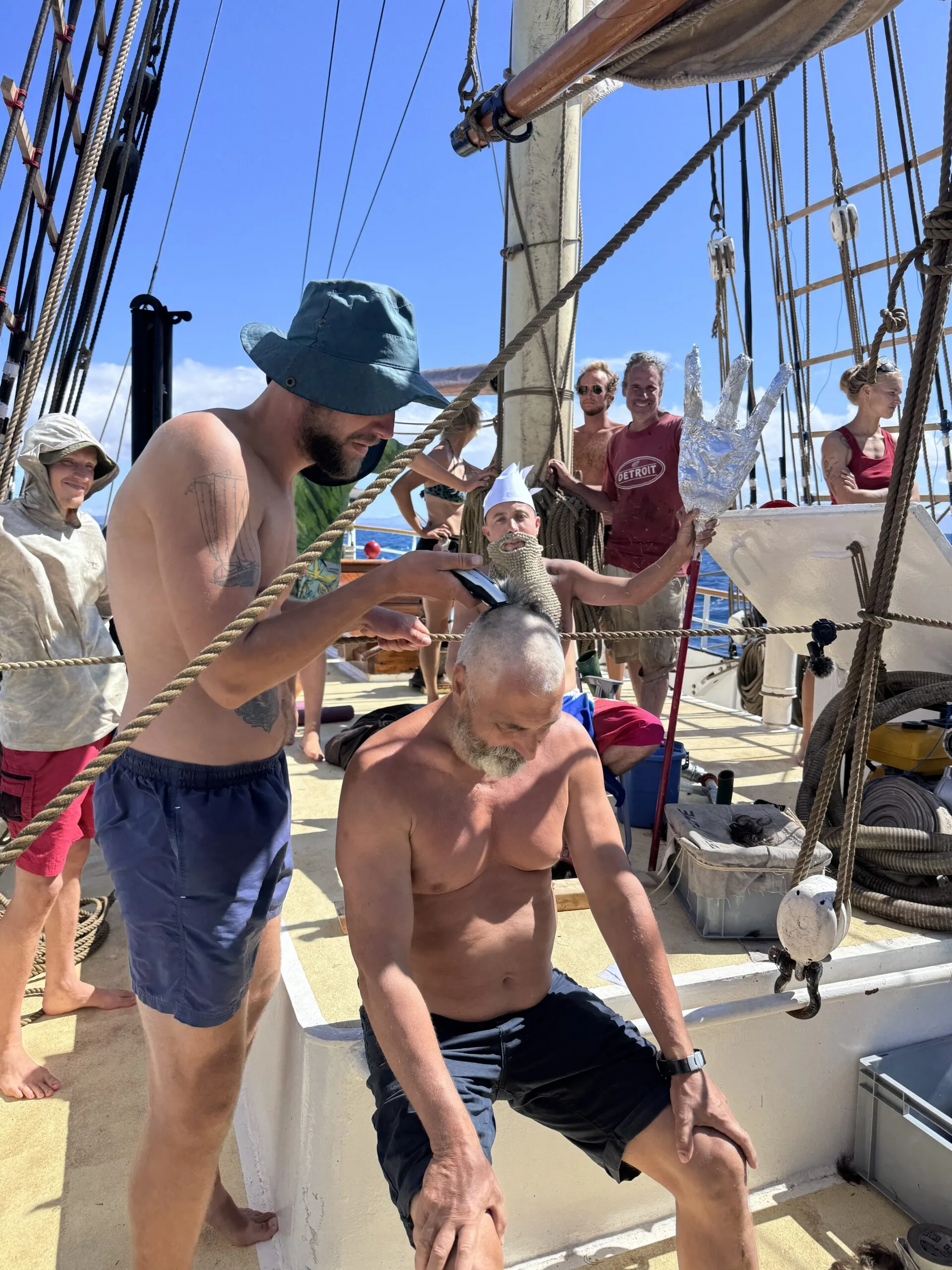
€79 a day. Real ocean miles. No charter mark-up.
How it compares to alternatives
It helps to put the number in context. What else could you do with a €3,000 to €6,000 travel budget for a month or two?
- Commercial crewed charter yacht. €500–€1,500 per person per day in the Caribbean or Mediterranean. A two-week charter at the low end is €7,000 before flights. You are a guest, not crew.
- Cruise ship. €100–€250 per person per day, less if you book inside cabins ahead. Cheaper per day than we are, but you are a passenger on an 80,000-tonne floating hotel, not a sail-training crew member. A very different experience.
- Backpacking Southeast Asia. €30–€80 per day. A three-month trip is €2,700 to €7,200 plus flights. Cheaper than a long NEPTUN leg, but you spend it on buses, hostels, and Wi-Fi, not on an ocean.
- Residential sailing school. €2,000–€4,000 for a one-to-two-week certificate course on a small modern yacht. Good for a qualification, nothing like the ocean.
- Staying home. €0, and you already know how that works.
The honest framing: a NEPTUN leg is mid-range for adventure travel. Not the cheapest way to spend a month, not the most expensive. What you pay for is scale and seriousness, real ocean miles on a real tall ship with a professional crew and an actual training programme. If you want the full tall ship adventure rather than a simulation, that is the cost.
Comparing seasons? The 2026 voyage is the Indian Ocean arc and the 2027 voyage is the Atlantic arc, same daily rate, different oceans.
Payment, deposit, and cancellation
The application process starts at apply-now. Once we confirm you on a specific leg, the flow is straightforward: a deposit to secure your berth, the balance due before the leg starts, and a cancellation policy sized to the fact that berths are limited and replacing a trainee four weeks before departure is hard.
Specifics vary slightly from year to year, so exact deposit amounts, payment schedule, and cancellation terms are sent when your application is accepted. We recommend signing up for travel insurance with trip-cancellation cover at the same time you pay your deposit, that is the correct protection if life intervenes after you've committed. For a broader picture of how the whole process works from first interest to first day aboard, see our guide on how to join a tall ship crew.
FAQ
Common questions about cost
How much does a tall ship voyage on NEPTUN cost?
€79 per day as trainee crew, plus a €67 annual nonprofit membership. Per-leg totals run from €2,100 (27-day Caribbean leg) to €7,300 (92-day Indian Ocean crossing). All meals, training, safety equipment and ship operating costs are included.
Are flights and insurance included?
No. Flights to the departure port and home from the arrival port are on you, as are visas, vaccinations, travel insurance with offshore cover (budget €150–€400), and personal sailing gear (€300–€600 starting from zero). See the packing list for what you actually need.
What's the all-in cost for a typical leg?
A six-week leg ends up costing most trainees €5,000–€8,000 all-in with flights, insurance, visas, gear and shore-day spending. A twelve-week leg is €8,000–€12,000. The berth fee itself is the smaller half of that for short legs.
How does this compare to a charter yacht?
A commercial crewed charter on a comparable traditional vessel runs €500–€1,500 per person per day, five to fifteen times our rate. The trade-off is real: on NEPTUN you work watches and stand by lines as crew, not as a guest.
Can I pay in instalments?
Yes. The standard flow is a deposit to secure your berth on a specific leg, then the balance due before the leg starts. Exact deposit amounts and payment schedule are sent when your application is accepted at apply-now.
What's the cancellation policy?
Berths are limited and replacing a trainee four weeks before departure is hard, so the cancellation policy is sized accordingly. We strongly recommend taking travel insurance with trip-cancellation cover when you pay your deposit, that is the correct protection if life intervenes.
Do I need to be a member of Foreningen Neptun?
Yes. Every trainee pays a €67 annual membership in Foreningen Neptun, the registered Danish nonprofit that owns the ship. Membership is the governance mechanism, members elect the board. It is small but separate from the berth fee.
Why is it €79 a day and not less?
The biggest line in the operating budget is professional crew salaries, a master, two mates, an engineer, a cook and a medic, all qualified mariners with decades of ocean experience. Add insurance, annual survey, fuel, port fees and provisioning, divide by trainee-days, and you land at €79. There is no shareholder margin.
Read also
- How to join a tall ship crew without experience
- Getting fit for a voyage, what your body needs to handle
- Packing list for a tall ship voyage
- Learn traditional seamanship, the curriculum you'll get
- How long does it take to sail around the world?
- Voyages 2026, five legs, Indian Ocean arc
- Voyages 2027, Atlantic arc back to Kiel
- The full 2026-2027 voyage, all nine legs
All nine legs, all priced
From a 27-day Caribbean shake-down to a 92-day Indian Ocean crossing, pick the dates that fit and apply.
Leg 1: from Bali to Réunion across the Indian Ocean
May 2026 — Aug 2026 · Bali, Indonesia → Réunion, France
The opening chapter of Neptun's 482-day world voyage, a 4,078-nm trade-wind passage from the temples of Bali to the volcanic cliffs of Réunion.
Read more about this leg → about Leg 1: from Bali to Réunion across the Indian OceanLeg 2: from Réunion to Zanzibar via Madagascar
Aug 2026 — Sept 2026 · Réunion, France → Zanzibar, Tanzania
Forty days across the western Indian Ocean, volcanic Réunion, lemur-haunted Nosy Be, the Mozambique Channel, and the spice-scented stone alleys of Zanzibar.
Read more about this leg → about Leg 2: from Réunion to Zanzibar via MadagascarLeg 3: from Zanzibar to Durban down the Mozambique Channel
Sept 2026 — Nov 2026 · Zanzibar, Tanzania → Durban, South Africa
Sixty-three days coasting the African shore, spice islands, mangrove anchorages, Portuguese praças and the long trade-wind run down the Mozambique Channel to Durban.
Read more about this leg → about Leg 3: from Zanzibar to Durban down the Mozambique ChannelLeg 4: from Durban around the Cape of Good Hope
Nov 2026 — Dec 2026 · Durban, South Africa → Cape Town, South Africa
Thirty-eight days of serious seamanship, the Agulhas current, the Cape of Good Hope and the Southern Ocean at the tip of Africa, finishing quietly in Cape Town for Christmas.
Read more about this leg → about Leg 4: from Durban around the Cape of Good HopeLeg 5: across the South Atlantic from Saldanha to Fortaleza
Jan 2027 — Mar 2027 · Saldanha Bay, South Africa → Fortaleza, Brazil
Forty-four days before the southeast trades, Napoleon's exile at St. Helena, the equator crossing, and landfall in tropical Brazil. The ocean chapter of the voyage.
Read more about this leg → about Leg 5: across the South Atlantic from Saldanha to FortalezaLeg 6: from Fortaleza to Trinidad along South America
Mar 2027 — Apr 2027 · Fortaleza, Brazil → Trinidad
A thousand miles of downwind trade running, the Amazon's brown water under the hull, the Guianas smudged on the horizon, and Trinidad's steelpan waiting at the end.
Read more about this leg → about Leg 6: from Fortaleza to Trinidad along South AmericaLeg 7: through the Windward Islands from Trinidad to Antigua
Apr 2027 — May 2027 · Trinidad → Antigua
Four weeks of short trade-wind daysails through the Lesser Antilles, turquoise anchorages, rum shops on the sand, French-Creole Martinique and the tall-ship scene in Antigua.
Read more about this leg → about Leg 7: through the Windward Islands from Trinidad to AntiguaLeg 8: across the North Atlantic from Antigua to the Azores
May 2027 — Jul 2027 · Antigua → Ponta Delgada, Azores
Fifty-six days on the classic spring tall-ship route home, Antigua, a long reach to Bermuda's pink sand, then three weeks of open ocean to the volcanic Azores.
Read more about this leg → about Leg 8: across the North Atlantic from Antigua to the AzoresLeg 9: homecoming from the Azores to Kiel
Jul 2027 — Aug 2027 · Ponta Delgada, Azores → Kiel, Germany
The final 1,878 nm, from volcanic São Miguel to the Baltic, up the English Channel through the Dover TSS, past Helgoland's red cliffs and home to Kiel.
Read more about this leg → about Leg 9: homecoming from the Azores to KielReady to apply for your leg?
Brigantine NEPTUN is a non-profit training ship, every voyage takes 15 trainees through real ocean sailing, no experience needed.
Want to sail with us? Brigantine NEPTUN is a non-profit training ship, every voyage takes 15 crew members through real ocean sailing, no experience needed. Apply for a berth or read about the voyages first.