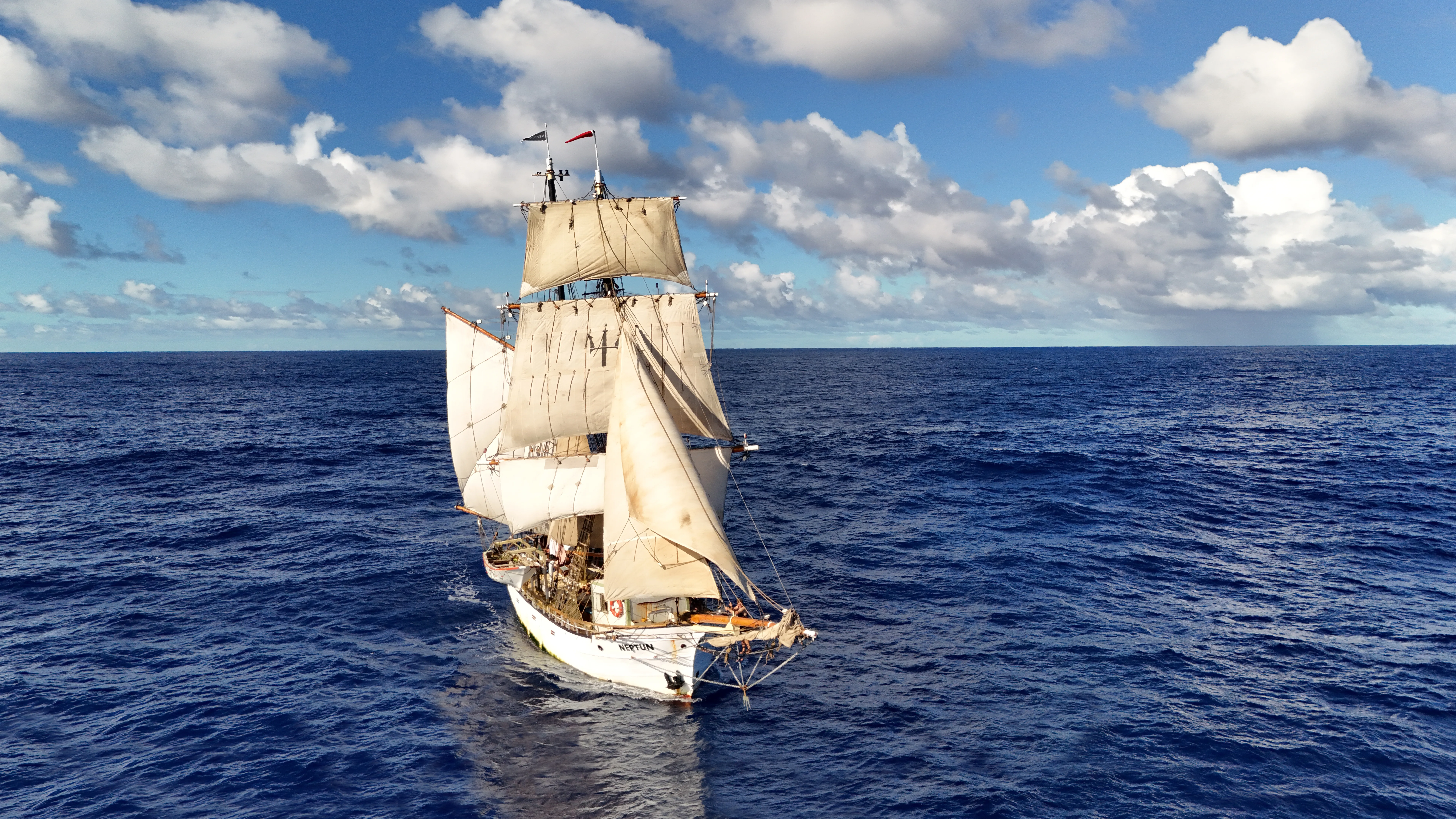
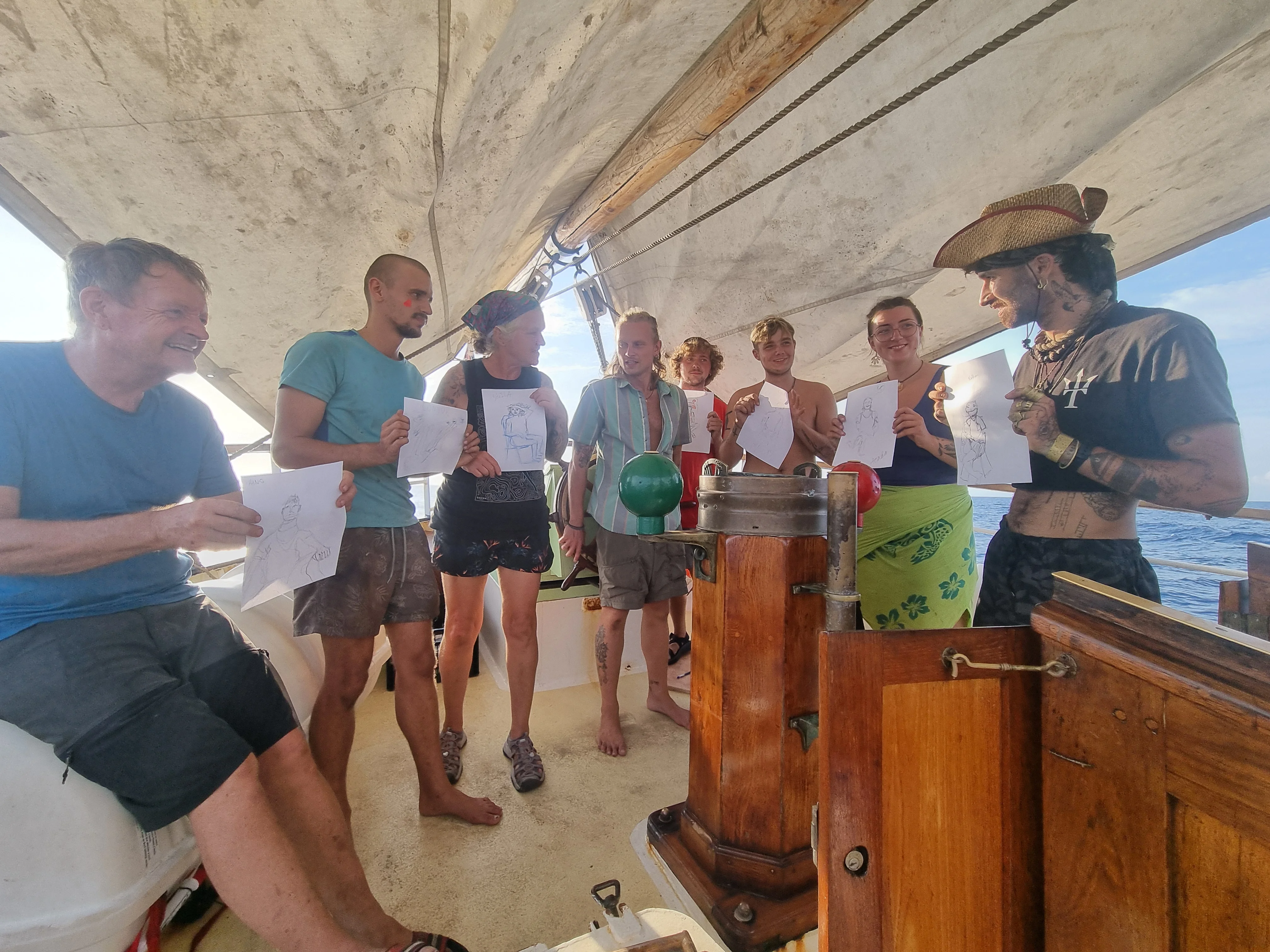
You need reasonable health and a willingness to move, not athletic fitness, to sail a tall ship as trainee crew.
That is the honest answer to the question we get more than any other, and especially the question behind emails from people in their late fifties, sixties, and early seventies. The physical bar is lower than most people think. The bar for willingness, accepting tired legs, a 3am watch call, getting wet, is higher than most people expect. This article covers the first part: what you will actually do physically, and what genuinely disqualifies someone.
Worried you're not fit enough for an ocean leg? Most people who ask are. Read on, then email us with the specifics, we answer every message honestly.
On this page
- The baseline, what you will actually do physically
- What you should be able to do before joining
- Common concerns, age, back, knees, and the rest
- Simple prep you can do two or three months out
- What genuinely disqualifies
- Older sailors, some specific advice
- FAQ
- Read also
The baseline, what you will actually do physically
A voyage on Brigantine NEPTUN is not a workout. It is daily life on a working ship, small repeated efforts over long hours, not short bursts of maximum effort. Five specific things come up often enough to plan for:
Standing four-hour watches. Watches run four hours on, eight hours off, rotated through day and night. During a watch you are mostly on your feet on a moving deck, with short stretches sitting, climbing a ladder, tending lines, or steering. The cumulative load is real, by day three most trainees are tired in a new way, but no single moment is physically hard.
Hauling on lines. Setting, furling, and trimming sails is done by teams of four to eight people pulling together on halyards, braces, and sheets. This is full-body pulling, similar to a tug-of-war against steady resistance, not a one-rep maximum lift. The load on any individual is moderate because the team shares it. If you can pull a stuck door open with both hands, you can haul on a line.
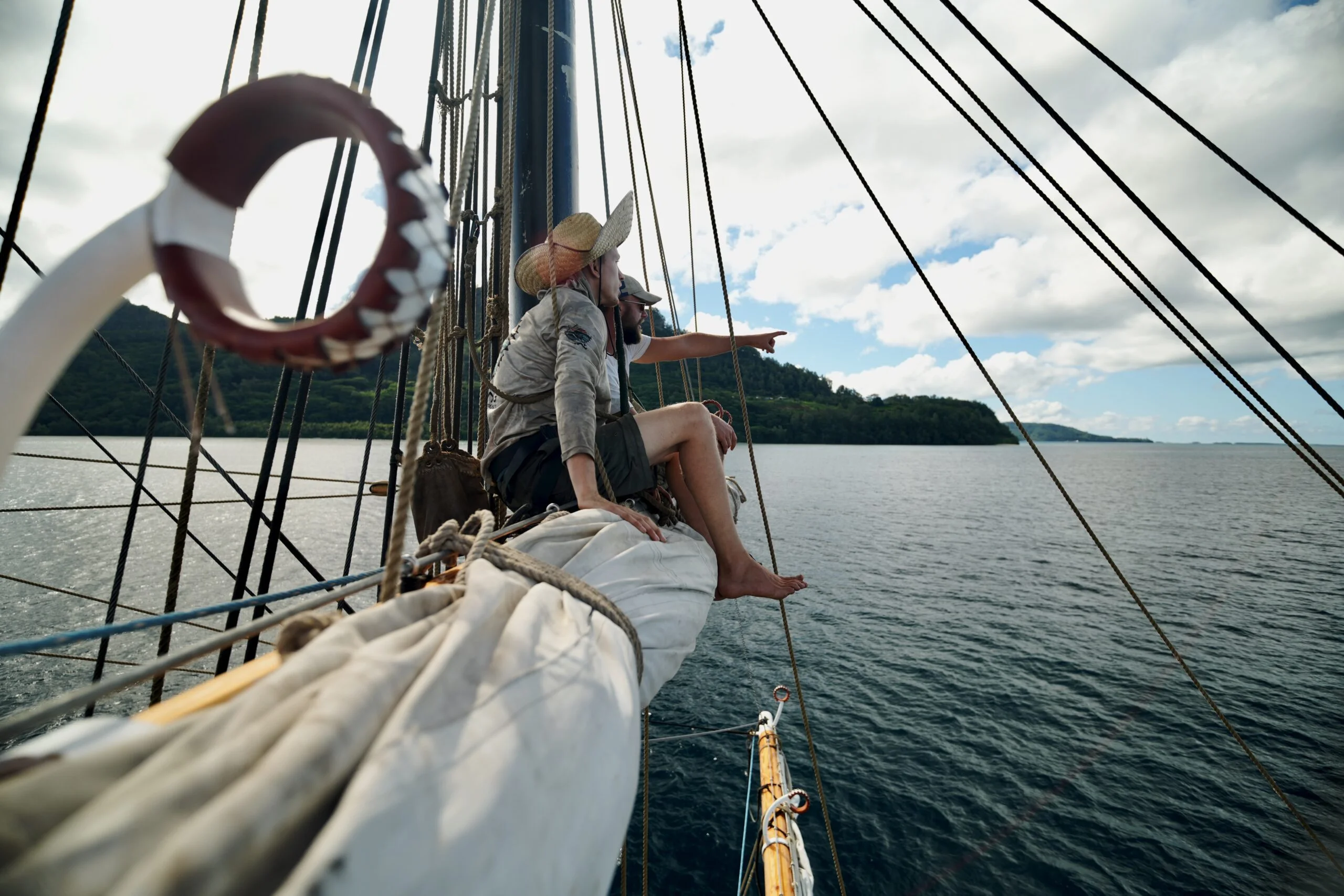
Climbing the ratlines (optional). Going aloft to the yards is part of traditional sail handling and many trainees want to do it. It is always optional, always in a harness clipped to a safety line, and no voyage milestone requires it. Trainees who prefer to stay on deck handle sails from deck level for the whole voyage and nothing about their experience is diminished.
Carrying ten to fifteen kilograms briefly. Provisioning days and sail handling occasionally involve a bag, a coil of rope, or a sail bundle of that weight. You carry it a few metres, up or down a ladder, then set it down. If you can carry a full grocery shop from the car to the kitchen, you have this covered.
Balancing on a moving deck. The ship rolls and pitches at sea, and your legs and core work continuously without you thinking about it. This is the one thing that genuinely builds in the first week, people who arrive feeling unsteady adapt within three or four days. The ship becomes your gym, and you cannot opt out of it.
None of these is strenuous for an average adult individually. What is demanding is doing them for weeks, in rotating watches, with interrupted sleep. Pacing matters more than peak fitness.
The numbers behind a working day at sea
The honest baseline
A working ship, not a bootcamp
Crew on the yards or hauling a brace is a team effort, never a one-person max lift. The ship rewards stamina and willingness, not gym numbers. People in their sixties and seventies sail every leg of the 2026-2027 voyage.
What you should be able to do before joining
If you can do these four things on land without distress, you can sail on NEPTUN. None requires a gym membership.
Climb a ladder
Go up and down a steep household ladder twice without resting. Companionways between decks are similar, short, steep, often slightly damp.
Lift 15 kg
Pick up a full grocery shop or a 15 kg suitcase from the floor and carry it across a room. Briefly, occasionally, not all day.
Swim 100 m
Swim a relaxed 100 metres in calm water in any stroke. We never expect anyone to swim at sea, but the ability is a basic safety baseline.
Stand 4-hour watches
Stay on your feet, with brief sits, for four hours at a stretch. Walking to the shops and back without a rest is the same load.
Already meet the bar? Browse the nine legs of the 2026-2027 voyage and pick the dates that fit your life.
Common concerns, age, back, knees, and the rest
Most physical worries people raise before a voyage do not become real problems aboard. A quick tour of the usual list:
"I am 62 / 65 / 70, am I too old?" No. Trainees on NEPTUN and comparable ships have ranged from eighteen to seventy-one. Age by itself is not a disqualifier. The honest question is whether you can do the things in the baseline section above. Many older trainees arrive slightly nervous and leave the ship in better shape than they came aboard.
"My back is not what it was." Rule of thumb: if you can carry your own luggage up two flights of stairs without sitting down at the top, your back is fine. The ship gives you more opportunities to bend, twist, and brace than ordinary life, but not heavier. Chronic pain that flares under light-to-moderate load is worth discussing with us and with your doctor before you book.
"My knees creak." If you can sit down and stand up from a low chair without pushing off the arms, your knees are up to the work. Ladders between decks are steep but short, and you set your own pace.
"My cardiovascular fitness is average." Fine. There is no sprinting on a voyage. The hardest cardiovascular moment most trainees face is hauling on a heavy sail for ninety seconds, and someone in the line is always pulling harder than you are.
"My balance is not great on land." It adapts faster at sea than ashore, because you are forced to use it every waking minute. Trainees who describe themselves as clumsy on land regularly feel steadier on the moving deck by the end of week one.
"I get vertigo." Rarely a problem on deck. Mast-climbing is optional, so if heights are a specific issue you never go aloft. Nobody is pressured.


Simple prep you can do two or three months out
You do not need a gym. The goal is to make the transition from office life to ship life less of a shock. Three habits, in order of usefulness:
Walk more, with some weight. A twenty- to thirty-minute walk most days is the single best preparation. Add weight by carrying a small backpack (three to five kilograms, books, a water bottle) instead of going empty-handed. Once that is comfortable, use stairs wherever you would otherwise take a lift. This trains the exact pattern you will use aboard: low-intensity, repeated, on your feet.
Carry things with your hands. Grip strength matters for hauling lines, and it is the first thing to fade in modern life. Stop rolling your luggage at the airport for a few weeks, pick it up and carry it for two minutes at a time. Carry shopping bags instead of pushing a trolley. If that feels like too much, start with one bag in one hand and switch sides.
A few minutes of core and balance, three times a week. Five or ten minutes is enough. A plank, a few sit-to-stands from a low chair, standing on one foot while you brush your teeth. Wake up the small stabilising muscles that a desk job puts to sleep. YouTube has thousands of short routines for people over fifty; any will do.
What you do not need: running, heavy weights, a trainer, or a month in a gym. People who show up having done nothing but their usual daily walk still sail fine. The trainees who struggle most in the first week are not the unfit ones, they are the ones who expected the first week to feel easy.
A two-month prep block in numbers
The ocean-crossing legs are the ones that ask the most of you. Three weeks of trade-wind sailing without a port, and you in a rotating watch the whole time.
The legs that ask the most
Ocean crossings, where stamina matters most
Three long passages where the rhythm of watches, weather, and pacing decides how you feel by week two.
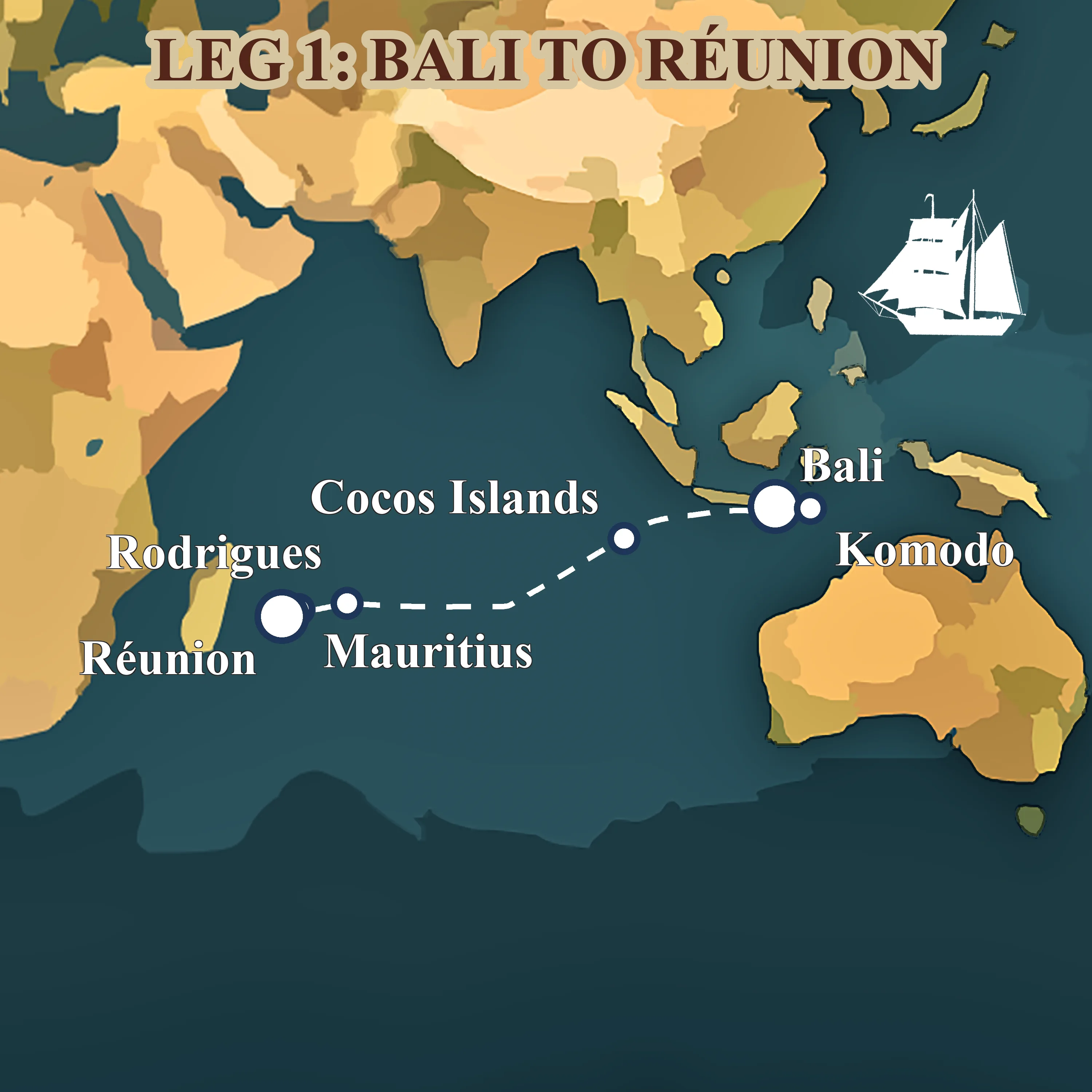
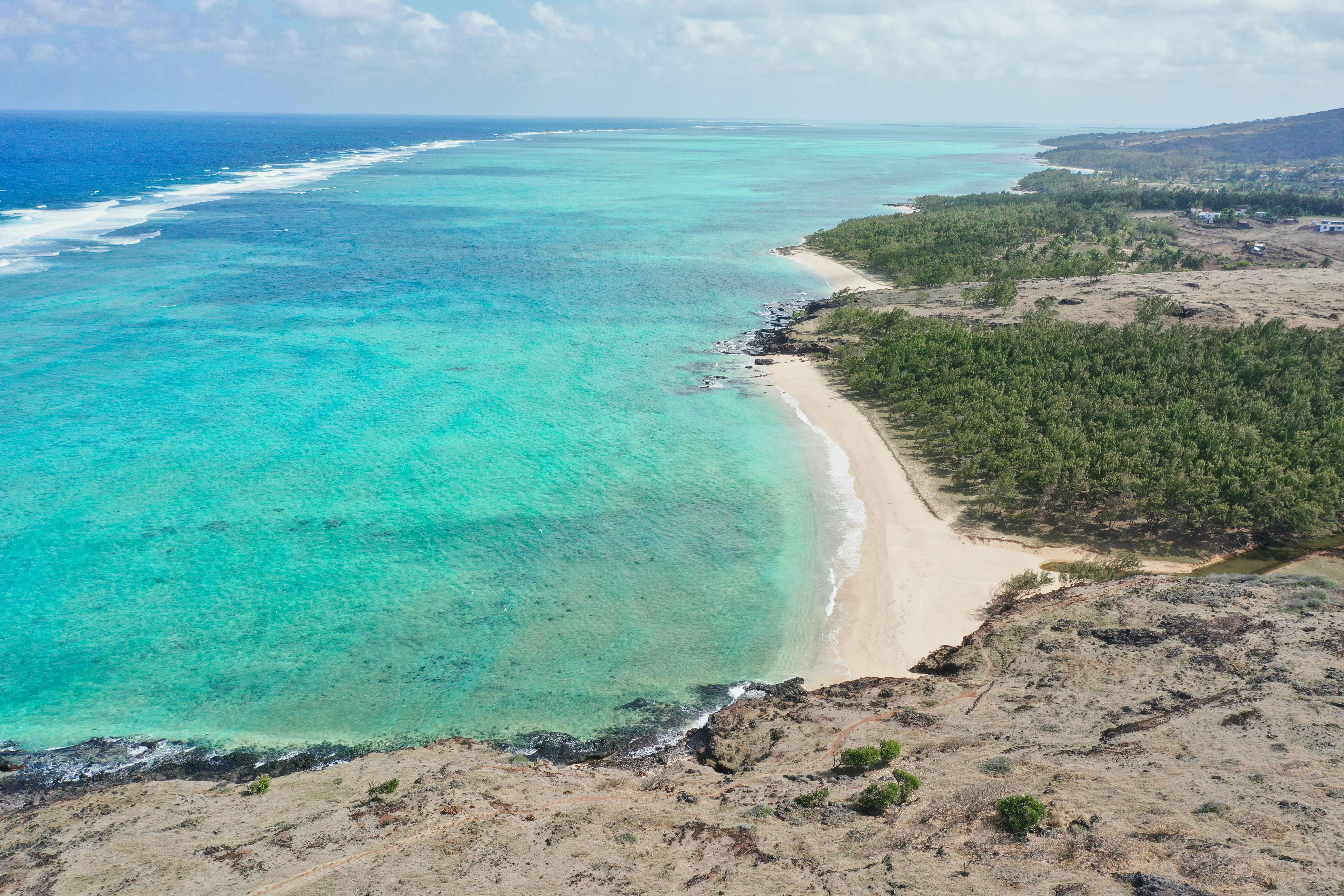
Leg 1: from Bali to Réunion across the Indian Ocean
May 2026 — Aug 2026 · Bali, Indonesia → Réunion, France
The opening chapter of Neptun's 482-day world voyage, a 4,078-nm trade-wind passage from the temples of Bali to the volcanic cliffs of Réunion.
Read more about this leg → about Leg 1: from Bali to Réunion across the Indian Ocean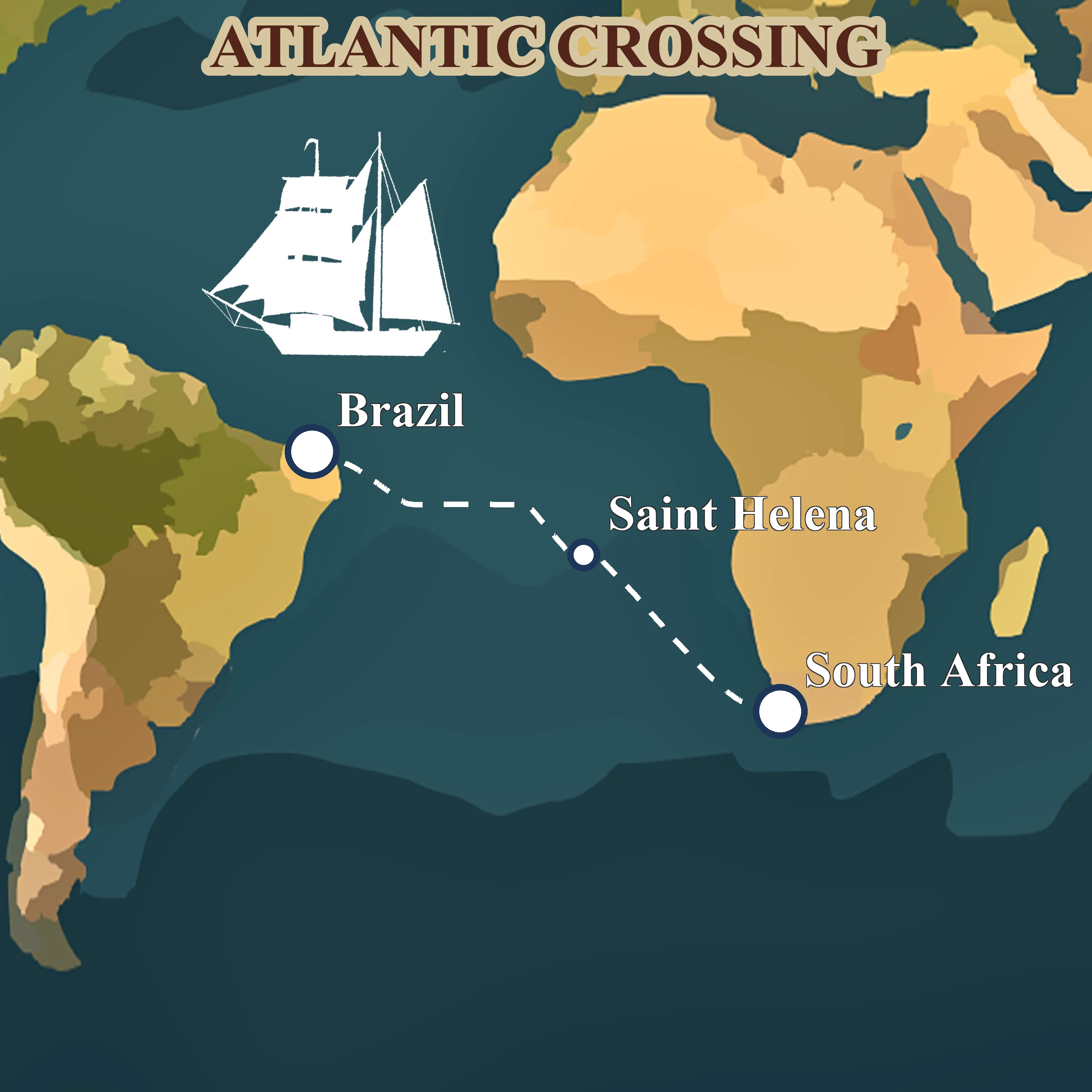
Leg 5: across the South Atlantic from Saldanha to Fortaleza
Jan 2027 — Mar 2027 · Saldanha Bay, South Africa → Fortaleza, Brazil
Forty-four days before the southeast trades, Napoleon's exile at St. Helena, the equator crossing, and landfall in tropical Brazil. The ocean chapter of the voyage.
Read more about this leg → about Leg 5: across the South Atlantic from Saldanha to Fortaleza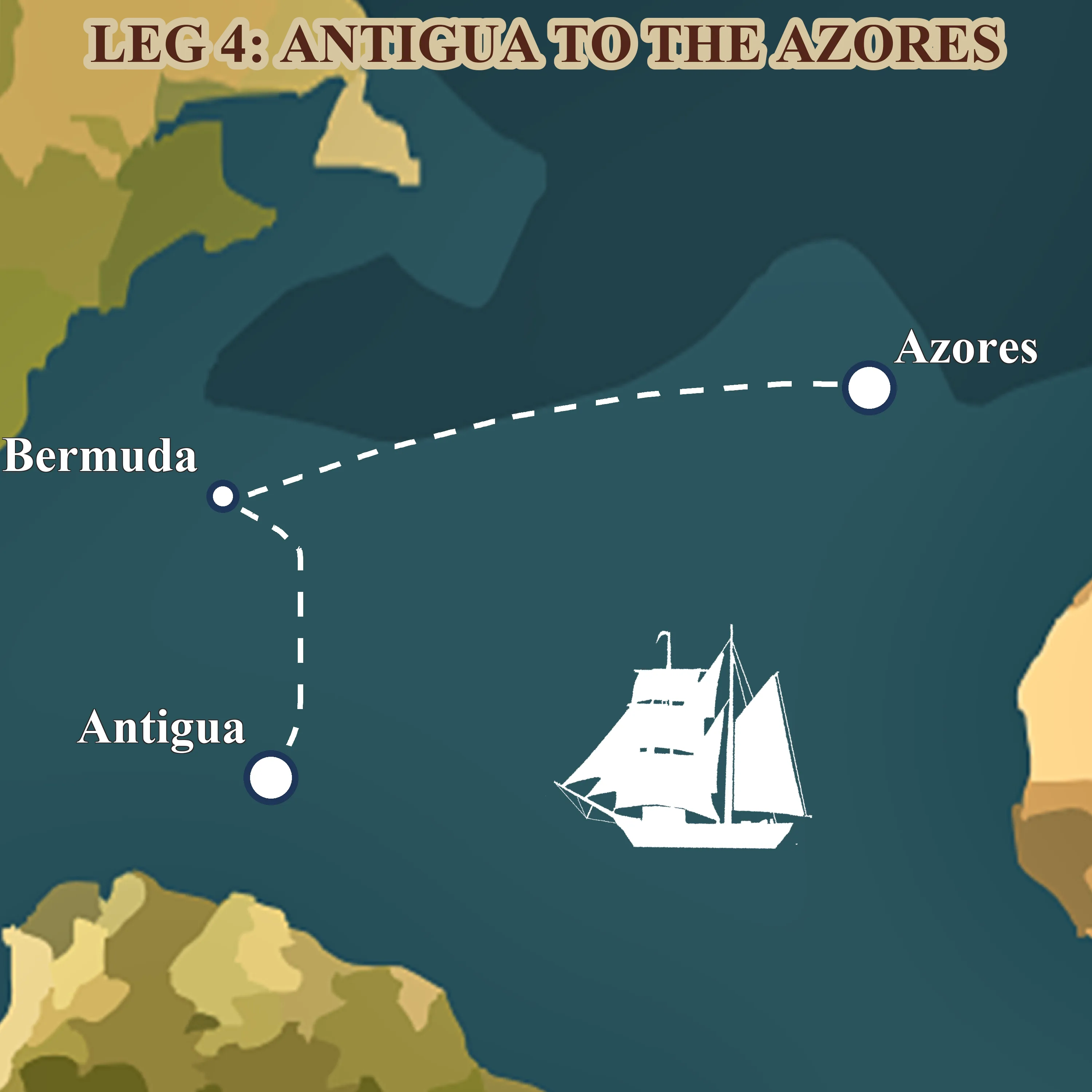
Leg 8: across the North Atlantic from Antigua to the Azores
May 2027 — Jul 2027 · Antigua → Ponta Delgada, Azores
Fifty-six days on the classic spring tall-ship route home, Antigua, a long reach to Bermuda's pink sand, then three weeks of open ocean to the volcanic Azores.
Read more about this leg → about Leg 8: across the North Atlantic from Antigua to the AzoresWhat genuinely disqualifies
We owe you an honest answer here, because the alternative is someone discovering at sea that they should not have come. The genuine limits:
Conditions requiring daily in-hospital care. Regular dialysis, scheduled infusions, continuous hospital oxygen, anything that requires you to be in a medical facility on a fixed schedule rules out an ocean voyage. We are days from shore when we are at sea.
Severe mobility limits. If you cannot climb a steep ladder between decks, or cannot stand unsupported for more than a few minutes, the ship's layout will not work for you. We are an old wooden vessel with narrow companionways, not an accessible platform.
Recent major surgery. Less than three months from a significant operation is too soon. Your doctor's recovery timeline matters more than ours.
Heavy medication that excludes being away from medical review. Some blood thinners, cardiac medications, and psychiatric medications need a level of monitoring an ocean voyage does not allow. Bring the list to your doctor and ask directly: "can I be out of contact with you for forty days?"
If any of this applies and you are unsure, email us before you rule yourself out. We will tell you honestly.
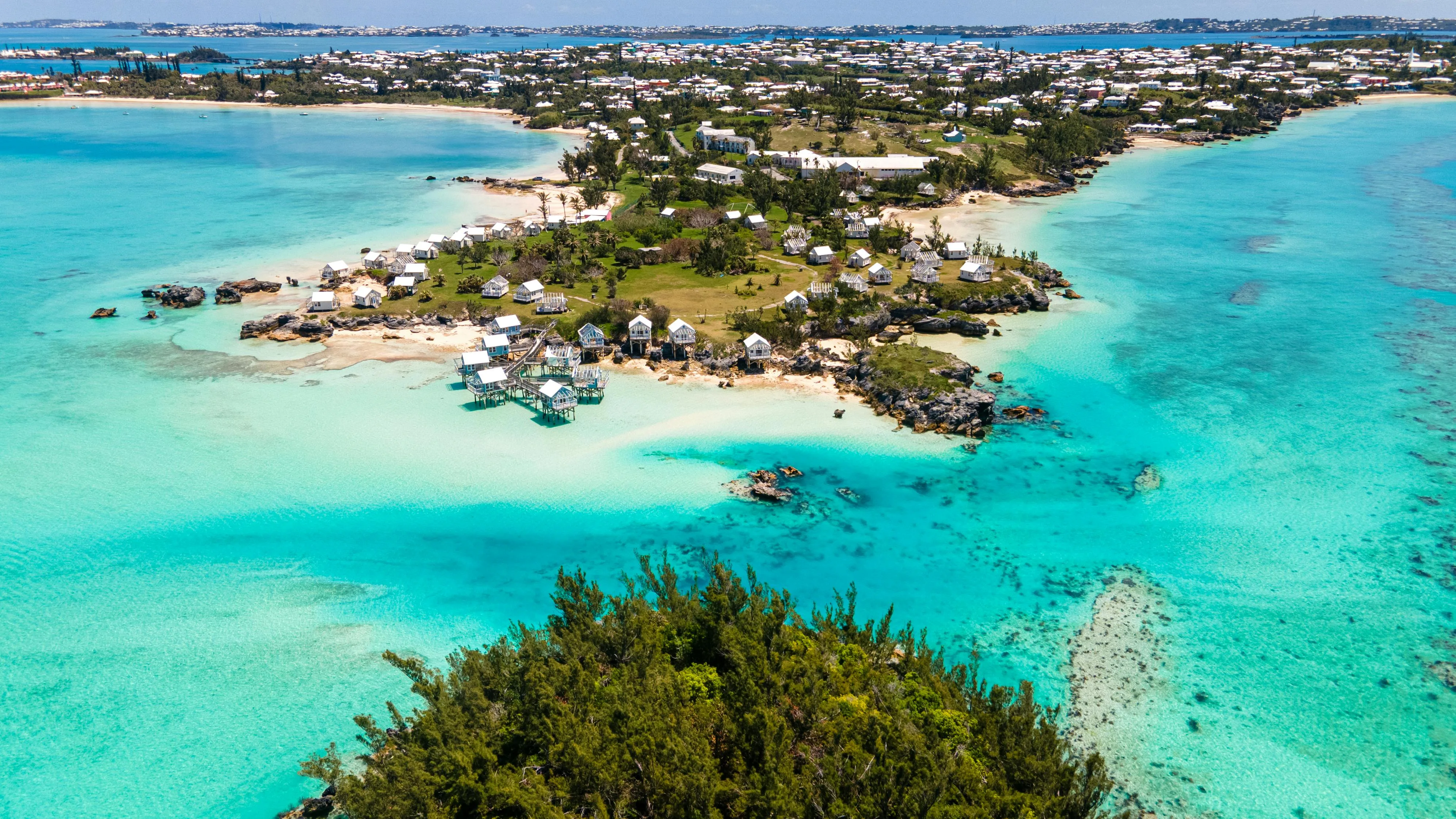
Reasonable health, willing legs, that is the bar.
Older sailors, some specific advice
If you are in your late fifties, sixties, or seventies and reading this because you have wanted to do something like this for years, a few things worth knowing.
You will not be the oldest on board. A typical voyage has two or three trainees over sixty, and we have had trainees in their early seventies complete multi-week legs. The youngest and the oldest trainees almost always end the voyage as friends, the physical work levels everyone, and the conversations after watches do the rest.
Watches adapt to the crew. If you are slower on a ladder or need longer to get into oilskins, the ship accommodates. Four-hour watches are fixed because sailing requires them, but how hard any individual is pushed inside that watch is flexible. A good bosun assigns the heaviest tasks, a big sail-change, a long haul, to the people on watch best placed to do them.
The crew helps. This is not a bootcamp. Professional officers and experienced volunteer crew are aboard specifically to teach and support, nobody is left struggling alone on a line. Asking for a hand is normal, not a sign that you should not have come.
If you are still uncertain whether you are fit enough, the honest answer is probably that you are. But you do not have to guess, write to us with the specifics and we will give you a direct answer. The mental side of an ocean leg matters more than the physical: read a day at sea on a tall ship and the watch system explainer to see whether the rhythm of the work suits you, and the seasickness guide for the other worry.
Reasonable health, a willingness to move, that is enough
If you can climb a ladder, lift 15 kg, swim 100 metres, and stand on your feet for four hours, you can sail on NEPTUN. No gym required.
FAQs
Common fitness questions
How fit do I need to be to sail a tall ship?
Reasonably healthy and willing to be on your feet for four-hour stretches. If you can climb a household ladder twice in a row, lift 15 kg briefly, swim 100 m in calm water, and walk for half an hour without resting, you have the baseline. Sail training on NEPTUN expects no athletic fitness.
Am I too old to join as trainee crew?
Almost certainly not. Trainees on NEPTUN range from eighteen to seventy-one. The youngest and oldest on every voyage end up as friends. Age by itself is not a disqualifier, the honest question is whether you can do the four basic things in the prerequisites section above.
Do I have to climb the rigging?
No. Going aloft is optional, always in a harness clipped to a safety line. Trainees who prefer to stay on deck handle sails from deck level for the entire voyage and nothing about their experience is diminished. If heights are a specific issue, you simply do not go up.
Will I get seasick? Does that disqualify me?
Most people get a little seasick in the first 24-48 hours and adapt. Severe, persistent seasickness is rare and we discuss it case-by-case. Read the seasickness guide for the honest version. By itself it is not a disqualifier, but plan for the first two days to feel rough.
I had surgery six months ago, can I still come?
Probably yes. Less than three months out from a major operation is too soon. Three to six months out depends on what was done and your surgeon's release. We do not need a doctor's note, but we do need you to ask your doctor directly: "can I be out of medical contact for the duration of this leg?"
What about my back / knees / cardiovascular fitness?
If you can carry luggage up two flights of stairs, sit and stand from a low chair without pushing off the arms, and walk thirty minutes without breathlessness, you have what you need. There is no sprinting on a voyage. Pacing matters more than peak fitness, the work is repeated, not maximal.
Read also
- A day at sea on a tall ship, the rhythm of watches, meals, and rest that decides how the work feels.
- Watch systems on a tall ship, the four-on-eight-off rotation, in detail.
- Seasickness on a tall ship, the other big worry, addressed honestly.
- Packing list for an ocean voyage, what to bring once you have decided to come.
- How to join a tall ship crew, the application and what to expect from the process.
- Sail training programme, what you actually learn over a full leg.
All nine legs of the 2026-2027 voyage
Pick a three-week leg or string several together. The fitness bar is the same for all of them.
Leg 1: from Bali to Réunion across the Indian Ocean
May 2026 — Aug 2026 · Bali, Indonesia → Réunion, France
The opening chapter of Neptun's 482-day world voyage, a 4,078-nm trade-wind passage from the temples of Bali to the volcanic cliffs of Réunion.
Read more about this leg → about Leg 1: from Bali to Réunion across the Indian Ocean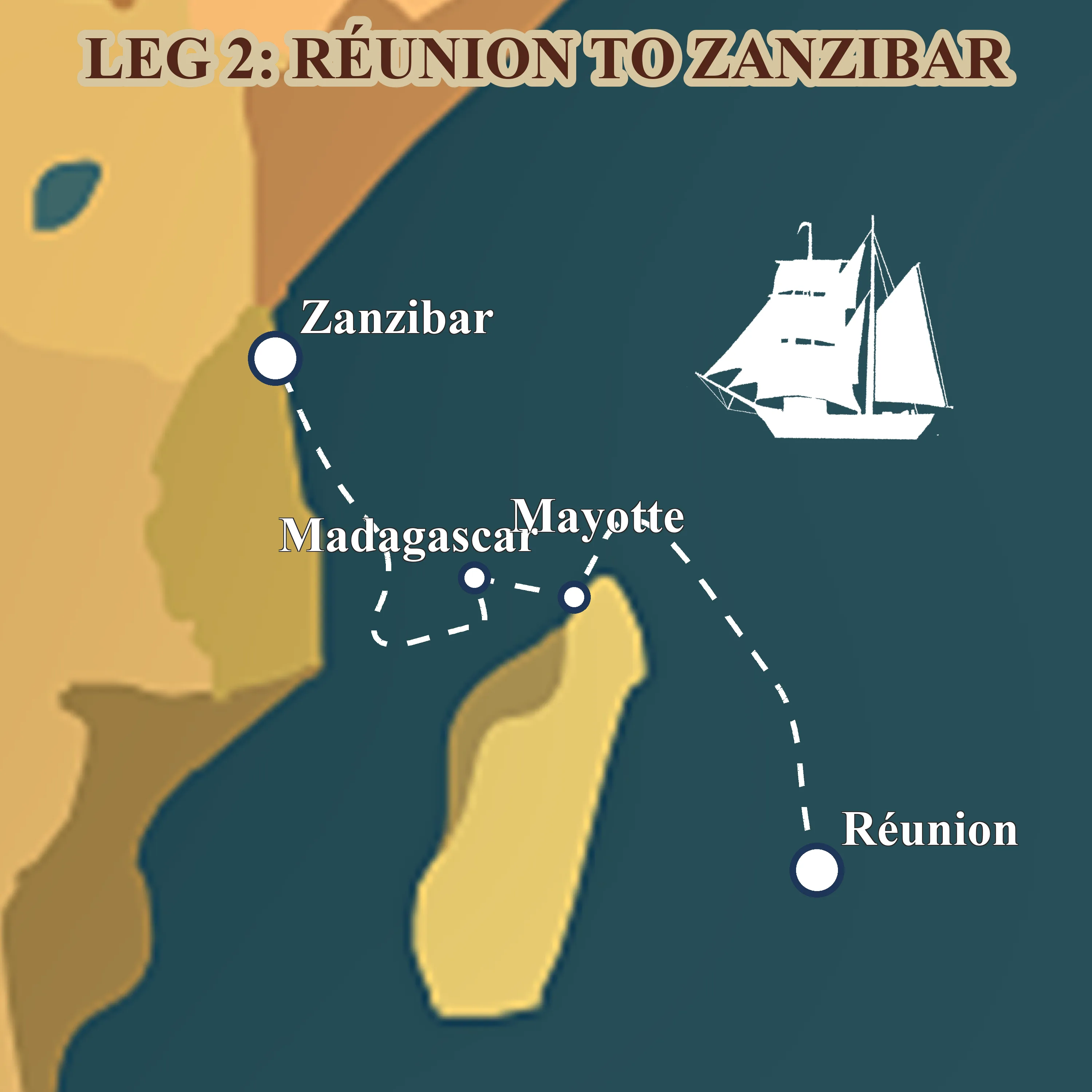
Leg 2: from Réunion to Zanzibar via Madagascar
Aug 2026 — Sept 2026 · Réunion, France → Zanzibar, Tanzania
Forty days across the western Indian Ocean, volcanic Réunion, lemur-haunted Nosy Be, the Mozambique Channel, and the spice-scented stone alleys of Zanzibar.
Read more about this leg → about Leg 2: from Réunion to Zanzibar via Madagascar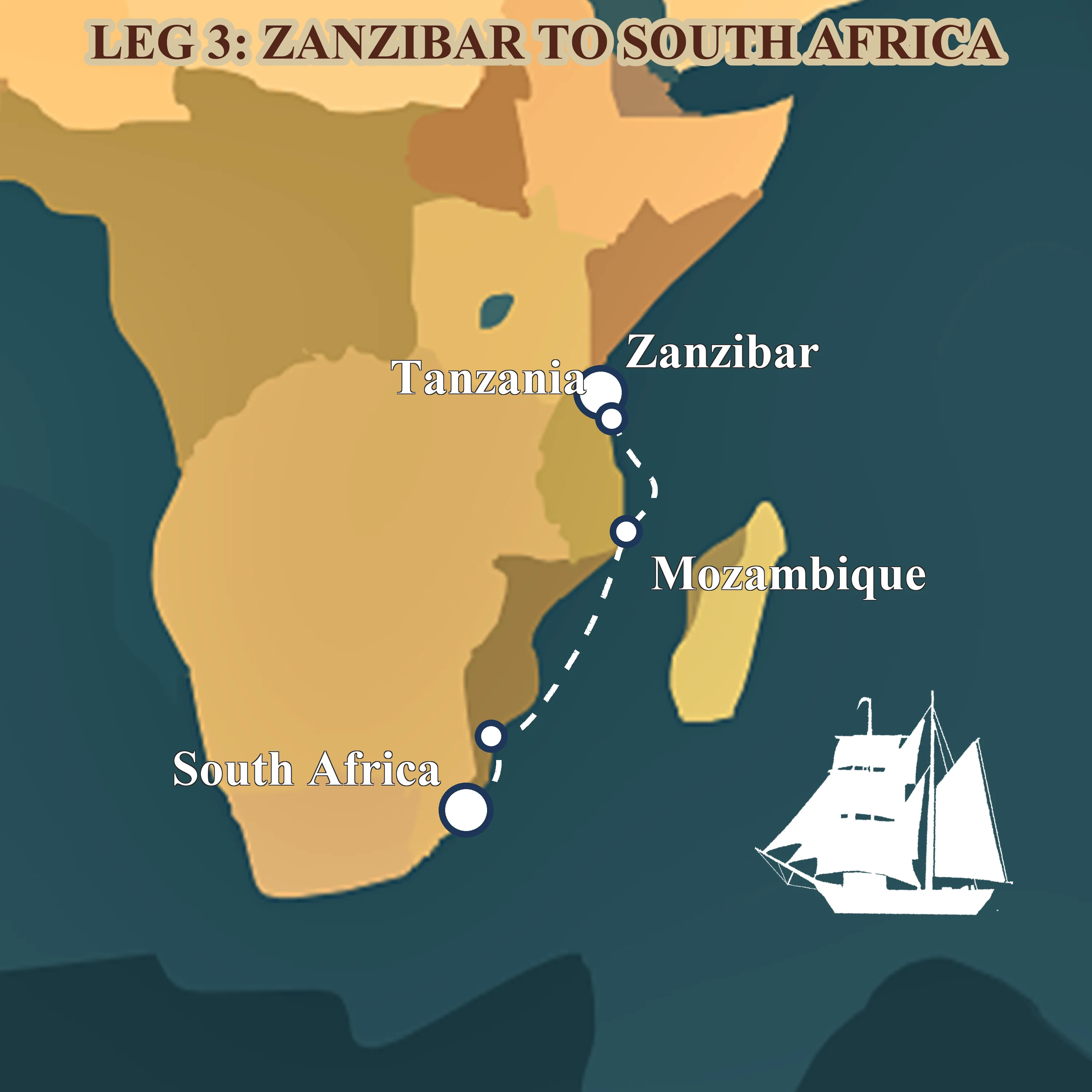
Leg 3: from Zanzibar to Durban down the Mozambique Channel
Sept 2026 — Nov 2026 · Zanzibar, Tanzania → Durban, South Africa
Sixty-three days coasting the African shore, spice islands, mangrove anchorages, Portuguese praças and the long trade-wind run down the Mozambique Channel to Durban.
Read more about this leg → about Leg 3: from Zanzibar to Durban down the Mozambique Channel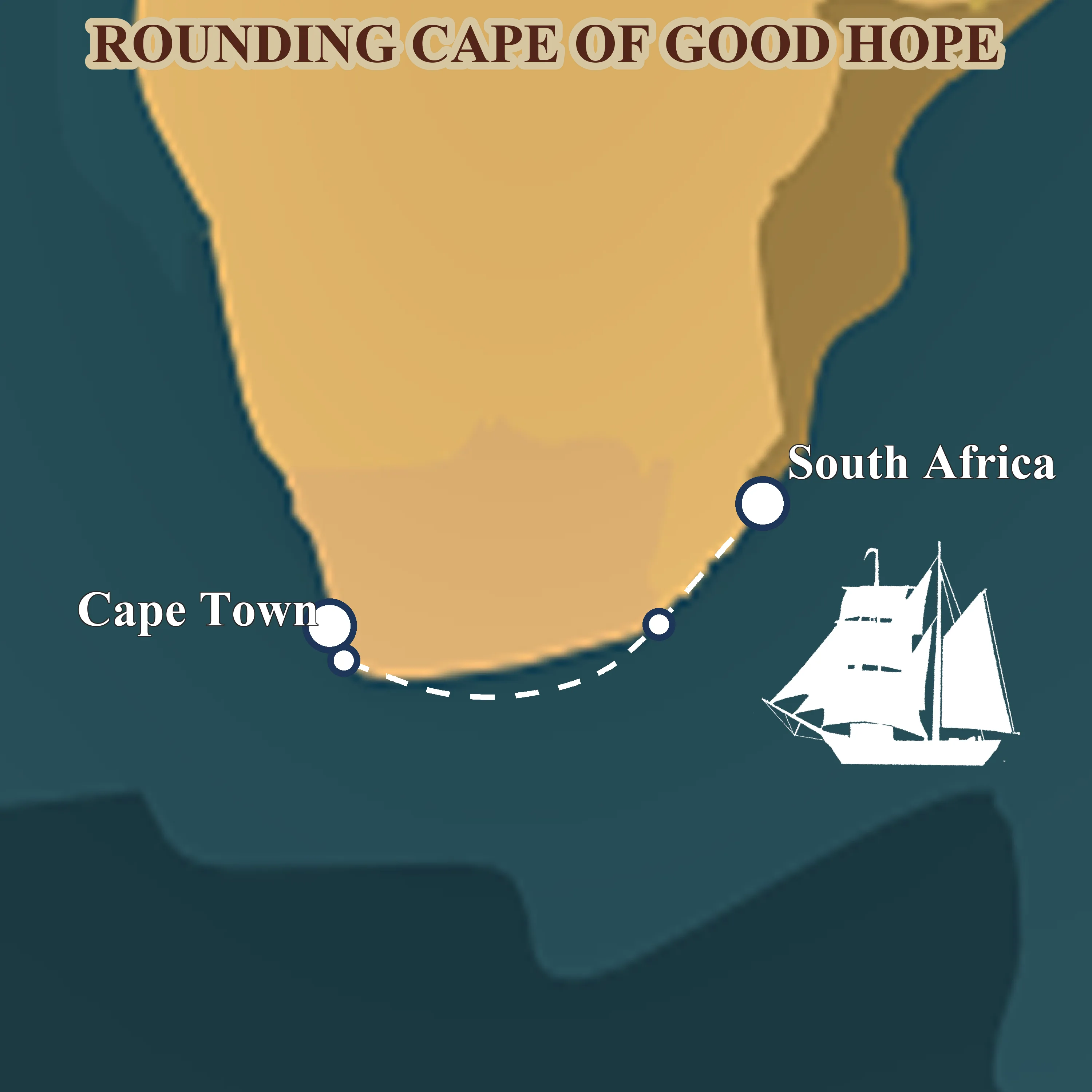
Leg 4: from Durban around the Cape of Good Hope
Nov 2026 — Dec 2026 · Durban, South Africa → Cape Town, South Africa
Thirty-eight days of serious seamanship, the Agulhas current, the Cape of Good Hope and the Southern Ocean at the tip of Africa, finishing quietly in Cape Town for Christmas.
Read more about this leg → about Leg 4: from Durban around the Cape of Good HopeLeg 5: across the South Atlantic from Saldanha to Fortaleza
Jan 2027 — Mar 2027 · Saldanha Bay, South Africa → Fortaleza, Brazil
Forty-four days before the southeast trades, Napoleon's exile at St. Helena, the equator crossing, and landfall in tropical Brazil. The ocean chapter of the voyage.
Read more about this leg → about Leg 5: across the South Atlantic from Saldanha to Fortaleza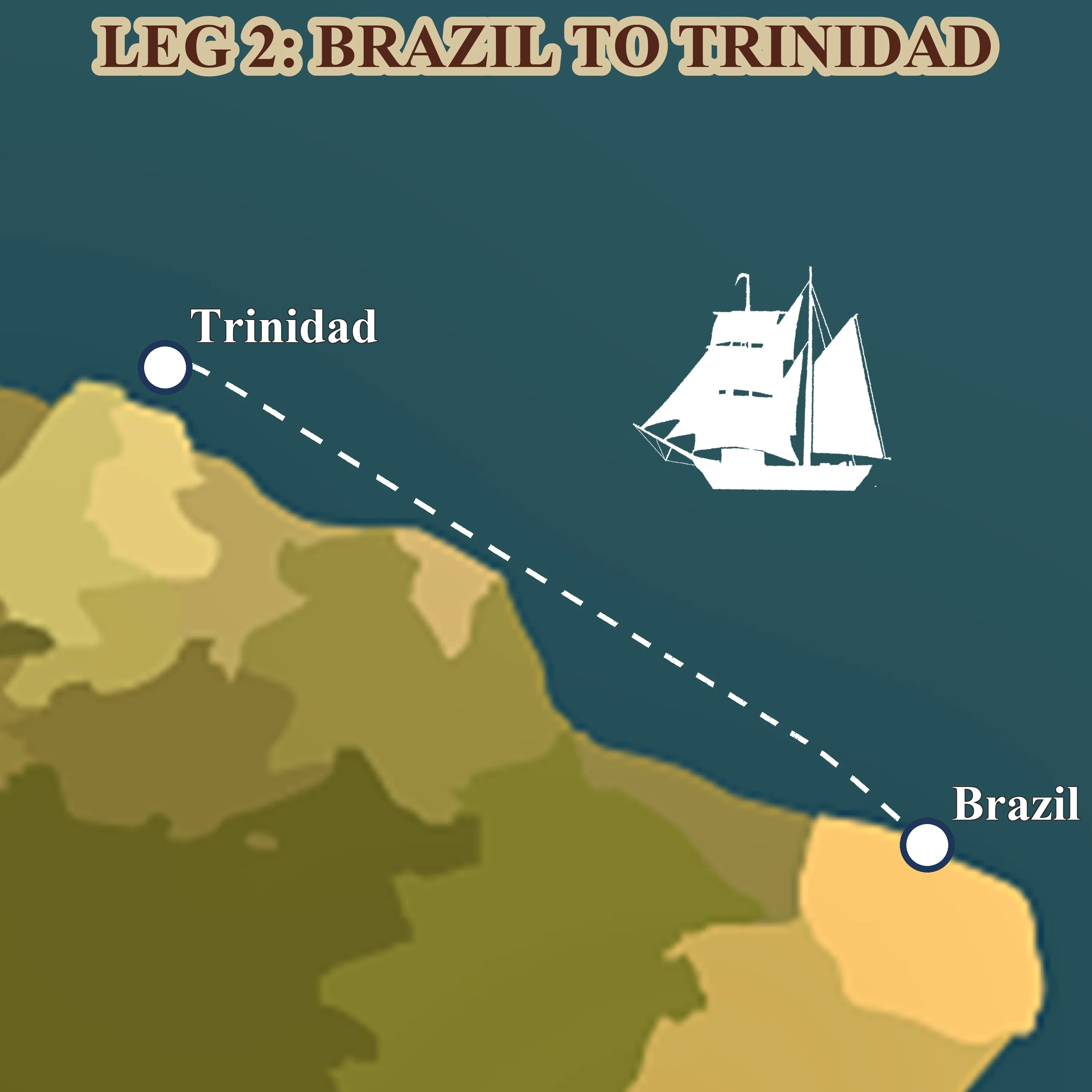
Leg 6: from Fortaleza to Trinidad along South America
Mar 2027 — Apr 2027 · Fortaleza, Brazil → Trinidad
A thousand miles of downwind trade running, the Amazon's brown water under the hull, the Guianas smudged on the horizon, and Trinidad's steelpan waiting at the end.
Read more about this leg → about Leg 6: from Fortaleza to Trinidad along South America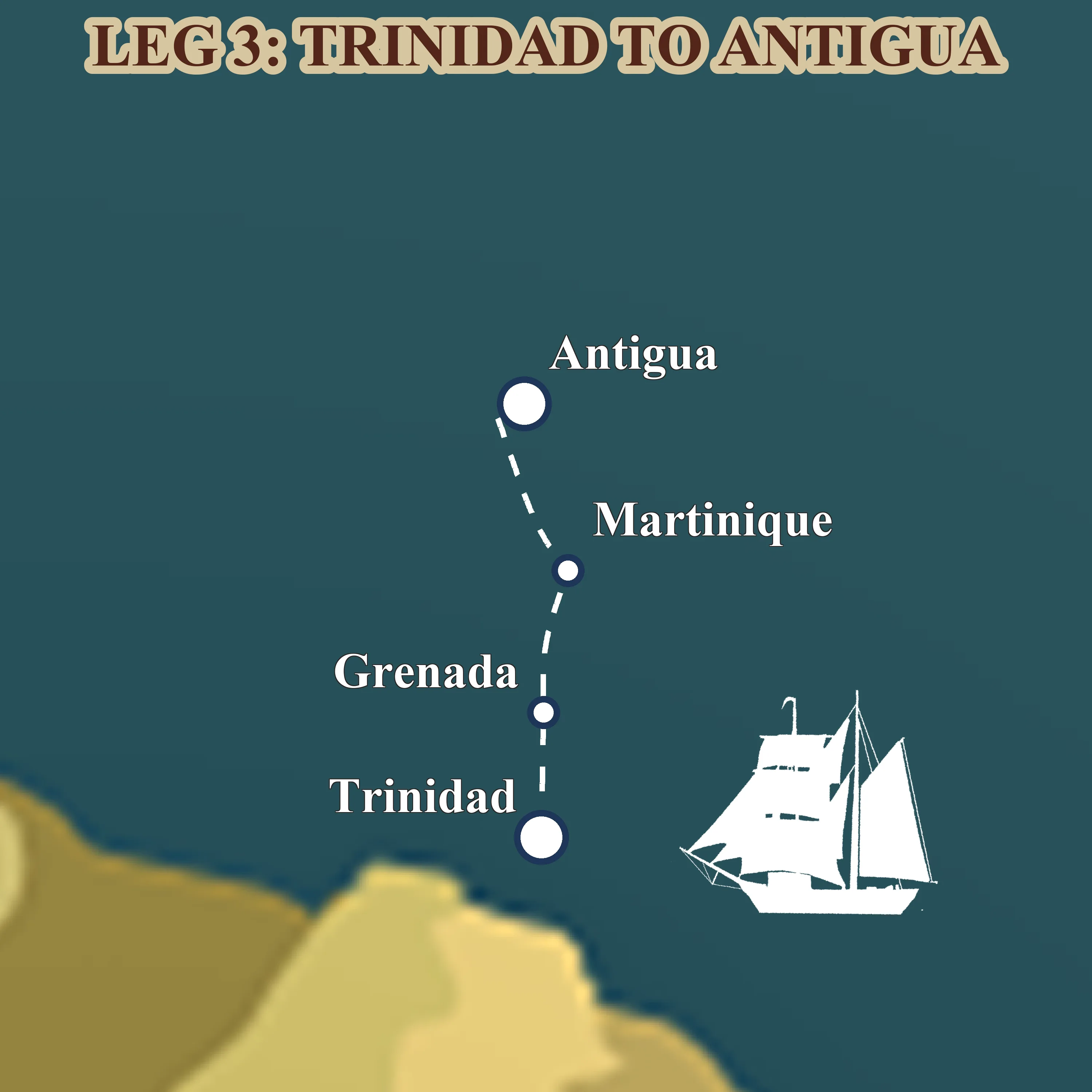
Leg 7: through the Windward Islands from Trinidad to Antigua
Apr 2027 — May 2027 · Trinidad → Antigua
Four weeks of short trade-wind daysails through the Lesser Antilles, turquoise anchorages, rum shops on the sand, French-Creole Martinique and the tall-ship scene in Antigua.
Read more about this leg → about Leg 7: through the Windward Islands from Trinidad to AntiguaLeg 8: across the North Atlantic from Antigua to the Azores
May 2027 — Jul 2027 · Antigua → Ponta Delgada, Azores
Fifty-six days on the classic spring tall-ship route home, Antigua, a long reach to Bermuda's pink sand, then three weeks of open ocean to the volcanic Azores.
Read more about this leg → about Leg 8: across the North Atlantic from Antigua to the Azores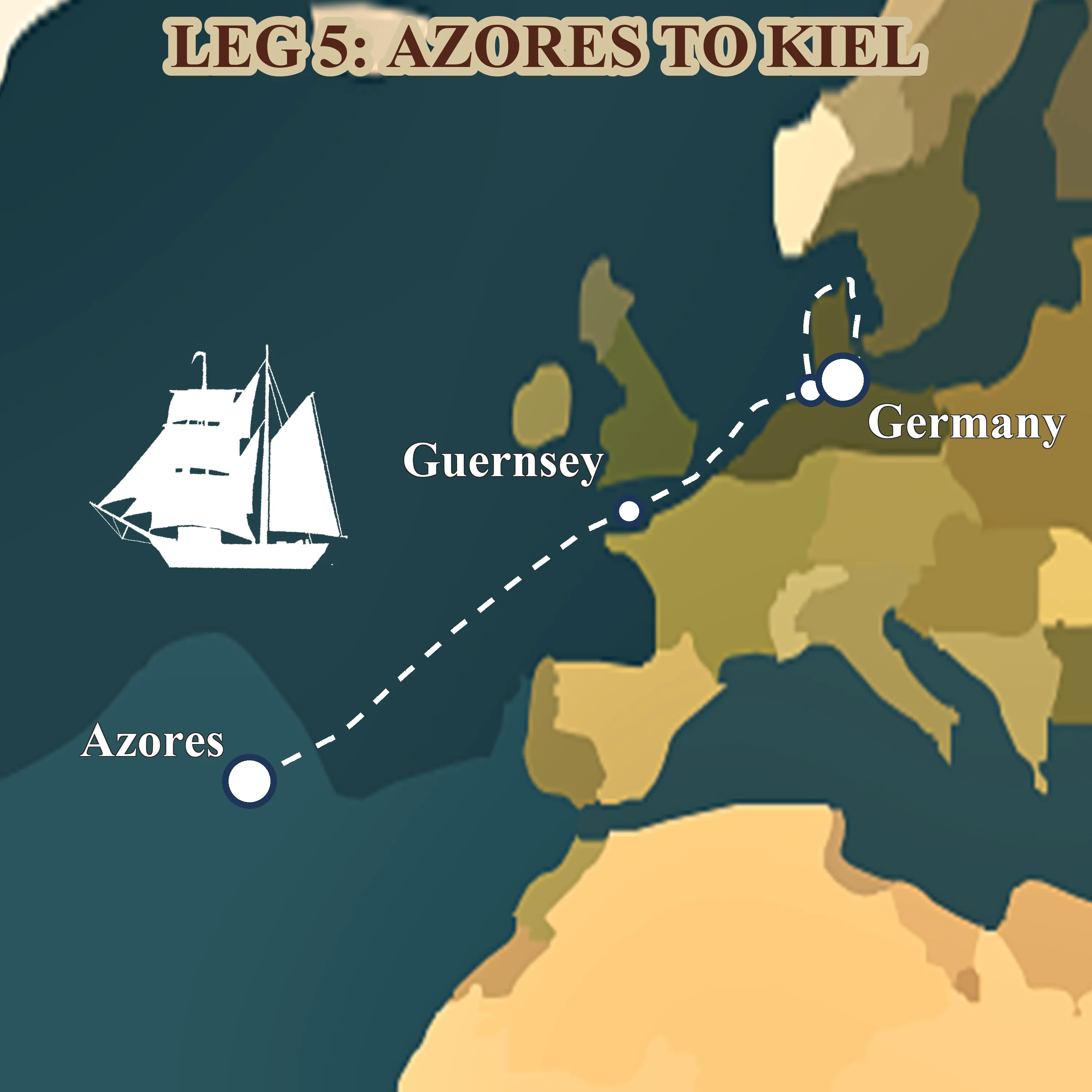
Leg 9: homecoming from the Azores to Kiel
Jul 2027 — Aug 2027 · Ponta Delgada, Azores → Kiel, Germany
The final 1,878 nm, from volcanic São Miguel to the Baltic, up the English Channel through the Dover TSS, past Helgoland's red cliffs and home to Kiel.
Read more about this leg → about Leg 9: homecoming from the Azores to KielWant to sail with us? Back to the knowledge base for more reference articles, or read on. Brigantine NEPTUN is a non-profit training ship, every voyage takes 10 crew members through real ocean sailing, no experience needed. Apply for a berth or read about the voyages first.