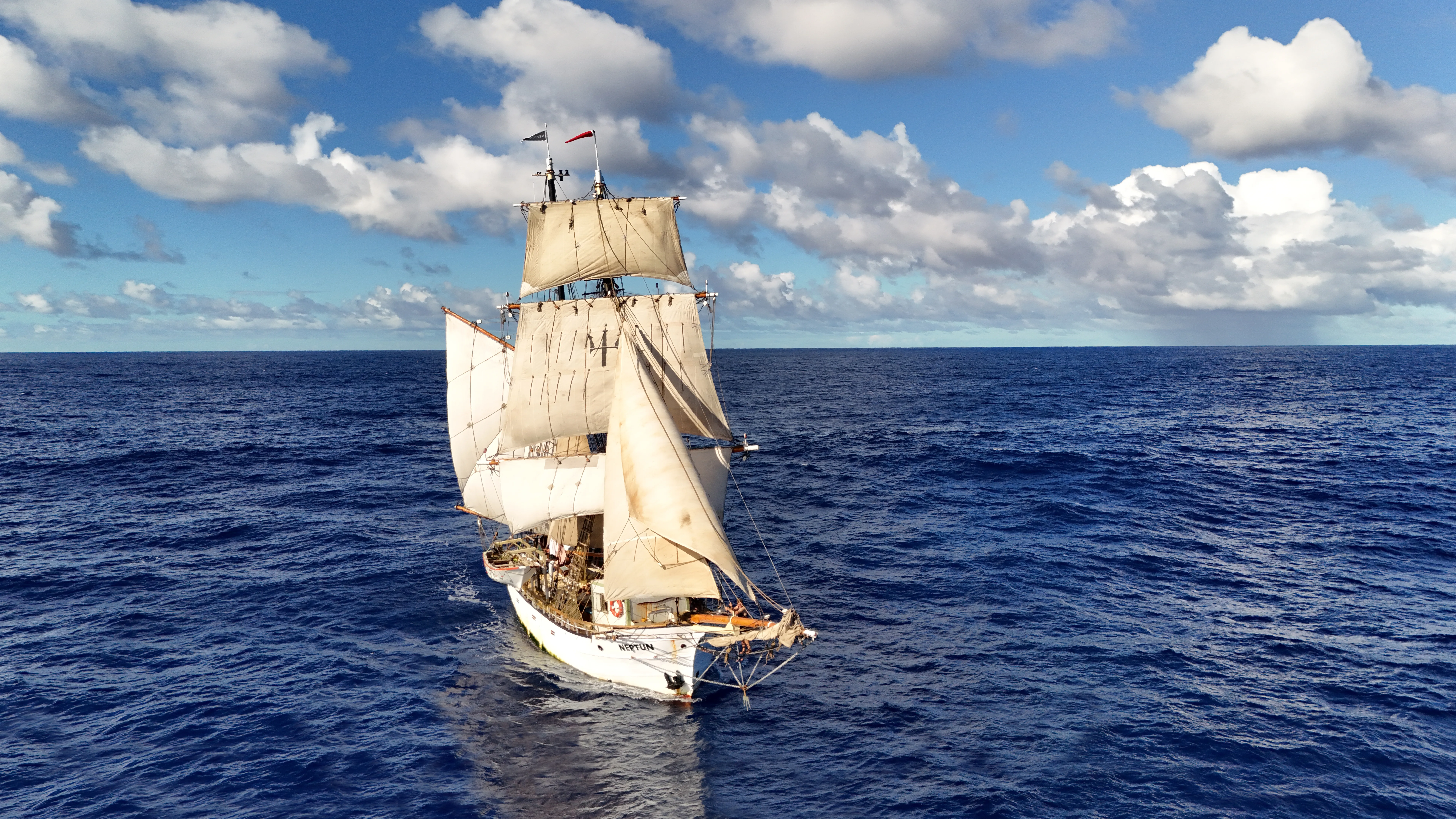

The honest version
Most people are briefly seasick on any ocean voyage, it passes in two to three days once your inner ear acclimates, and learning how to avoid seasickness on a long voyage is mostly about managing those first 48 hours rather than eliminating the feeling entirely.
If fear of being sick for weeks is what's holding you back from applying, this article is for you. The pattern across NEPTUN voyages is consistent enough that we can tell you what to expect, what helps, and when to stop worrying. Nothing below is medical advice, for anything beyond over-the-counter products, talk to your pharmacist or doctor. But the anxiety around seasickness on a tall ship is usually disproportionate to the real experience.
Worried seasickness will ruin a long passage? Most NEPTUN crew have never crossed an ocean before, and almost all of them are eating breakfast on day three. Apply for a berth or read about life onboard first.
On this page
- The honest version
- The reassuring numbers
- What actually causes seasickness
- Will you get seasick?
- Prevention before the voyage
- What to do when it starts
- The acclimation curve
- What helps, what doesn't, what NEPTUN provides
- When to worry
- Does it disqualify you from sailing?
- Shorter legs for first-timers
- FAQ
- Read also
The reassuring numbers
If you take one thing from this article, take this: you are not the first person to feel rough at sea, and you will not be alone for one minute of it.
Seasickness on NEPTUN, in numbers
What actually causes seasickness
Seasickness is a neurological mismatch, not a weakness. Your inner ear (the vestibular system) senses motion in three dimensions, and your eyes send a separate picture to the brain. On land those two inputs agree. On a ship in a seaway, they don't, your inner ear feels a rolling, pitching, yawing world while your eyes, fixed on the bulkhead or a book, insist everything is still. The brain interprets this sensory conflict the same way it interprets some kinds of poisoning, and it triggers the symptoms you recognise: nausea, cold sweat, fatigue, eventually vomiting.
This is why looking at a screen below decks makes things worse, and why fixing your eyes on the horizon helps, the horizon is the one visual reference that matches what your inner ear is telling you. It's also why people who never get carsick can still get seasick: a ship's motion is slower, broader, and more three-dimensional than a car's, and the mismatch is harder to resolve. None of this is about being tough or soft. It's biology, and it affects experienced sailors too.
It's biology, not character
The vestibular mismatch, and why the horizon fixes it
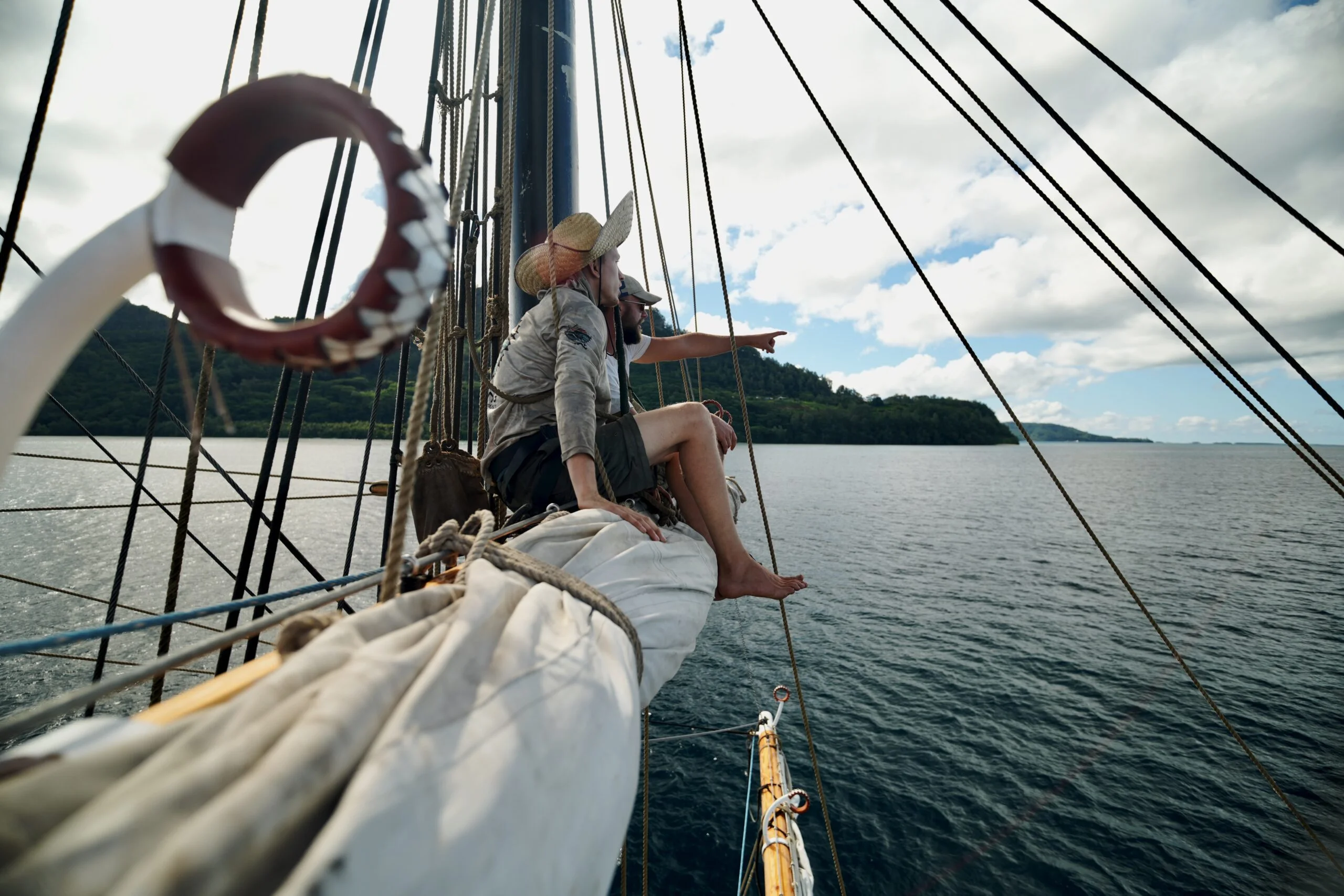
Seasickness is sensory conflict between the inner ear and the eyes. Get on deck, fix your gaze on the horizon, and the mismatch starts to resolve within minutes. It is the single most reliable intervention, more effective than any pill once symptoms have started.
Will you get seasick?
Probably, briefly. The reliable number across sail training ships is that roughly half of new trainees feel queasy at some point in the first 48 hours of a real open-water passage. Of those, most manage it with fresh air, water, and time. A smaller group, perhaps 10 to 20 percent, will actually vomit once or twice. A genuinely severe, persistent case where someone can't keep fluids down for days is rare, maybe 1 or 2 trainees out of a whole voyage, and even those almost always recover.
Harbour time and coastal sailing don't count. You need genuine open-water motion to know how your body responds, and that usually begins on the second or third day at sea. People who assume they'll be fine from ferry experience sometimes get surprised; people who expect to be terrible often find it milder than they feared.
Almost no one stays seasick for an entire long voyage. Your brain adapts. The question isn't whether you'll feel it, it's how to get through the short window when you might.
Never sailed before? Roughly half of every NEPTUN intake is on their first ocean passage. Read the no-experience guide or apply for a berth.
Prevention before the voyage
What you do in the week before sailing matters more than most people realise. Arrive rested. The single strongest predictor of who struggles in the first 48 hours is sleep debt, trainees who turn up jet-lagged or hungover from a farewell party have a harder time. Aim to sleep well the two nights before boarding. Eat normal, not-too-heavy meals on travel day and the night before sailing. A light breakfast on the morning of departure is usually better than either a huge meal or nothing at all. Hydrate, but don't arrive bloated with water either.
On boarding day, get your bunk made up and your kit stowed before the ship sails. Being able to lie down without sorting gear is useful if you need it. Skip alcohol the evening before departure, this isn't moralism, it's because dehydration and poor sleep compound seasickness significantly.
Motion-sickness medications are a normal part of a sail training kit. Common options your pharmacist can discuss include cinnarizine (sold as Stugeron in Europe), meclizine, dimenhydrinate (Dramamine), and prescription scopolamine patches applied behind the ear. Each has its own profile, some more sedating, some longer-lasting; patches run multiple days, tablets need redosing. The common side effects are drowsiness, dry mouth, and occasional blurred vision. If you plan to use something, try it once at home before the voyage so you know how your body reacts, and bring enough for the first several days. Ginger (capsules, sweets, or tea) helps some people on its own or alongside medication.
Packing for the voyage? The full packing list for a tall ship voyage covers everything from foulies to medication kits.
What to do when it starts
The first warning is usually a mild, quiet nausea and a sense that you don't want to look at anything complicated. Don't tough it out silently. Act early and the whole episode stays mild.
Get on deck. Fresh air is the single most effective intervention, and cabins below decks are the worst place to be. Find a spot where you can see the horizon, not the rigging, not the deck, the horizon itself, and keep your eyes on it. Sit or stand with your body relaxed and your feet wide for balance. Breathe slowly. If you were reading, writing, or using a phone, put it away.
Stay hydrated with small, frequent sips of water rather than a big glass at once. Plain crackers, dry bread, or an apple are usually tolerated better than anything rich or greasy. Avoid coffee and alcohol while you feel off. If you can keep eating small amounts, you'll recover faster than if you skip meals entirely.
Stand your watch if you can. This is counterintuitive, you want to crawl into your bunk, but most trainees find that being on deck with a task, focused on the horizon, helps more than lying down. Steering is particularly effective: anticipating the ship's motion gives your brain something to match the inner ear's signal with. If you're genuinely too unwell to be useful, tell the watch leader or mate early. Nobody will be annoyed.
If you vomit, you will probably feel better immediately afterwards. That's normal. Rinse your mouth, sip water, go back on deck. It's not the end of the voyage, it's often the turning point.
The acclimation curve
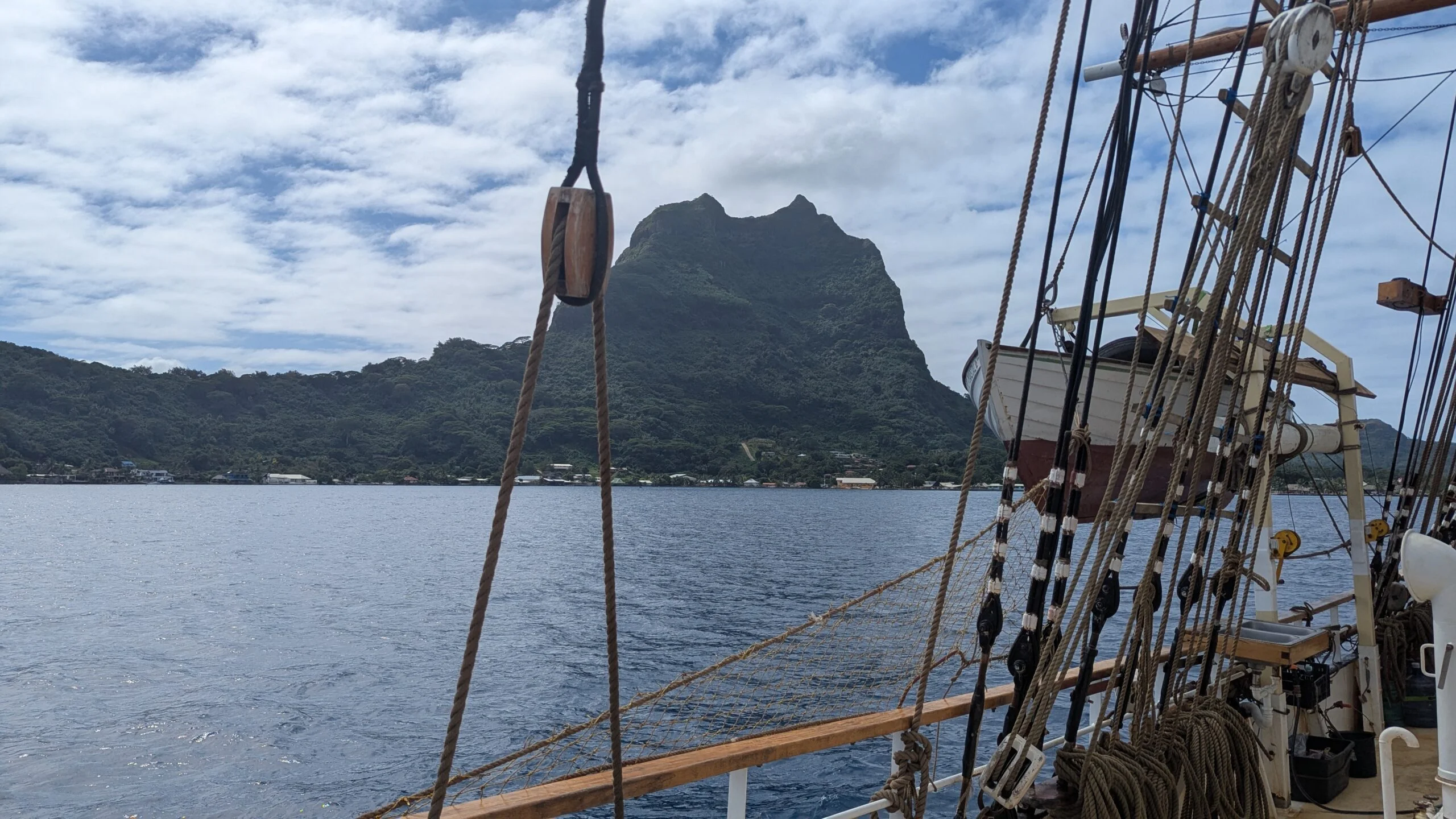
The rhythm is predictable enough to describe. Day 1 to 2 is usually the worst: the body is adjusting, sleep is still erratic, and the novelty of the motion is at its peak. Day 3 to 4 is noticeably better, most people have stopped feeling queasy, are eating full meals, and are actually enjoying themselves. Day 5 and beyond is normal: the ship's motion becomes background, you sleep through it, and you'll often wonder what you were worried about.
Most trainees are fully acclimated by the first landfall. Then comes a quirk, if you spend a few days ashore and then return to the ship, you'll often get a small second dip. It's milder and shorter than the first, usually just a day, and the same rules apply: fresh air, horizon, water, patience. Bodies adjust and re-adjust. You don't lose the adaptation permanently, and it comes back faster each time.
Day 0, boarding
You feel fine. Harbour is flat, the ship is steady alongside, and the only motion is wash from passing traffic. Stow your kit, make up your bunk, eat a normal meal. Sleep tonight matters more than anything else you do today.
Day 1, open water
The first real motion arrives. Roughly half of trainees feel queasy at some point in the first 24 hours. Symptoms are usually mild: light nausea, a bit of fatigue, no appetite. Stay on deck, eyes on the horizon, sip water.
Days 2–3, the worst window
If it hits, this is when. Sleep is still erratic, the novelty of the motion is peaking. 10–20% of trainees will vomit once or twice. Tell the mate early. Most are eating full meals again by the end of day 3.
Days 4–5, turning the corner
Acclimation kicks in. Most people have stopped feeling queasy and are actually enjoying themselves. Watches feel rhythmic instead of grim, the ship's motion fades into background, and you start sleeping through it.
Day 6 onwards, normal
The motion becomes background. You eat, sleep, work, laugh. Almost no one is still seasick by the first landfall, and the trainees who were briefly miserable in week one are usually the ones signing up for the next leg.
After a port call, the second dip
A milder, shorter relapse. Spend a few days ashore and the inner ear partly resets. The second dip on returning to sea usually lasts a day, sometimes hours. Same rules: fresh air, horizon, water, patience.

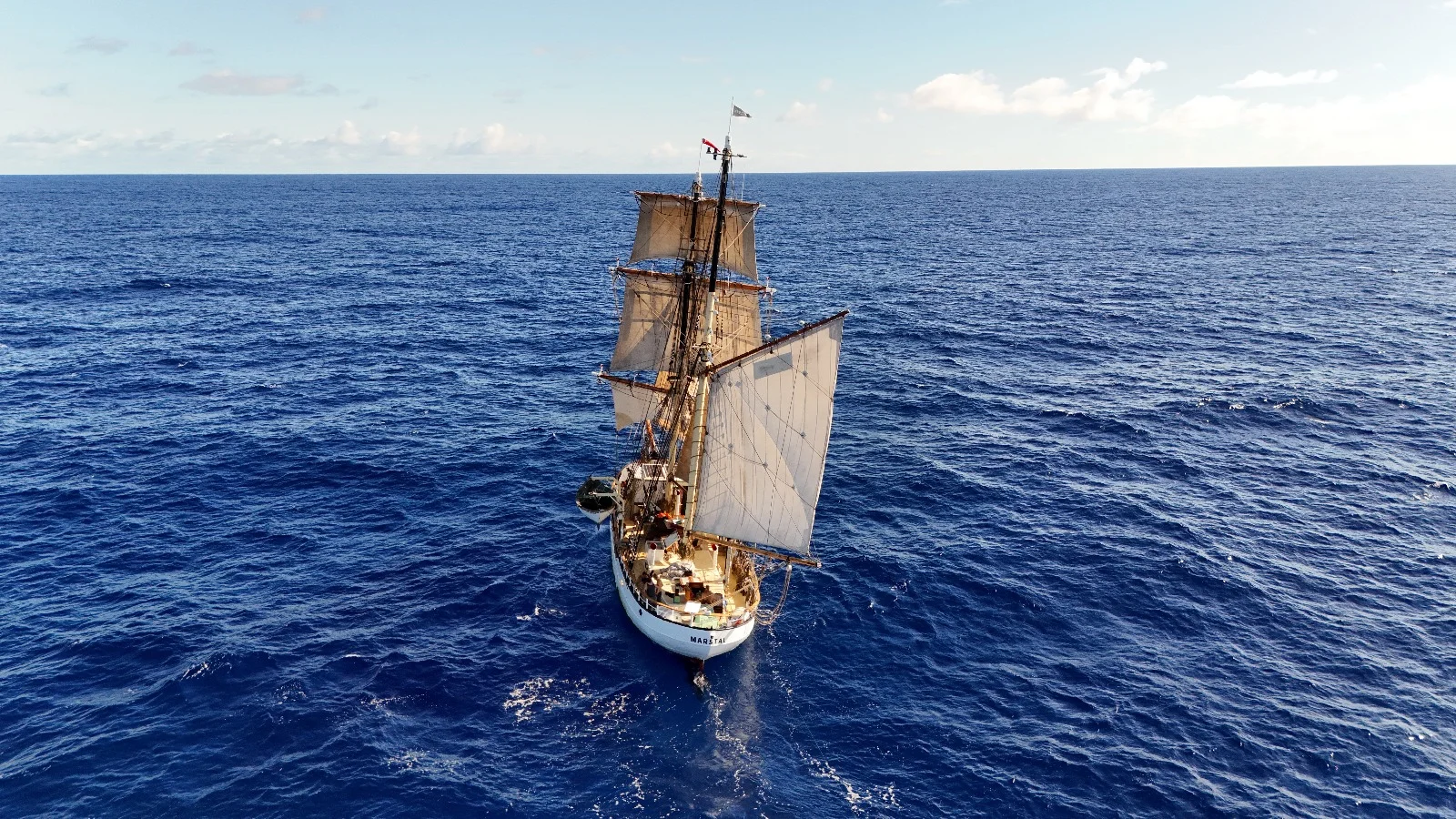
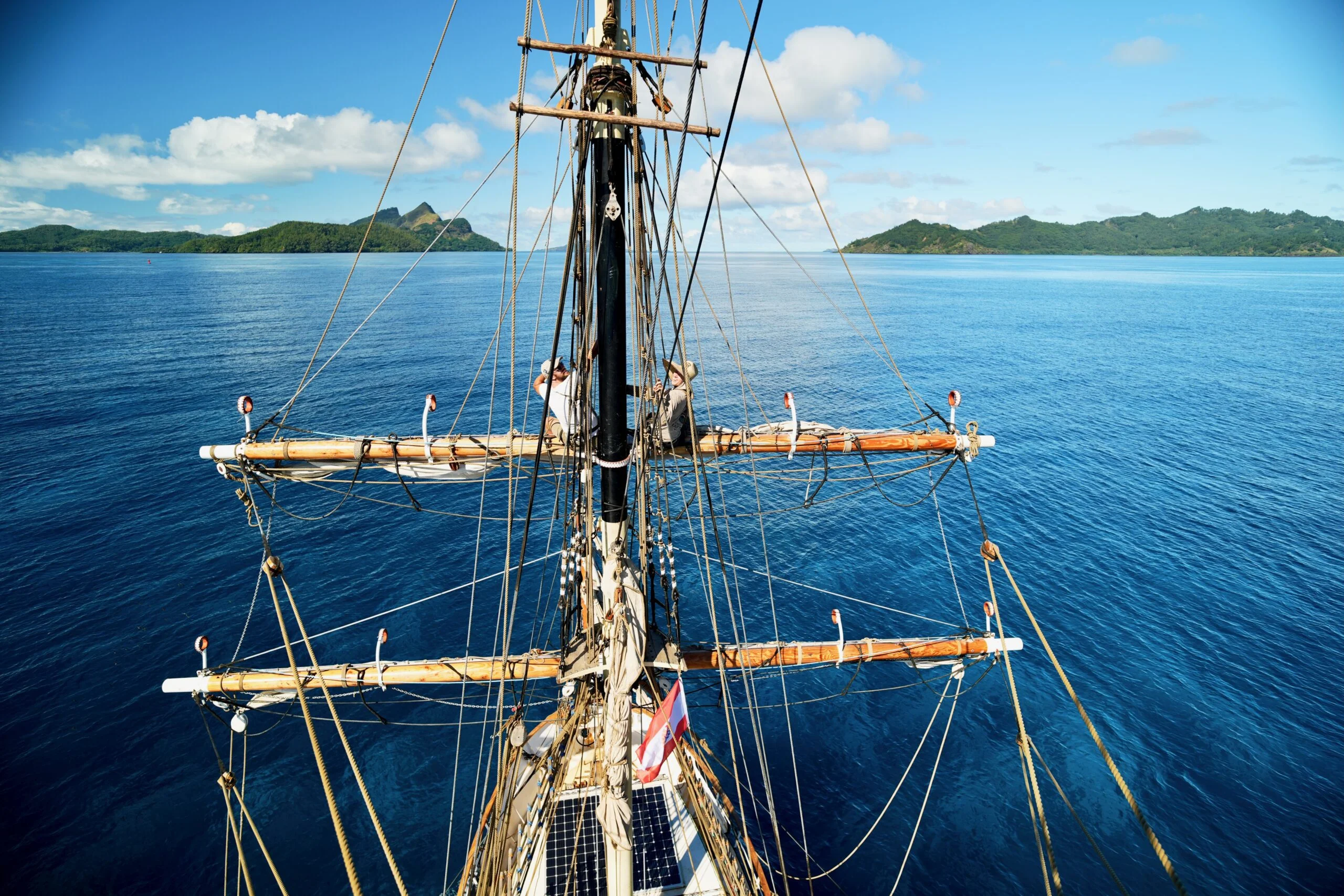
Day three, and the ocean becomes background.
What helps, what doesn't, what NEPTUN provides
Most of the seasickness folklore is harmless and a bit of it is useful. Some of it is actively counterproductive. Here is the honest division.
What helps
Fresh air on deck. Eyes on the horizon. Small, frequent sips of water. Plain crackers or dry bread. Standing a watch with a task. Steering, anticipating the motion is the single best cure. Sleep. Pre-emptive medication tried at home first. Ginger if it works for you.
What doesn't help
Hiding in your bunk below decks. Reading or scrolling a phone with the ship rolling. A heavy meal or an empty stomach. Coffee and alcohol while symptoms are active. Toughing it out silently for hours. Trying a new medication for the first time at sea. Worry, it amplifies every symptom.
What NEPTUN provides
A captain and mates trained in marine first aid. Standard offshore medical kit including IV rehydration where permitted. A 3-watch system so nobody is alone on deck. 10 crew per leg, you are never the only first-timer. Clear protocols and radio access to shoreside medical support if it ever escalates.
When to worry
The case that needs attention is persistent severe vomiting combined with an inability to keep fluids down. If after 48 to 72 hours a trainee can't eat, can't drink, is producing almost no urine, and is visibly weakening, that's medical, not just miserable. It's also rare. NEPTUN sails with a captain and mates trained in marine first aid, standard offshore medical kits including IV rehydration where permitted, and clear protocols for when to contact shoreside medical support by radio.
Tell the mate or captain early if you're genuinely struggling. There's no embarrassment involved, we'd rather hear on day 2 that someone isn't keeping water down than discover it on day 4 when they're dehydrated. For context on how shipboard life supports sick or tired crew, see /life-onboard. For how to arrive in better shape in the first place, the companion article /knowledge-base/getting-fit-for-a-voyage covers the fitness side.
Does it disqualify you from sailing?
Almost never. People who are briefly, even badly, seasick in the first two days complete full voyages every year. The "I can't do this, I've made a terrible mistake" panic that hits during the worst hours passes together with the queasiness, and most of those same trainees finish the voyage wanting to sign up for the next one.
The realistic exclusions are rare and usually medical rather than about seasickness itself: conditions that make dehydration dangerous, untreated severe anxiety, or a genuine inability to function in close quarters. These are discussed honestly on the application call, not diagnosed from a feeling of dread about being sick. If you're worried you're the one person who won't acclimate, you probably aren't, we've heard that worry from hundreds of trainees and watched almost all of them be fine.
Beginners are the audience for this article, and the fuller beginner picture lives at /sailing-no-experience. If you want to understand how the first hours aboard actually unfold, /knowledge-base/day-at-sea-tall-ship walks through embarkation and the early routine.
Ready to take the leap?
Most NEPTUN crew have never crossed an ocean before. We've got you, three days of awkward, then the rest of your life feeling at home at sea.
Shorter legs for first-timers
If the 48 hours of acclimation still feels like a lot, the obvious answer is to start with a shorter leg. NEPTUN's 2026-2027 voyage has nine legs, and the two shortest are popular first-timer choices for exactly this reason: by the time you're acclimated, you're already most of the way to the next port.
Best legs for first-timers
Shorter passages, gentler trade-wind miles
Leg 7 (Trinidad → Antigua, 27 days) and Leg 2 (Réunion → Zanzibar, 40 days) are the easiest entry points for trainees worried about a long open-water stretch.
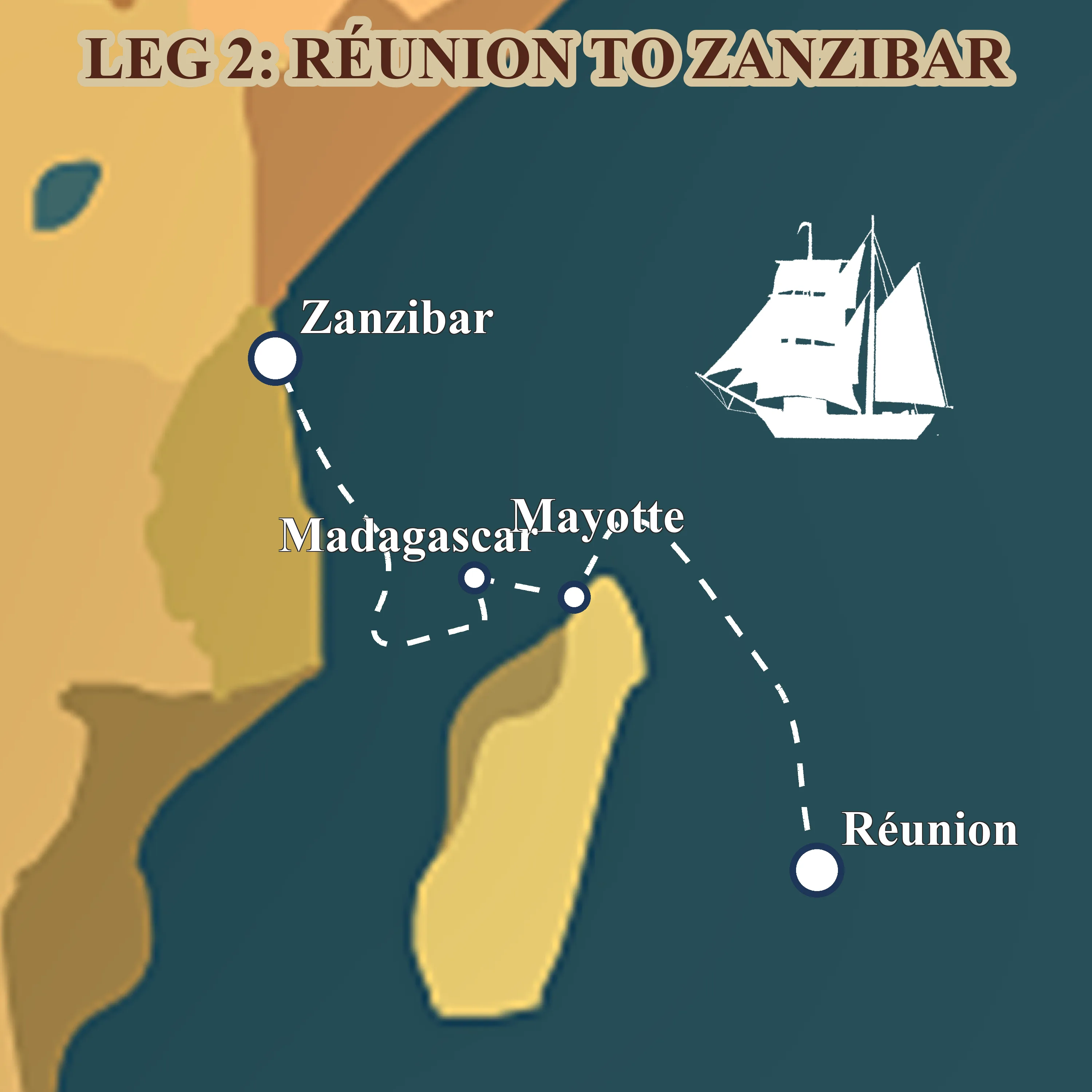
Leg 2: from Réunion to Zanzibar via Madagascar
Aug 2026 — Sept 2026 · Réunion, France → Zanzibar, Tanzania
Forty days across the western Indian Ocean, volcanic Réunion, lemur-haunted Nosy Be, the Mozambique Channel, and the spice-scented stone alleys of Zanzibar.
Read more about this leg → about Leg 2: from Réunion to Zanzibar via Madagascar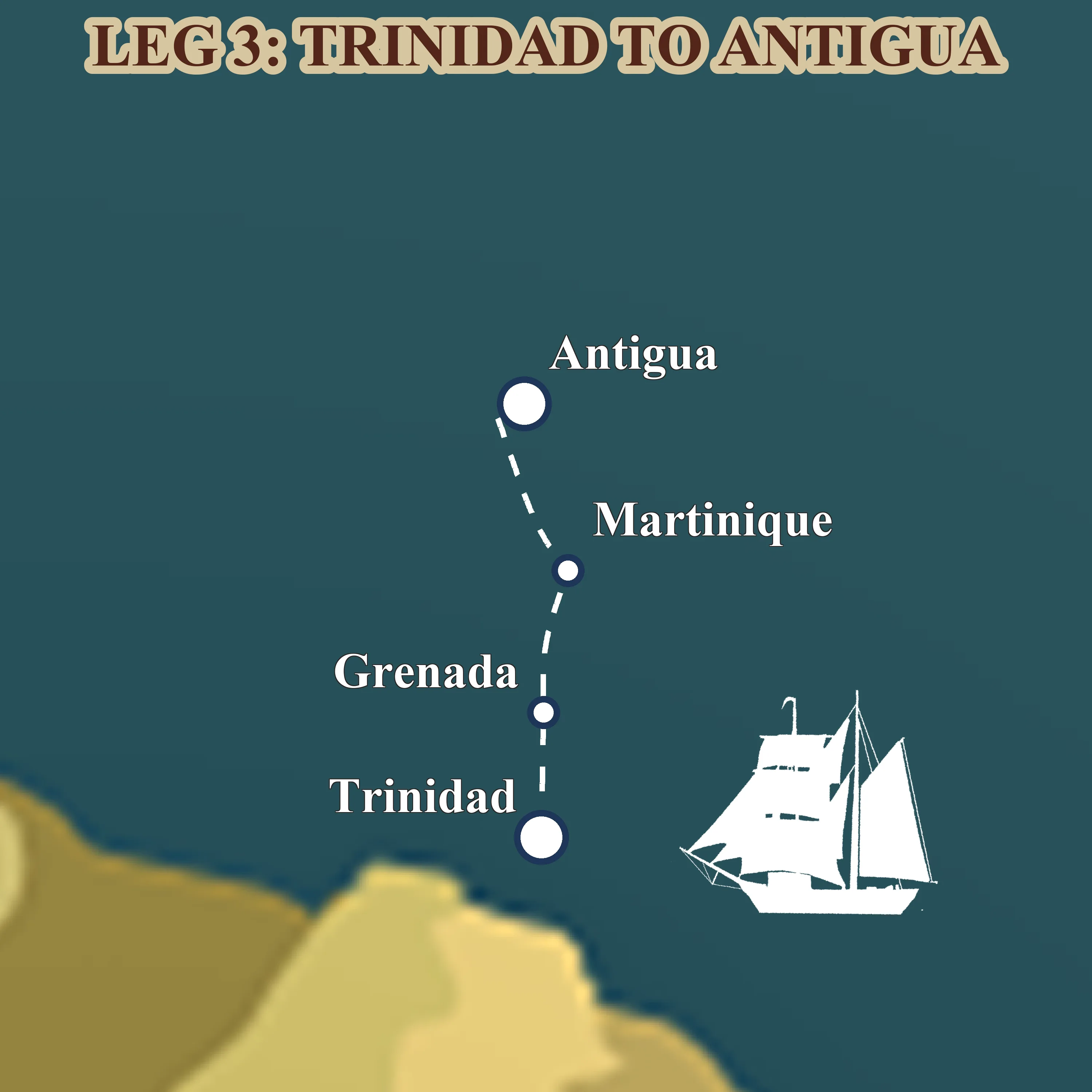
Leg 7: through the Windward Islands from Trinidad to Antigua
Apr 2027 — May 2027 · Trinidad → Antigua
Four weeks of short trade-wind daysails through the Lesser Antilles, turquoise anchorages, rum shops on the sand, French-Creole Martinique and the tall-ship scene in Antigua.
Read more about this leg → about Leg 7: through the Windward Islands from Trinidad to AntiguaFAQs
Common questions about seasickness on a tall ship
How long does seasickness last on a tall ship?
For roughly half of new trainees on NEPTUN, symptoms last 24 to 48 hours. By day three most people are eating full meals and standing watches normally. A small minority feel rough for 72 hours. Genuine multi-day debilitation is rare, under 5% across sail-training fleets.
Can I take seasickness medication on the voyage?
Yes, and many trainees do. Cinnarizine (Stugeron), meclizine, dimenhydrinate (Dramamine), and scopolamine patches are all common. Try whichever you choose at home first so you know how it affects you. Bring enough for the first three to five days, most people stop needing it once acclimated.
Will I have to keep working if I feel sick?
You'll be encouraged to stand your watch if you can, being on deck with a task and the horizon in sight usually helps more than lying below. If you're genuinely too unwell to be useful, tell the mate. Nobody will be annoyed. We'd rather know on day two than find out on day four.
What if I'm the one person who never acclimates?
You almost certainly aren't. We've heard that worry from hundreds of trainees and watched almost all of them be fine by day three. The brain adapts, that's biology, not willpower. Genuine non-acclimation is so rare we can't reliably predict who it will be, and it isn't correlated with how anxious people feel beforehand.
Does ginger actually work?
For some people, yes. Ginger capsules, candied ginger, and ginger tea have decent evidence for mild nausea and no real downsides. It is not a substitute for proper medication if symptoms are severe, but it pairs well with the rest of the toolkit. Bring some, it is light, cheap, and tastes good.
Should I pick a shorter leg if I'm worried?
It is a reasonable hedge. Leg 7 (Trinidad → Antigua, 27 days) and Leg 2 (Réunion → Zanzibar, 40 days) are the shortest open-water legs of the 2026-2027 voyage. By the time you're acclimated you're most of the way to the next port. See the full list of nine legs for the calendar.
Read also
- How fit do you need to be for a tall ship voyage?
- A day at sea on a tall ship, hour by hour
- Packing list for a tall ship voyage
- How to join a tall ship crew without experience
- Sailing with no experience, the beginner's guide
- Life onboard NEPTUN
- Apply now, join a leg as trainee crew
All nine legs of the world voyage
The 2026-2027 voyage spans 482 days, over 30,000 nautical miles, and four oceans, pick the leg that fits your nerves and your calendar.
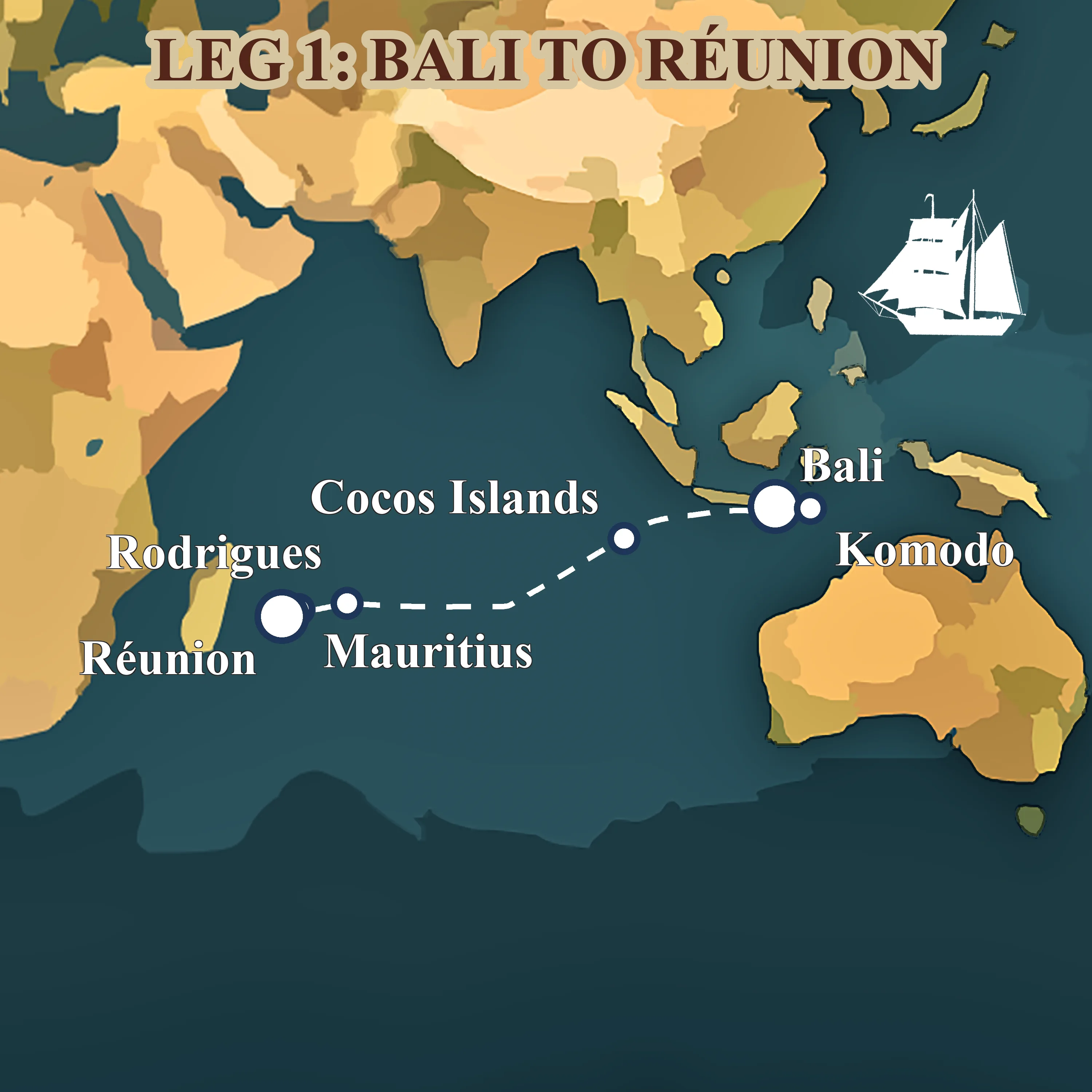
Leg 1: from Bali to Réunion across the Indian Ocean
May 2026 — Aug 2026 · Bali, Indonesia → Réunion, France
The opening chapter of Neptun's 482-day world voyage, a 4,078-nm trade-wind passage from the temples of Bali to the volcanic cliffs of Réunion.
Read more about this leg → about Leg 1: from Bali to Réunion across the Indian OceanLeg 2: from Réunion to Zanzibar via Madagascar
Aug 2026 — Sept 2026 · Réunion, France → Zanzibar, Tanzania
Forty days across the western Indian Ocean, volcanic Réunion, lemur-haunted Nosy Be, the Mozambique Channel, and the spice-scented stone alleys of Zanzibar.
Read more about this leg → about Leg 2: from Réunion to Zanzibar via Madagascar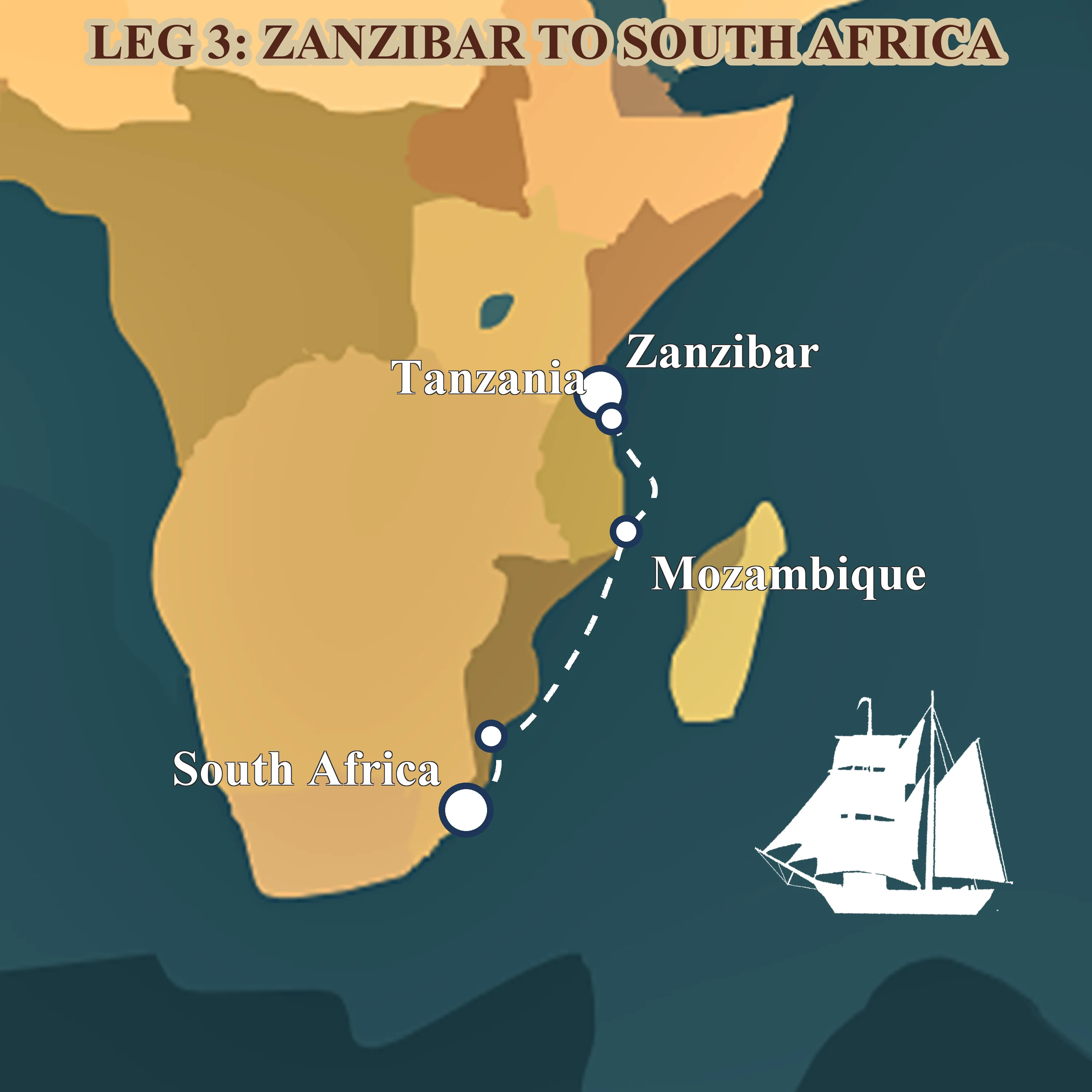
Leg 3: from Zanzibar to Durban down the Mozambique Channel
Sept 2026 — Nov 2026 · Zanzibar, Tanzania → Durban, South Africa
Sixty-three days coasting the African shore, spice islands, mangrove anchorages, Portuguese praças and the long trade-wind run down the Mozambique Channel to Durban.
Read more about this leg → about Leg 3: from Zanzibar to Durban down the Mozambique Channel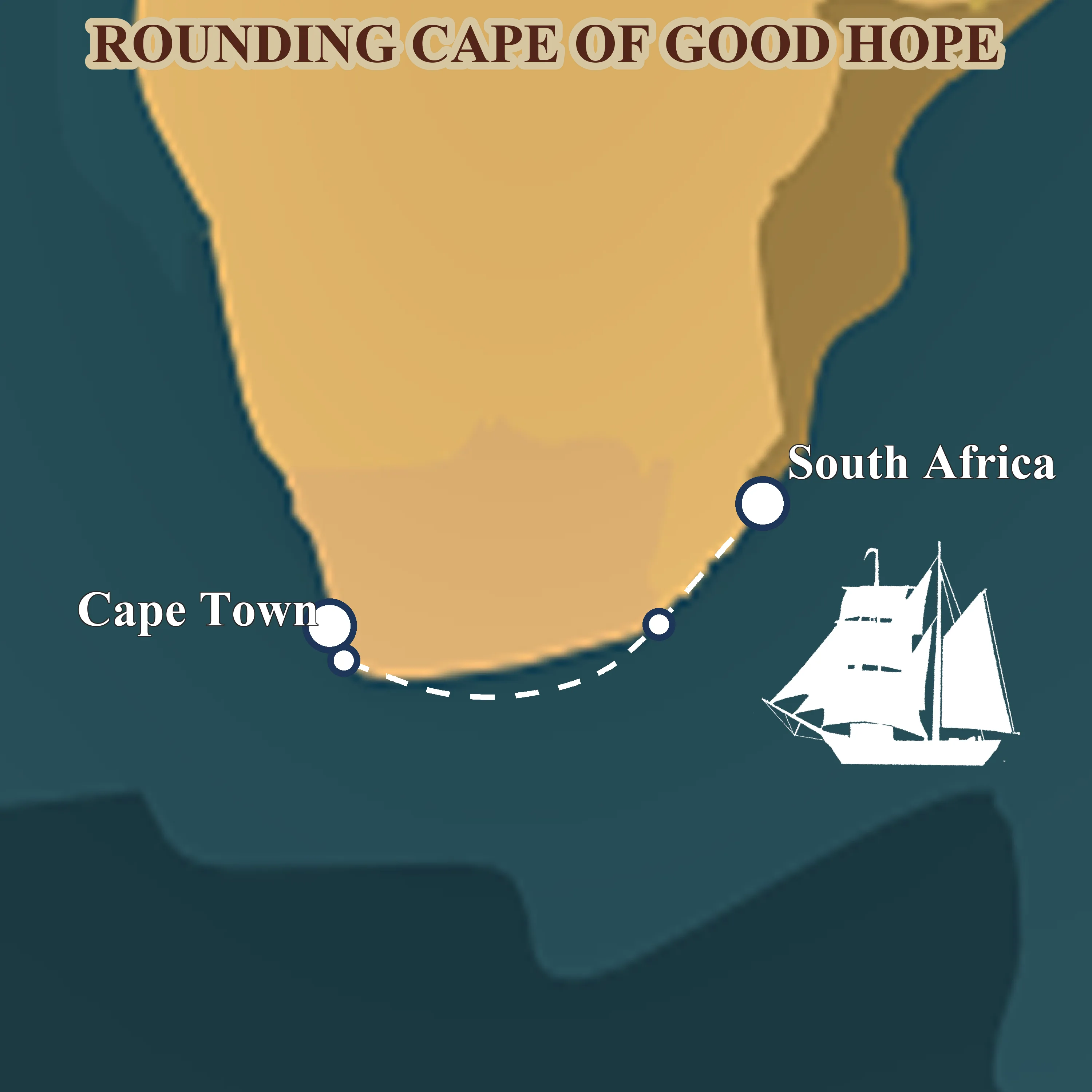
Leg 4: from Durban around the Cape of Good Hope
Nov 2026 — Dec 2026 · Durban, South Africa → Cape Town, South Africa
Thirty-eight days of serious seamanship, the Agulhas current, the Cape of Good Hope and the Southern Ocean at the tip of Africa, finishing quietly in Cape Town for Christmas.
Read more about this leg → about Leg 4: from Durban around the Cape of Good Hope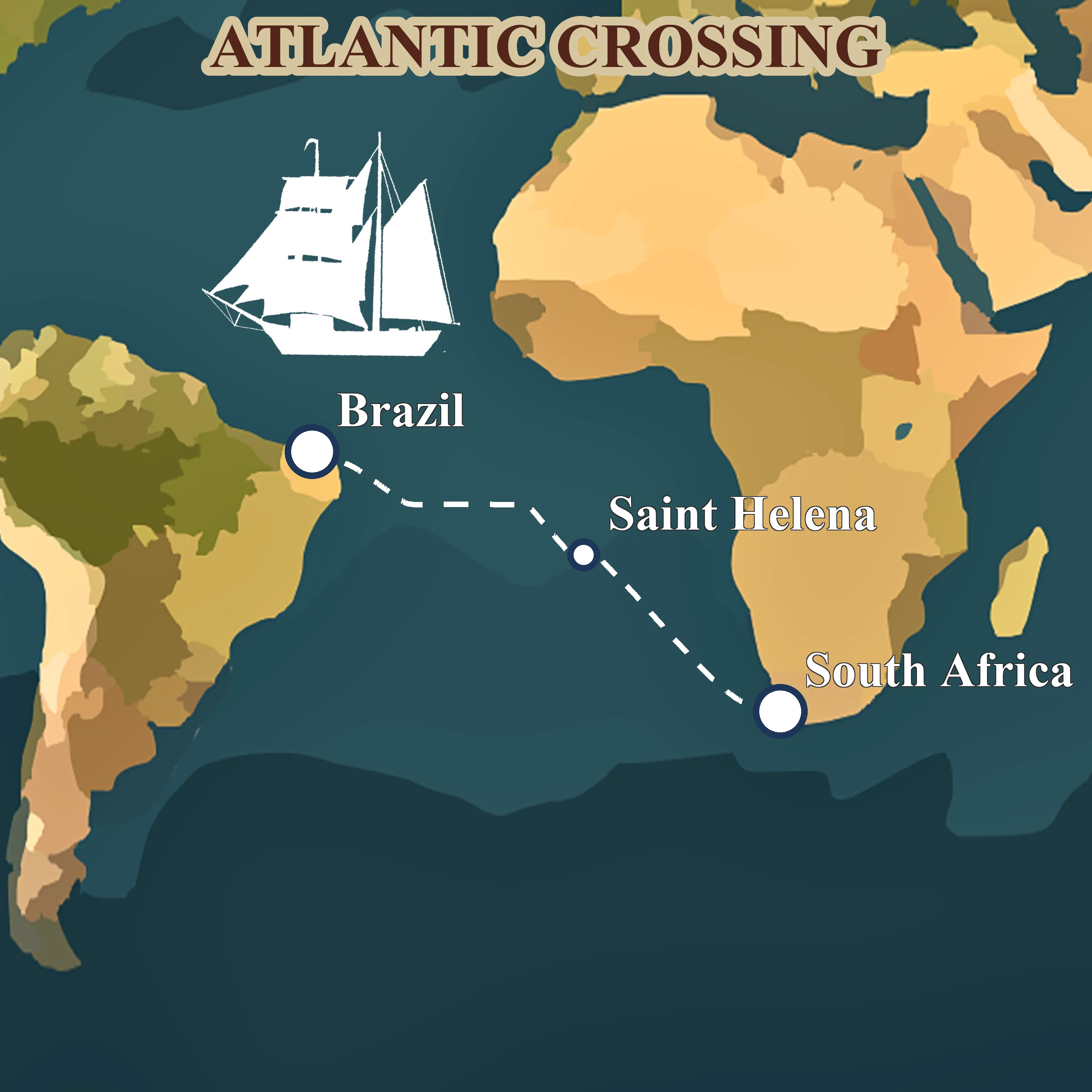
Leg 5: across the South Atlantic from Saldanha to Fortaleza
Jan 2027 — Mar 2027 · Saldanha Bay, South Africa → Fortaleza, Brazil
Forty-four days before the southeast trades, Napoleon's exile at St. Helena, the equator crossing, and landfall in tropical Brazil. The ocean chapter of the voyage.
Read more about this leg → about Leg 5: across the South Atlantic from Saldanha to Fortaleza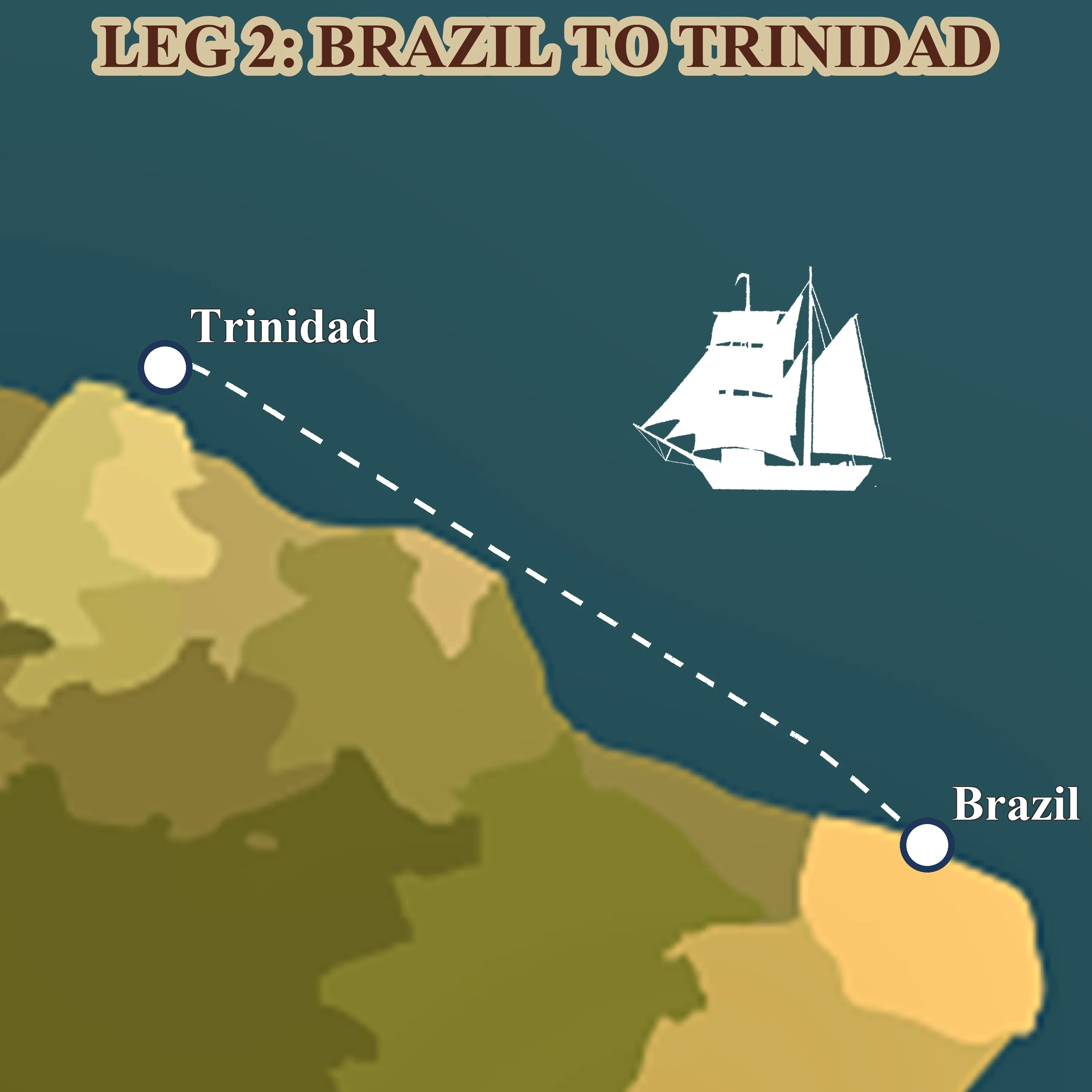
Leg 6: from Fortaleza to Trinidad along South America
Mar 2027 — Apr 2027 · Fortaleza, Brazil → Trinidad
A thousand miles of downwind trade running, the Amazon's brown water under the hull, the Guianas smudged on the horizon, and Trinidad's steelpan waiting at the end.
Read more about this leg → about Leg 6: from Fortaleza to Trinidad along South AmericaLeg 7: through the Windward Islands from Trinidad to Antigua
Apr 2027 — May 2027 · Trinidad → Antigua
Four weeks of short trade-wind daysails through the Lesser Antilles, turquoise anchorages, rum shops on the sand, French-Creole Martinique and the tall-ship scene in Antigua.
Read more about this leg → about Leg 7: through the Windward Islands from Trinidad to Antigua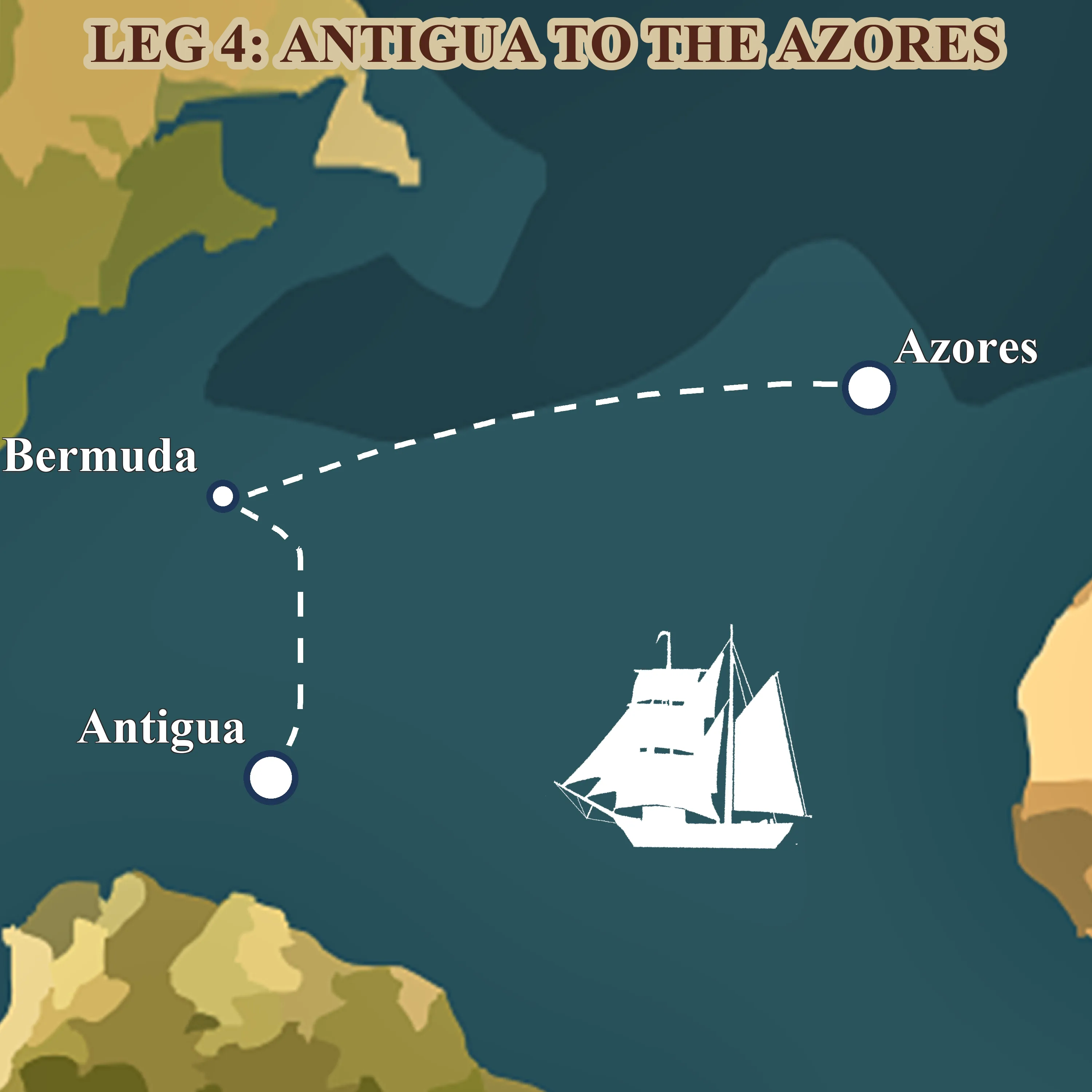
Leg 8: across the North Atlantic from Antigua to the Azores
May 2027 — Jul 2027 · Antigua → Ponta Delgada, Azores
Fifty-six days on the classic spring tall-ship route home, Antigua, a long reach to Bermuda's pink sand, then three weeks of open ocean to the volcanic Azores.
Read more about this leg → about Leg 8: across the North Atlantic from Antigua to the Azores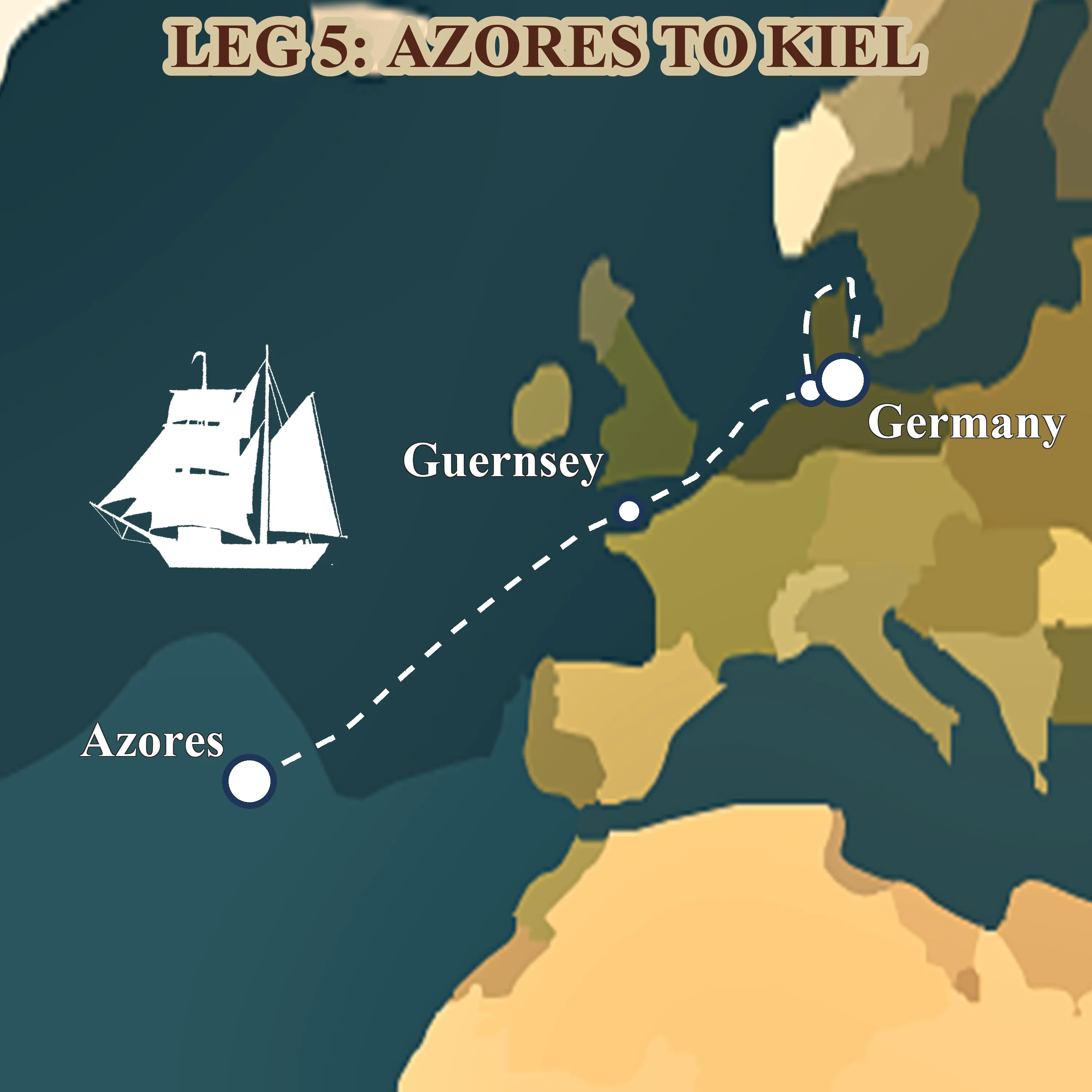
Leg 9: homecoming from the Azores to Kiel
Jul 2027 — Aug 2027 · Ponta Delgada, Azores → Kiel, Germany
The final 1,878 nm, from volcanic São Miguel to the Baltic, up the English Channel through the Dover TSS, past Helgoland's red cliffs and home to Kiel.
Read more about this leg → about Leg 9: homecoming from the Azores to KielWant to sail with us? Brigantine NEPTUN is a non-profit training ship, every voyage takes 10 crew members through real ocean sailing, no experience needed. Apply for a berth or read about the voyages first.