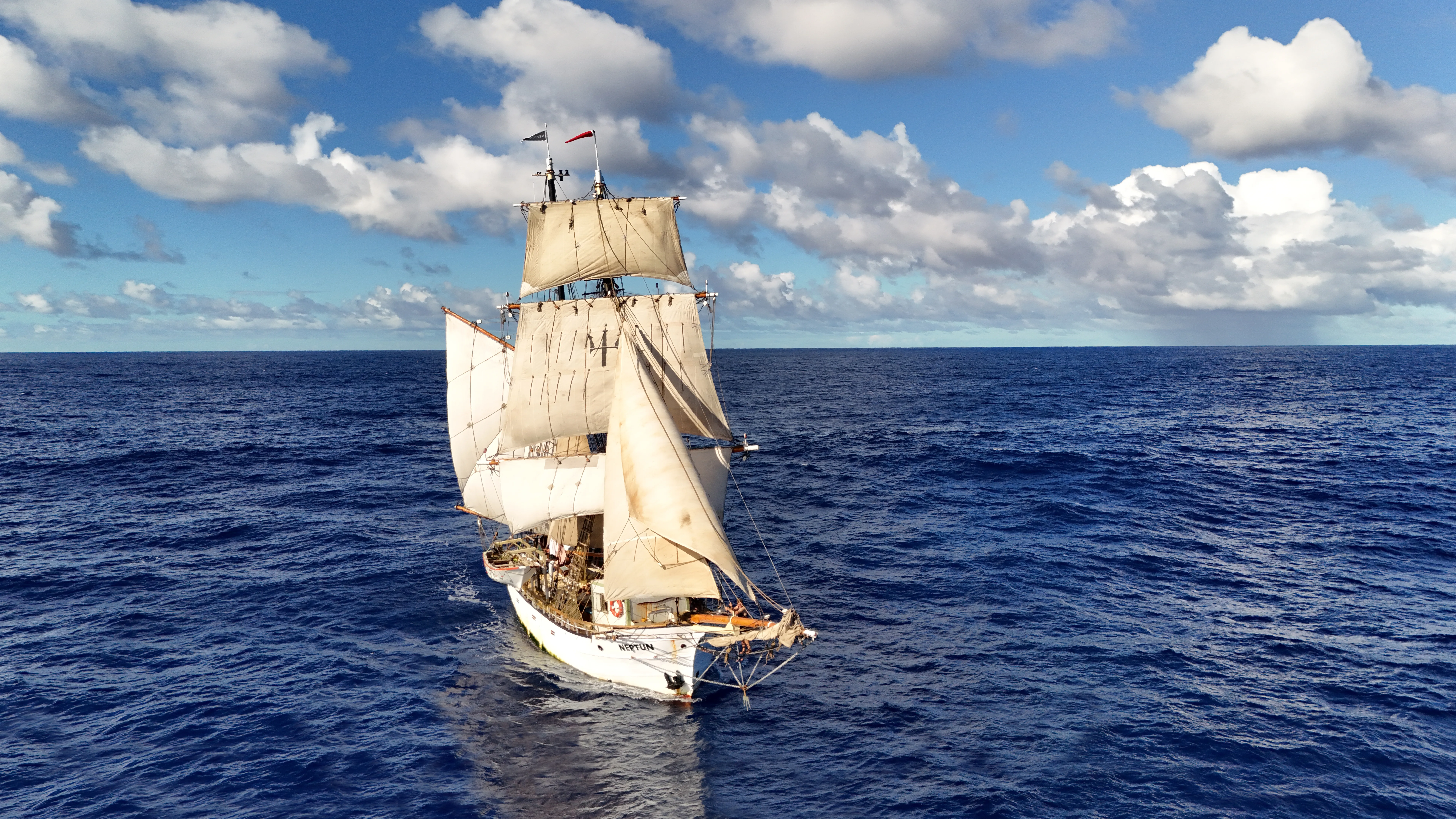
To join a tall ship crew, decide which of three roles fits you, professional crew, sail training crew, or volunteer shore crew, then apply directly to a specific ship and voyage leg; for most people with no prior experience, the sail training route is the realistic path.
Already know you want to sign on? Apply for a berth on a 2026-2027 leg or browse the nine legs of NEPTUN's world voyage first.
On this page
- The 3 categories of tall ship crew
- Sail training crew, the main path
- What qualifications you need (or don't)
- Typical application process
- Other tall ship options
- Ready to apply?
- FAQ
- Read also
By the numbers, NEPTUN's 2026-2027 voyage
The 3 categories of tall ship crew
Most people imagining a tall ship picture one undifferentiated crew hauling on lines together. In practice, every active tall ship runs on three distinct crew populations, and the path you take depends entirely on which one you belong to. Getting this right before you apply anywhere saves months of wrong turns.
Professional crew
Professional crew are the paid, certified mariners who keep the ship seaworthy and the voyage legal. On a working brigantine like NEPTUN this typically includes a captain, one or two mates, a bosun, an engineer, a cook, and sometimes a medic. These positions require formal maritime certification, STCW Basic Safety Training at minimum, often a national deck or engine officer ticket, and documented sea time on similar vessels. Pay is modest by industry standards but the positions are competitive because the lifestyle is unusual.
If you already hold a maritime license and want to work on traditional ships, this is your route. Apply directly to the ship's operator when a vacancy is posted, and expect to provide certificates, references from previous captains, and a face-to-face interview. NEPTUN accepts professional applications at /apply-as-professional-crew. Most tall ship operators hire informally through the tall ship network rather than open boards, so getting known in the scene matters more than a polished CV.
Sail training crew
Sail training crew are paying trainees, people who join the voyage to learn, contribute, and experience ocean sailing rather than earn wages. They stand watches, handle sails, help with navigation, cook, clean, and generally do everything the professionals do, at a learner's level. Cost typically ranges from about €80 to €200 per day depending on the ship, making a three-week leg €1,500–€5,000 and a longer ocean crossing substantially more. This is by far the most common path onto a tall ship and the one this guide focuses on.
Sail training crew is open to almost anyone willing to work. Most ships, NEPTUN included, take complete beginners. You're not paying for a cruise; you're paying to join a real voyage as a novice crew member and learn by doing. If you want the full picture, our sail training overview walks through the teaching model in detail, and sailing with no experience addresses the most common blocker.
Volunteer shore crew
The third category rarely gets mentioned but keeps most tall ship nonprofits alive. Volunteer shore crew maintain the ship when she's in port, organize events, run fundraising campaigns, staff open-ship days, and handle the unglamorous work of keeping a 75-year-old vessel operational. They don't sail, or they sail only on short local day trips as a thank-you. For NEPTUN that's Foreningen NEPTUN's member network in Denmark.
This is the right route if you want to belong to a tall ship community without the time or money for a long voyage, or if you're local to the ship's home port and want to contribute practical skills, welding, rigging repair, carpentry, electrical work, photography, writing. It's also the most common way Scandinavian sailors build up enough hours and relationships to eventually land a professional berth.
Pick the role that fits you
Three doors onto a tall ship
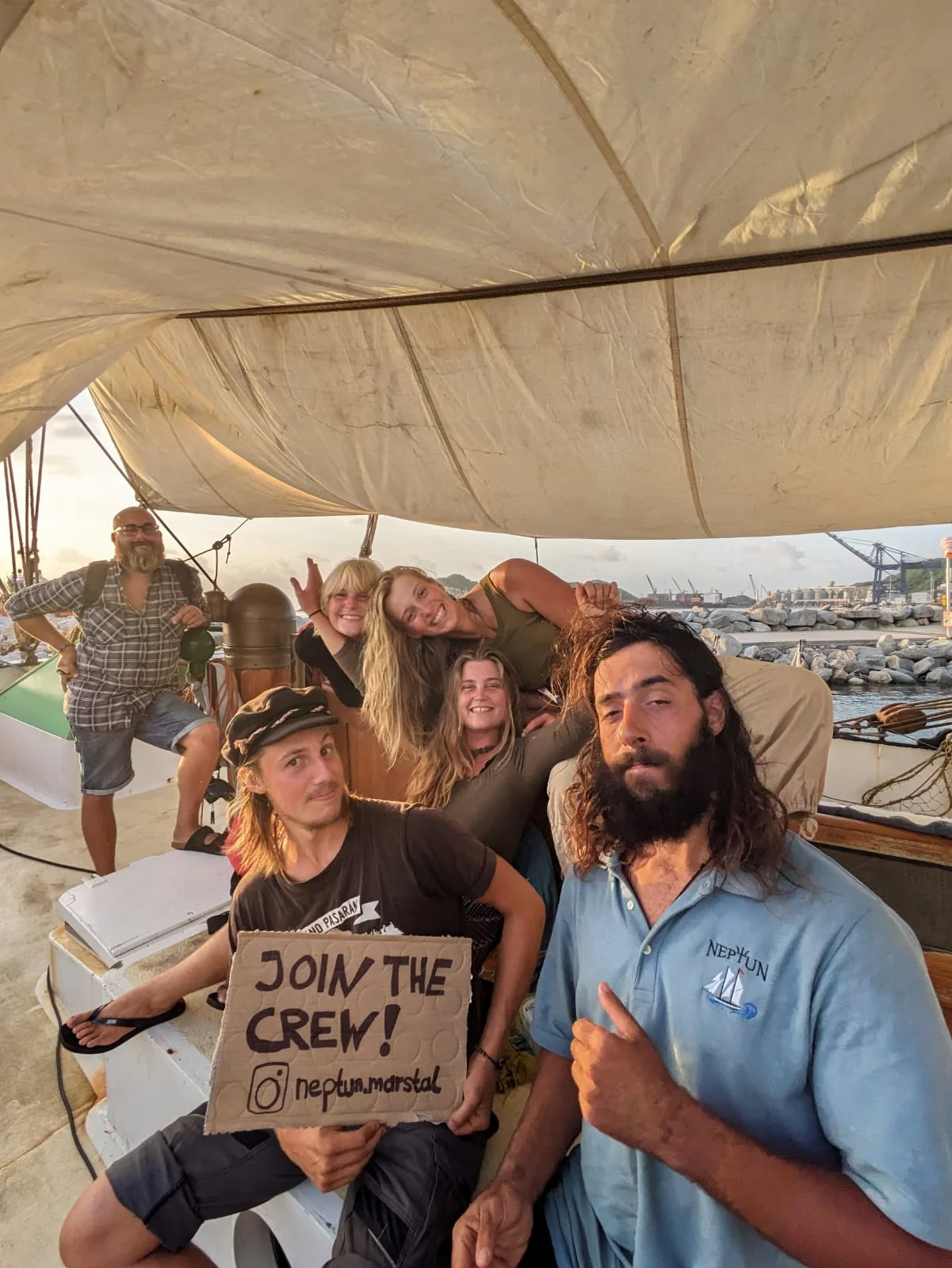
Professional, sail training, or volunteer shore crew, each has its own application route, its own price tag, and its own time commitment. For 95% of readers, sail training is the door. NEPTUN's 2026-2027 voyage opens that door across nine legs from Bali to Kiel.
Choose your leg
The 9 legs of the 2026-2027 voyage
Pick the leg that fits your schedule, from a 27-day Caribbean hop to a 92-day Indian Ocean crossing.
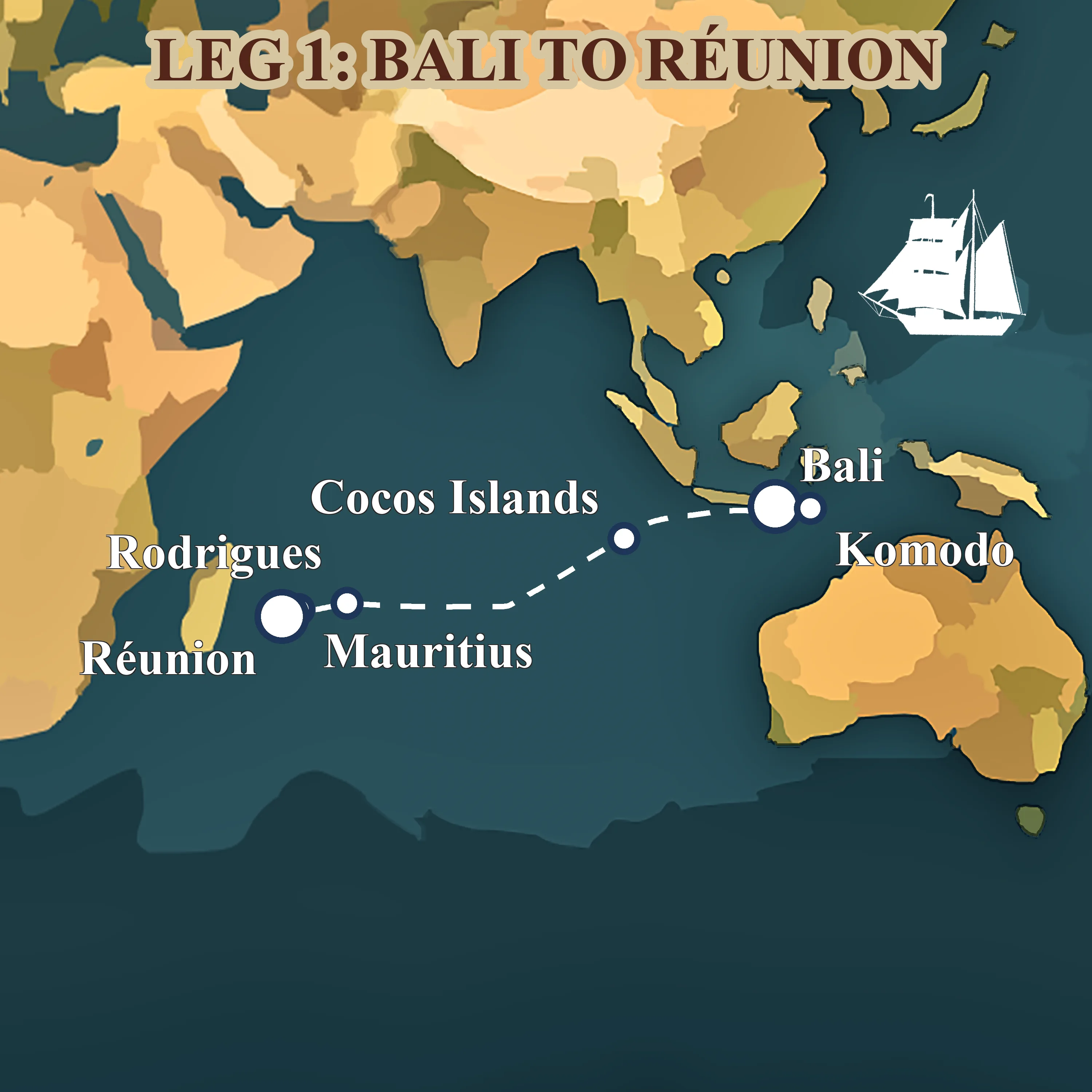
Leg 1: from Bali to Réunion across the Indian Ocean
May 2026 — Aug 2026 · Bali, Indonesia → Réunion, France
The opening chapter of Neptun's 482-day world voyage, a 4,078-nm trade-wind passage from the temples of Bali to the volcanic cliffs of Réunion.
Read more about this leg → about Leg 1: from Bali to Réunion across the Indian Ocean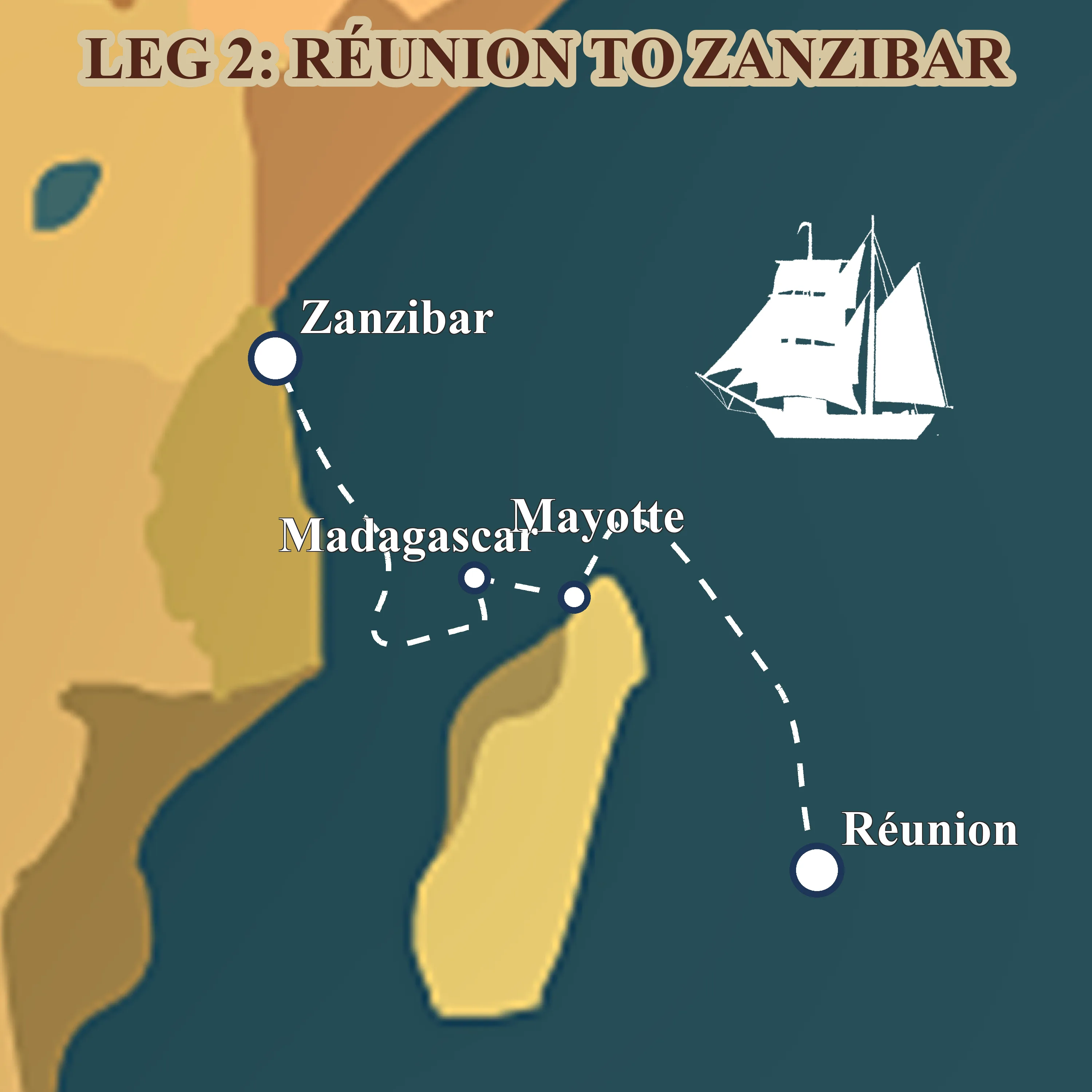
Leg 2: from Réunion to Zanzibar via Madagascar
Aug 2026 — Sept 2026 · Réunion, France → Zanzibar, Tanzania
Forty days across the western Indian Ocean, volcanic Réunion, lemur-haunted Nosy Be, the Mozambique Channel, and the spice-scented stone alleys of Zanzibar.
Read more about this leg → about Leg 2: from Réunion to Zanzibar via Madagascar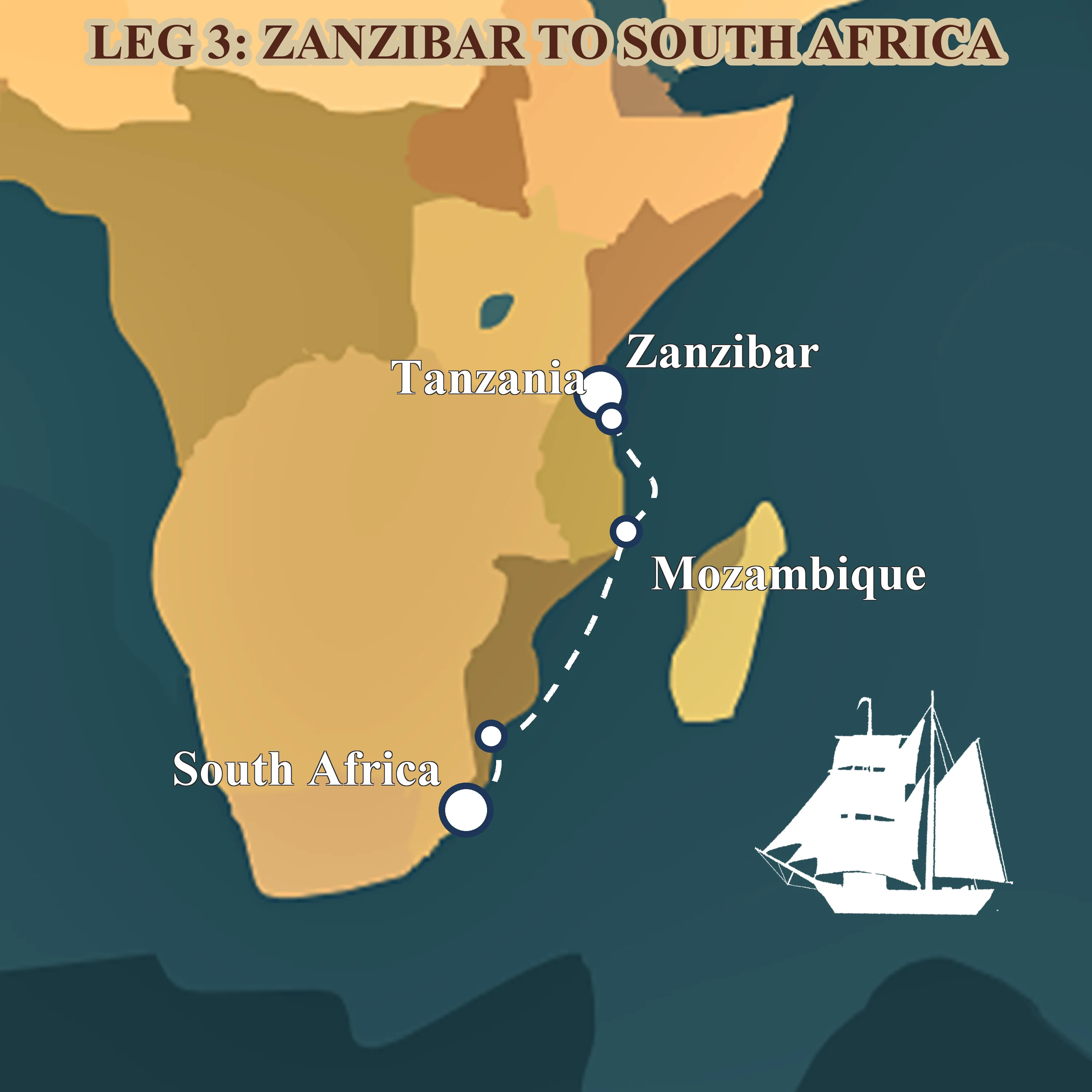
Leg 3: from Zanzibar to Durban down the Mozambique Channel
Sept 2026 — Nov 2026 · Zanzibar, Tanzania → Durban, South Africa
Sixty-three days coasting the African shore, spice islands, mangrove anchorages, Portuguese praças and the long trade-wind run down the Mozambique Channel to Durban.
Read more about this leg → about Leg 3: from Zanzibar to Durban down the Mozambique Channel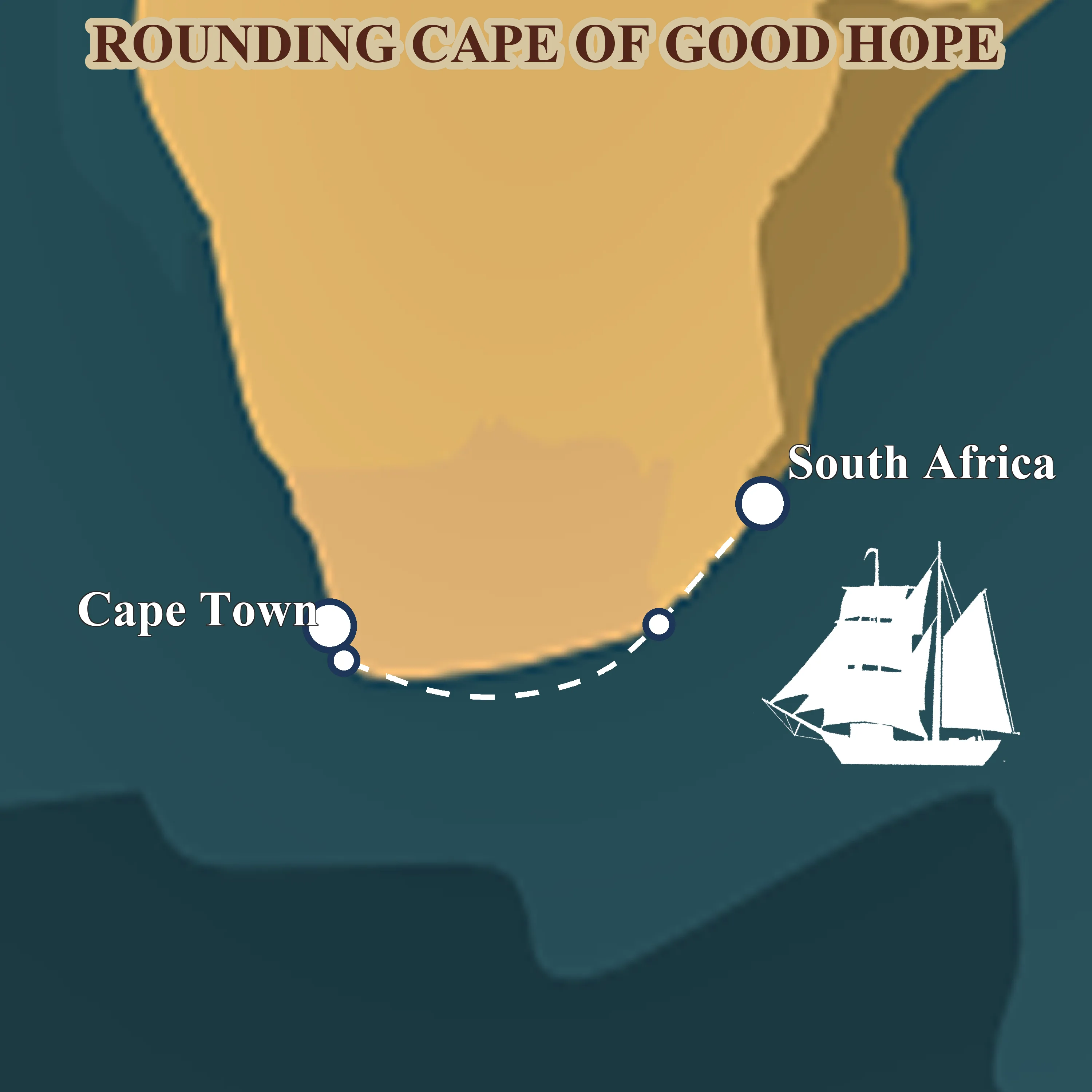
Leg 4: from Durban around the Cape of Good Hope
Nov 2026 — Dec 2026 · Durban, South Africa → Cape Town, South Africa
Thirty-eight days of serious seamanship, the Agulhas current, the Cape of Good Hope and the Southern Ocean at the tip of Africa, finishing quietly in Cape Town for Christmas.
Read more about this leg → about Leg 4: from Durban around the Cape of Good Hope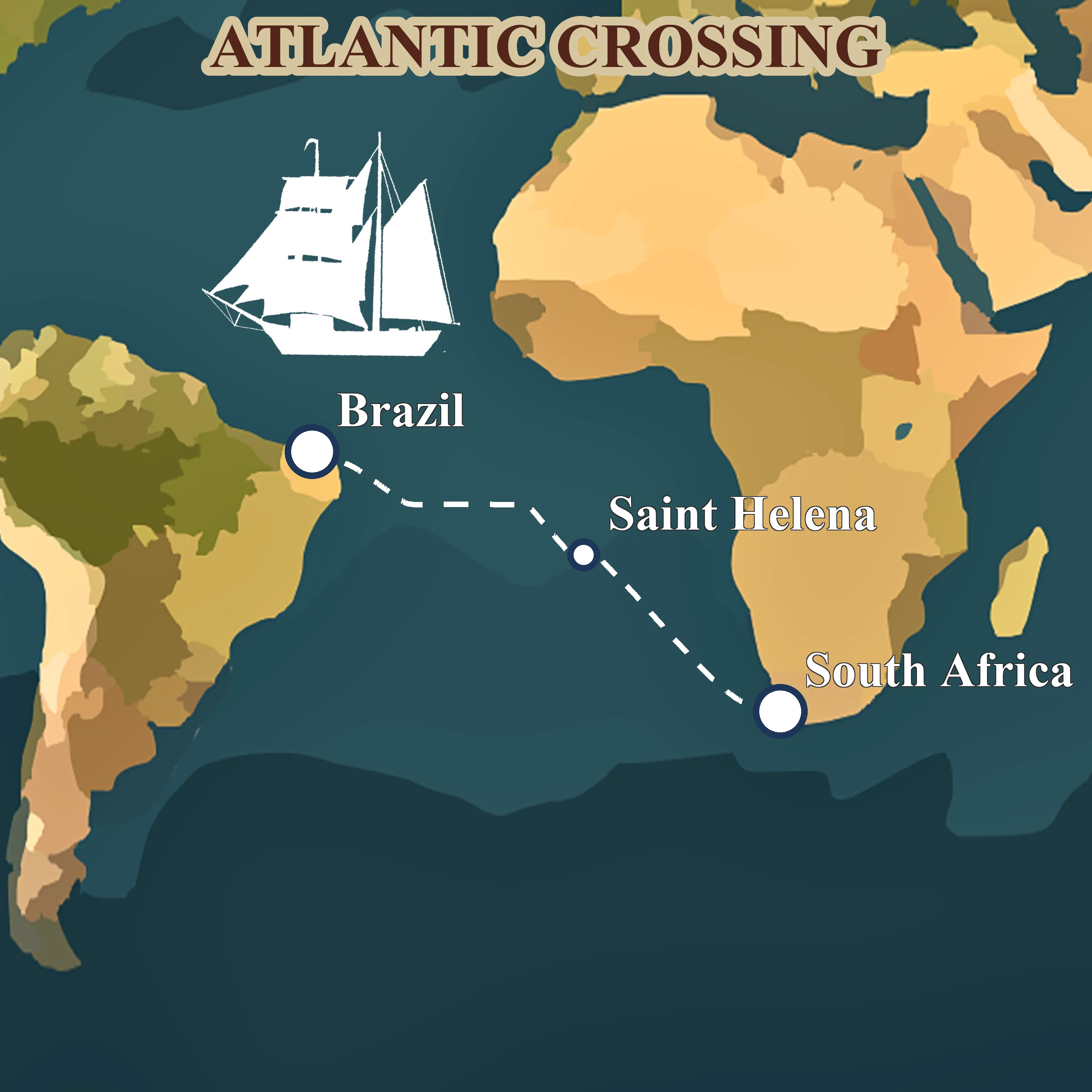
Leg 5: across the South Atlantic from Saldanha to Fortaleza
Jan 2027 — Mar 2027 · Saldanha Bay, South Africa → Fortaleza, Brazil
Forty-four days before the southeast trades, Napoleon's exile at St. Helena, the equator crossing, and landfall in tropical Brazil. The ocean chapter of the voyage.
Read more about this leg → about Leg 5: across the South Atlantic from Saldanha to Fortaleza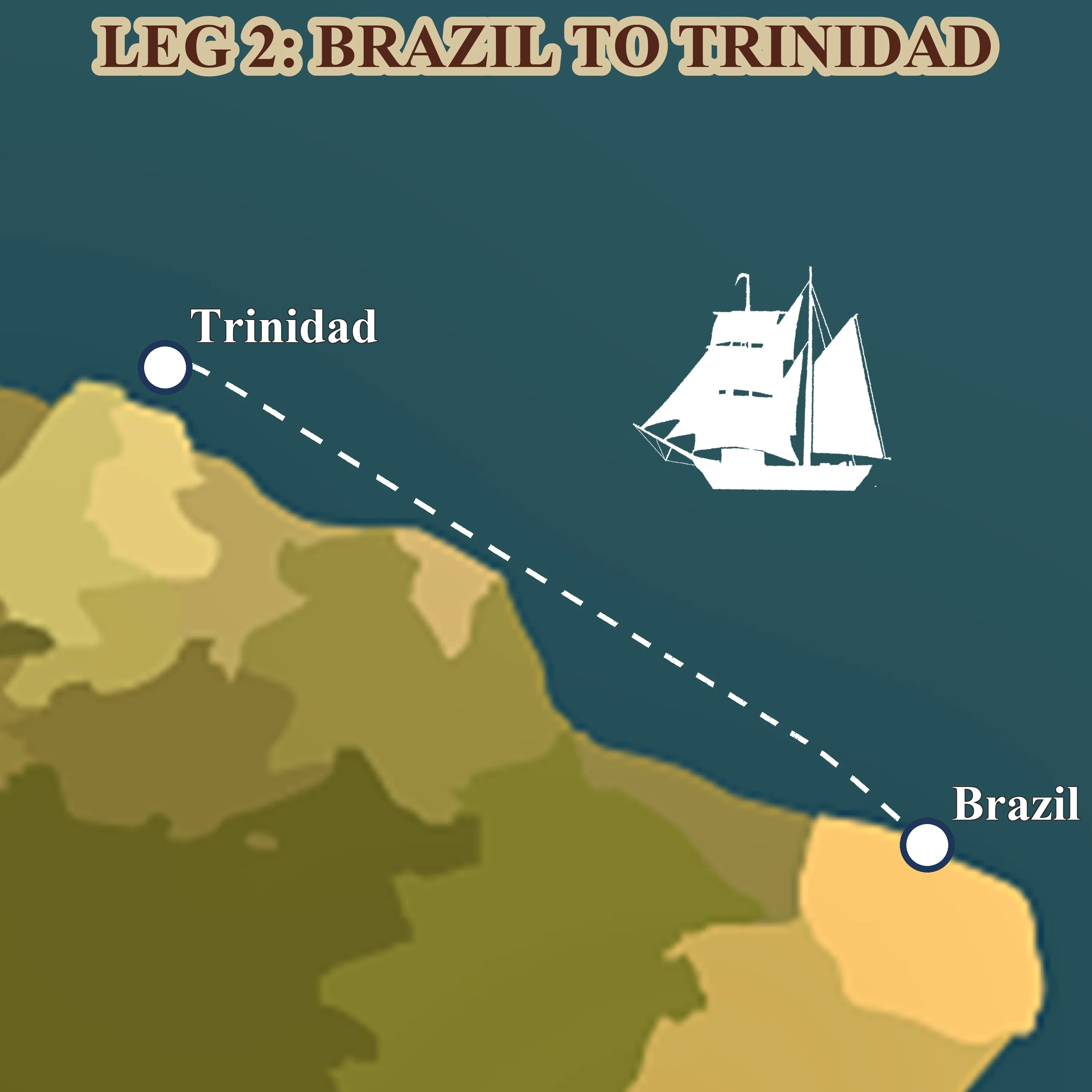
Leg 6: from Fortaleza to Trinidad along South America
Mar 2027 — Apr 2027 · Fortaleza, Brazil → Trinidad
A thousand miles of downwind trade running, the Amazon's brown water under the hull, the Guianas smudged on the horizon, and Trinidad's steelpan waiting at the end.
Read more about this leg → about Leg 6: from Fortaleza to Trinidad along South America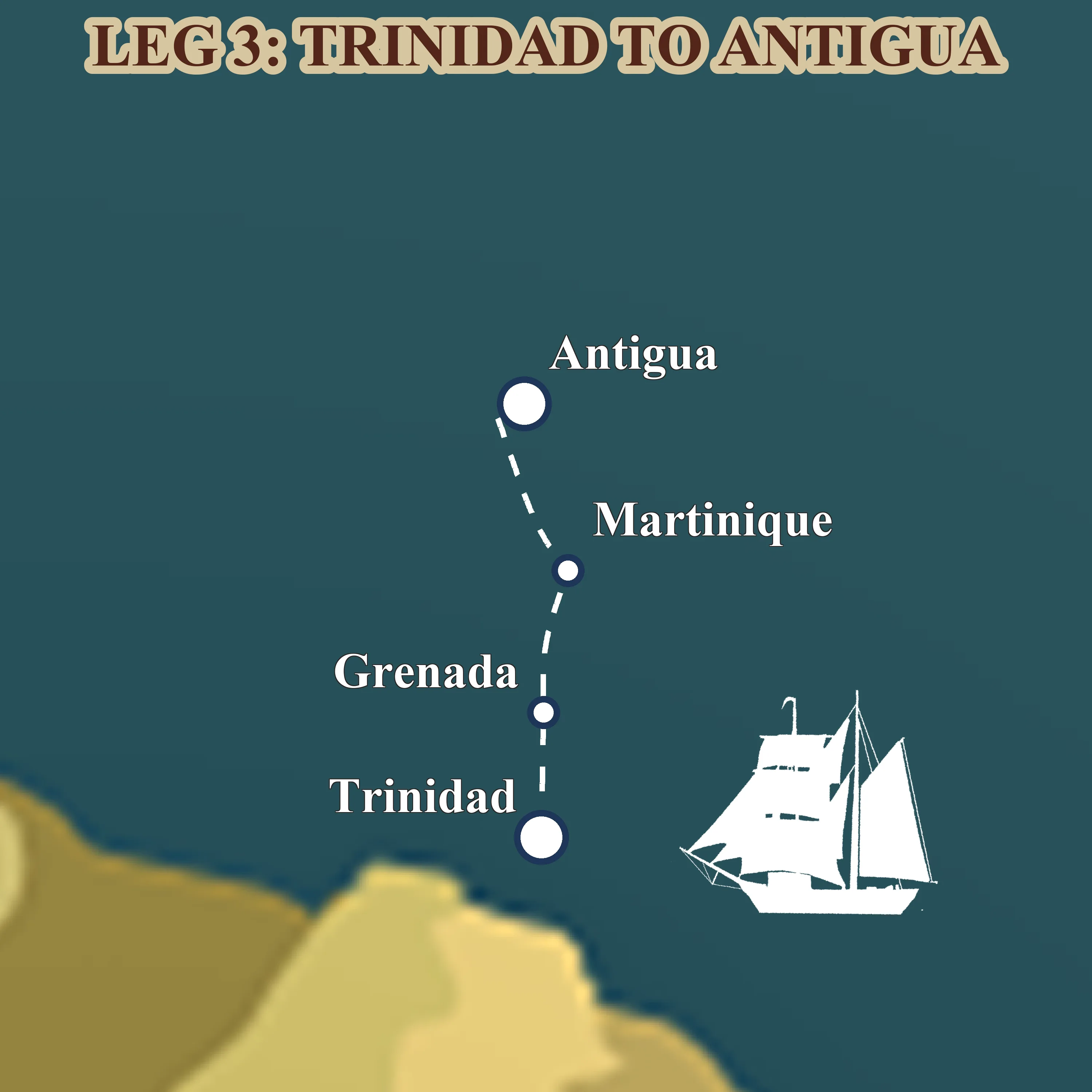
Leg 7: through the Windward Islands from Trinidad to Antigua
Apr 2027 — May 2027 · Trinidad → Antigua
Four weeks of short trade-wind daysails through the Lesser Antilles, turquoise anchorages, rum shops on the sand, French-Creole Martinique and the tall-ship scene in Antigua.
Read more about this leg → about Leg 7: through the Windward Islands from Trinidad to Antigua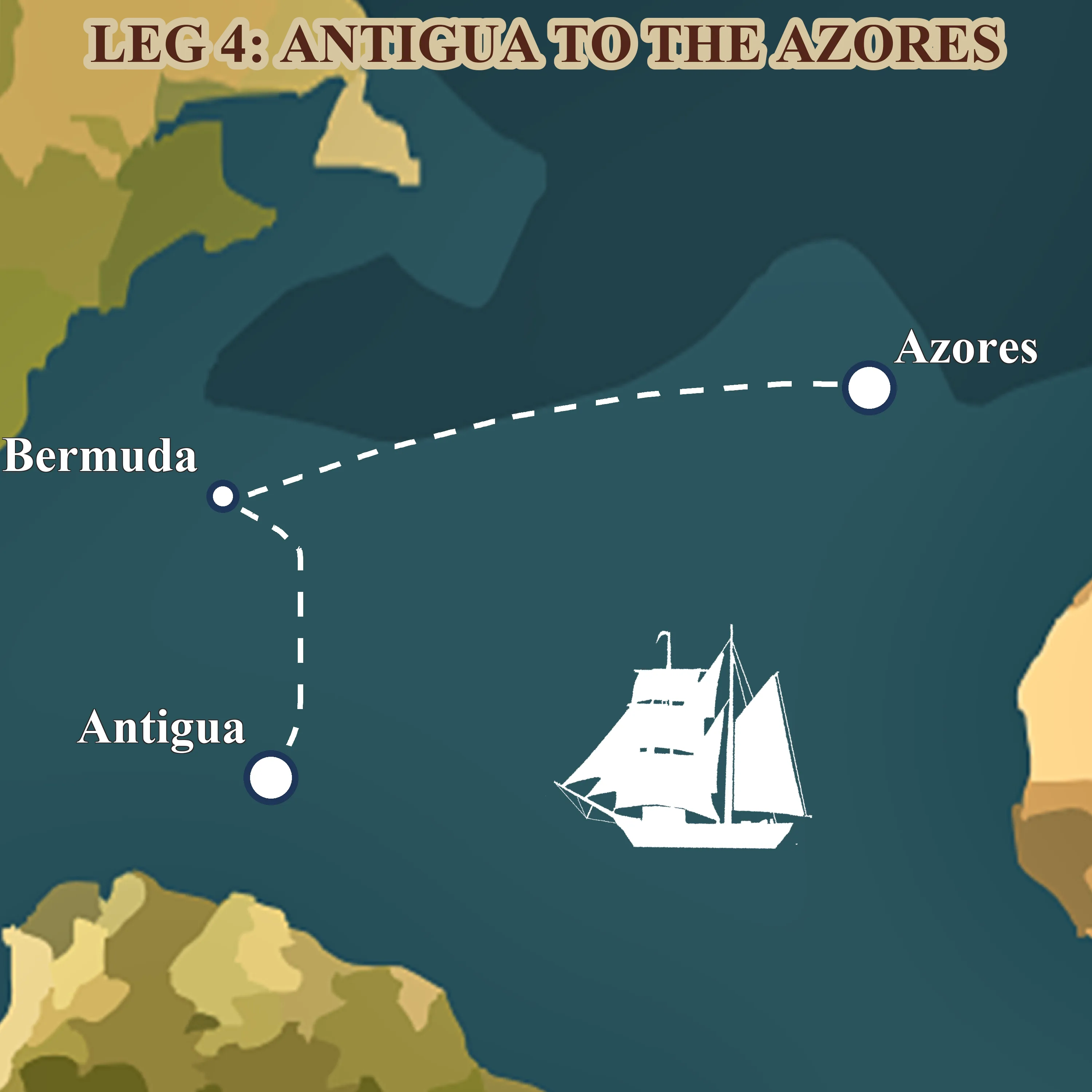
Leg 8: across the North Atlantic from Antigua to the Azores
May 2027 — Jul 2027 · Antigua → Ponta Delgada, Azores
Fifty-six days on the classic spring tall-ship route home, Antigua, a long reach to Bermuda's pink sand, then three weeks of open ocean to the volcanic Azores.
Read more about this leg → about Leg 8: across the North Atlantic from Antigua to the Azores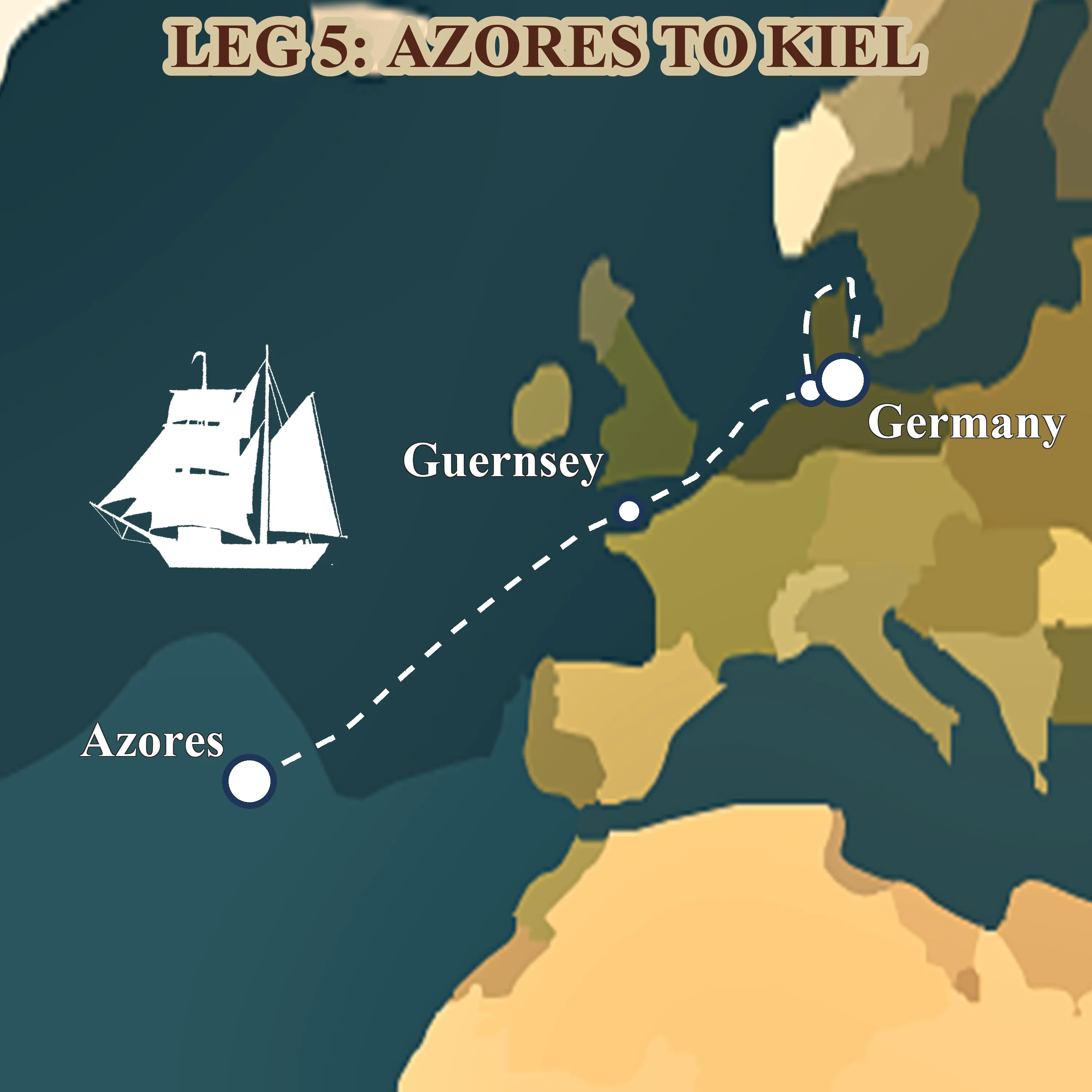
Leg 9: homecoming from the Azores to Kiel
Jul 2027 — Aug 2027 · Ponta Delgada, Azores → Kiel, Germany
The final 1,878 nm, from volcanic São Miguel to the Baltic, up the English Channel through the Dover TSS, past Helgoland's red cliffs and home to Kiel.
Read more about this leg → about Leg 9: homecoming from the Azores to KielReady to apply for a berth?
The application is short, the conversation is friendly, and the voyage is real. Start there, we'll figure out the leg together.
Sail training crew, the main path
For readers landing here because they want to sail on a tall ship and have no idea how to make it happen, this is the section that matters. Sail training is the largest, most accessible, and most documented of the three routes, and it's the one almost every modern voyage depends on commercially.
Who takes the sail training route
The sail training population on a single voyage is almost always a mix, 18-year-olds on a gap year, 30-somethings on sabbatical, early retirees ticking off a bucket list, enthusiast sailors who want to prove themselves on bluewater, and people quietly processing a major life change. Age range on NEPTUN typically runs 18 to 70+. Fitness matters more than age. The unifying trait isn't demographics but willingness: people who will accept being bad at something new, stand a 4 a.m. watch in the rain, and live in close quarters with strangers for weeks.
What a voyage leg actually looks like
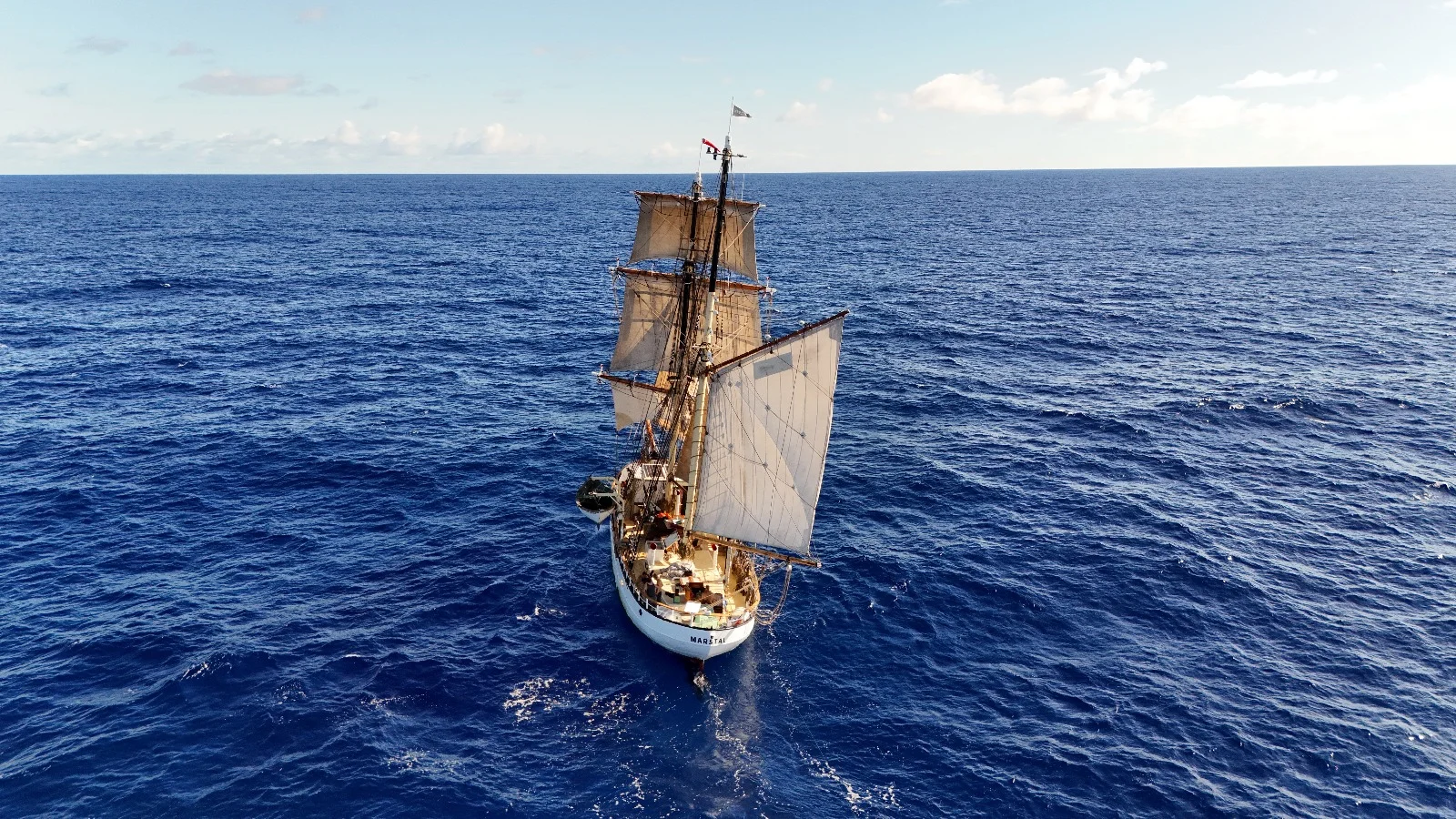
Typical voyage legs run 2 to 8 weeks. A coastal leg might be 10 days; an Atlantic crossing 4 to 6 weeks; a full world voyage segment stitched across a year is possible for those with the time. On NEPTUN the 2026 world voyage and 2027 Caribbean-to-Denmark voyages are broken into individual legs so trainees can join the section that fits their schedule and budget, see /voyages for the current leg catalogue, then apply for the one that fits.
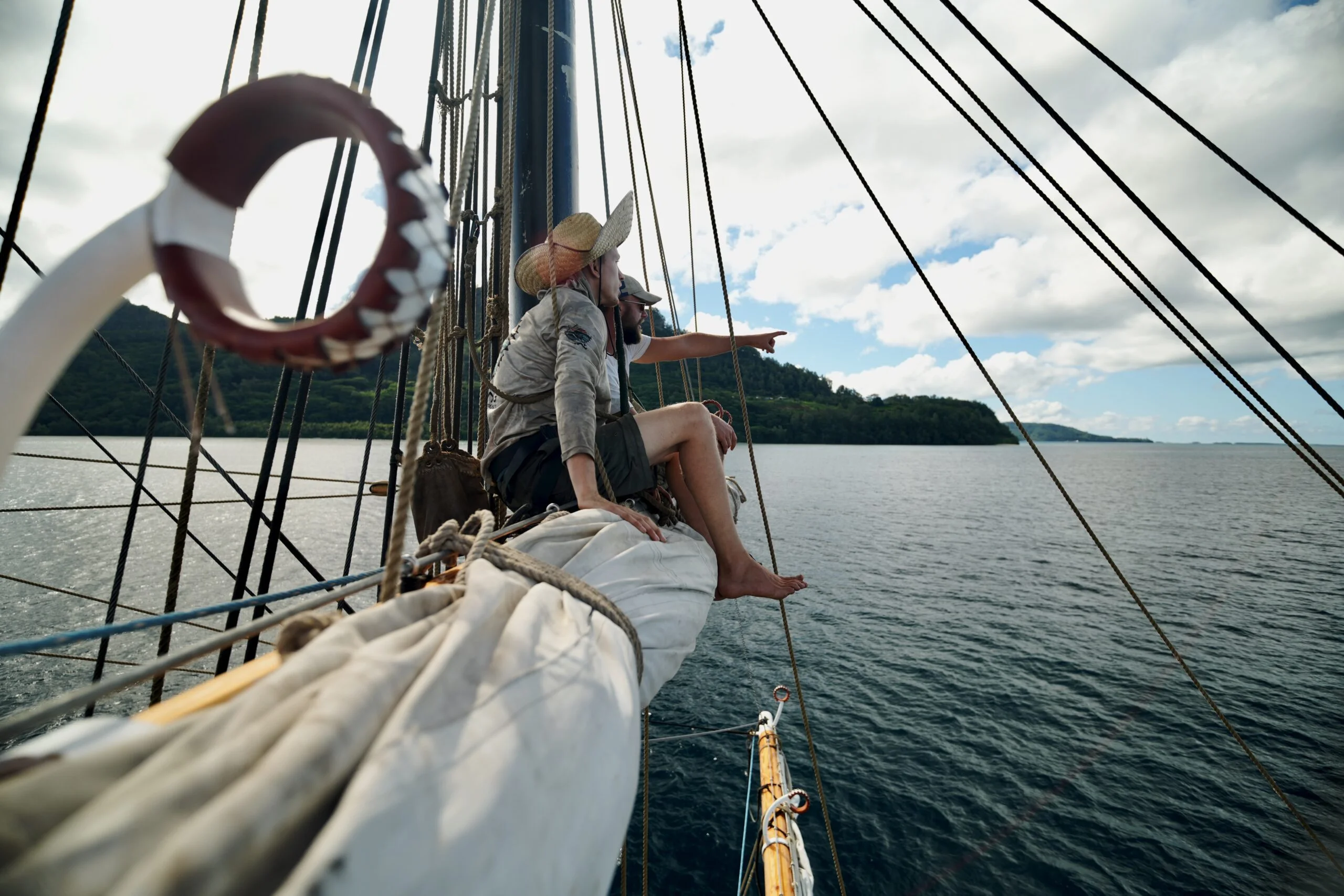
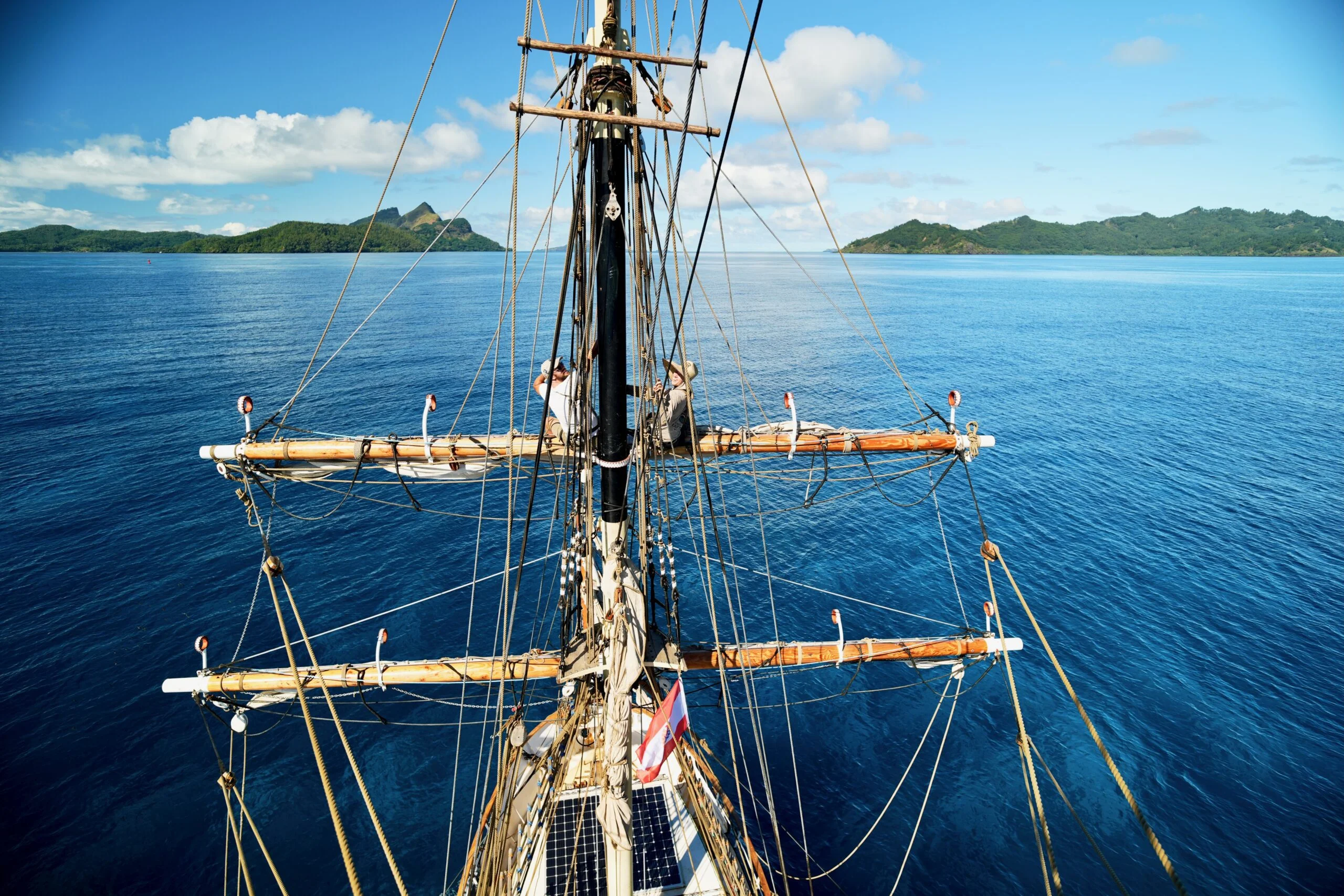
On board you'll rotate through a watch system (typically 4-on/8-off), help trim and furl sails, steer the ship, keep navigation logs, cook for the crew on rotation, clean, and maintain gear. Expect to learn knots, points of sail, traditional rigging, basic celestial navigation, weather interpretation, and the small ship-keeping habits that keep everyone safe. Most of this is taught in context, you learn to reef a topsail while reefing a topsail, not in a classroom.
What it costs and what that buys you
Cost structures vary, but the general pattern across reputable tall ships is a daily rate inclusive of bunk, food, and instruction. NEPTUN's current rates are published on the voyage pages. You are not paying for luxury, bunks are narrow, showers are limited, and the food is good but plain. What you're paying for is the ship, the crew that runs it, and several weeks of instruction from people who have genuinely crossed oceans under sail. Compare our full cost breakdown at /knowledge-base/what-sail-training-costs.
If you have no experience
The single biggest myth keeping people off tall ships is that you need to know how to sail before you apply. You don't. Most ships in the sail training fleet explicitly take beginners, and the teaching model assumes most of the trainee crew will arrive knowing nothing. NEPTUN's beginner policy is spelled out at /sailing-no-experience, short version: if you can climb a ladder, tolerate a moving deck, and are willing to work, you qualify.
For the full picture of what we offer trainees, voyages, rates, training approach, and who we are, start at the pillar page /sail-with-us. When you're ready to act, /apply-now is the application form.
No experience required. Just willingness.
What qualifications you need (or don't)
Sail training crew positions have almost no formal prerequisites. You do not need a sailing license, certification, or prior sea time to join NEPTUN, or most comparable ships, as a trainee. What you do need is a small cluster of practical and medical baselines.
Reasonable fitness. You'll climb ladders (sometimes in motion), handle heavy lines, and stand 4-hour watches in all weather. You don't need to be athletic; you need to be able to do a moderately physical day without collapsing. People in their 60s and 70s join every year and do fine. If you want a structured pre-voyage routine, see getting fit for a voyage.
Mental steadiness. Long ocean passages mean extended time with the same small group, no internet, no privacy, and occasional rough weather. Severe anxiety disorders, untreated claustrophobia, or acute mental health crises are usually disqualifying, not because we don't sympathize, but because we cannot safely manage a medical evacuation from mid-Atlantic.
Medical honesty. Conditions that typically require review before approval include insulin-dependent diabetes, epilepsy, severe cardiac disease, conditions requiring daily dialysis, and pregnancies past the first trimester. None are automatic disqualifiers, we just need to know, so the captain and ship's medic can plan. Dishonest medical forms are the genuine disqualifier.
Language. Working language on board is English. Conversational English is enough.
Age. NEPTUN's trainee minimum is 18 unaccompanied, or 16 with a parent aboard. No upper limit.
Meet the qualifications? Don't wait, legs fill unevenly.
Popular Caribbean and Atlantic-crossing legs fill 6-9 months ahead.
Typical application process
The application process is straightforward but takes several weeks from first contact to boarding. Here's what it looks like in practice on NEPTUN:
1. Browse the legs
Look at the nine legs of the 2026-2027 voyage and pick one (or several) that fits your schedule, budget, and ocean of choice. Start at /voyages.
2. Submit the form
Go to /apply-now, select the voyage leg, and submit basic personal, medical, and emergency-contact information. Allow 10 minutes.
3. Conversation + membership
Within a few working days we reply and schedule a 20-30 minute video call. Trainees join Foreningen NEPTUN as members; a deposit secures the bunk.
4. Embark
You arrive at the embarkation port, meet the crew, stow your kit, and the voyage begins with a safety briefing and harbour-training days before we sail.
In more detail:
- Fill out the application form. Go to
/apply-now, select the voyage or voyage leg you want to join, and submit basic personal, medical, and emergency-contact information. Allow 10 minutes. - Conversation with the office. Within a few working days we'll reply and usually schedule a 20–30 minute video call. This is low-stakes on both sides, we want to understand your situation and expectations, and you should ask every question you have. We say no occasionally when someone is a poor fit for a specific leg; more often we redirect applicants to a better-matched voyage.
- Leg confirmation. You confirm the leg you want and we reserve your bunk. Legs fill unevenly, popular Caribbean and Atlantic-crossing legs fill 6–9 months ahead, others remain available closer to departure.
- Deposit. A deposit secures the booking. Balance is due before sailing. Full payment terms are on the application confirmation email.
- Preparation. We send a kit list, reading suggestions, and logistical details, how to get to the ship, what to bring, what not to bring, passport and visa notes for the specific voyage. Plan 4–6 weeks for this phase.
- Board the ship. You arrive at the embarkation port, meet the crew, stow your kit, and the voyage begins with a safety briefing and a couple of harbour-training days before we sail.
Most applicants who start at step 1 are on the ship within 3 to 9 months. If you're flexible about which leg you join, it's often faster, start the application now and we'll match you to availability.
Other tall ship options
NEPTUN is not the only tall ship taking sail training crew, and an honest guide should point to the alternatives. A few worth knowing about:
- Picton Castle (Canada) runs long-format world voyages with an established sail training tradition, the flagship "tall ship around the world" programme in the English-speaking market.
- Stad Amsterdam (Netherlands) is a luxury clipper running mostly shorter European legs and corporate charters, with occasional trainee spots.
- Tres Hombres (Netherlands) is an engineless trading brigantine, extreme and remarkable, best suited for climate-committed trainees willing to sail genuinely traditional.
- Bark Europa (Netherlands) specialises in Antarctic and polar voyages and is the right choice if your dream is specifically cold-water, high-latitude sailing.
- Sørlandet (Norway) is a traditional full-rigged ship running educational and open trainee voyages, particularly strong in the Scandinavian market.
Each has a different rig, crew size, price point, and culture. If your dream is specifically polar, NEPTUN isn't the right ship; if it's specifically engine-free cargo sailing, neither are we. For beginner-friendly ocean voyages on a traditional brigantine with a Scandinavian nonprofit community behind it, we think we're a good match, but the best voyage is the one that actually gets you on the water. If we sound like a fit, apply for a leg; if we don't, the list above is a real one.
Ready to apply?
If you've read this far, you probably know which category you belong to. Your next step:
- Sail training crew: browse current voyages at
/voyages, then submit the form at/apply-now. - Professional crew: see
/apply-as-professional-crewfor open positions and required certification. - Still exploring: start at
/sail-with-usfor the full overview, or browse more articles at/knowledge-base.
Apply for a 2026-2027 berth
Ten berths per leg, nine legs across two seasons, pick yours.
FAQs
Common questions about joining a tall ship crew
Do I need sailing experience to join NEPTUN?
No. NEPTUN, like most ships in the sail training fleet, explicitly takes beginners. The teaching model assumes most of the trainee crew will arrive knowing nothing. If you can climb a ladder, tolerate a moving deck, and are willing to work, you qualify. See sailing with no experience for the full beginner policy.
How much does it cost to join a tall ship as crew?
Sail training crew typically pay €80 to €200 per day, inclusive of bunk, food, and instruction. A three-week leg works out to €1,500-€5,000; a long ocean crossing more. Read the full tall ship voyage cost breakdown, or browse current rates on the voyage pages.
How long is one leg?
On NEPTUN's 2026-2027 voyage, the shortest leg is 27 days (Trinidad to Antigua) and the longest is 92 days (Bali across the Indian Ocean to Réunion). Most legs land in the 3-to-8-week range. Pick the duration that fits your schedule on the leg overview.
How fit do I need to be?
Reasonably fit. You'll climb ladders, handle heavy lines, and stand 4-hour watches in all weather. People in their 60s and 70s join every year and do fine. We've published a structured routine at getting fit for a voyage if you want a pre-departure plan.
How far ahead do I need to apply?
Most applicants who start the application are on the ship within 3 to 9 months. Popular Caribbean and Atlantic-crossing legs fill 6-9 months ahead; less popular legs are sometimes available a few weeks before departure. The honest answer is "as soon as you know", start at /apply-now and we will match you to availability.
What about professional crew applications?
If you already hold a maritime license (STCW, deck or engine officer ticket, documented sea time), apply at /apply-as-professional-crew. Most tall ship operators hire informally through the tall ship network, getting known in the scene matters more than a polished CV.
Read also
- Sail with us, the full crew overview
- Apply now, submit your application
- Sailing with no experience, the beginner policy
- What a tall ship voyage actually costs
- Getting fit for a voyage
- A day at sea on a tall ship
- Watch systems on a tall ship
- Voyages 2026-2027, all nine legs
Still deciding?
See the full 482-day arc
Nine legs, four oceans, ten berths each. Pick one, or string several together.
Leg 1: from Bali to Réunion across the Indian Ocean
May 2026 — Aug 2026 · Bali, Indonesia → Réunion, France
The opening chapter of Neptun's 482-day world voyage, a 4,078-nm trade-wind passage from the temples of Bali to the volcanic cliffs of Réunion.
Read more about this leg → about Leg 1: from Bali to Réunion across the Indian OceanLeg 2: from Réunion to Zanzibar via Madagascar
Aug 2026 — Sept 2026 · Réunion, France → Zanzibar, Tanzania
Forty days across the western Indian Ocean, volcanic Réunion, lemur-haunted Nosy Be, the Mozambique Channel, and the spice-scented stone alleys of Zanzibar.
Read more about this leg → about Leg 2: from Réunion to Zanzibar via MadagascarLeg 3: from Zanzibar to Durban down the Mozambique Channel
Sept 2026 — Nov 2026 · Zanzibar, Tanzania → Durban, South Africa
Sixty-three days coasting the African shore, spice islands, mangrove anchorages, Portuguese praças and the long trade-wind run down the Mozambique Channel to Durban.
Read more about this leg → about Leg 3: from Zanzibar to Durban down the Mozambique ChannelLeg 4: from Durban around the Cape of Good Hope
Nov 2026 — Dec 2026 · Durban, South Africa → Cape Town, South Africa
Thirty-eight days of serious seamanship, the Agulhas current, the Cape of Good Hope and the Southern Ocean at the tip of Africa, finishing quietly in Cape Town for Christmas.
Read more about this leg → about Leg 4: from Durban around the Cape of Good HopeLeg 5: across the South Atlantic from Saldanha to Fortaleza
Jan 2027 — Mar 2027 · Saldanha Bay, South Africa → Fortaleza, Brazil
Forty-four days before the southeast trades, Napoleon's exile at St. Helena, the equator crossing, and landfall in tropical Brazil. The ocean chapter of the voyage.
Read more about this leg → about Leg 5: across the South Atlantic from Saldanha to FortalezaLeg 6: from Fortaleza to Trinidad along South America
Mar 2027 — Apr 2027 · Fortaleza, Brazil → Trinidad
A thousand miles of downwind trade running, the Amazon's brown water under the hull, the Guianas smudged on the horizon, and Trinidad's steelpan waiting at the end.
Read more about this leg → about Leg 6: from Fortaleza to Trinidad along South AmericaLeg 7: through the Windward Islands from Trinidad to Antigua
Apr 2027 — May 2027 · Trinidad → Antigua
Four weeks of short trade-wind daysails through the Lesser Antilles, turquoise anchorages, rum shops on the sand, French-Creole Martinique and the tall-ship scene in Antigua.
Read more about this leg → about Leg 7: through the Windward Islands from Trinidad to AntiguaLeg 8: across the North Atlantic from Antigua to the Azores
May 2027 — Jul 2027 · Antigua → Ponta Delgada, Azores
Fifty-six days on the classic spring tall-ship route home, Antigua, a long reach to Bermuda's pink sand, then three weeks of open ocean to the volcanic Azores.
Read more about this leg → about Leg 8: across the North Atlantic from Antigua to the AzoresLeg 9: homecoming from the Azores to Kiel
Jul 2027 — Aug 2027 · Ponta Delgada, Azores → Kiel, Germany
The final 1,878 nm, from volcanic São Miguel to the Baltic, up the English Channel through the Dover TSS, past Helgoland's red cliffs and home to Kiel.
Read more about this leg → about Leg 9: homecoming from the Azores to KielWant to sail with us?
Brigantine NEPTUN is a non-profit training ship, every voyage takes 10 crew members through real ocean sailing, no experience needed.
Want to sail with us? Brigantine NEPTUN is a non-profit training ship, every voyage takes 10 crew members through real ocean sailing, no experience needed. Apply for a berth or read about the voyages first.