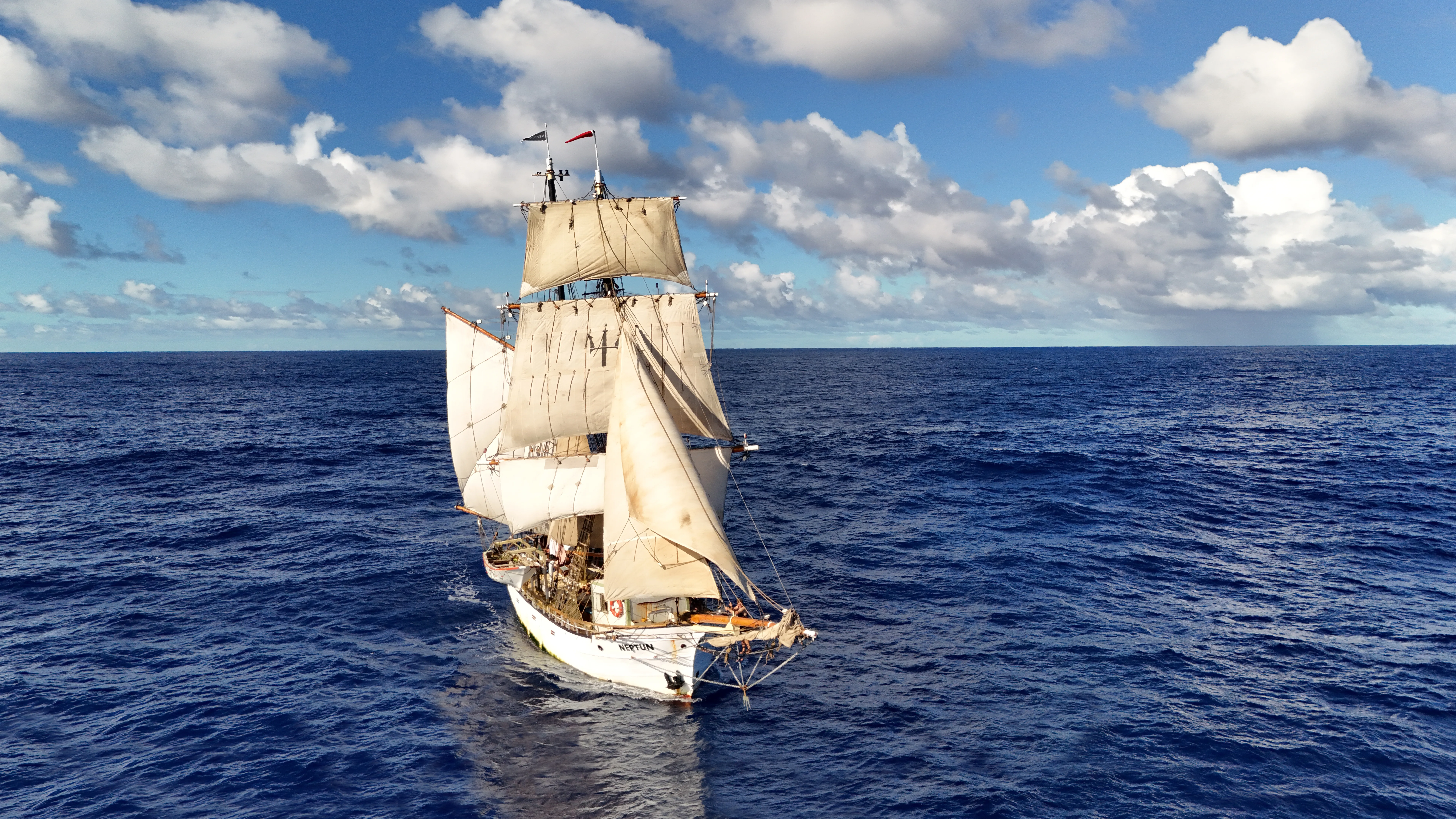
A good packing list ocean voyage kit is the difference between a comfortable 30-day passage and a miserable one, and it fits in a single 70-litre duffel. This guide gives you two climate-specific lists (tropical and temperate), the three rules that govern every tall-ship bag, the foul-weather kit worth spending money on, and the items crews laugh at every voyage when a first-time trainee hauls them up the gangway.
On this page
- Why a tall ship packing list is different from a yacht list
- The three rules: soft luggage, bunk-sized, weight-honest
- Tropical vs temperate: two packing lists side by side
- Foul-weather kit: the one thing worth spending on
- Medications, toiletries, and the personal kit that lives in a dry bag
- What NOT to pack (and why crews laugh at it every voyage)
- A two-week timeline to arrive ready
- FAQ
- Read also
Why a tall ship packing list is different from a yacht list
Most "what to pack sailing trip" guides assume a private cabin, a dry salon, and a marina shower waiting at every stop. A tall ship is none of those things. On NEPTUN you share a 15-person working ship for weeks at a time, and three realities shape everything you bring.
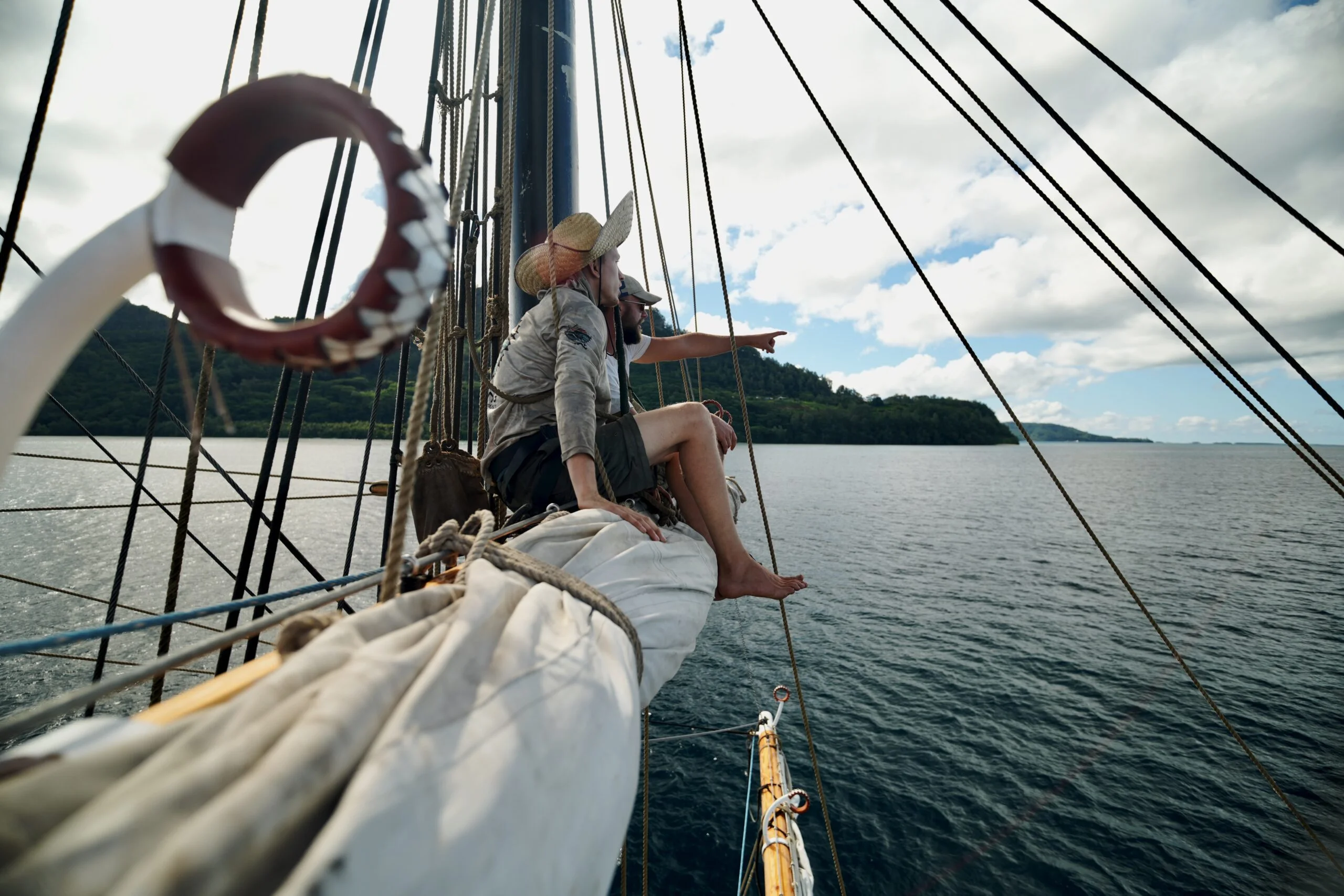
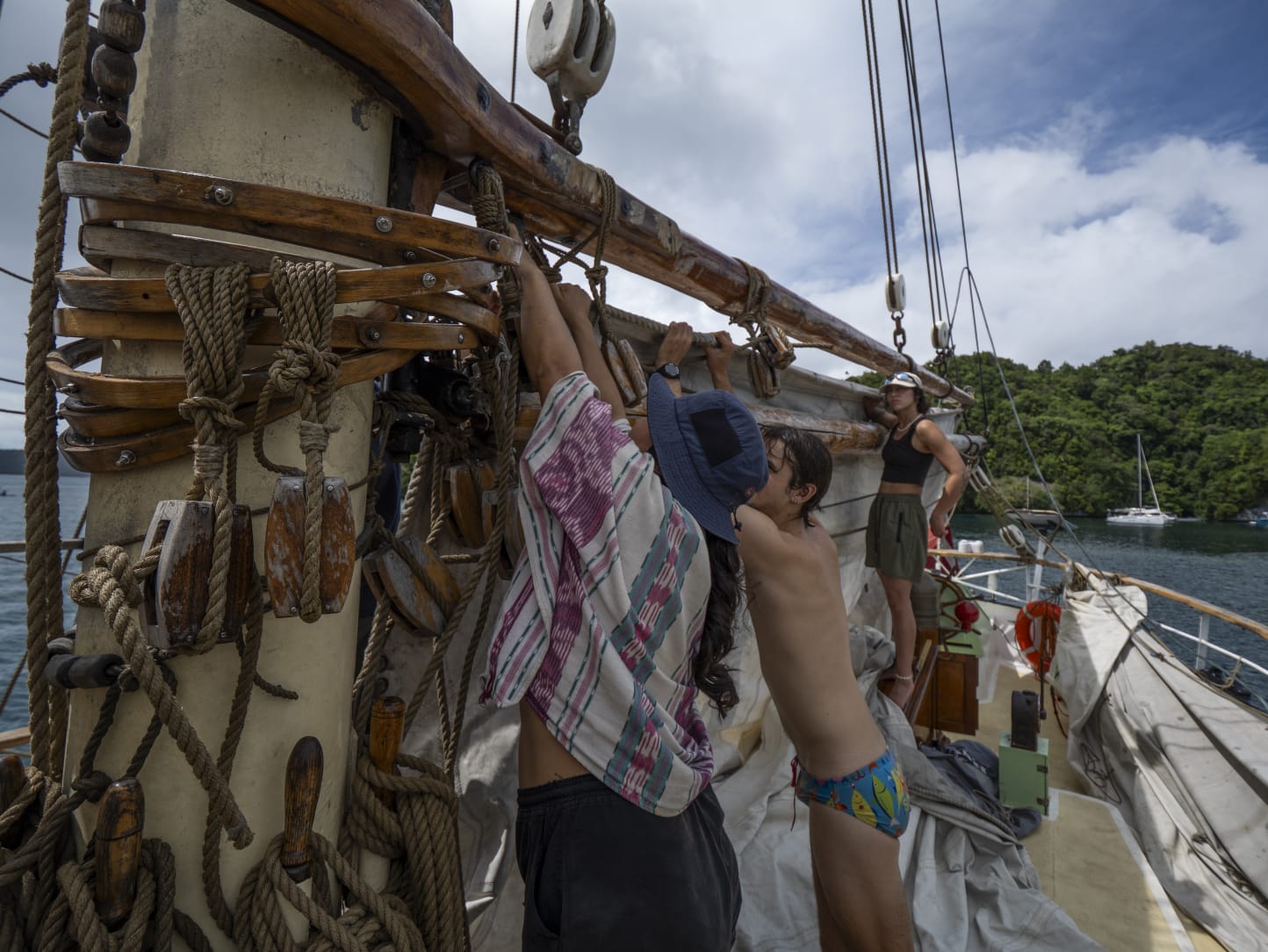
First, your bunk is your storage. There is no wardrobe. A duffel that fits beside you on the mattress is the bag you brought; anything bigger goes in the lazarette and you won't see it until port. Second, you work at height in weather. Going aloft in foul-weather gear with a harness is a normal watch task, not an extreme event, kit has to survive salt water, sun, and being sat on wet ropes. Third, everything shared aboard gets wet. The drying space is a single line above the galley stove, and 15 people are competing for it. Read through life onboard a tall ship before you start buying anything, the working reality is what the list supports.
Pack for the working ship, not the brochure
The items that matter on a tall ship are the ones you can haul on in the dark, wear wet for four hours, wring out, and wear again tomorrow. Nothing decorative survives.
The three rules: soft luggage, bunk-sized, weight-honest
Three rules govern every tall-ship bag and they're non-negotiable on almost every sail-training ship in the world:
- Soft luggage only. A duffel or large holdall, no wheeled suitcases, no hard-sided cases. Hard luggage does not stow on a ship; it slides, it jams companionways, and there is literally no flat floor to roll it across in a seaway.
- Bunk-sized. Your bag has to fit beside you on a 190 cm × 70 cm bunk with you still in it, because that's where it lives. Aim for 70–90 litres. One bag, not three.
- Weight-honest. You will carry it up a gangway at awkward angles, hand it down a ladder, and stow it in a forepeak at 0300 on the night you arrive. Most trainees land between 15 and 20 kg for temperate legs, under 12 kg for pure tropical. If you can't carry it one-handed up a step ladder, it's too heavy.
Tall-ship packing, by the numbers
Not applied yet? Join NEPTUN as crew and we email your leg-specific packing list after confirmation. Apply for a berth, no experience needed.
Tropical vs temperate: two packing lists side by side
The centrepiece of any tall-ship packing list is the climate split. NEPTUN's 2026–2027 circumnavigation runs through both, the tropical legs of the 2026 voyage through the Indian Ocean and South Atlantic trades, and the temperate passages where the 2027 North Atlantic return crosses higher latitudes. Pack for the leg you're sailing; don't average the two.
Tropical list, Indian Ocean, South Atlantic trades, tropical Pacific
For Leg 1 (Bali → Réunion), Leg 2 (Réunion → Zanzibar), Leg 5 (South Africa → Brazil) and Leg 6 (Brazil → Trinidad). Temperatures 24–32 °C, humidity near 100 %, UV extreme, intermittent squalls.
Clothing
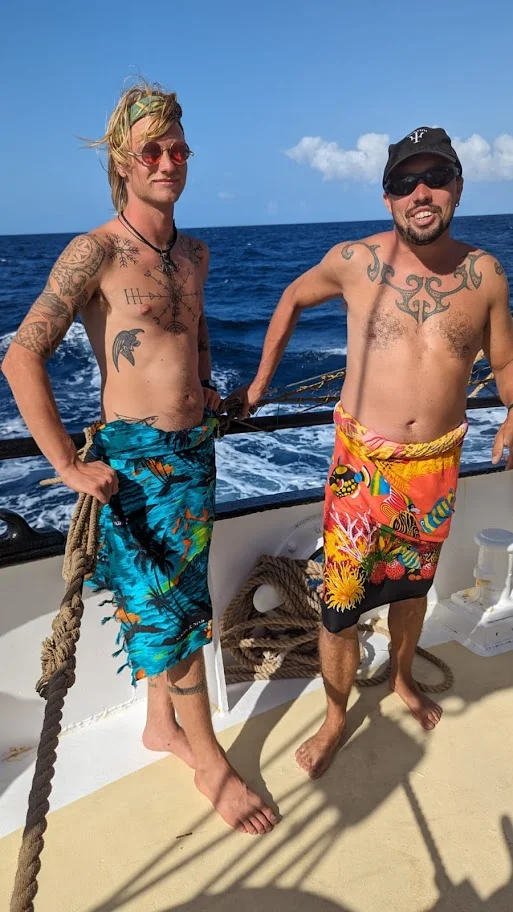
5× quick-dry t-shirts. 2× long-sleeve UPF shirts for sun. 2× lightweight trousers (one long for sun, one cut-offs). 1× warm layer for night watches, it gets cool at 0300 even in the tropics. 1× rash vest for swimming. 5× quick-dry underwear. 2× pairs light socks.
Deck gear
Soft-sole, non-marking deck shoes (broken in). Pair of barefoot-friendly sandals for off-watch. Light rain jacket, a cheap one is fine for tropical squalls. Wide-brim hat with a chin strap (the hat without the strap is a gift to the sea). Polarised sunglasses with a retainer.
Personal kit
Reef-safe SPF 50 sunscreen (bring double what you think). Lip balm with SPF. Salt-water soap. Small microfibre towel. Head torch with a red-light mode. Earplugs + eye mask for off-watch sleep. 1 L reusable water bottle. Dry bag (20–30 L) for valuables.
Temperate list, South Atlantic, North Atlantic spring/summer
For Leg 3 (Zanzibar → Durban), Leg 4 (Durban → Cape Town), Leg 8 (Antigua → Azores) and Leg 9 (Azores → Kiel). Temperatures 8–20 °C, wind chill significant, persistent damp, weather systems rolling through every few days.
Clothing
3× merino-wool base layers (long-sleeve + bottoms), the single best temperate investment. 2× mid-layer fleeces. 2× warm trousers (one for watch, one for off). 1× insulated jacket for deck transitions. 5× warm socks (wool, not cotton). Beanie, neck gaiter, and two pairs of gloves, one waterproof, one thinner.
Deck gear
Foul-weather bib + jacket (the big-ticket item, see §5). Soft-sole sea boots mid-calf, broken in. Second pair of soft-sole deck shoes for off-watch and rest days ashore. Harness-compatible layering: everything must fit under a climbing harness without binding. A thin buff for keeping spray off your face.
Personal kit
Everything from the tropical personal kit, plus: hand cream (salt + wind destroys skin), extra lip balm, thermos flask for hot drinks on watch, waterproof phone pouch, wool blanket liner or 3-season sleeping bag (NEPTUN provides a bunk mattress and wool blanket, you bring the sheet bag and pillowcase).
Planning your own leg? The full 2026-2027 itinerary is live, browse the nine legs and pick the one that fits your dates and your climate comfort.
Tropical legs, pack light, pack sun-safe
The warm-water passages where the tropical list above is the working kit.
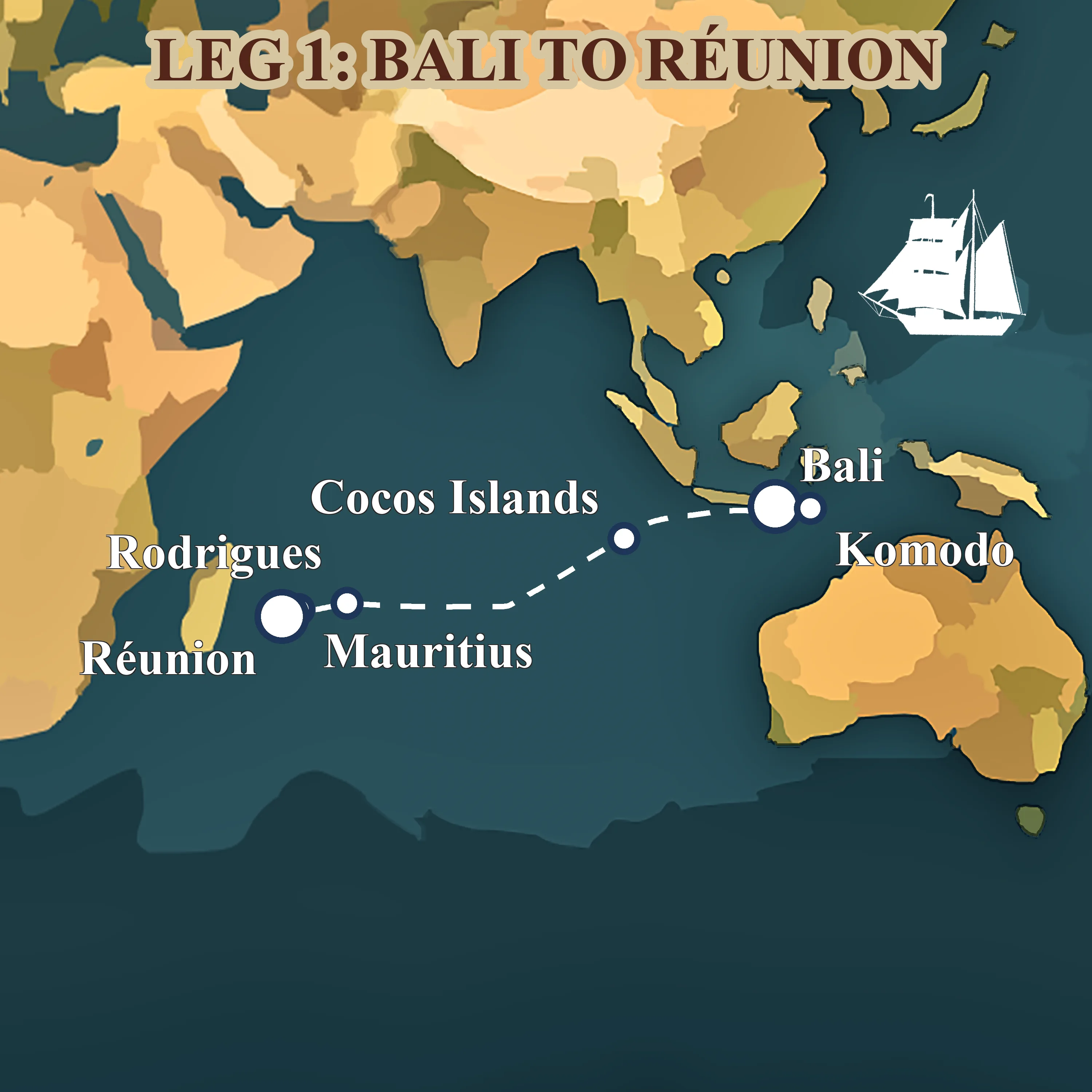
Leg 1: from Bali to Réunion across the Indian Ocean
May 2026 — Aug 2026 · Bali, Indonesia → Réunion, France
The opening chapter of Neptun's 482-day world voyage, a 4,078-nm trade-wind passage from the temples of Bali to the volcanic cliffs of Réunion.
Read more about this leg → about Leg 1: from Bali to Réunion across the Indian Ocean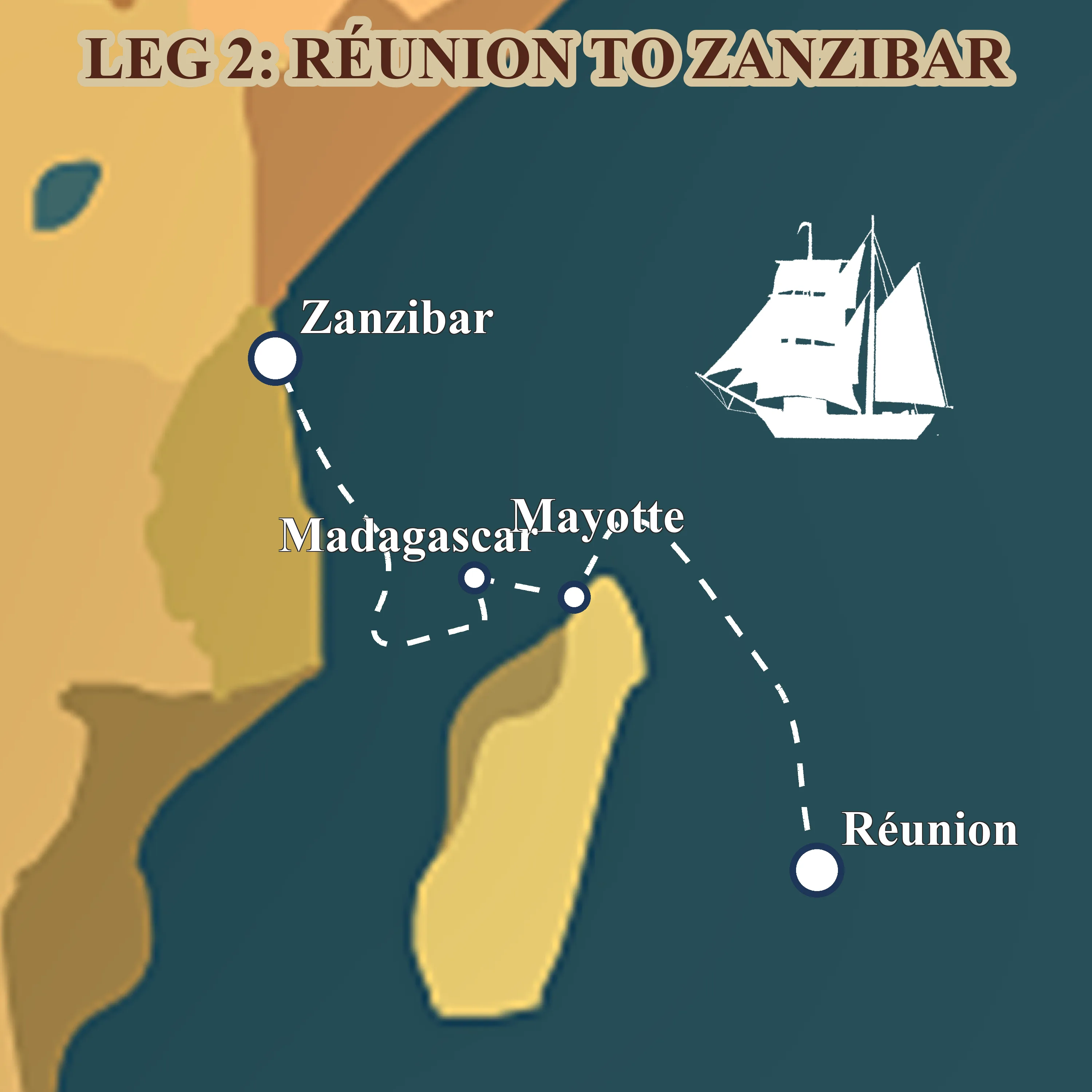
Leg 2: from Réunion to Zanzibar via Madagascar
Aug 2026 — Sept 2026 · Réunion, France → Zanzibar, Tanzania
Forty days across the western Indian Ocean, volcanic Réunion, lemur-haunted Nosy Be, the Mozambique Channel, and the spice-scented stone alleys of Zanzibar.
Read more about this leg → about Leg 2: from Réunion to Zanzibar via Madagascar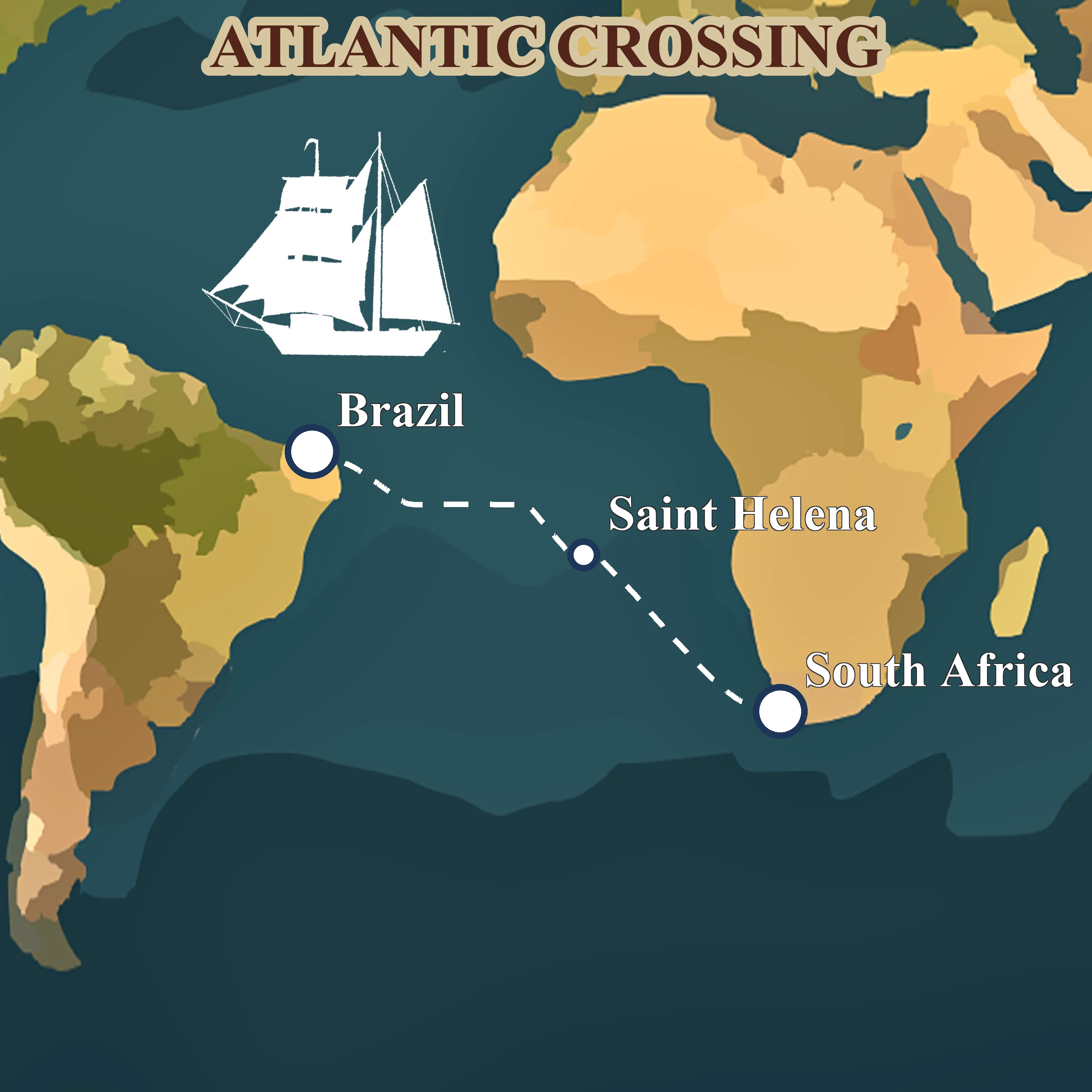
Leg 5: across the South Atlantic from Saldanha to Fortaleza
Jan 2027 — Mar 2027 · Saldanha Bay, South Africa → Fortaleza, Brazil
Forty-four days before the southeast trades, Napoleon's exile at St. Helena, the equator crossing, and landfall in tropical Brazil. The ocean chapter of the voyage.
Read more about this leg → about Leg 5: across the South Atlantic from Saldanha to Fortaleza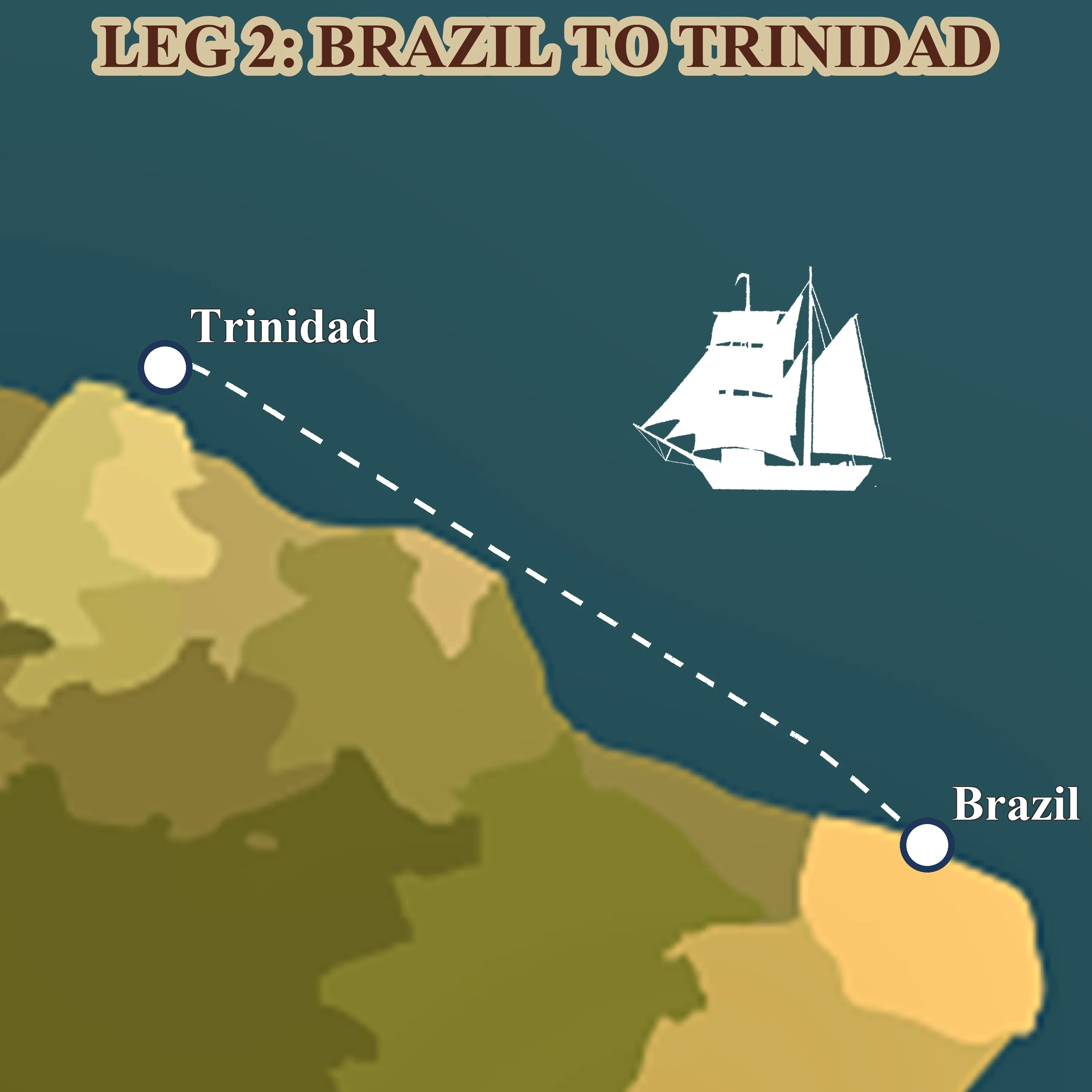
Leg 6: from Fortaleza to Trinidad along South America
Mar 2027 — Apr 2027 · Fortaleza, Brazil → Trinidad
A thousand miles of downwind trade running, the Amazon's brown water under the hull, the Guianas smudged on the horizon, and Trinidad's steelpan waiting at the end.
Read more about this leg → about Leg 6: from Fortaleza to Trinidad along South AmericaFoul-weather kit: the one thing worth spending on
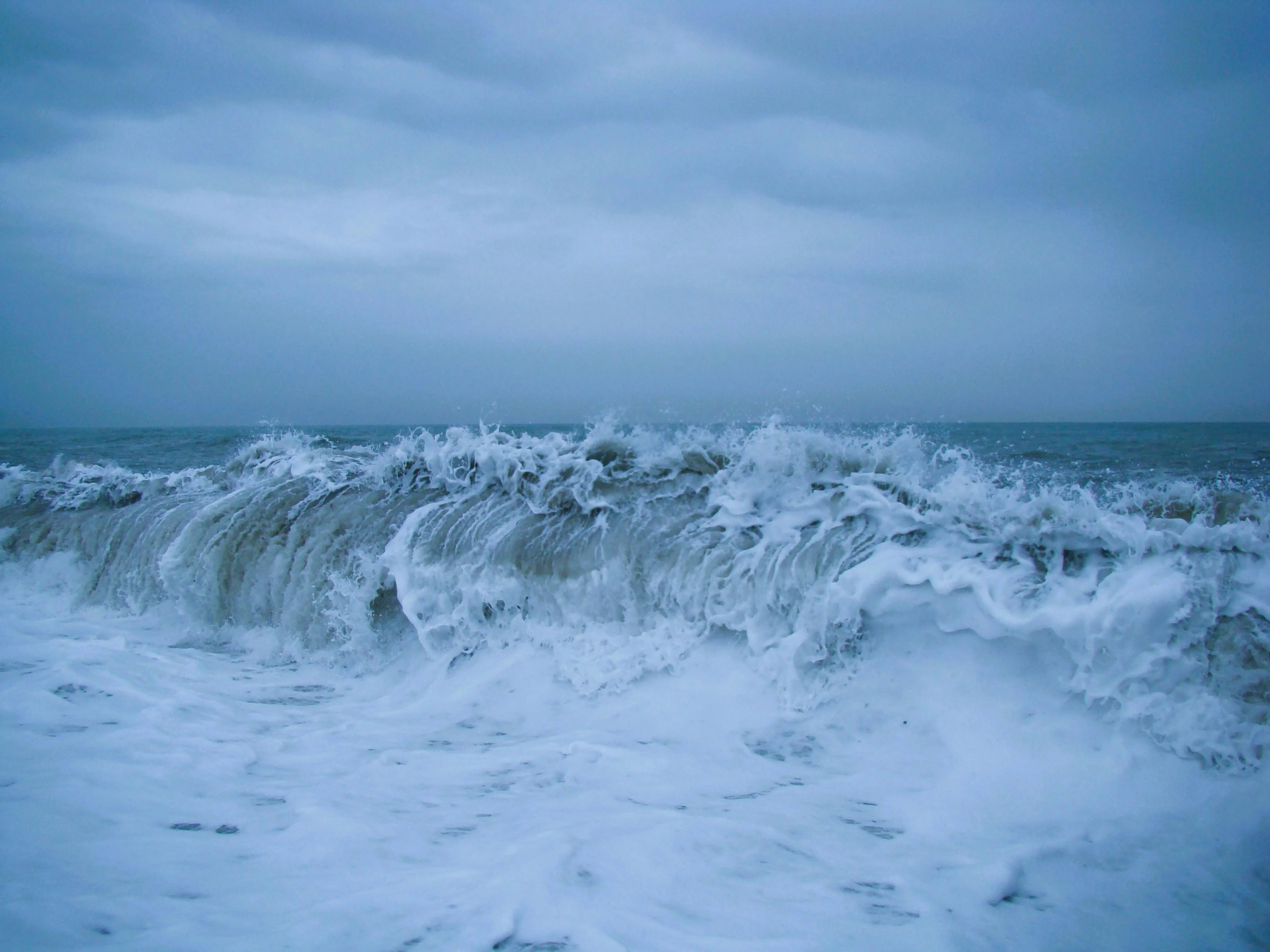
If you take one thing from this article, take this: mid-range foul-weather gear is the single best €250 you will spend on a temperate or cold-water leg. Cheap oilskins wet you through after four hours on watch. Genuinely expensive offshore kit is overkill for most trainees. The sweet spot is a mid-range bib-and-jacket combo from a real marine brand, Helly Hansen, Musto, Gill, and Grundéns all sit in that band, and any of their entry-to-mid-tier sets will outperform a €40 fisherman's jacket by a wide margin.
What actually keeps you warm is not the outer shell, it's the layering underneath. Merino wool base + fleece mid-layer + windproof outer is the formula. The shell stops the water; the layers hold the heat. Get the layering right and a cheaper shell still works; get the layering wrong and the most expensive jacket won't save you.
NEPTUN loans a small set of communal foul-weather gear, fine for trying a weekend, not good enough for a multi-week ocean leg where the same jacket is damp for ten days running. Bring your own. Read what life onboard a tall ship looks like before you decide what you can live without.
Medications, toiletries, and the personal kit that lives in a dry bag
A small 20–30 litre dry bag is the most important bag after the duffel. It lives within arm's reach of your bunk and holds the things you'll need at 0300 in weather: head torch, a layer, meds, phone, ID. Everything in it stays dry even if the deck hatch is open to spray.
Seasickness medication goes in this bag. Common options your pharmacist can discuss are cinnarizine (Stugeron in Europe), meclizine, dimenhydrinate, and scopolamine patches. Try them once at home before the voyage so you know how your body reacts. A dedicated pocket for seasickness meds matters, see seasickness on a tall ship for what actually works and when to take it.
Bring prescription medication for the full voyage plus two weeks' buffer, and a photocopy of the prescriptions. The rest of the personal kit stays minimal: salt-water soap (plain soap lathers in sea water; most gels don't), small microfibre towel, toothbrush, basic toiletries. No hair products, no elaborate skincare, salt will win.

What NOT to pack (and why crews laugh at it every voyage)
A short but firm list. Every one of these has walked up the gangway at least once:
- Wheeled luggage or hard-shell suitcases. Will not stow. Will jam companionways. Will roll across your bunkmate's face. Soft duffel only.
- Anything white or pale. Sail-training decks are tar-sealed, rust-stained and bosun's-locker-grimy. Within a day, anything white is ruined.
- Valuables and jewellery. There is nowhere to lock them, and nobody needs a gold watch on watch. Leave wedding rings at home too, taping fingers with rings aloft is how fingers get injured.
- Formal shoes, heels, stilettos. Yes, this is in real sail-training packing lists because trainees have tried. Heels puncture a teak deck and destroy a rubber one. No exceptions.
- Hair-dryers, curling irons, electric kettles. 12V ship's power will not run them, and there are no shore-power outlets at sea. Leave the hair appliances home.
- A week's worth of books "in case you get bored." You won't. Two books, or one e-reader with everything on it.
A good test: if an item needs to stay clean, stay dry, or charge off shore power, it probably doesn't belong. If you're still unsure, apply to join as crew and we'll send a leg-specific review of your list before you pack.
Pack for the ocean you're crossing, not the one in the brochure photo
A two-week timeline to arrive ready
Most trainees pack in the wrong order: kit first, then think about it. Reverse it. Over two weeks you can test every item, break the boots in, and walk aboard with a bag you trust.
Timeline
From T-14 to walking aboard
T-14 days, order and break in
Order any missing kit now so replacements arrive in time. Start wearing new deck boots daily, blisters belong on land, not on day 2 of a passage. Try your seasickness medication once at home so you know how it affects you.
T-7 days, dry-pack and weigh
Lay everything out. Pack the duffel. Weigh it. Repack: half of what you planned will not fit. Keep the personal dry bag separate. This is the pass where you discover the missing item and have time to buy it.
T-3 days, admin and prescriptions
Print your digital packing checklist to confirm against. Confirm prescriptions are filled and packed. Scan your passport, ship ticket, and insurance to cloud storage. Charge the head torch and the power bank.
T-1 day, final layer
Pack wet-weather gear at the top of the duffel (you want it first when you board). ID, tickets and phone in the personal dry bag. Lay out travel clothes. Go to bed early, standing [four-hour watches](/knowledge-base/getting-fit-for-a-voyage) starts with being rested.
T-0, walk aboard
One duffel in one hand, dry bag over the shoulder. Gangway, introduction, bunk, stow. You are packed for an ocean voyage.
Temperate and cold-water legs, pack for weather
Foul-weather gear, merino layers and sea boots earn their keep on these passages.
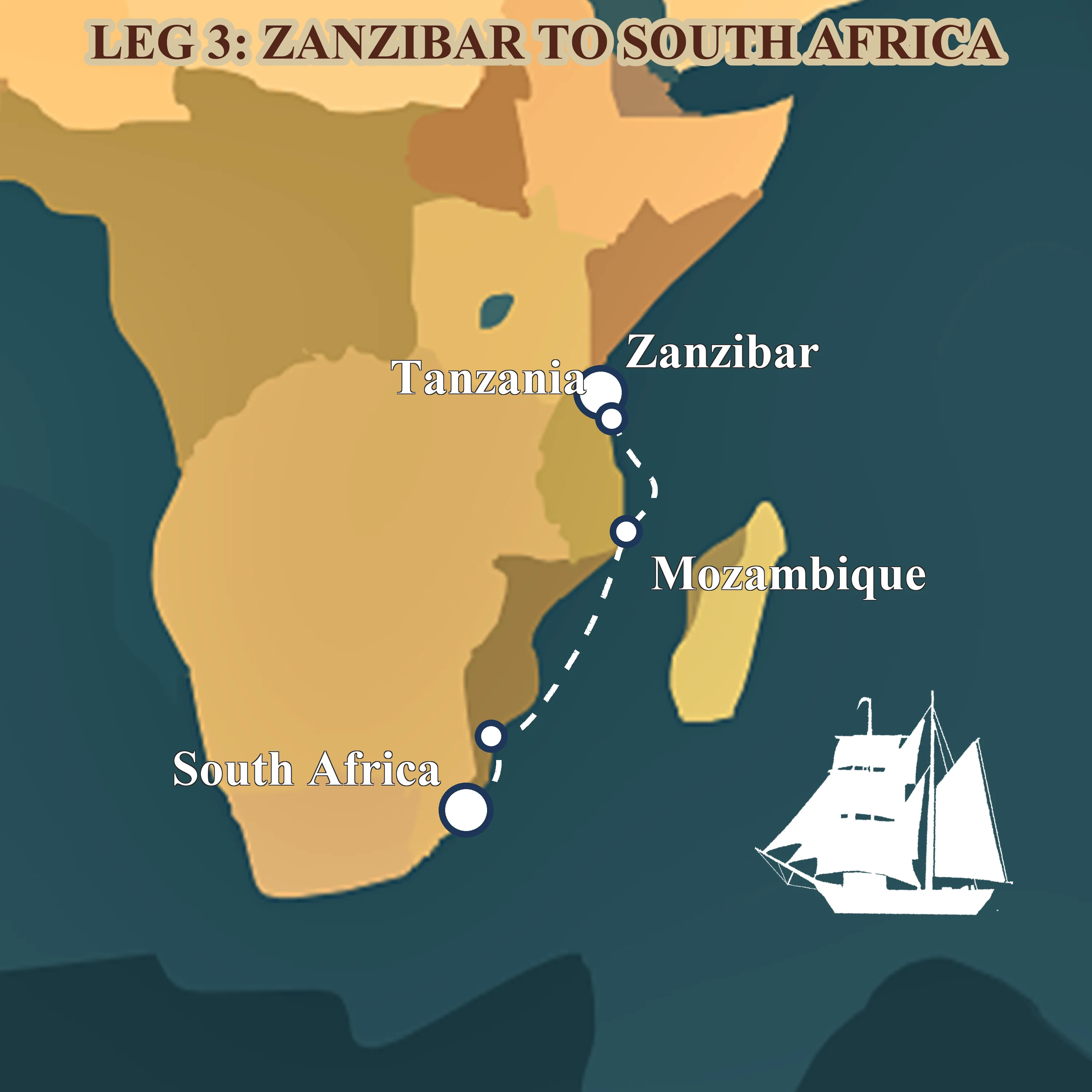
Leg 3: from Zanzibar to Durban down the Mozambique Channel
Sept 2026 — Nov 2026 · Zanzibar, Tanzania → Durban, South Africa
Sixty-three days coasting the African shore, spice islands, mangrove anchorages, Portuguese praças and the long trade-wind run down the Mozambique Channel to Durban.
Read more about this leg → about Leg 3: from Zanzibar to Durban down the Mozambique Channel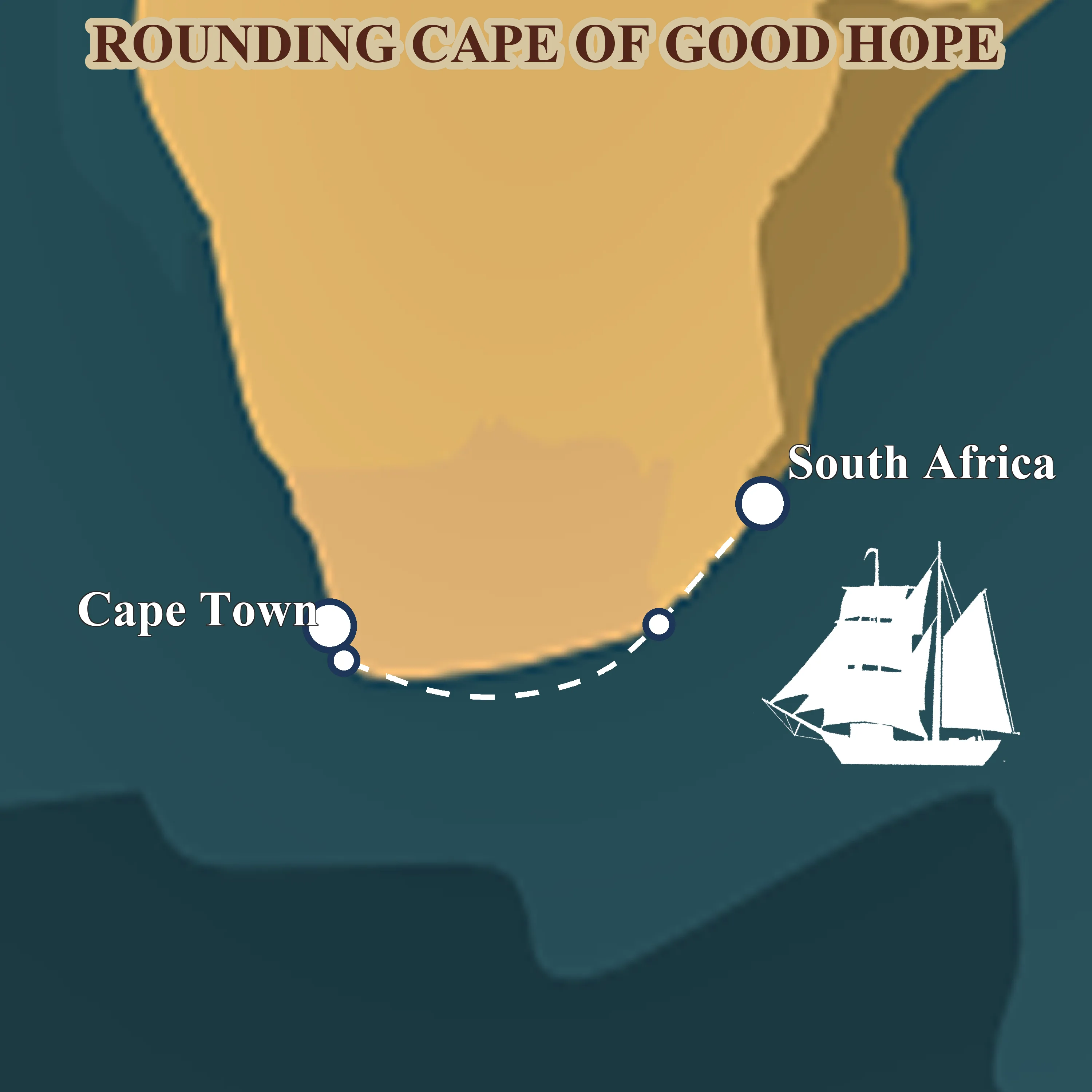
Leg 4: from Durban around the Cape of Good Hope
Nov 2026 — Dec 2026 · Durban, South Africa → Cape Town, South Africa
Thirty-eight days of serious seamanship, the Agulhas current, the Cape of Good Hope and the Southern Ocean at the tip of Africa, finishing quietly in Cape Town for Christmas.
Read more about this leg → about Leg 4: from Durban around the Cape of Good Hope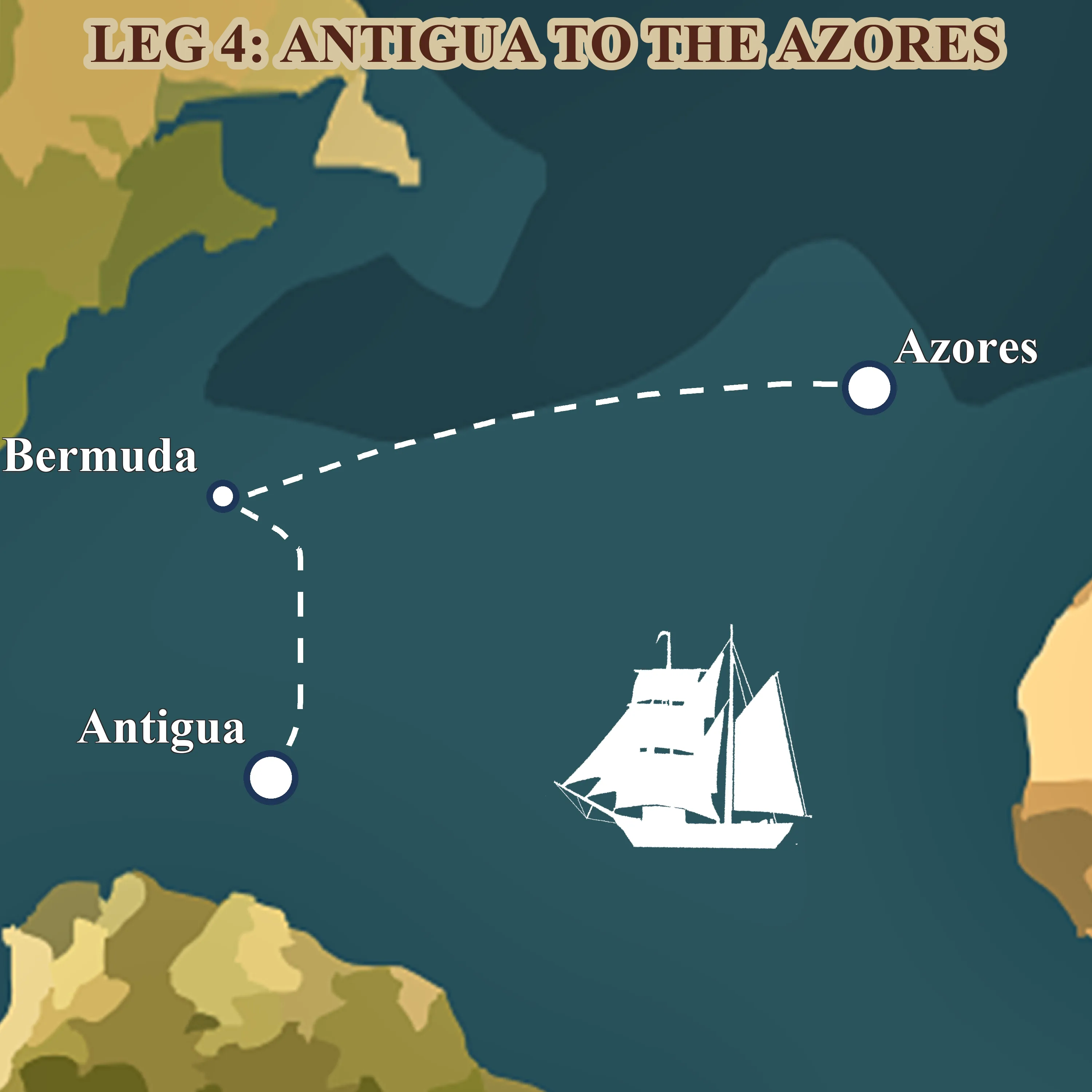
Leg 8: across the North Atlantic from Antigua to the Azores
May 2027 — Jul 2027 · Antigua → Ponta Delgada, Azores
Fifty-six days on the classic spring tall-ship route home, Antigua, a long reach to Bermuda's pink sand, then three weeks of open ocean to the volcanic Azores.
Read more about this leg → about Leg 8: across the North Atlantic from Antigua to the Azores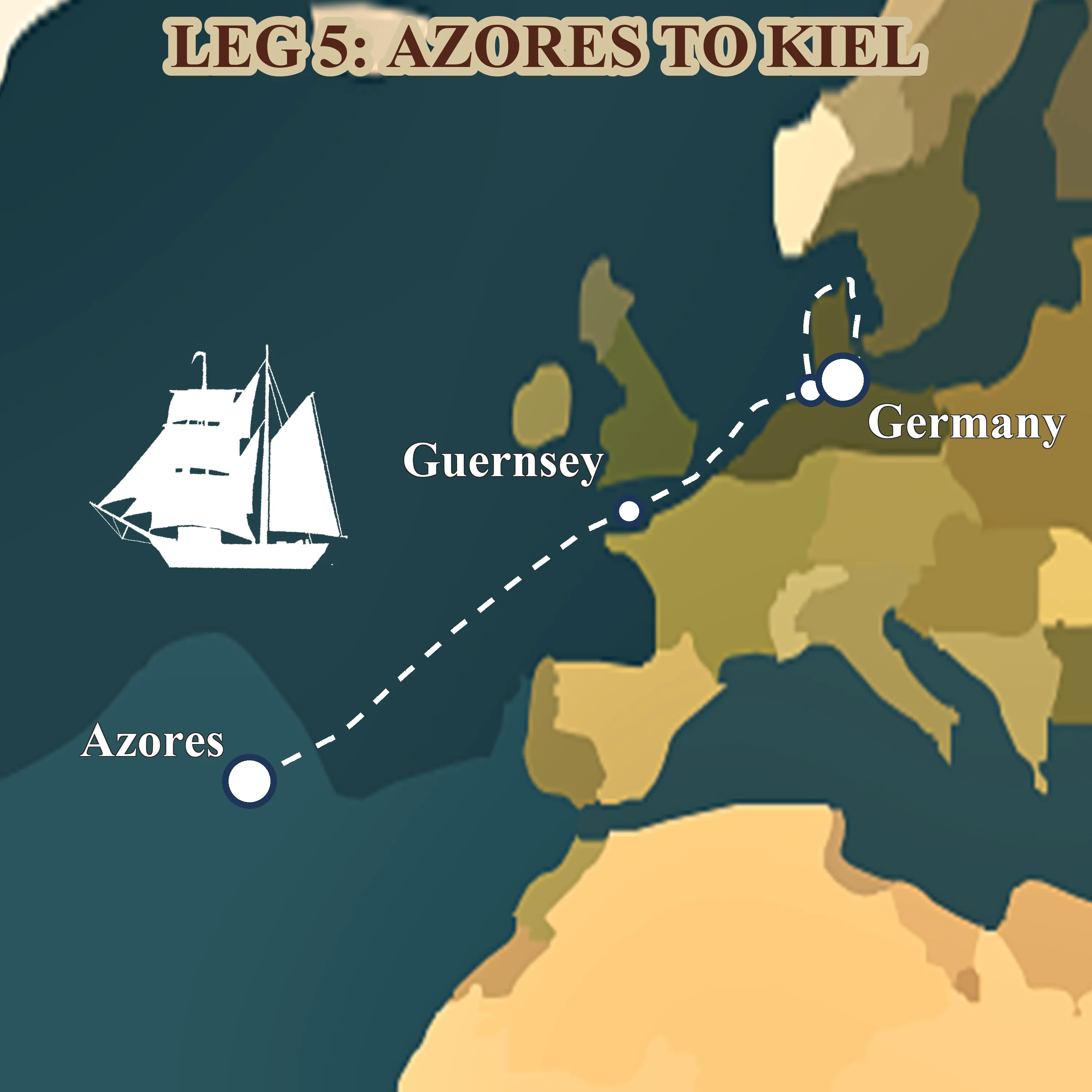
Leg 9: homecoming from the Azores to Kiel
Jul 2027 — Aug 2027 · Ponta Delgada, Azores → Kiel, Germany
The final 1,878 nm, from volcanic São Miguel to the Baltic, up the English Channel through the Dover TSS, past Helgoland's red cliffs and home to Kiel.
Read more about this leg → about Leg 9: homecoming from the Azores to KielPacked and ready to sail?
Berths open on every leg of the 2026–2027 world voyage. No experience required, just the right kit and a two-week watch rotation.
Frequently asked questions
Packing list, quick answers
What should I pack for a sailing trip?
For a tall-ship ocean voyage, pack a soft 70–90 litre duffel containing: quick-dry t-shirts and trousers, merino or fleece warm layers, foul-weather bib and jacket, soft-sole non-marking deck shoes (broken in), a wide-brim hat, sunscreen, a head torch, a reusable water bottle, seasickness medication, and prescription meds for the full voyage plus two weeks. Skip suitcases, white clothing, heels, and anything needing shore power.
Can I bring a suitcase on a tall ship?
No. Wheeled and hard-shell suitcases are banned on almost every sail-training ship because they do not stow, there is no flat floor to roll them on in a seaway, and the space beside your bunk is duffel-shaped, not suitcase-shaped. Use a 70–90 litre soft duffel or holdall. This rule is universal across tall ships, not a NEPTUN quirk.
Do tall ships provide bedding?
Partly. NEPTUN provides a bunk mattress and a wool blanket; you bring a sheet bag (or sleeping bag liner) and a pillowcase. On cold-water legs some trainees also bring a light 3-season sleeping bag. Full duvets are not practical, they will not dry if they get damp, and drying space aboard is a single line above the galley stove.
What kind of shoes should I wear on a tall ship?
Soft-sole, non-marking, closed-toe shoes. Classic deck shoes, sailing trainers, or mid-calf soft-sole sea boots for weather. Break them in on land before the voyage, blisters on day 2 of a passage are miserable. Avoid: stiff hiking boots (too rigid for ladders and rigging), anything with a hard sole (marks the deck), heels of any kind, and open-toe sandals on watch.
How much does a tall ship packing list weigh?
Most trainees land between 15 and 20 kg for a temperate ocean leg, and under 12 kg for a pure tropical one. Foul-weather gear and sea boots carry most of the temperate weight. If your bag is above 25 kg you have packed things you will not use; repack. You should be able to carry the duffel one-handed up a step ladder.
Do I need to buy my own foul-weather gear?
For a weekend sail, NEPTUN can lend a set from the ship locker. For a multi-week ocean leg, bring your own, the loan kit is damp-shared and won't perform over weeks at sea. A mid-range bib-and-jacket combo from Helly Hansen, Musto, Gill or Grundéns sits around €200–300 and is the single best item on the list. The shell stops water; merino base + fleece mid-layer underneath keeps you warm.
Read also
- Seasickness on a Tall Ship, Prevention and Cure, the companion first-timer guide to managing the first 48 hours
- How Fit Do You Need to Be for a Tall Ship Voyage?, the physical side of arriving ready
- Life Onboard NEPTUN, the Daily Rhythm, the working reality your kit supports
- What is a Brigantine?, the rig you're climbing into oilskins for
- Sail With Us, Join a Tall Ship Voyage, how a berth works end-to-end
Want to sail with us? Brigantine NEPTUN is a non-profit training ship, every voyage takes 10 crew members through real ocean sailing, no experience needed. Apply for a berth or read about the voyages first.