The short answer
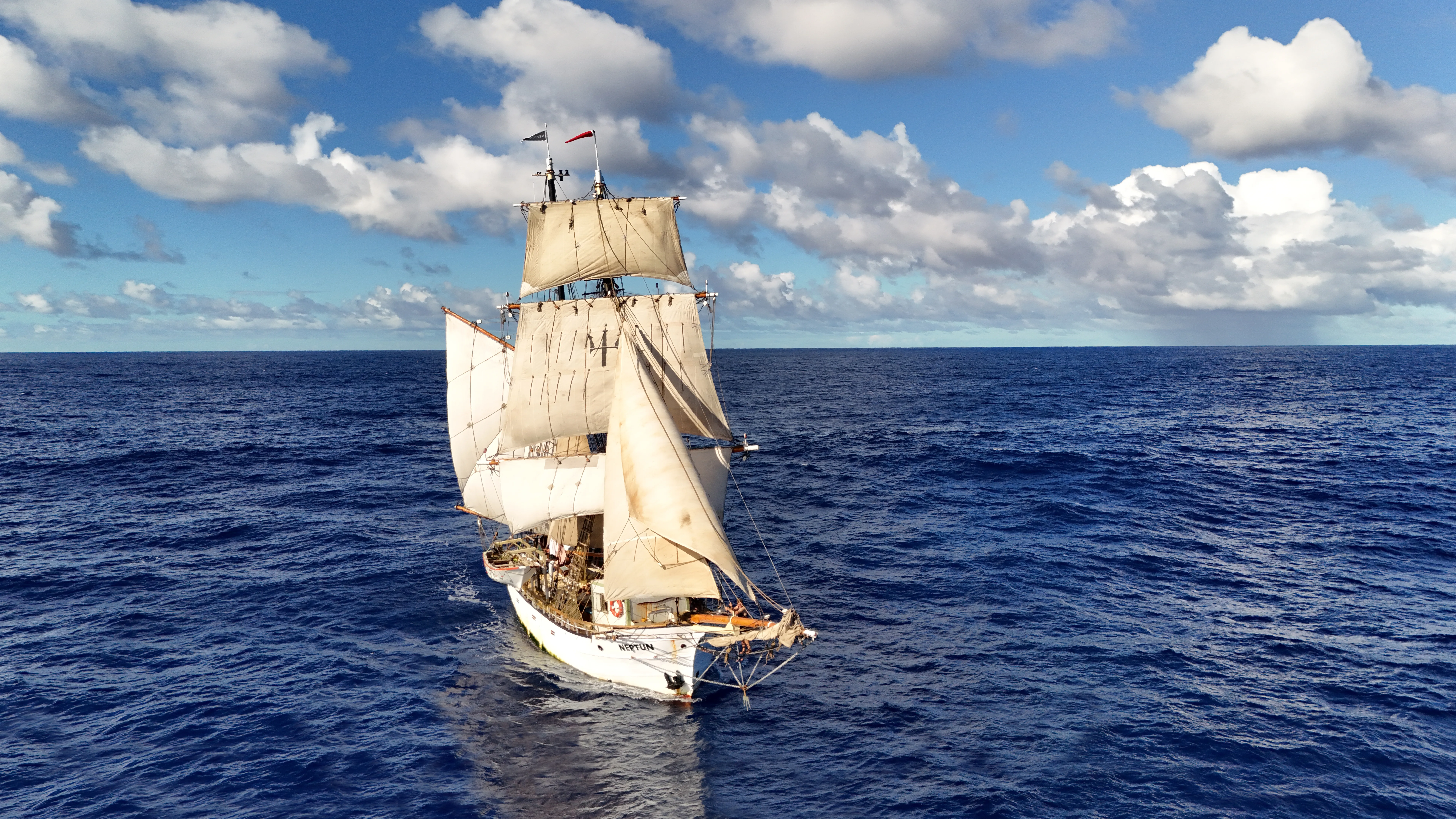
A brigantine is a two-masted sailing ship with a square-rigged foremast and a fore-and-aft rigged mainmast, known for its speed, manoeuvrability, and long history as a working trader, naval scout, and sail training vessel.
That one-line definition covers the shape. The rest of this guide covers where brigantines came from, how the rig actually works, why a handful of them are still sailing today, and how Brigantine NEPTUN fits into that story. If you want the bigger picture afterwards, the knowledge base pillar collects the rest of our traditional-seamanship articles.
Want to step aboard a working brigantine? NEPTUN is a non-profit training ship sailing the world right now. Apply for a berth or browse the nine legs of the voyage first.
On this page
- The short answer
- Defining features of a brigantine
- Origin and history
- Rig details
- Why brigantines are special
- Brigantine NEPTUN specifically
- Where this brigantine is sailing
- FAQ
- Read also
Defining features of a brigantine
Before the history, the shape. Four features are what make a vessel a brigantine, change any one of them and you have a different rig.
Two masts
Foremast forward, mainmast aft. Not three (that would be a barquentine or full-rigged ship), not one (sloop or cutter).
Square sails forward
The foremast carries horizontal yards with course, topsail, topgallant, and sometimes a royal, driving sails for downwind work.
Fore-and-aft sails aft
The mainmast carries a gaff mainsail and staysails running along the line of the ship, the windward sails of a schooner.
60 to 200 ton range
Historically a brigantine displaced enough to cross oceans but stayed small enough for a working crew of 10 to 20. NEPTUN sits in this band.
Origin and history
The brigantine as a distinct ship type traces back to the 16th-century Mediterranean. The word itself comes from the Italian brigantino, which was used for a small, fast, oar-and-sail vessel favoured by coastal raiders, the brigands the name implies. These early brigantines were low, open craft with a single mast and rows of oars. They were built for speed along coastlines, not for crossing oceans.
The shape changed as demand changed. By the 17th century, European trade along the Mediterranean and into the Atlantic needed ships that could carry useful cargo but still sail well in light winds and tight coastal waters. Builders added a second mast, decked the hull over, and dropped the oars. The result was closer to what we now call a brigantine: two masts, square-rigged forward, fore-and-aft rigged aft.
Through the 18th and 19th centuries the brigantine became a workhorse on both sides of the Atlantic. American colonial yards built them in large numbers because they suited the coasting trade, short legs between ports with varying wind conditions, carrying tobacco, molasses, timber, and salt. A brigantine could run before the trade winds with its square foresails pulling hard, then switch to handling like a schooner when beating up a river or threading a harbour entrance.
Navies used them too, but in a supporting role rather than the battle line. The Royal Navy rated brigantines as dispatch vessels and tenders. They were fast enough to carry orders between squadrons and small enough to nose into anchorages that a frigate could not reach. The United States Navy used brigantines in the same way during the early 19th century, including in the Mediterranean and off the Barbary Coast.
The Age of Sail ended for commercial shipping when steam became cheap, and most brigantines were scrapped or broken up for timber. A few survived as cargo carriers into the early 20th century on routes where coal bunkers were scarce. By the 1930s the type was effectively extinct as a working ship. What kept the name alive was sail training. From the mid-20th century onward, a small number of organisations rebuilt or re-rigged vessels as brigantines specifically to teach traditional seamanship, the rig is demanding enough to be a real education but small enough for a mixed crew to handle.
Curious how the brigantine compares to her closest cousin? Read brigantine vs schooner for a side-by-side breakdown.
Rig details
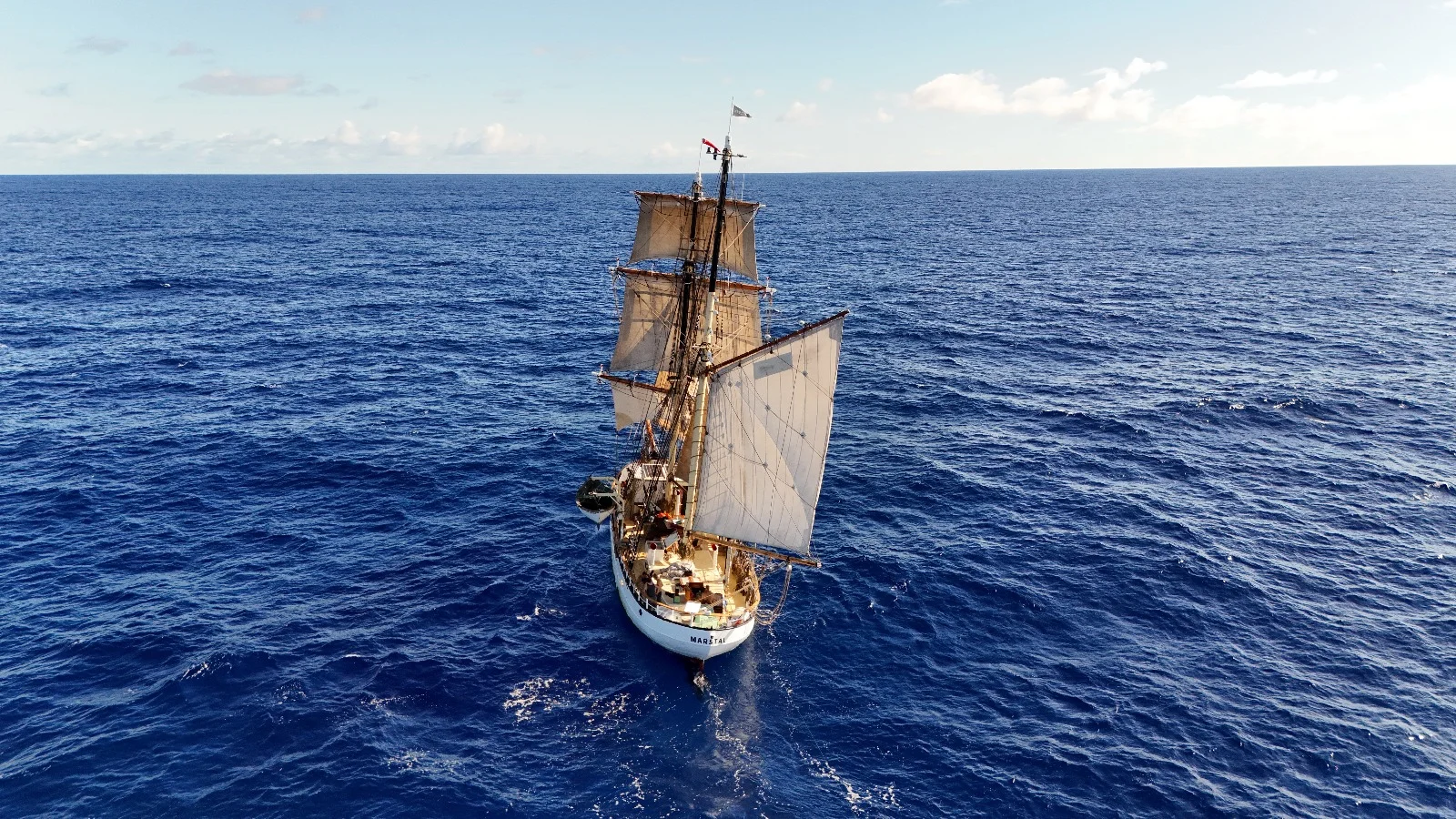
A brigantine carries two masts. The forward one, the foremast, is square-rigged, meaning its sails are hung horizontally across the ship and pull best when the wind comes from behind or from the side. The aft mast, the mainmast, is fore-and-aft rigged, meaning its sail runs along the line of the ship and works well when sailing closer to the wind. This split is the whole point of the rig.
Square sails on the foremast give driving power downwind. They catch the trade winds efficiently, and because they can be set, furled, and braced from deck level, a relatively small crew can handle a lot of sail area. The fore-and-aft mainsail gives control and pointing ability, the sail a schooner or sloop relies on. Together the two rigs mean a brigantine can cross an ocean with the trades on her quarter and still work in and out of harbours when the wind comes from ahead.
The mainmast on a brigantine carries only fore-and-aft sails, usually a gaff mainsail and staysails. This is the feature that separates a true brigantine from its close cousins. A hermaphrodite brig (sometimes called a schooner-brig) is rigged almost the same way, but historical sources use the two names loosely and often interchangeably. A snow brig looks similar from a distance but carries square sails on both masts, with a small trysail mast right behind the mainmast for the fore-and-aft driver. A brigantine has square sails on one mast only.
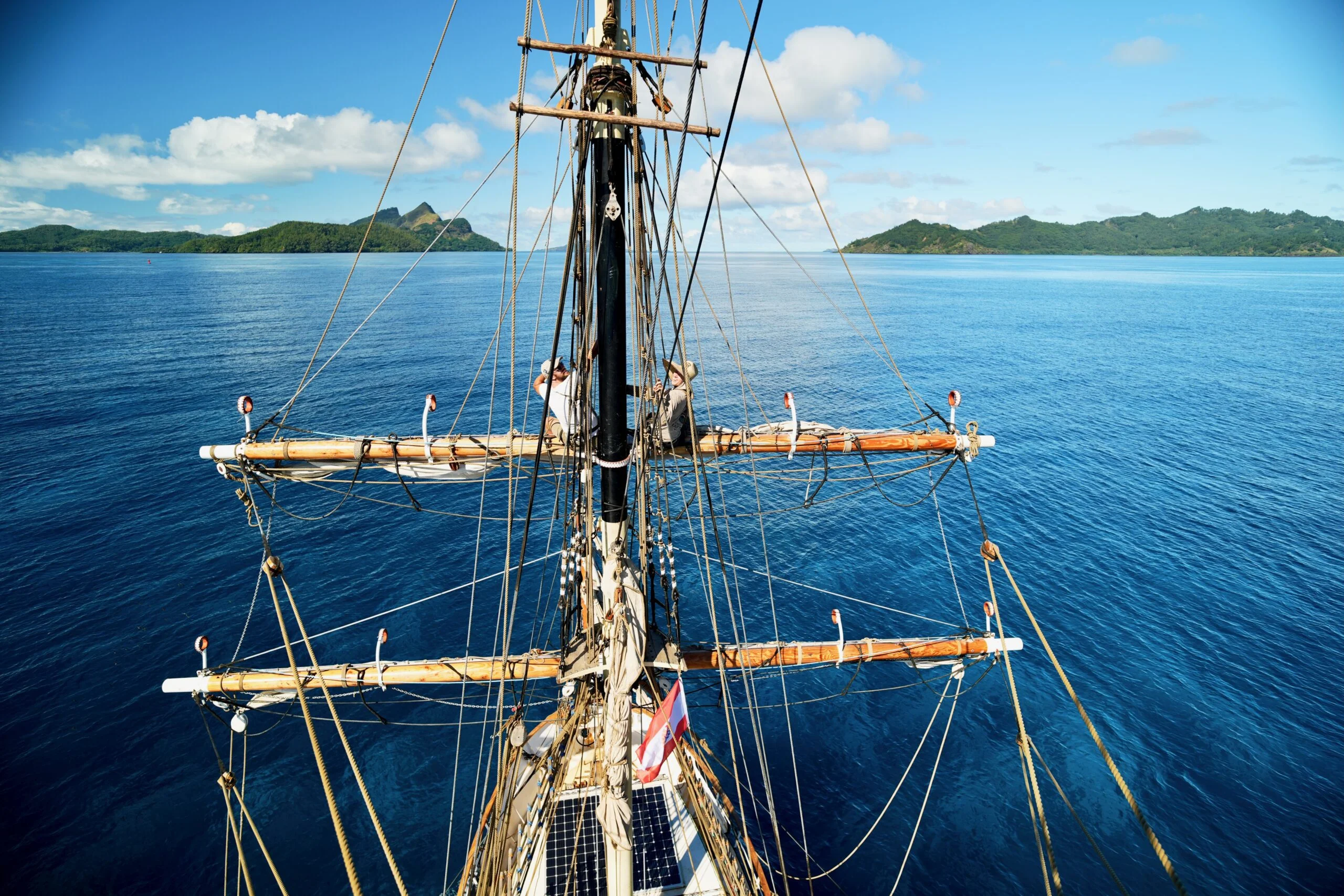
The square sails on the foremast stack from the deck upward: course (the lowest and largest), topsail, topgallant, and sometimes a royal above that. Each sail hangs from its own yard, and each yard is controlled from deck by halyards to hoist it, braces to rotate it to the wind, and sheets and clewlines to set or furl the canvas. Nothing on the foremast is automatic. Every sail change is a coordinated pull on multiple lines with a crew on deck, often with a few hands aloft on the yards to furl or loose gaskets. This is the work a brigantine teaches, and it is the reason one voyage is worth more than a classroom year.
If you want the side-by-side comparison with other two-masters, see our companion article on brigantine vs schooner. For the vocabulary itself, yards, braces, halyards, shrouds, the parts of a tall ship guide walks through each term with diagrams. The deeper mechanics of how square canvas pulls a hull through water are covered in square sails explained.
Want to learn the ropes for real? Square-sail handling cannot be read off a page, you have to pull on the line. Apply for a berth on a leg that fits your dates.
Why brigantines are special
Brigantines hit a balance that few other rigs manage. They are large enough to cross oceans, small enough to be handled by a mixed crew, and rigged in a way that exposes you to both the square-sail tradition and the fore-and-aft tradition on the same voyage. On a fully square-rigged ship, a full-rigged ship or a barque, most of the trimming happens up in the yards, and much of a trainee's work is aloft. On a pure schooner, you never really learn square-sail work. A brigantine gives you both.
Their sailing characteristics suit long passages. In the trade-wind belts, the Caribbean, the South Atlantic, the Pacific east of Indonesia, a brigantine runs well for days on end with the square foresails set and very little adjustment needed. When the wind turns fluky or the ship is coasting, the fore-and-aft mainsail and staysails let her point up to within about fifty degrees of the wind, which is respectable for a traditional rig. Historically this is exactly why brigantines dominated the coasting trade: they could do both jobs without changing ships.
They also have a reputation as good sea boats. The hull form behind a typical brigantine rig is long, narrow by modern standards, and deep enough to track well in a following sea. Crews on older brigantines describe them as steady under reduced sail, and that tracks with the wider pattern that working ships were built to be forgiving when shorthanded.
Almost none are still actively sailing. Best estimates put the number of square-rigged brigantines regularly under way worldwide in the low single digits. Most of the traditional ships you see in tall ship festivals are barques, barquentines, or full-rigged ships; brigantines as a class largely disappeared with commercial sail, and very few have been rebuilt. The ones that remain, mostly sail training vessels, are the reason the rig survived as a living craft rather than a museum exhibit. If sailing a brigantine is on your list, the practical path is the tall ship adventure route: join a voyage on one of the active ships and do the work.
Brigantine NEPTUN specifically
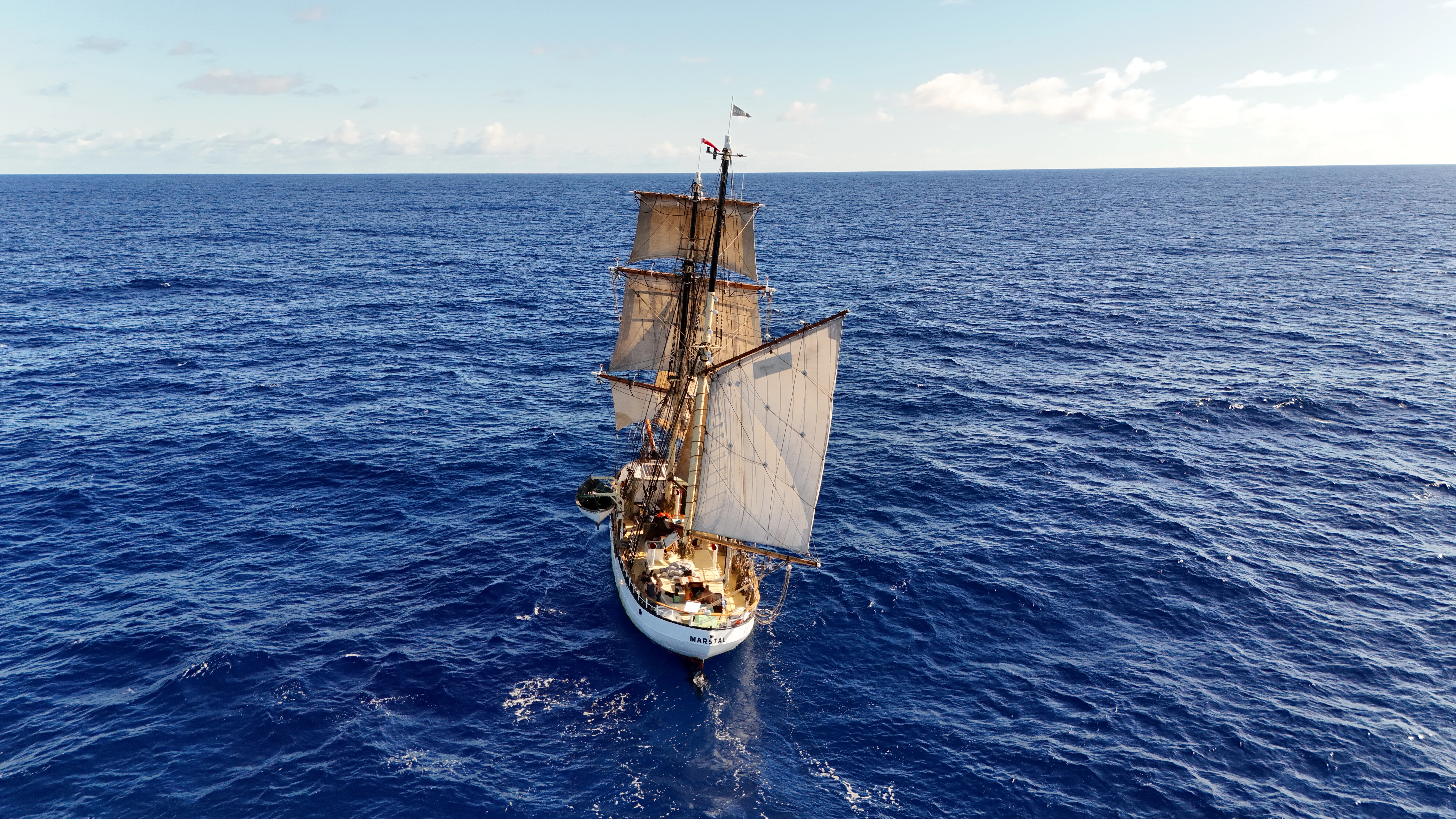
NEPTUN was built in 1947 in a Danish yard as a traditional fishing vessel, working the North Sea and the waters around Denmark in the first decades of her life. She was built heavy, in wood, to the standards that working fishermen needed: forgiving under sail, strong enough to take a hard chance on a lee shore, and simple enough that her crew could fix almost anything at sea.
She was converted to sail training later in her life, serving first under a schooner rig while the nonprofit that owns her built up crew, refitted the interior, and restored the hull. In 2025 she was re-rigged as a brigantine, square sails on a new foremast, fore-and-aft rig retained on the mainmast, to make her a training platform for both rig traditions. The re-rig is documented in more detail in our history page.
She sails today as an active training ship, carrying paying trainees, volunteer crew, and professional officers on ocean voyages. For the current schedule, see our voyages overview.
The ship herself
Brigantine NEPTUN, wood, square canvas, ocean miles
Built 1947 in Denmark as a working fishing vessel, restored over decades, re-rigged as a brigantine in 2025. Today she carries 10 trainees per leg on a 482-day, 30,000+ nautical mile voyage from Bali to Kiel. No prior sailing experience required.
NEPTUN by the numbers
Step aboard a working brigantine
NEPTUN is one of a handful of square-rigged brigantines actively crossing oceans with trainees on board. No experience needed, you learn the ropes on the voyage itself.
Where this brigantine is sailing
A brigantine is a ship type, but it is also a programme, and NEPTUN's programme is the 2026-2027 world voyage. Nine legs from Bali to Kiel, over 30,000 nautical miles, four oceans crossed. Every leg is open to trainees with no prior sailing experience.
Pick a leg
The brigantine in motion, 482 days, nine legs
From the Indian Ocean trade winds to the South Atlantic crossing and back to the Baltic. Join one leg or string several together.
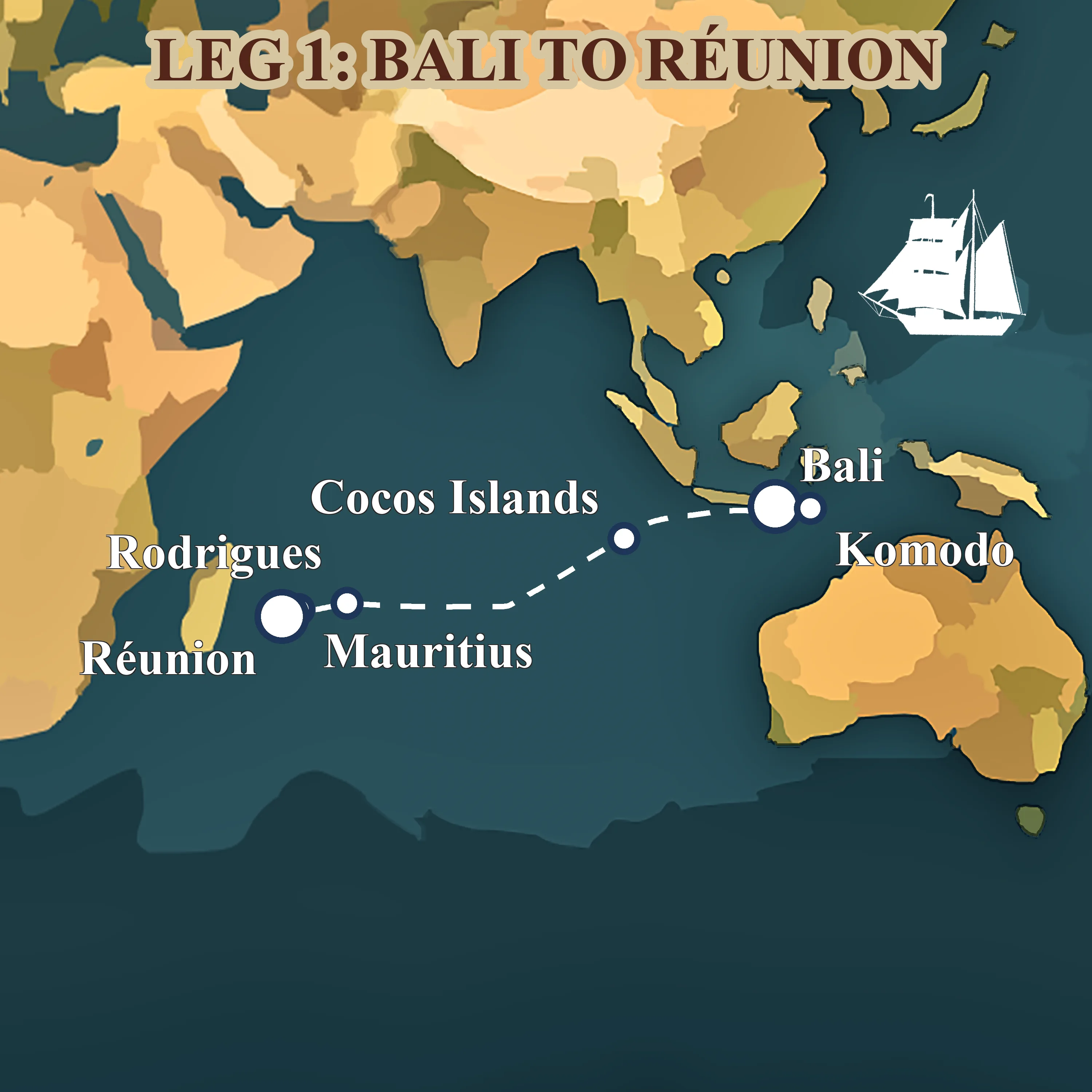
Leg 1: from Bali to Réunion across the Indian Ocean
May 2026 — Aug 2026 · Bali, Indonesia → Réunion, France
The opening chapter of Neptun's 482-day world voyage, a 4,078-nm trade-wind passage from the temples of Bali to the volcanic cliffs of Réunion.
Read more about this leg → about Leg 1: from Bali to Réunion across the Indian Ocean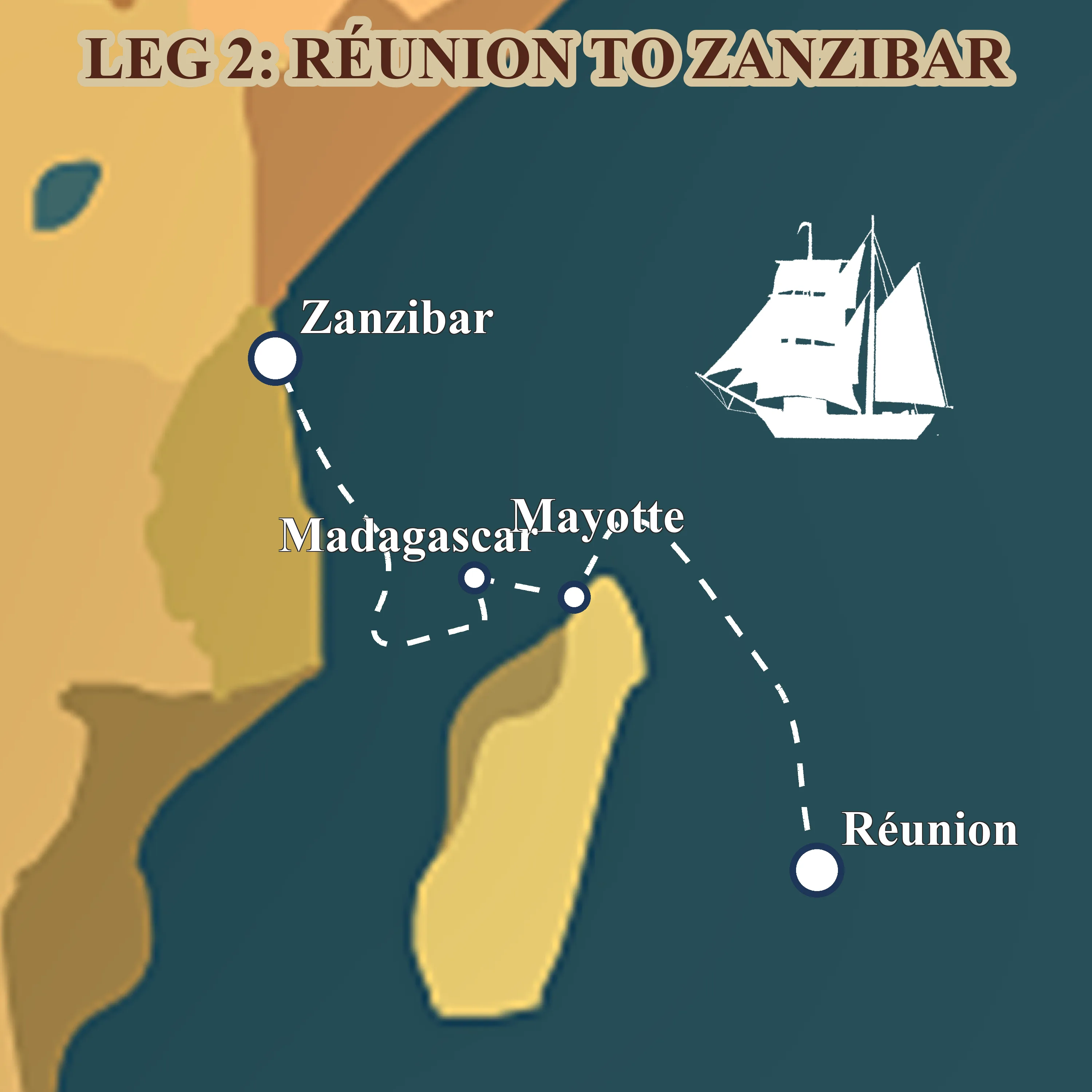
Leg 2: from Réunion to Zanzibar via Madagascar
Aug 2026 — Sept 2026 · Réunion, France → Zanzibar, Tanzania
Forty days across the western Indian Ocean, volcanic Réunion, lemur-haunted Nosy Be, the Mozambique Channel, and the spice-scented stone alleys of Zanzibar.
Read more about this leg → about Leg 2: from Réunion to Zanzibar via Madagascar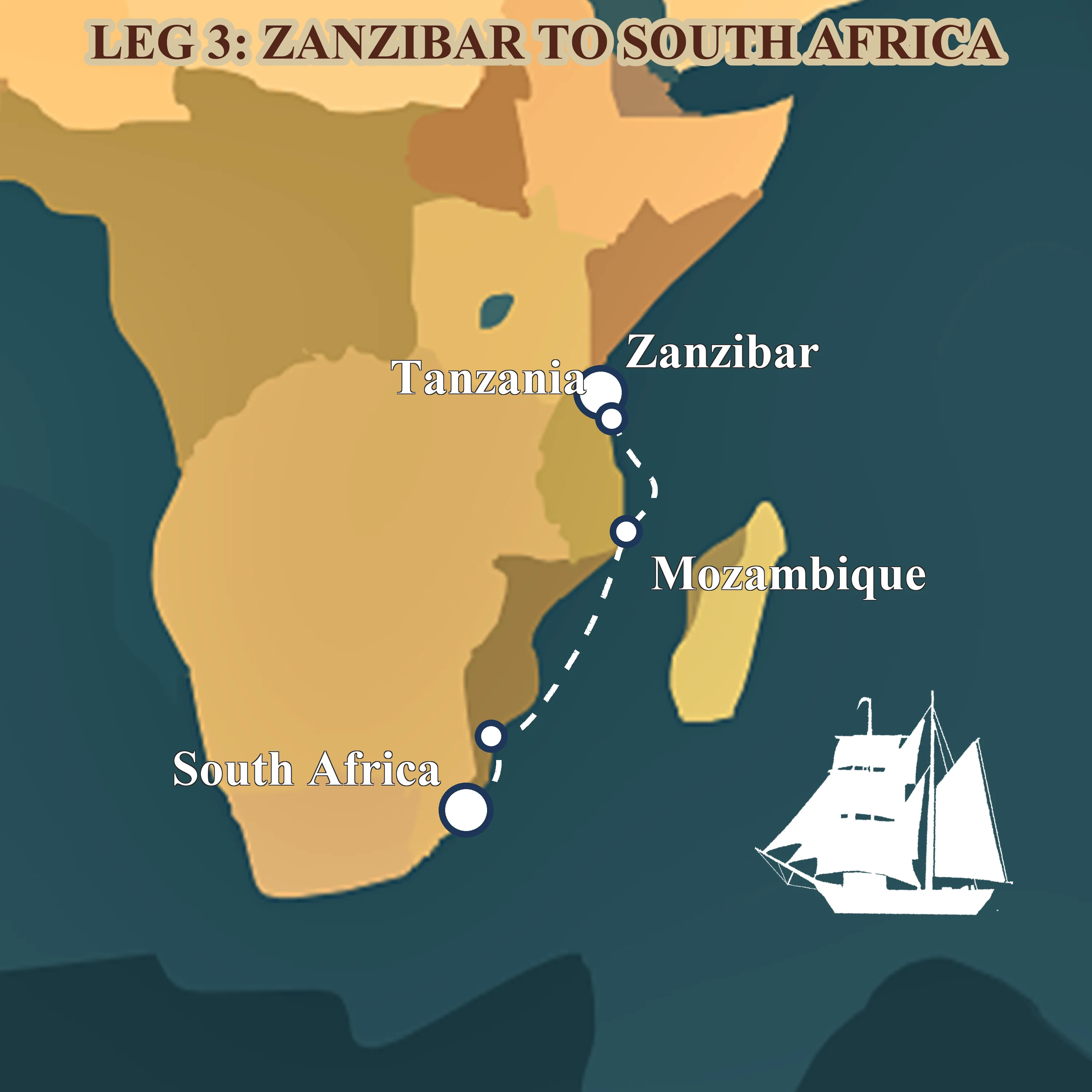
Leg 3: from Zanzibar to Durban down the Mozambique Channel
Sept 2026 — Nov 2026 · Zanzibar, Tanzania → Durban, South Africa
Sixty-three days coasting the African shore, spice islands, mangrove anchorages, Portuguese praças and the long trade-wind run down the Mozambique Channel to Durban.
Read more about this leg → about Leg 3: from Zanzibar to Durban down the Mozambique Channel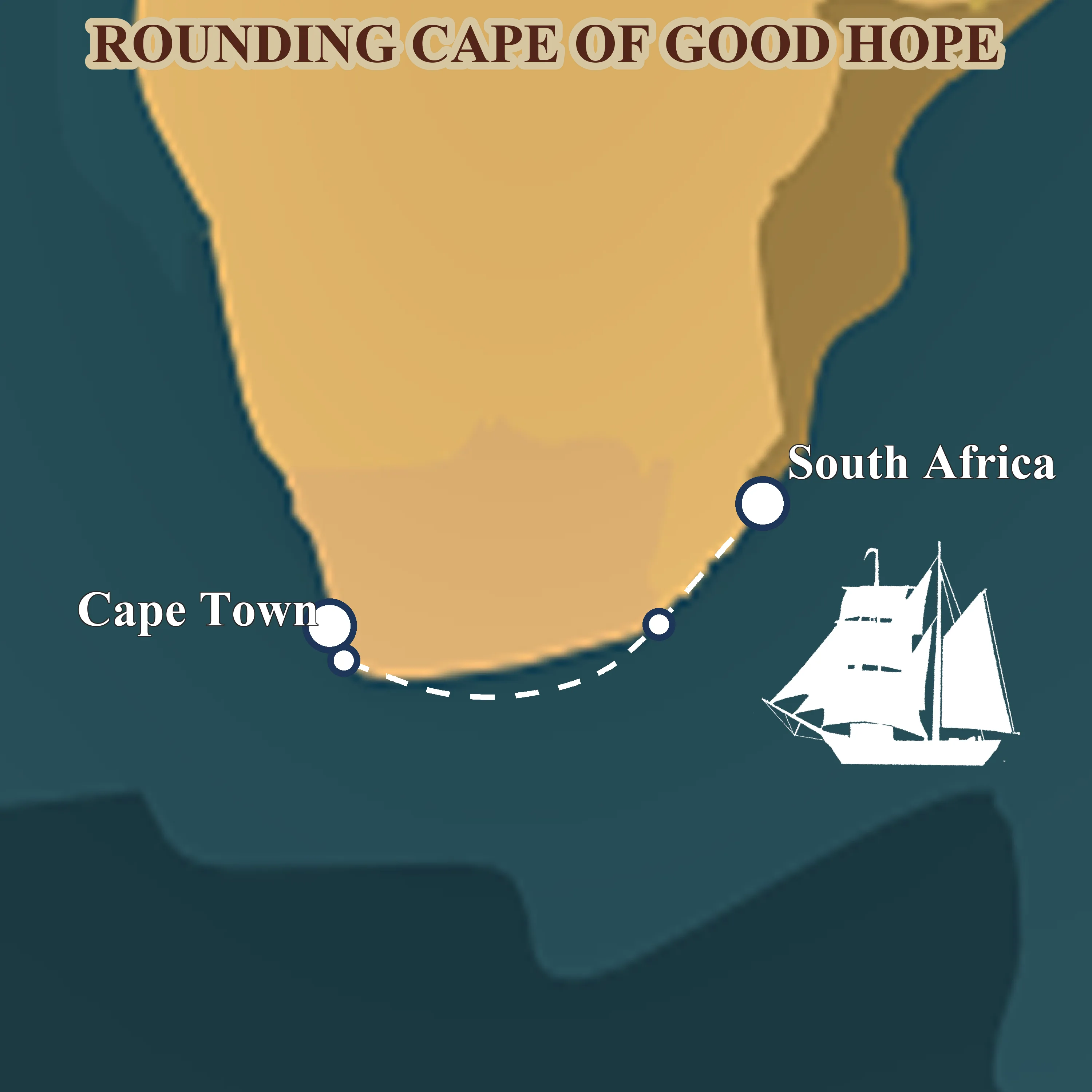
Leg 4: from Durban around the Cape of Good Hope
Nov 2026 — Dec 2026 · Durban, South Africa → Cape Town, South Africa
Thirty-eight days of serious seamanship, the Agulhas current, the Cape of Good Hope and the Southern Ocean at the tip of Africa, finishing quietly in Cape Town for Christmas.
Read more about this leg → about Leg 4: from Durban around the Cape of Good HopePlanning your own leg? The full 2026-2027 itinerary is live, browse the nine legs and pick the one that fits your dates.
Want to sail on a brigantine?
Brigantines are not an exhibit. A small number of them, including NEPTUN, are out there actively crossing oceans with trainees on board, and you can be one of those trainees.
- Sail with us, how to join a voyage as a sail training crew member, including what no-experience applicants need to know.
- Tall ship adventure, the longer piece on what it is like to sail a traditional ship in practice, day by day.
- Voyages, upcoming legs, dates, and routes.
FAQs
Common questions about brigantines
What is a brigantine in simple terms?
A brigantine is a two-masted sailing ship with square sails on the forward mast (the foremast) and fore-and-aft sails, typically a gaff mainsail and staysails, on the aft mast (the mainmast). The split rig gives her downwind power on the square canvas and upwind ability on the fore-and-aft canvas. Brigantine NEPTUN is one of the few still sailing today.
What's the difference between a brigantine and a brig?
A brig carries square sails on both masts. A brigantine carries square sails only on the foremast, the mainmast is fore-and-aft rigged. The single-letter difference in the name hides a fundamental difference in handling: a brig is a small square-rigger, a brigantine is a hybrid.
How is a brigantine different from a schooner?
A schooner is fore-and-aft rigged on both masts. A brigantine adds square sails to the foremast. That extra canvas costs more lines, more crew work, and more learning, but it adds real downwind speed and gives trainees the chance to learn square-sail handling. See brigantine vs schooner for the full comparison.
How big is a brigantine?
Historically 60 to 200 tons displacement and 20 to 35 metres on deck. Big enough to cross oceans, small enough for a working crew of 10 to 20. NEPTUN is 29 m overall with 10 trainee berths plus professional crew.
How many brigantines are still sailing?
Best estimates put the number of actively sailing square-rigged brigantines worldwide in the low single digits. Most surviving tall ships are barques, barquentines, or full-rigged ships. The brigantines that remain are almost all sail training vessels, a handful of working ships keeping the rig alive as a living craft rather than a museum piece.
Can a beginner sail on a brigantine?
Yes. Ships like Brigantine NEPTUN accept trainees with no prior sailing experience, you learn square-sail handling, watch-keeping, and traditional seamanship on the voyage itself, with mentors on watch. See how to join a tall ship crew for the practical path.
Read also
- Brigantine vs schooner, the side-by-side comparison
- Parts of a tall ship, the vocabulary of yards, braces and shrouds
- Square sails explained, how a tall ship actually works
- About NEPTUN, the ship and the nonprofit behind her
- History, from 1947 fishing vessel to brigantine
- How to join a tall ship crew without experience
- Voyages 2026-2027, all nine legs
All nine legs of the world voyage
The 2026-2027 voyage spans 482 days, over 30,000 nautical miles, and four oceans, every leg open to trainees on a working brigantine.
Leg 1: from Bali to Réunion across the Indian Ocean
May 2026 — Aug 2026 · Bali, Indonesia → Réunion, France
The opening chapter of Neptun's 482-day world voyage, a 4,078-nm trade-wind passage from the temples of Bali to the volcanic cliffs of Réunion.
Read more about this leg → about Leg 1: from Bali to Réunion across the Indian OceanLeg 2: from Réunion to Zanzibar via Madagascar
Aug 2026 — Sept 2026 · Réunion, France → Zanzibar, Tanzania
Forty days across the western Indian Ocean, volcanic Réunion, lemur-haunted Nosy Be, the Mozambique Channel, and the spice-scented stone alleys of Zanzibar.
Read more about this leg → about Leg 2: from Réunion to Zanzibar via MadagascarLeg 3: from Zanzibar to Durban down the Mozambique Channel
Sept 2026 — Nov 2026 · Zanzibar, Tanzania → Durban, South Africa
Sixty-three days coasting the African shore, spice islands, mangrove anchorages, Portuguese praças and the long trade-wind run down the Mozambique Channel to Durban.
Read more about this leg → about Leg 3: from Zanzibar to Durban down the Mozambique ChannelLeg 4: from Durban around the Cape of Good Hope
Nov 2026 — Dec 2026 · Durban, South Africa → Cape Town, South Africa
Thirty-eight days of serious seamanship, the Agulhas current, the Cape of Good Hope and the Southern Ocean at the tip of Africa, finishing quietly in Cape Town for Christmas.
Read more about this leg → about Leg 4: from Durban around the Cape of Good Hope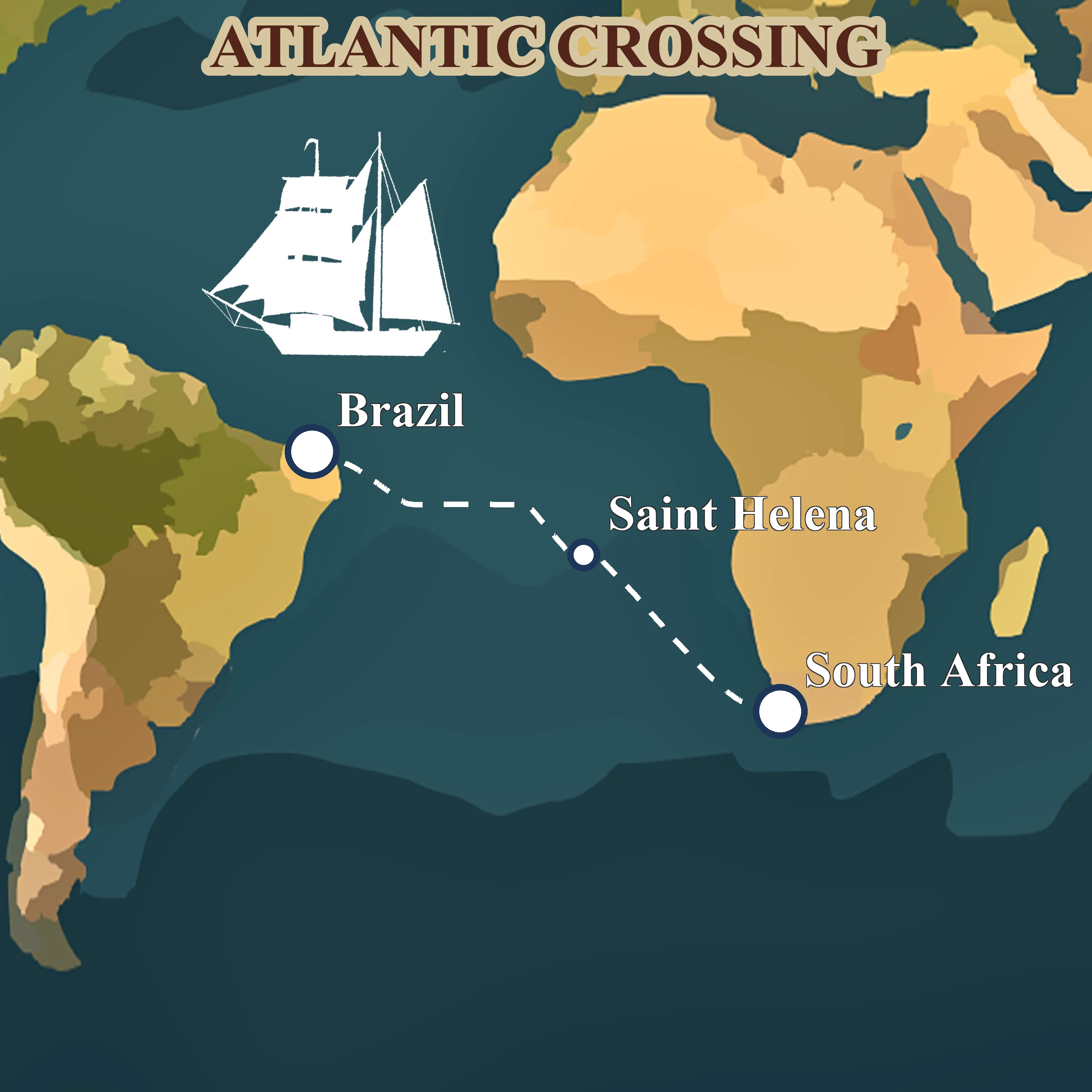
Leg 5: across the South Atlantic from Saldanha to Fortaleza
Jan 2027 — Mar 2027 · Saldanha Bay, South Africa → Fortaleza, Brazil
Forty-four days before the southeast trades, Napoleon's exile at St. Helena, the equator crossing, and landfall in tropical Brazil. The ocean chapter of the voyage.
Read more about this leg → about Leg 5: across the South Atlantic from Saldanha to Fortaleza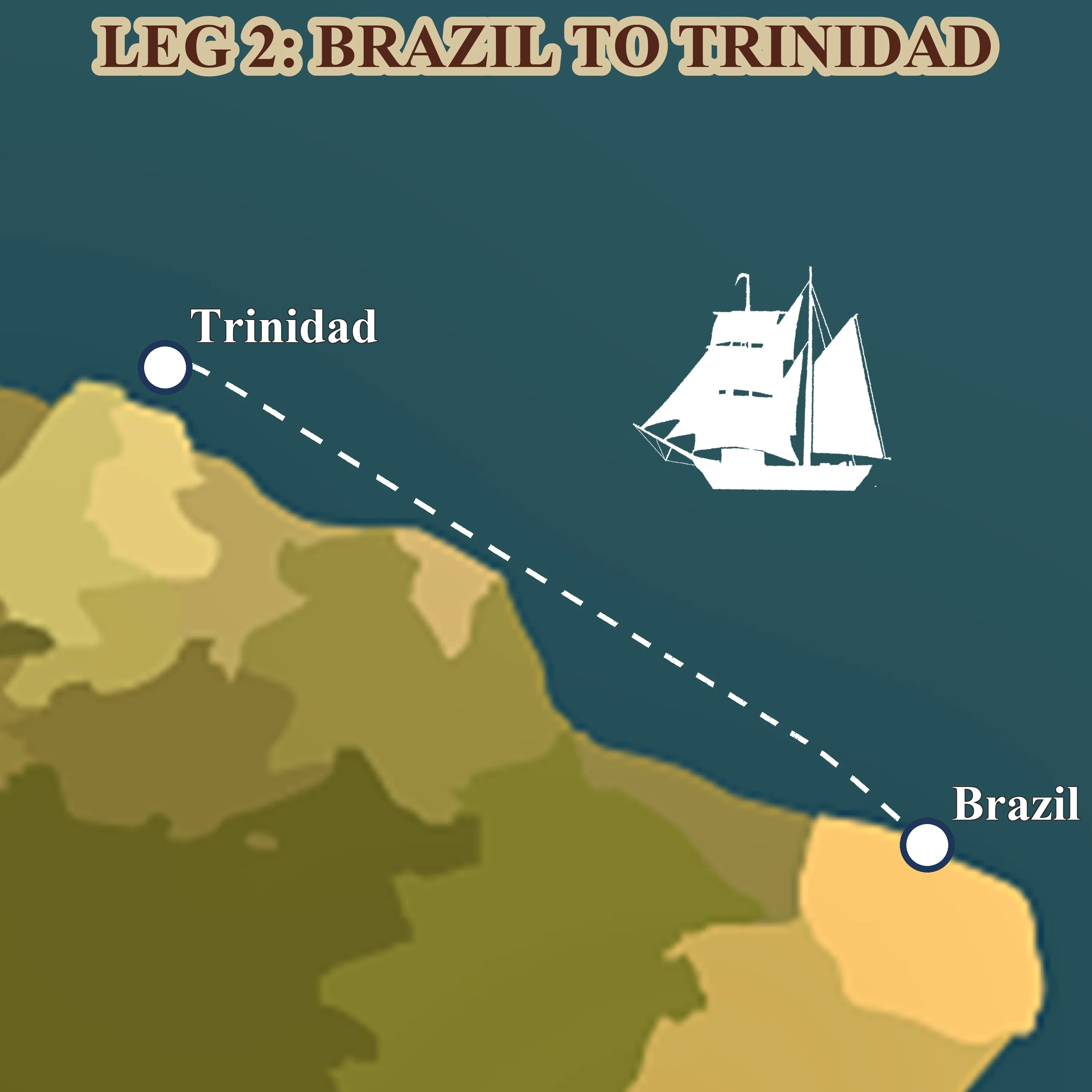
Leg 6: from Fortaleza to Trinidad along South America
Mar 2027 — Apr 2027 · Fortaleza, Brazil → Trinidad
A thousand miles of downwind trade running, the Amazon's brown water under the hull, the Guianas smudged on the horizon, and Trinidad's steelpan waiting at the end.
Read more about this leg → about Leg 6: from Fortaleza to Trinidad along South America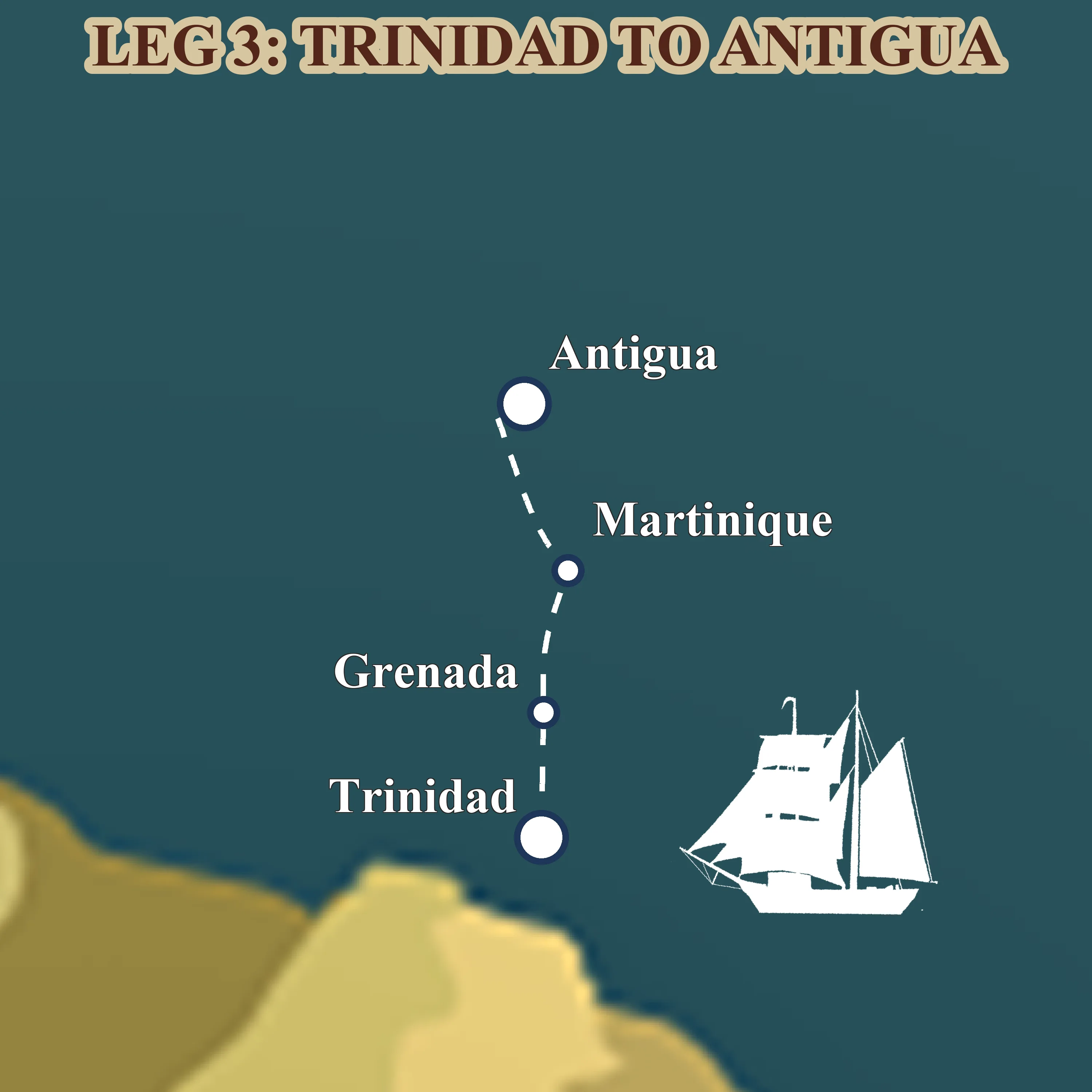
Leg 7: through the Windward Islands from Trinidad to Antigua
Apr 2027 — May 2027 · Trinidad → Antigua
Four weeks of short trade-wind daysails through the Lesser Antilles, turquoise anchorages, rum shops on the sand, French-Creole Martinique and the tall-ship scene in Antigua.
Read more about this leg → about Leg 7: through the Windward Islands from Trinidad to Antigua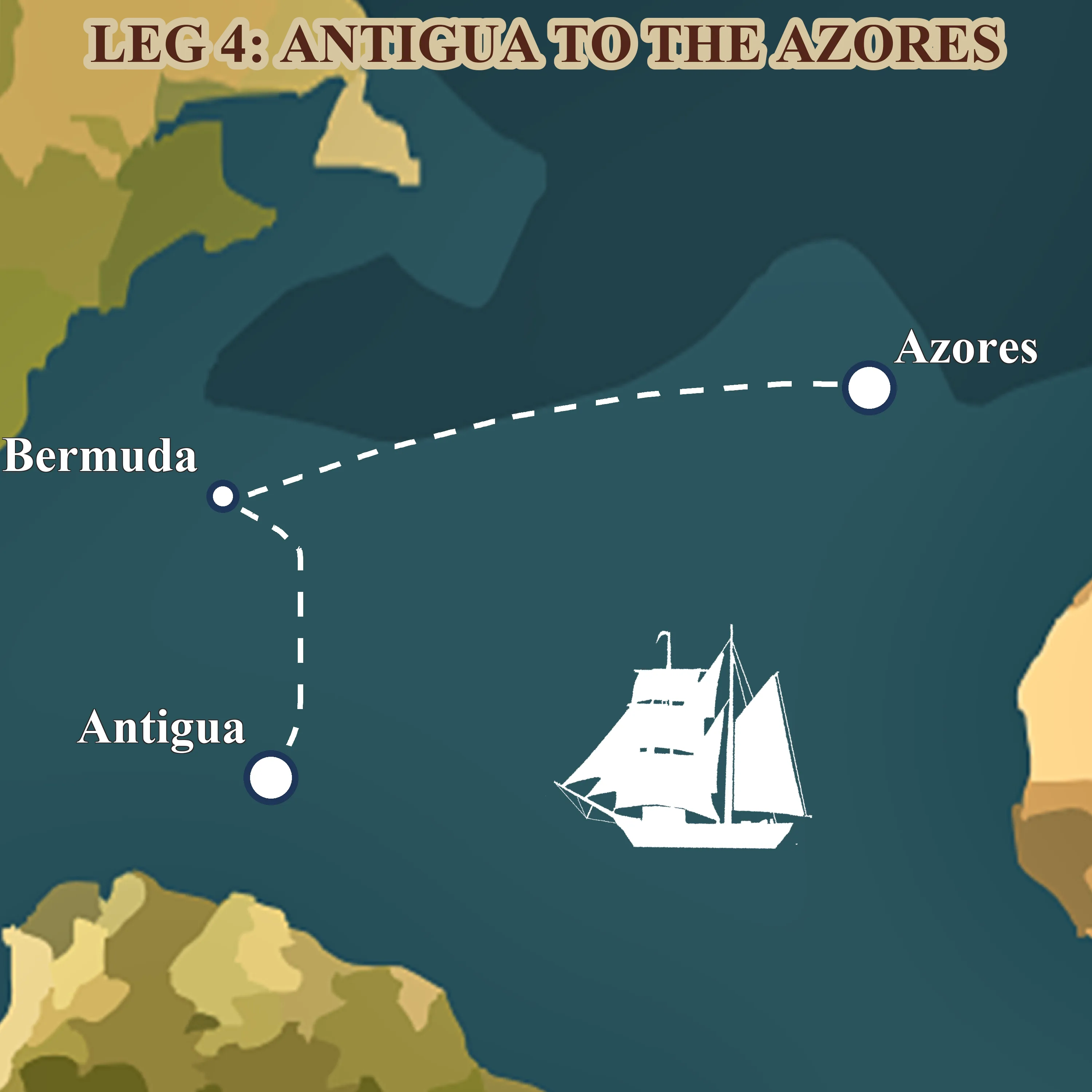
Leg 8: across the North Atlantic from Antigua to the Azores
May 2027 — Jul 2027 · Antigua → Ponta Delgada, Azores
Fifty-six days on the classic spring tall-ship route home, Antigua, a long reach to Bermuda's pink sand, then three weeks of open ocean to the volcanic Azores.
Read more about this leg → about Leg 8: across the North Atlantic from Antigua to the Azores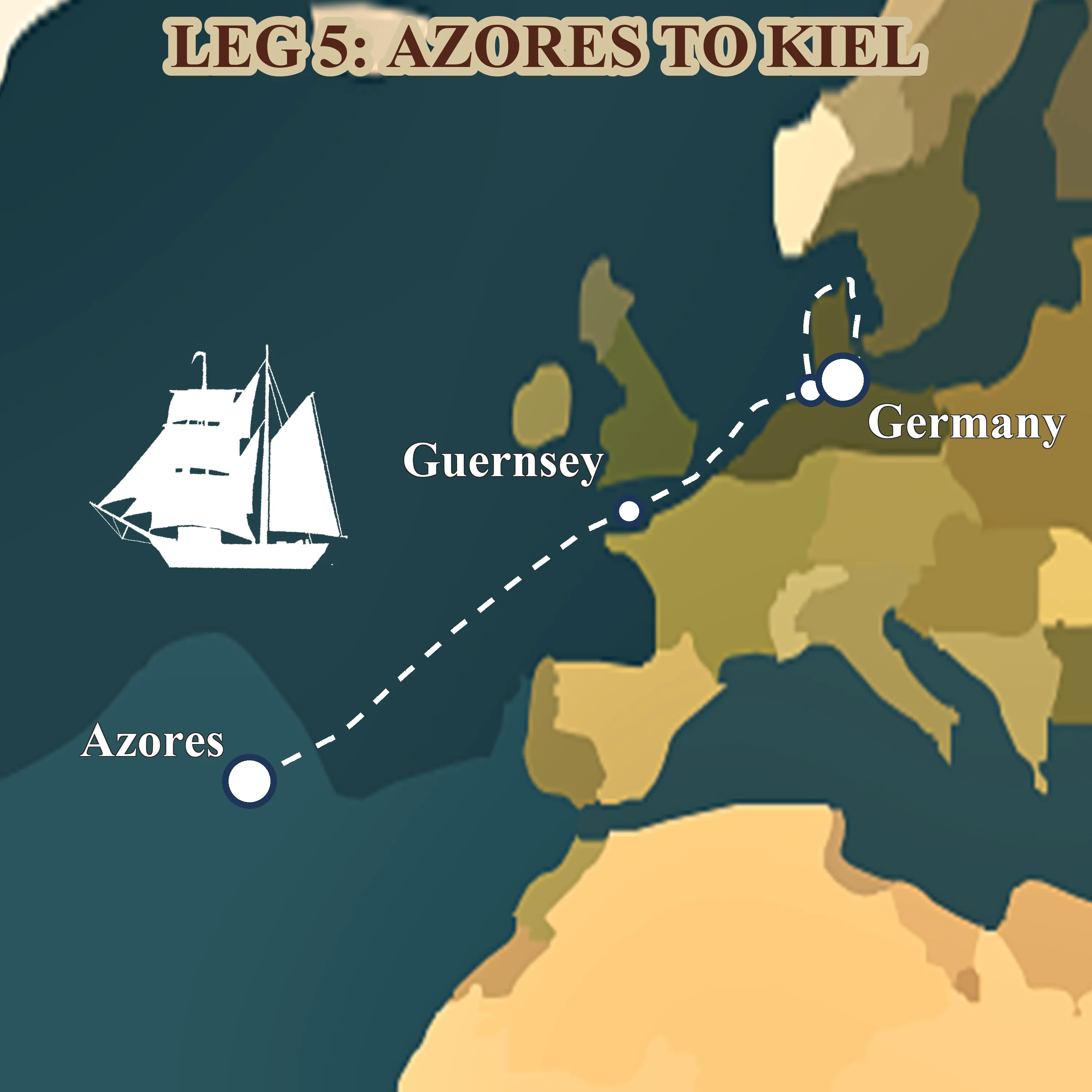
Leg 9: homecoming from the Azores to Kiel
Jul 2027 — Aug 2027 · Ponta Delgada, Azores → Kiel, Germany
The final 1,878 nm, from volcanic São Miguel to the Baltic, up the English Channel through the Dover TSS, past Helgoland's red cliffs and home to Kiel.
Read more about this leg → about Leg 9: homecoming from the Azores to KielWant to sail with us? Brigantine NEPTUN is a non-profit training ship, every voyage takes 10 crew members through real ocean sailing, no experience needed. Apply for a berth or read about the voyages first.