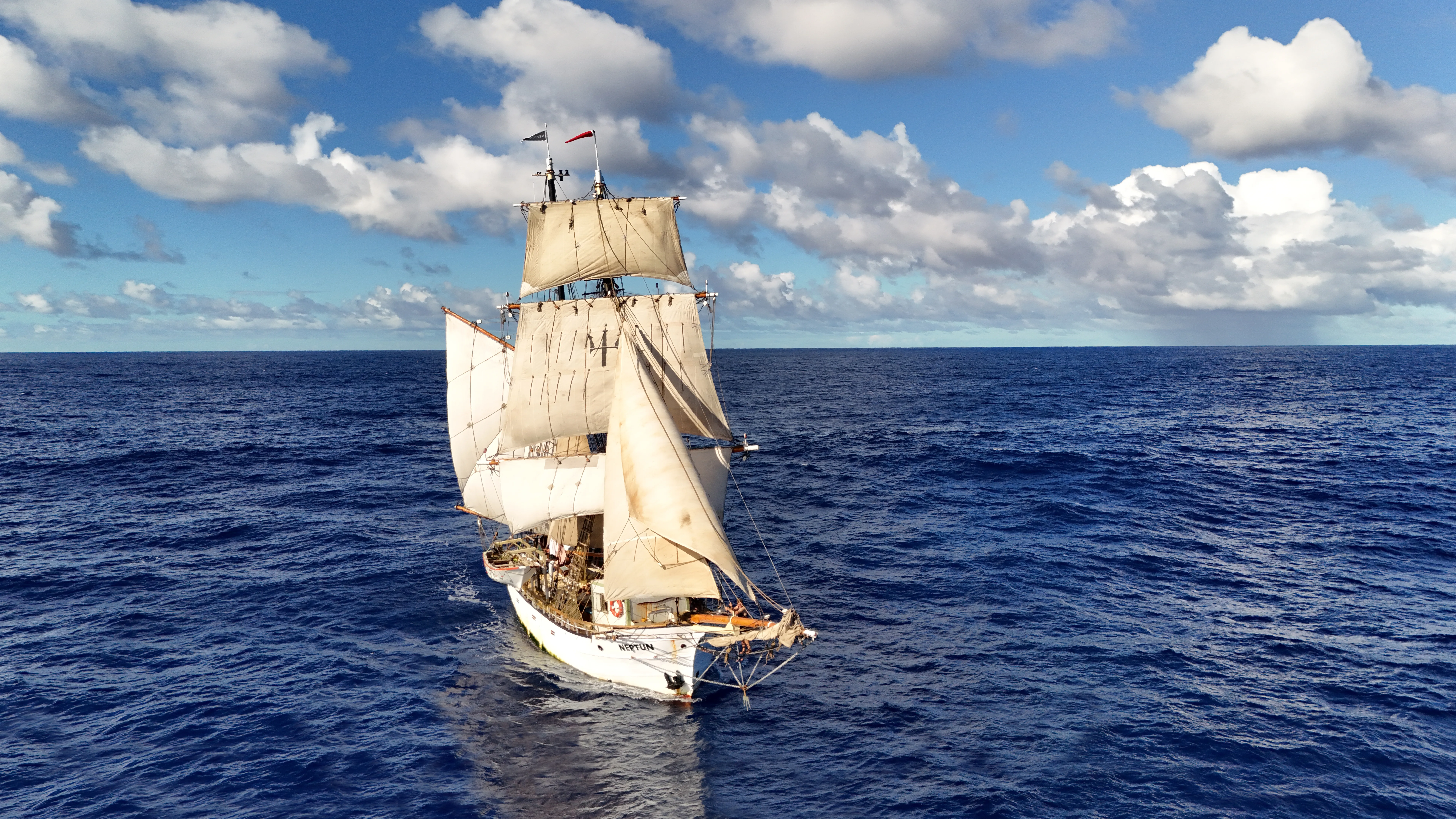

A brigantine is a two-masted ship with a square-rigged foremast and a fore-and-aft rigged mainmast, while a schooner has two or more masts that are all fore-and-aft rigged, no square sails at all.
That single sentence covers the technical difference, but the story is more interesting than that. The two rigs come from different centuries, different oceans, and different jobs. Knowing which is which tells you something about where a ship came from and what it was built to do, and if you want to feel the difference in your hands, you can apply for a berth on a real brigantine.
Already curious about square-rig sailing? Browse the voyages, NEPTUN's nine-leg world voyage is the easiest way to learn the rig from scratch.
On this page
- Key differences
- Brigantine in detail
- Schooner in detail
- Other rigs briefly
- Side-by-side: which rig wins where
- Which one should you sail on?
- FAQs
- Read also
Key differences
The quickest way to tell a brigantine from a schooner is to look at the foremast. If the foremast carries horizontal spars with square sails hung from them, it is a brigantine. If every mast carries triangular or four-sided sails running along the length of the ship, it is a schooner.
| Feature | Brigantine | Schooner |
|---|---|---|
| Number of masts | Two | Two or more (commonly two or three) |
| Foremast rig | Square-rigged | Fore-and-aft rigged |
| Mainmast rig | Fore-and-aft rigged | Fore-and-aft rigged |
| Peak era | 17th–19th century | 18th century to present |
| Origin | European (Mediterranean, then Atlantic) | American (New England) |
| Typical historical use | Naval patrol, merchant trade, privateering | Coastal trade, fishing, pilot work |
| Crew size for the same hull | Larger | Smaller |
| Best point of sail | Downwind and reaching | Upwind and reaching |
| Modern examples | Brigantine NEPTUN, Fryderyk Chopin | Bluenose II, Pride of Baltimore II |
Two points of nuance. First, the word brigantine has shifted over the centuries, in the 1700s it sometimes described what we would now call a brig (both masts square-rigged). The modern definition, which is the one used in sail training and nautical museums today, is the two-rig hybrid described above. Second, schooners come in many variations: topsail schooners carry one or two square topsails on the foremast, which blurs the line with brigantines. A strict schooner carries no square sails.
The two rigs at a glance
Brigantine in detail
A brigantine is built around a compromise. Square sails on the foremast give excellent downwind performance and the ability to carry a lot of canvas with a relatively short mast. The fore-and-aft mainsail behind it lets the ship sail closer to the wind than a fully square-rigged vessel could. You get most of the power of a larger square-rigger and most of the upwind ability of a fore-and-aft rig, in a smaller hull.
The brigantine flourished from the 1600s through the mid-1800s. Navies used them as patrol vessels and despatch boats. Merchants used them for Mediterranean and transatlantic trade. Pirates and privateers liked them for the same reason navies did, the combination of speed and weatherliness let a small crew outrun or run down larger ships.
By the late 19th century, steam was taking over merchant shipping and the brigantine nearly vanished as a working rig. Today, fewer than a dozen genuine brigantines are actively sailing worldwide, most of them as sail training vessels. That rarity is part of why the rig matters to traditional seamanship, learn it here or you do not learn it at all.
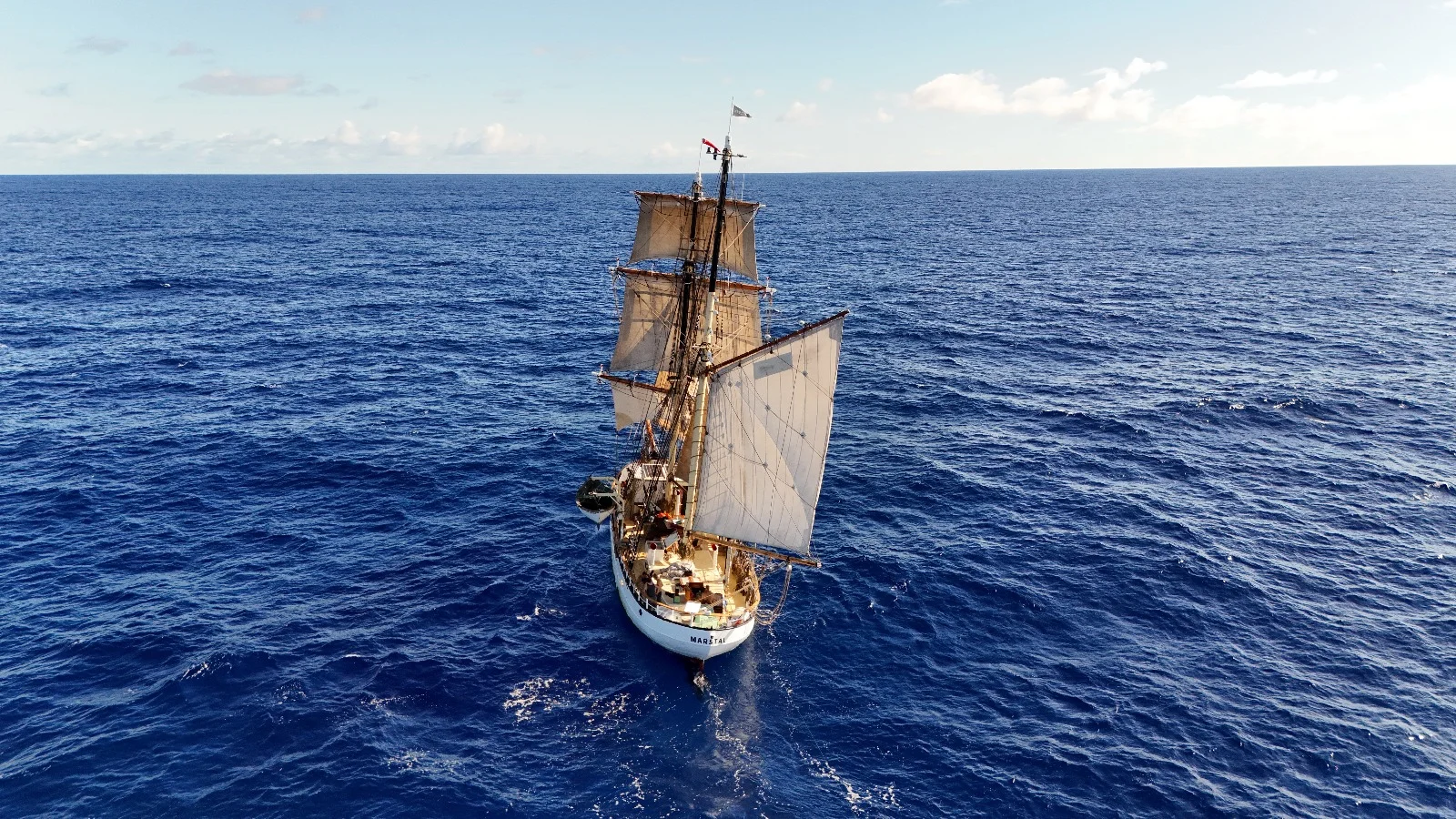
Brigantine NEPTUN is one of those surviving ships. Built in 1947 as a Danish fishing vessel and re-rigged as a brigantine, she carries square sails on the foremast, a gaff mainsail aft, and the full set of headsails forward. If you want the full story of the rig, see the companion article on what is a brigantine, or how square sails actually work.
Square sails up close
Where the rig comes alive
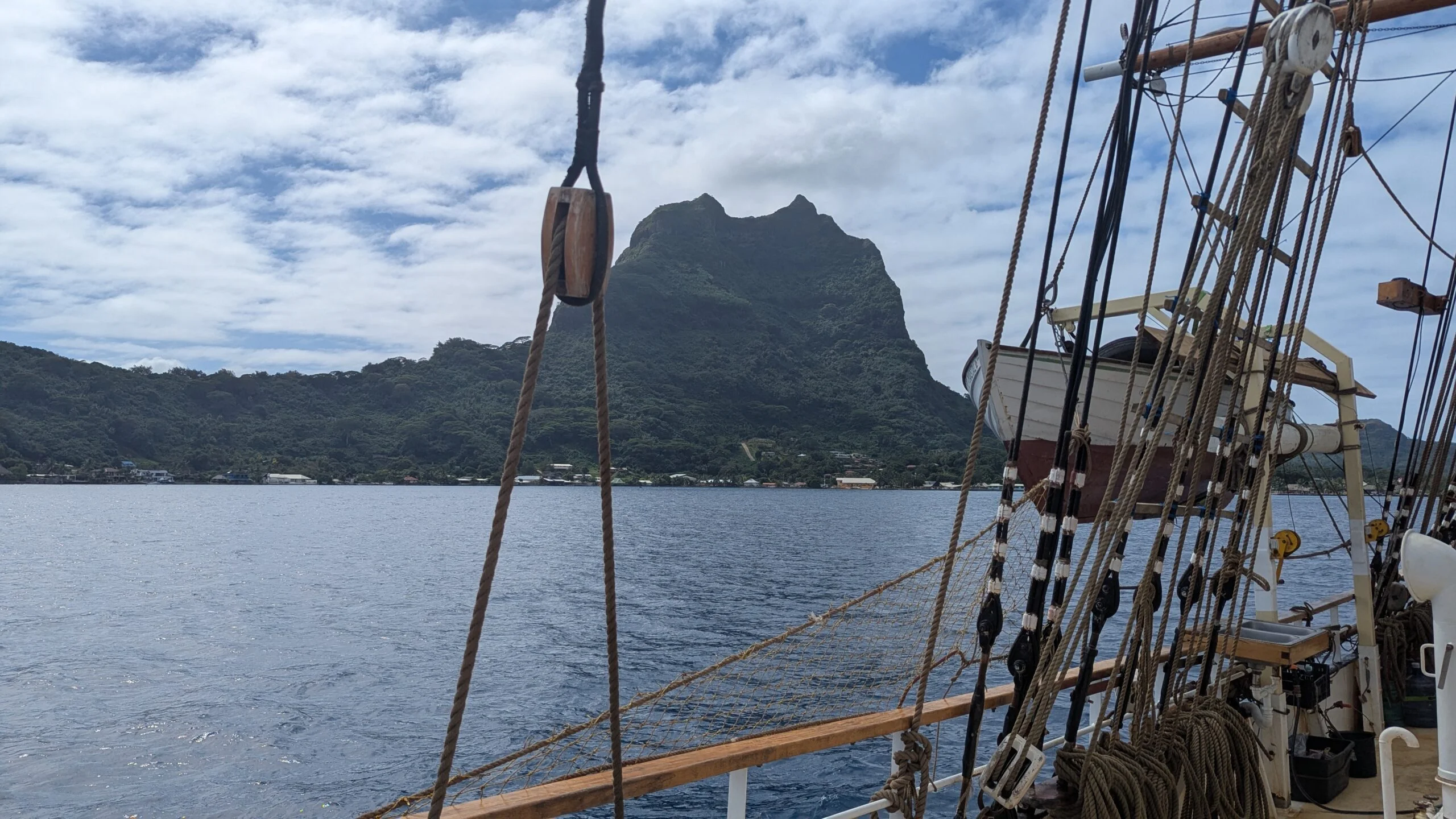
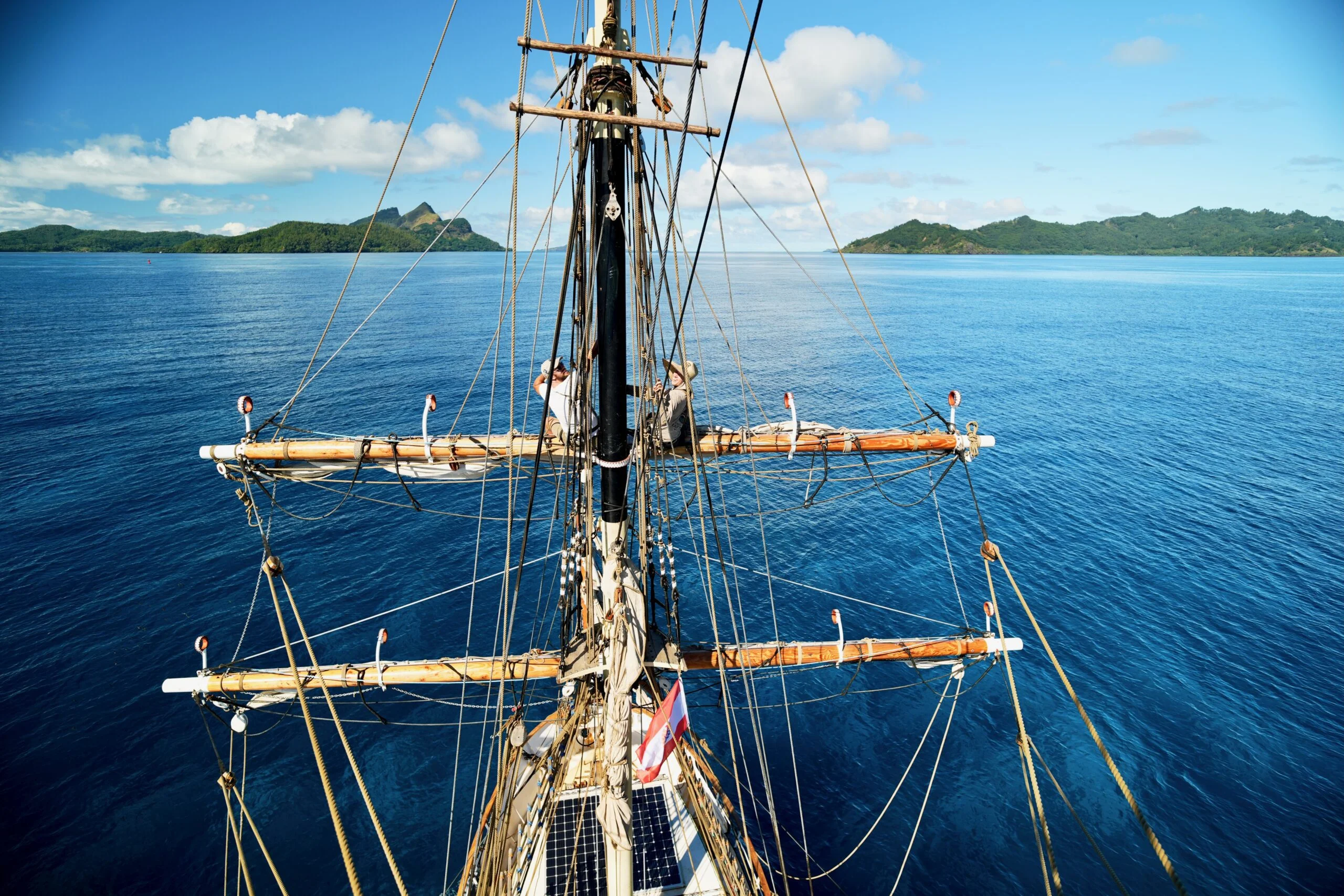
On NEPTUN, the foremast carries the square sails, fore course, lower topsail, upper topsail, and topgallant. Setting and stowing them means going aloft, working in pairs along the yards, and learning the rig the way every square-sail sailor has learned it for 400 years. No prior experience needed; the ship will teach you.
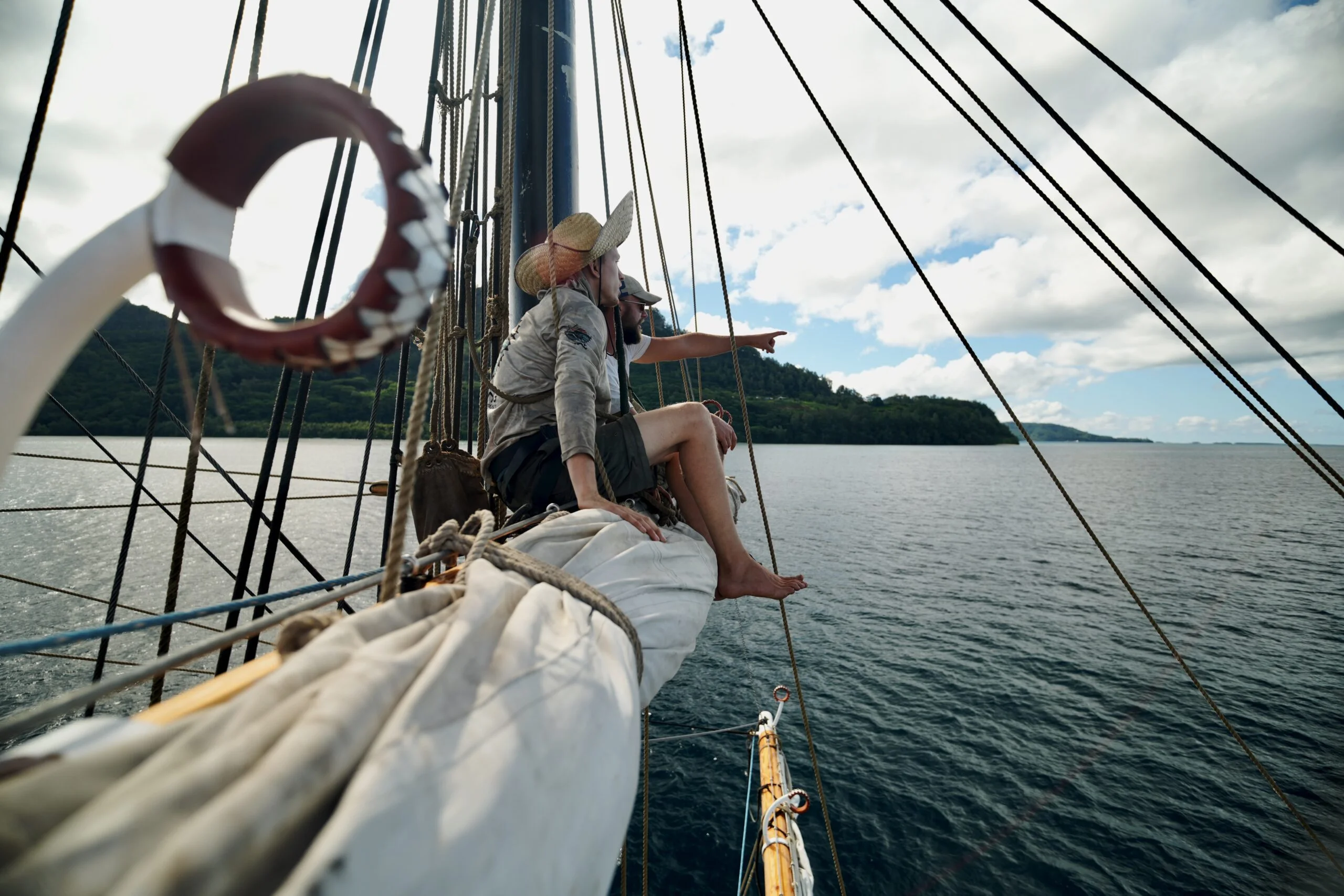
The legs of NEPTUN's voyage where the square rig works hardest are the open-ocean trade-wind passages. That is where the foremast earns its keep, day after day, with the wind aft of the beam.
Square-sail legs
Where the brigantine rig shines
Three legs across three oceans where NEPTUN sails on her square sails for weeks at a time.
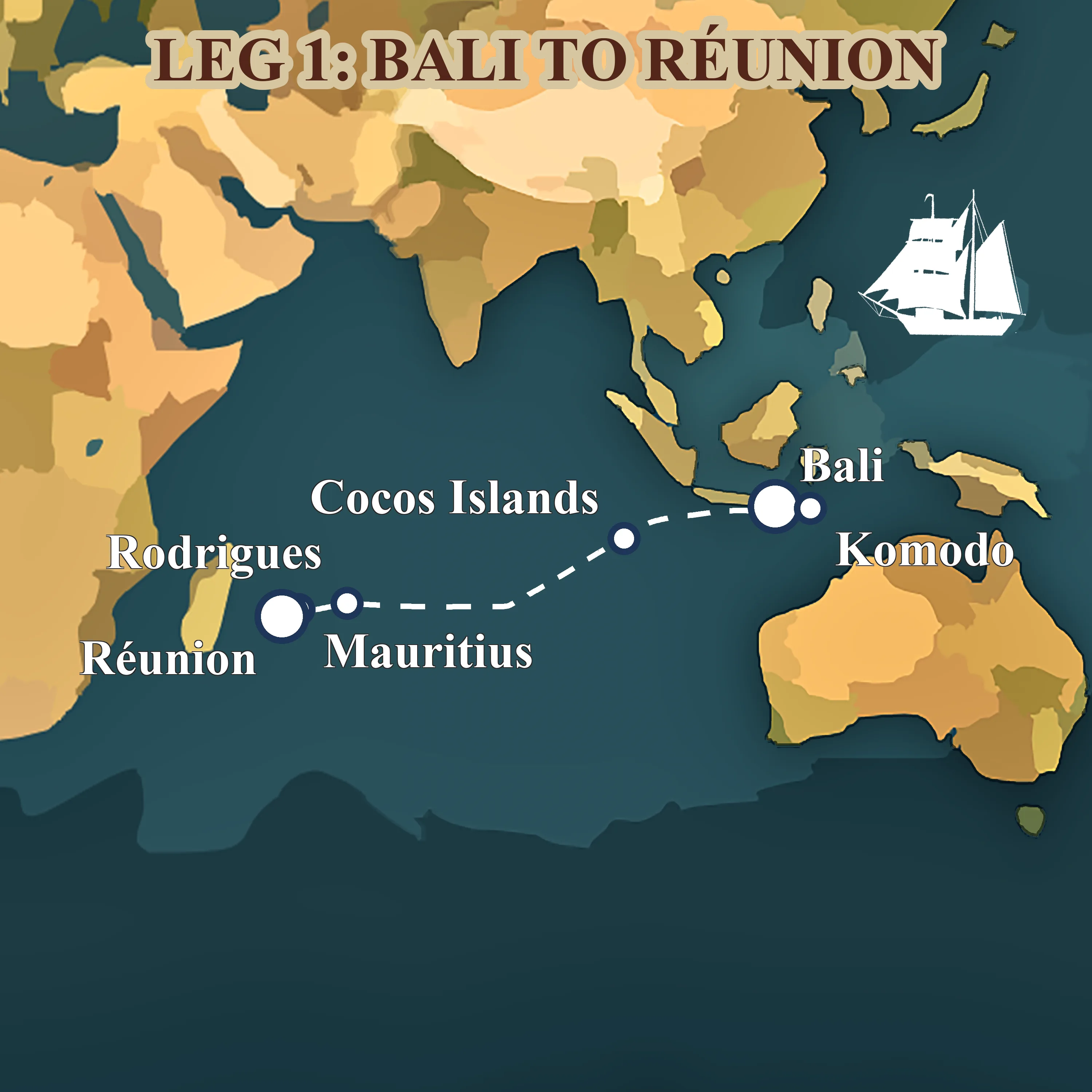
Leg 1: from Bali to Réunion across the Indian Ocean
May 2026 — Aug 2026 · Bali, Indonesia → Réunion, France
The opening chapter of Neptun's 482-day world voyage, a 4,078-nm trade-wind passage from the temples of Bali to the volcanic cliffs of Réunion.
Read more about this leg → about Leg 1: from Bali to Réunion across the Indian Ocean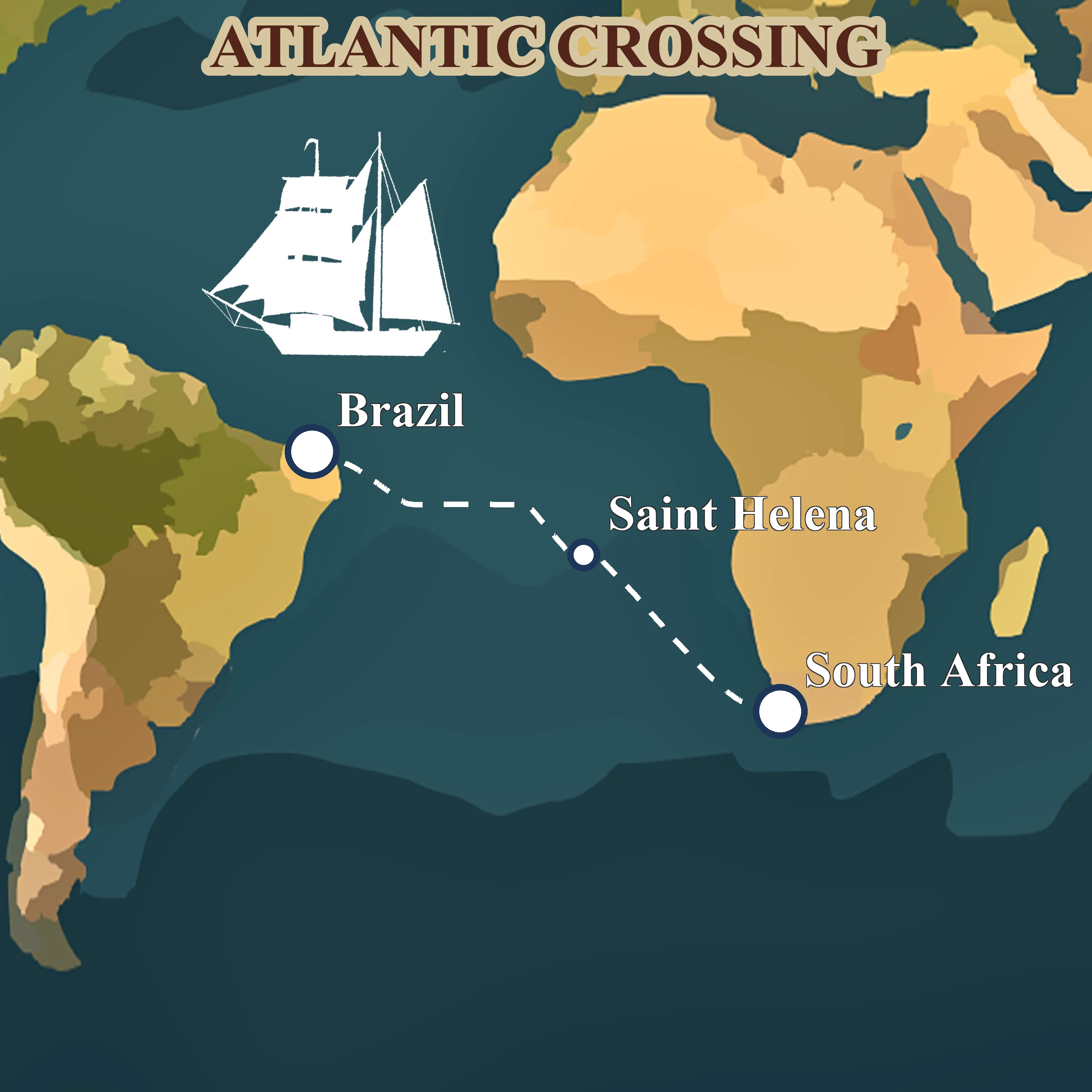
Leg 5: across the South Atlantic from Saldanha to Fortaleza
Jan 2027 — Mar 2027 · Saldanha Bay, South Africa → Fortaleza, Brazil
Forty-four days before the southeast trades, Napoleon's exile at St. Helena, the equator crossing, and landfall in tropical Brazil. The ocean chapter of the voyage.
Read more about this leg → about Leg 5: across the South Atlantic from Saldanha to Fortaleza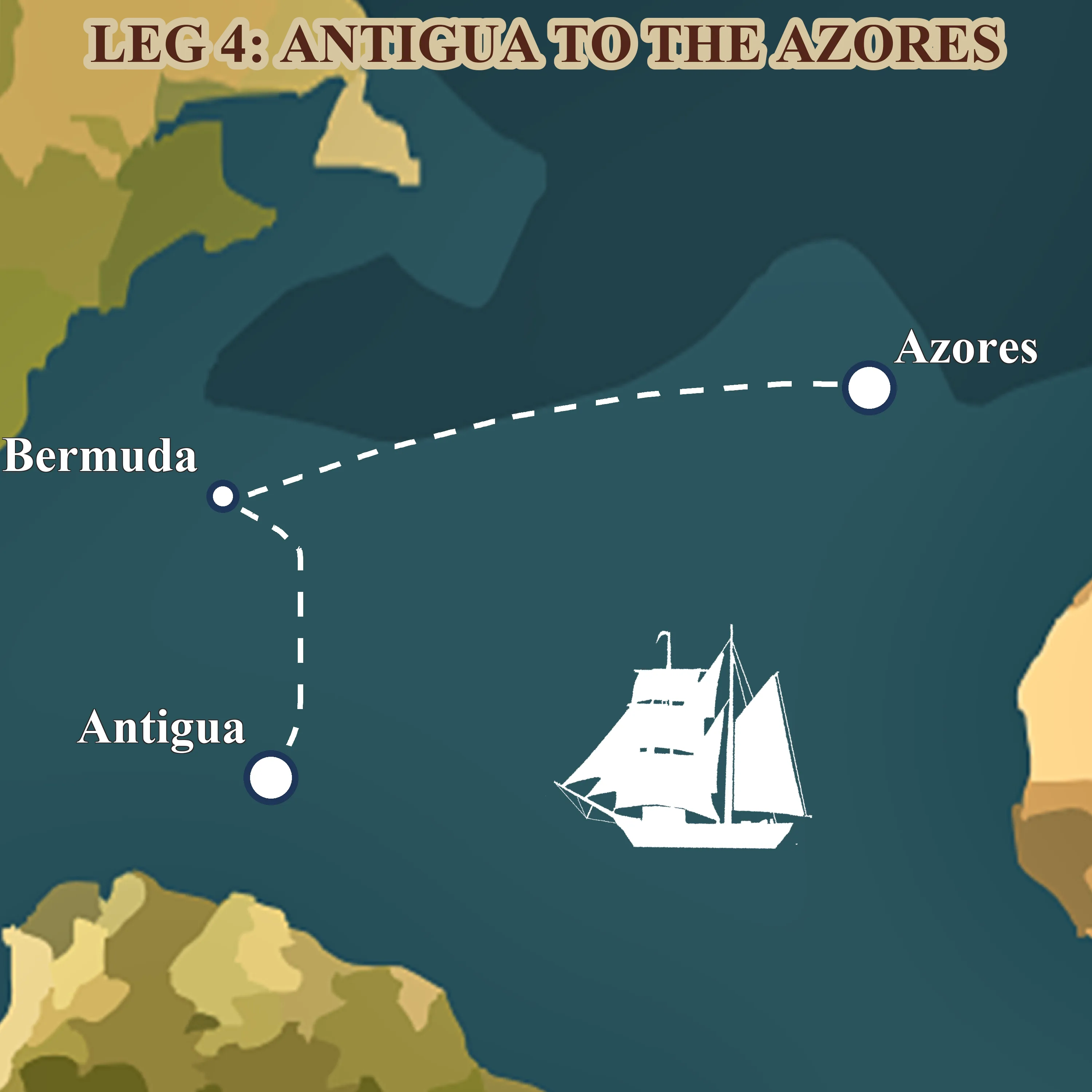
Leg 8: across the North Atlantic from Antigua to the Azores
May 2027 — Jul 2027 · Antigua → Ponta Delgada, Azores
Fifty-six days on the classic spring tall-ship route home, Antigua, a long reach to Bermuda's pink sand, then three weeks of open ocean to the volcanic Azores.
Read more about this leg → about Leg 8: across the North Atlantic from Antigua to the AzoresSchooner in detail
The schooner is an American invention. The rig appeared in New England in the early 1700s and took off quickly because it solved a specific problem: how to sail fast along a coast with shifting winds and a small crew. Fore-and-aft sails on every mast meant a schooner could beat upwind well, tack quickly, and be handled by four or five people where a square-rigged brig of the same size needed twelve.
That efficiency made schooners the workhorse of the North Atlantic coastal economy for two hundred years. Fishing fleets out of Gloucester, Lunenburg, and the Chesapeake were almost entirely schooner-rigged. Pilots who boarded incoming ships off harbour mouths used schooners because they could dart in and out under sail. Rum runners during American Prohibition used them because they were fast, unobtrusive, and cheap to run.
Schooners grew in size as the trade grew. By the late 1800s, the American East Coast was building four-, five-, and even six-masted schooners for the lumber and coal trade. The Thomas W. Lawson, launched in 1902, had seven masts. These giants were the last gasp of commercial sail, and they ran on a crew of only a dozen or so, impossible with any square rig.
Schooners never really disappeared. They remain the most common traditional rig in use today, both as working vessels (charter, day-sailing, training) and as yacht rigs. If you see a modern tall ship with two masts and no square sails, it is almost certainly a schooner.

Square sails downwind, fore-and-aft on the wind, the rigs were built for different jobs.
Other rigs briefly
Brigantines and schooners sit in the middle of a larger family of traditional rigs. Knowing where they fit makes the differences easier to remember. (For the full anatomy, see parts of a tall ship.)
A brig has two masts, both fully square-rigged. Think of it as a brigantine where the mainmast is also square. Brigs were the standard small warship of the Napoleonic era.
A barque (sometimes spelled bark) has three or more masts. The foremast and mainmast are square-rigged, the mizzen (aftermost) is fore-and-aft. It is essentially a scaled-up brigantine logic applied to a bigger hull.
A barquentine is a three-masted version of a brigantine: square-rigged foremast, fore-and-aft everywhere else. Common in late 19th-century trade.
A ship-rigged vessel, often just called a full-rigged ship, has three or more masts, all square-rigged. The classic tall ships of the Age of Sail, frigates, East Indiamen, clipper ships, were ship-rigged.
In one sentence: the more square sails a ship carries, the more crew she needs, the faster she runs downwind, and the worse she goes upwind. Schooners sit at one end of that scale, full-rigged ships at the other, and brigantines are one step in from the square end.
Side-by-side: which rig wins where
The two rigs are not "better" or "worse", they are tools tuned for different jobs. Read this grid as a quick decision aid for which rig you actually want under your feet.
Brigantine, downwind power
Square sails on the foremast spread a huge area of canvas perpendicular to the wind. On a trade-wind passage, a brigantine settles into a fast, stable rhythm, heel modest, motion easy, miles eaten. NEPTUN does her best work on the open ocean, dead before the wind.
Schooner, upwind agility
Fore-and-aft sails on every mast point higher, tack quicker, and need fewer hands to trim. A schooner is the rig you want for working a coast, ducking in and out of harbours, and handling shifty winds with a small crew.
Brigantine, bigger crew, bigger team
Setting and stowing square sails means working aloft in pairs along the yards. NEPTUN sails with around 10 trainees plus officers, enough hands to brace the yards around onto a new tack and stow a topsail in a building breeze. The work is shared and physical.
Schooner, leaner manning
A 100-foot schooner can be handled by four or five experienced sailors. No yards, no going aloft to stow, no hauling on bracing gear. That economy is why schooners outlasted square rigs in commercial trade.
Brigantine, the rare classroom
Fewer than a dozen genuine brigantines are actively sailing worldwide. Skills you learn on one, going aloft, working the yards, bending and unbending sails on a yard, transfer directly to barques, barquentines, and full-rigged ships. The rig is the gateway to every square-sail vessel afloat.
Schooner, easier first step
If you have never sailed before and want a gentle introduction, a schooner day-sail is the kinder learning curve. The sails are easier to grasp, the loads are smaller, and you stay on deck. Many sailors start on a schooner and only later move to square rig.
Which one should you sail on?
Honest answer: both rigs are wonderful, and the one you should try depends on what you want to learn.
A schooner is easier. Fewer ropes, no yards to haul around, smaller crew, gentler learning curve. You will tack and gybe often and spend a lot of time trimming headsails and the main. Good for short trips, easier on your shoulders, and genuinely fun.
A brigantine is rarer, harder, and teaches more. Square-rig skills, going aloft, setting and stowing sails on yards, bracing around onto a new tack, understanding how a driver and a square topsail work together, transfer directly to barques, barquentines and full-rigged ships. If you want traditional seamanship that applies across every tall ship in the world, learn it on a square rig.
Brigantine NEPTUN is one of the few places you can still do that, on long ocean passages with a trainee crew that sails her every day. If that appeals, you can browse the voyages or jump straight to the application form.
Planning a voyage? The full 2026-2027 itinerary is live, browse the nine legs and pick the one that fits your dates.
Learn the brigantine rig on a real ocean voyage
No prior sailing experience required. Join one leg, or string several together, a 27-day Caribbean hop, a 92-day Indian Ocean crossing, or the full 482-day arc.
FAQs
Common questions
What is the main difference between a brigantine and a schooner?
A brigantine has a square-rigged foremast (sails set on horizontal yards) and a fore-and-aft rigged mainmast. A schooner has two or more masts, all fore-and-aft rigged, no square sails. The foremast is the easiest place to look: square spars say brigantine, fore-and-aft sails on every mast say schooner.
Is a brigantine faster than a schooner?
Downwind, yes, a brigantine carries more sail area perpendicular to the wind and rides trade-wind passages beautifully. Upwind, a schooner usually wins because fore-and-aft sails point closer to the wind and tack faster. The two rigs were built for different jobs, not as direct competitors.
Why are brigantines so rare today?
Steam shipping replaced sail in commercial trade by the late 1800s, and the schooner outlasted the brigantine because it was cheaper to run. Fewer than a dozen genuine brigantines sail worldwide today, most of them as sail-training vessels like Brigantine NEPTUN. Schooners remain the most common traditional rig in current use.
Can a beginner sail on a brigantine?
Yes. Ships like NEPTUN take trainees with no prior sailing experience and teach the rig on the voyage itself, standing watches with mentors, learning to set and stow sails, going aloft under supervision. The square rig looks intimidating from the dock; on the deck it is just a series of named ropes you learn one at a time. Read what a sail-training berth involves.
How many masts does a brigantine have?
Two masts. The foremast is square-rigged, the mainmast (aftermost) is fore-and-aft rigged. If a vessel has three or more masts and only the foremost is square-rigged, it is a barquentine, not a brigantine. If both masts are square-rigged, it is a brig.
What is a topsail schooner?
A topsail schooner is a schooner that carries one or two square topsails on the foremast above the gaff main. It bridges the gap between a strict schooner (zero square sails) and a brigantine (the full square-rig fore course, topsails, and topgallant). Topsail schooners were popular for fast trade and pilot work in the 19th century.
Read also
- What is a brigantine?, anatomy and history of the rig
- Square sails explained, how a tall ship actually works
- Parts of a tall ship, bow to stern, deck to truck
- How to join a tall ship crew without experience
- The full 2026-2027 voyage, all nine legs
- Apply now, join a leg as trainee crew
All nine legs of the world voyage
From Bali to Kiel, 482 days, over 30,000 nautical miles, four oceans, both rigs working hard.
Leg 1: from Bali to Réunion across the Indian Ocean
May 2026 — Aug 2026 · Bali, Indonesia → Réunion, France
The opening chapter of Neptun's 482-day world voyage, a 4,078-nm trade-wind passage from the temples of Bali to the volcanic cliffs of Réunion.
Read more about this leg → about Leg 1: from Bali to Réunion across the Indian Ocean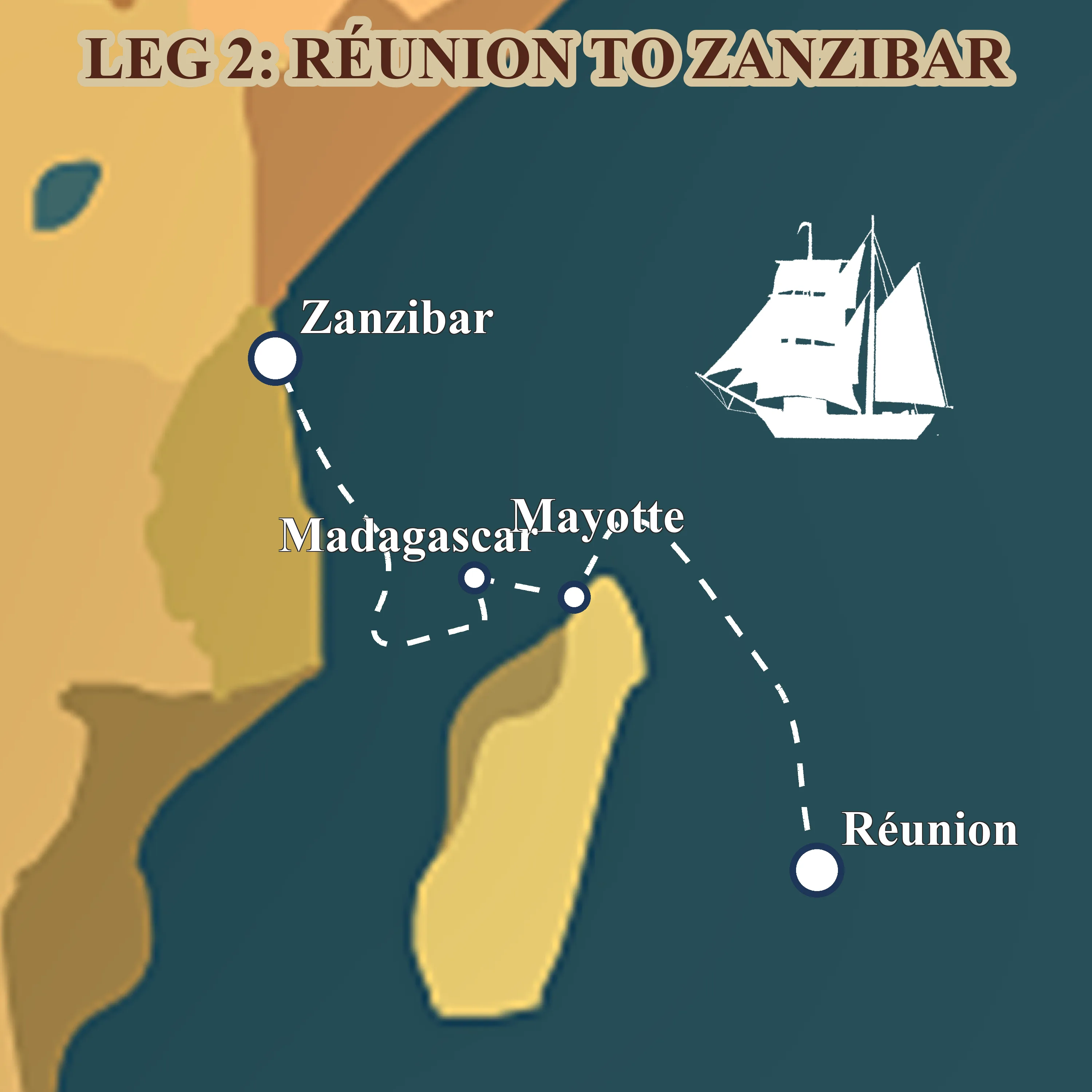
Leg 2: from Réunion to Zanzibar via Madagascar
Aug 2026 — Sept 2026 · Réunion, France → Zanzibar, Tanzania
Forty days across the western Indian Ocean, volcanic Réunion, lemur-haunted Nosy Be, the Mozambique Channel, and the spice-scented stone alleys of Zanzibar.
Read more about this leg → about Leg 2: from Réunion to Zanzibar via Madagascar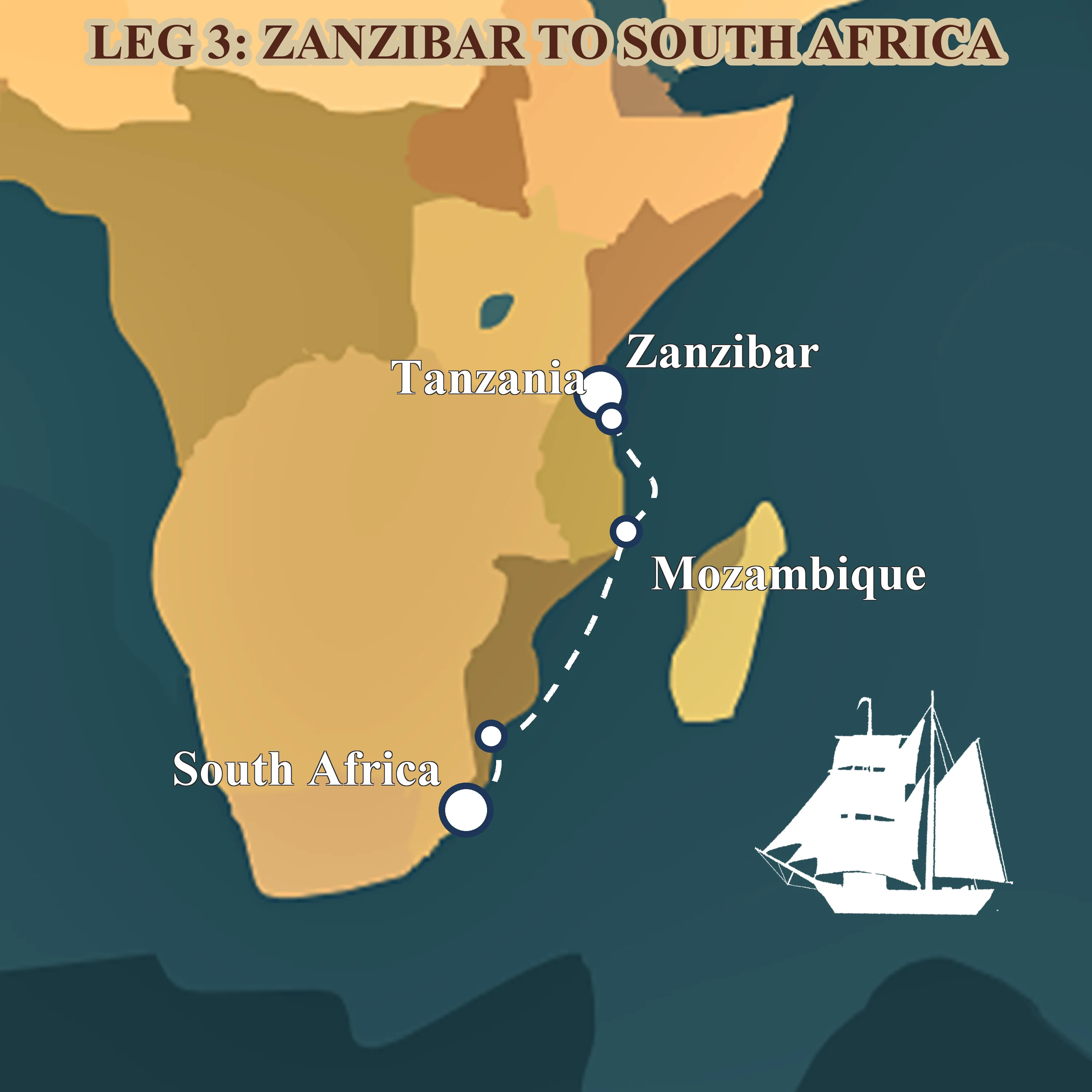
Leg 3: from Zanzibar to Durban down the Mozambique Channel
Sept 2026 — Nov 2026 · Zanzibar, Tanzania → Durban, South Africa
Sixty-three days coasting the African shore, spice islands, mangrove anchorages, Portuguese praças and the long trade-wind run down the Mozambique Channel to Durban.
Read more about this leg → about Leg 3: from Zanzibar to Durban down the Mozambique Channel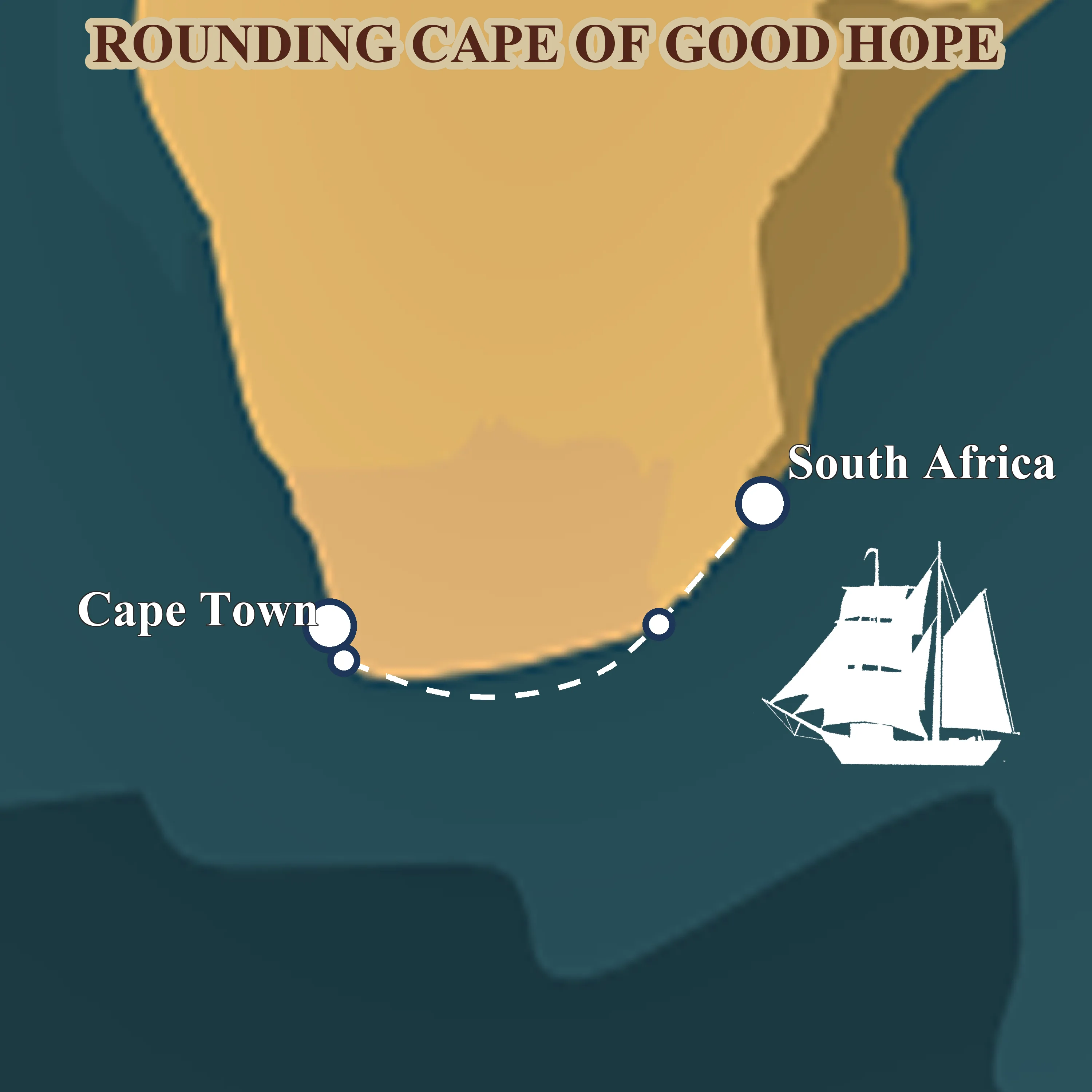
Leg 4: from Durban around the Cape of Good Hope
Nov 2026 — Dec 2026 · Durban, South Africa → Cape Town, South Africa
Thirty-eight days of serious seamanship, the Agulhas current, the Cape of Good Hope and the Southern Ocean at the tip of Africa, finishing quietly in Cape Town for Christmas.
Read more about this leg → about Leg 4: from Durban around the Cape of Good HopeLeg 5: across the South Atlantic from Saldanha to Fortaleza
Jan 2027 — Mar 2027 · Saldanha Bay, South Africa → Fortaleza, Brazil
Forty-four days before the southeast trades, Napoleon's exile at St. Helena, the equator crossing, and landfall in tropical Brazil. The ocean chapter of the voyage.
Read more about this leg → about Leg 5: across the South Atlantic from Saldanha to Fortaleza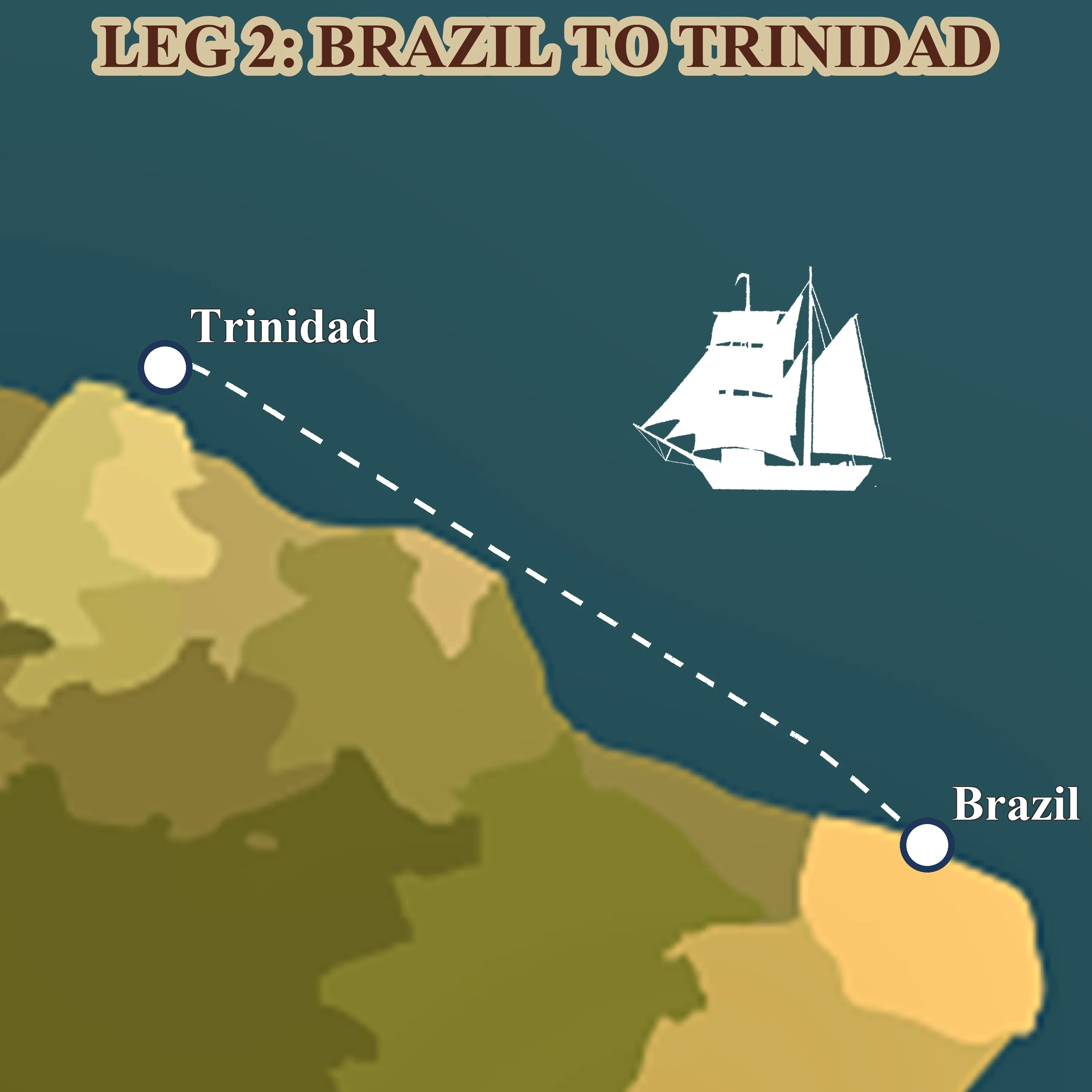
Leg 6: from Fortaleza to Trinidad along South America
Mar 2027 — Apr 2027 · Fortaleza, Brazil → Trinidad
A thousand miles of downwind trade running, the Amazon's brown water under the hull, the Guianas smudged on the horizon, and Trinidad's steelpan waiting at the end.
Read more about this leg → about Leg 6: from Fortaleza to Trinidad along South America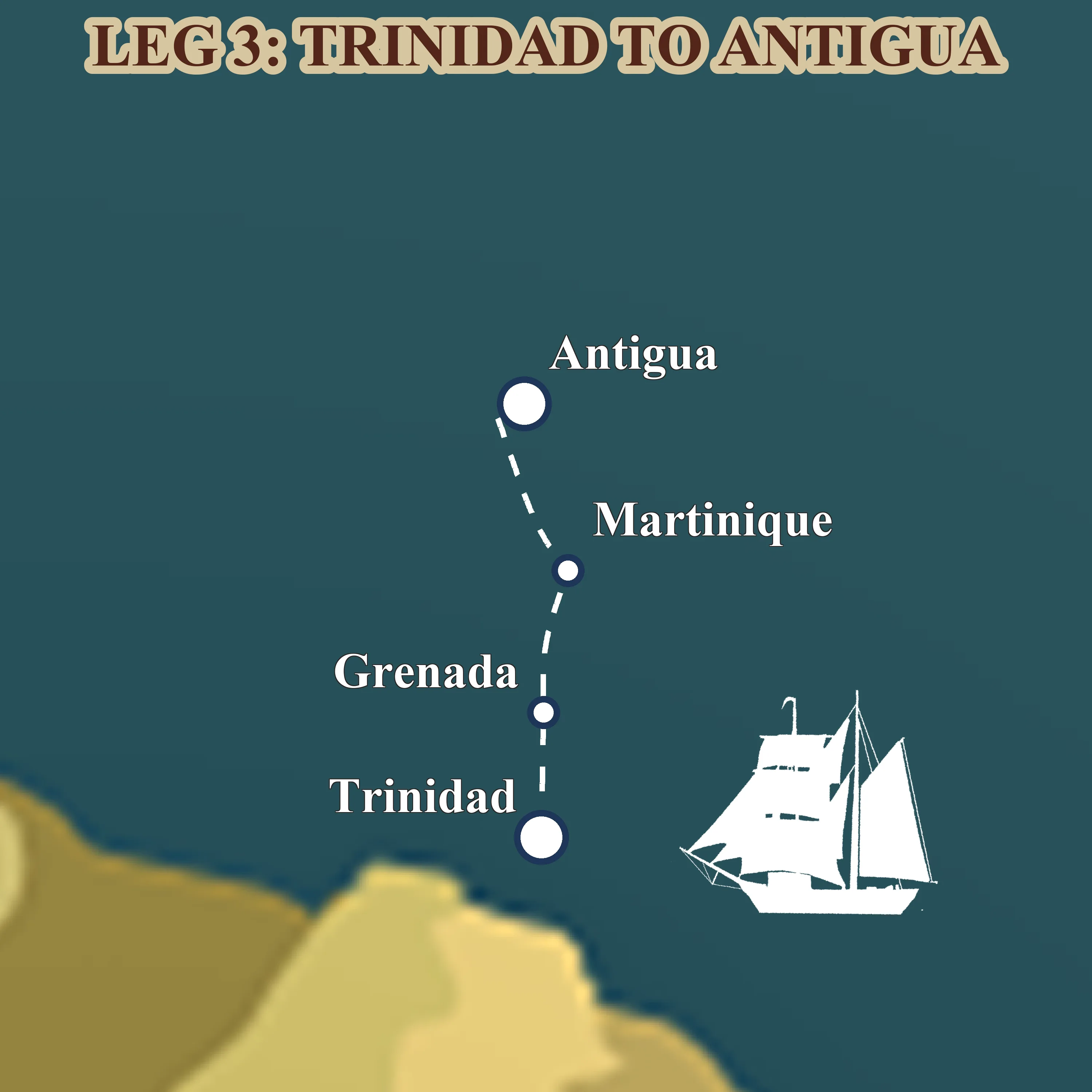
Leg 7: through the Windward Islands from Trinidad to Antigua
Apr 2027 — May 2027 · Trinidad → Antigua
Four weeks of short trade-wind daysails through the Lesser Antilles, turquoise anchorages, rum shops on the sand, French-Creole Martinique and the tall-ship scene in Antigua.
Read more about this leg → about Leg 7: through the Windward Islands from Trinidad to AntiguaLeg 8: across the North Atlantic from Antigua to the Azores
May 2027 — Jul 2027 · Antigua → Ponta Delgada, Azores
Fifty-six days on the classic spring tall-ship route home, Antigua, a long reach to Bermuda's pink sand, then three weeks of open ocean to the volcanic Azores.
Read more about this leg → about Leg 8: across the North Atlantic from Antigua to the Azores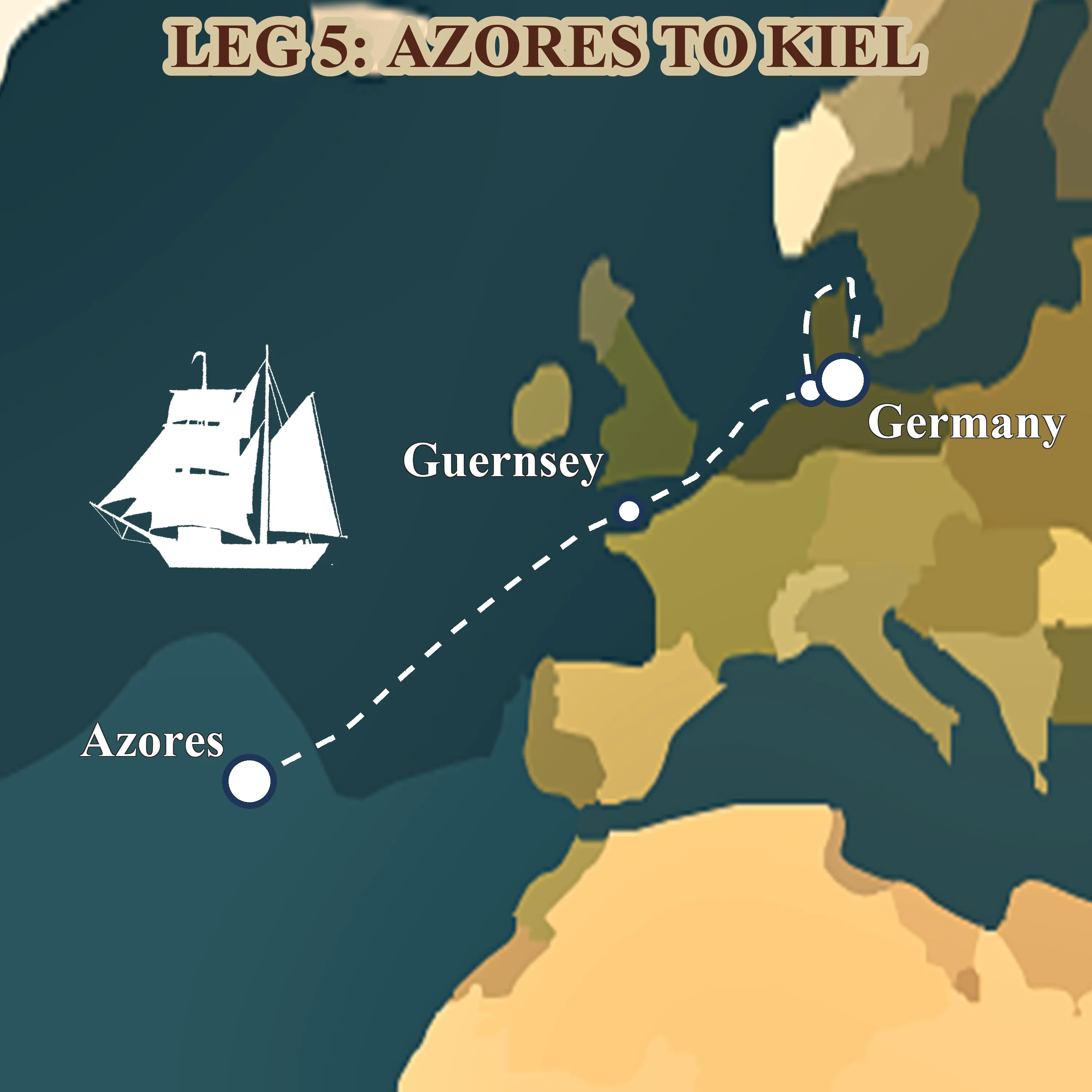
Leg 9: homecoming from the Azores to Kiel
Jul 2027 — Aug 2027 · Ponta Delgada, Azores → Kiel, Germany
The final 1,878 nm, from volcanic São Miguel to the Baltic, up the English Channel through the Dover TSS, past Helgoland's red cliffs and home to Kiel.
Read more about this leg → about Leg 9: homecoming from the Azores to KielWant to sail with us? Brigantine NEPTUN is a non-profit training ship, every voyage takes 10 crew members through real ocean sailing, no experience needed. Apply for a berth or read about the voyages first.