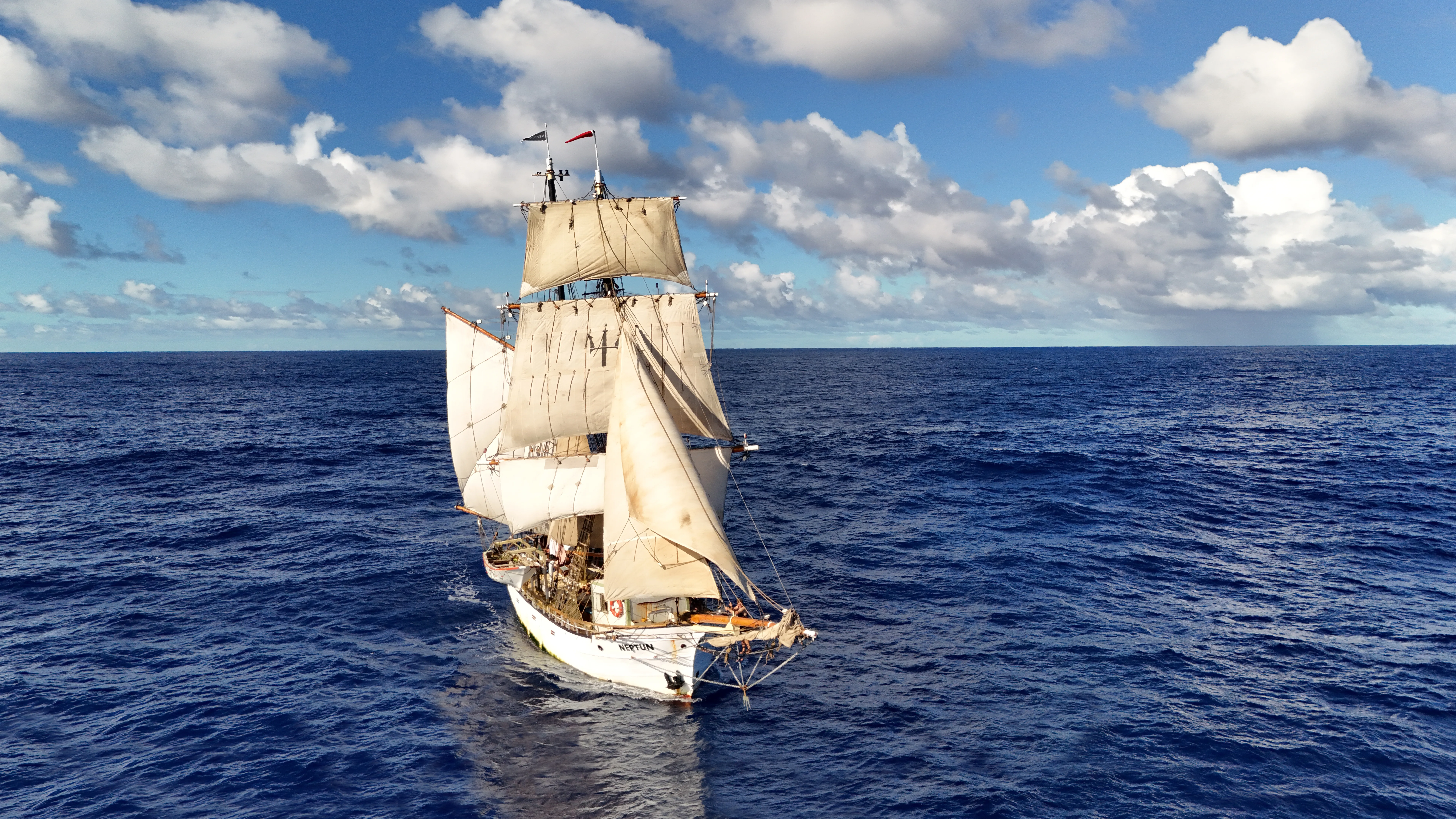
A square sail is a four-sided sail hung horizontally from a yard across the mast, pulling best when the wind comes from behind or on the quarter. It is the oldest sail shape still in working use, and on a brigantine like NEPTUN it is what gives the ship her downwind power across an ocean.
On this page
- The Square Sail: A Timeless Maritime Icon
- Origins and Evolution
- The Mechanics of Square Sails
- Types of Square Sails
- Advantages and Disadvantages of Square Sails
- The Square Sail Today
- The Square Sail in Naval Warfare
- The Square Sail and Maritime Exploration
- The Square Sail in Trade and Commerce
- The Square Sail in Popular Culture
- The Future of Square Sails
- FAQ
- Read also
The Square Sail: A Timeless Maritime Icon
Square sails, with their distinctive rectangular shape and ability to harness the power of the wind efficiently, have been a mainstay of maritime navigation for centuries. Their simplicity, durability, and effectiveness in various wind conditions have made them a ubiquitous feature on ships of all sizes, from small fishing vessels to grand sailing ships.
The square rig in numbers
New to tall-ship sailing? Brigantine NEPTUN takes 10 trainees per leg and teaches the square rig hands-on, apply for a berth or browse the nine legs of the voyage first.
Origins and Evolution
The exact origins of square sails are shrouded in history, but their earliest known use can be traced back to ancient Egypt and Mesopotamia. These early sails were likely made of woven reeds or papyrus, and were hoisted onto simple masts using ropes and pulleys. Over time, as shipbuilding technology advanced, square sails became larger, more sophisticated, and more efficient.
During the Age of Exploration, square sails played a crucial role in enabling European powers to explore the globe. Large, multi-masted vessels equipped with square sails, such as galleons and caravels, could carry vast quantities of cargo and sail long distances across the oceans. These ships were capable of reaching remote parts of the world, leading to the discovery of new lands and the establishment of global trade networks.
Same rig, modern voyage
NEPTUN carries the square rig today
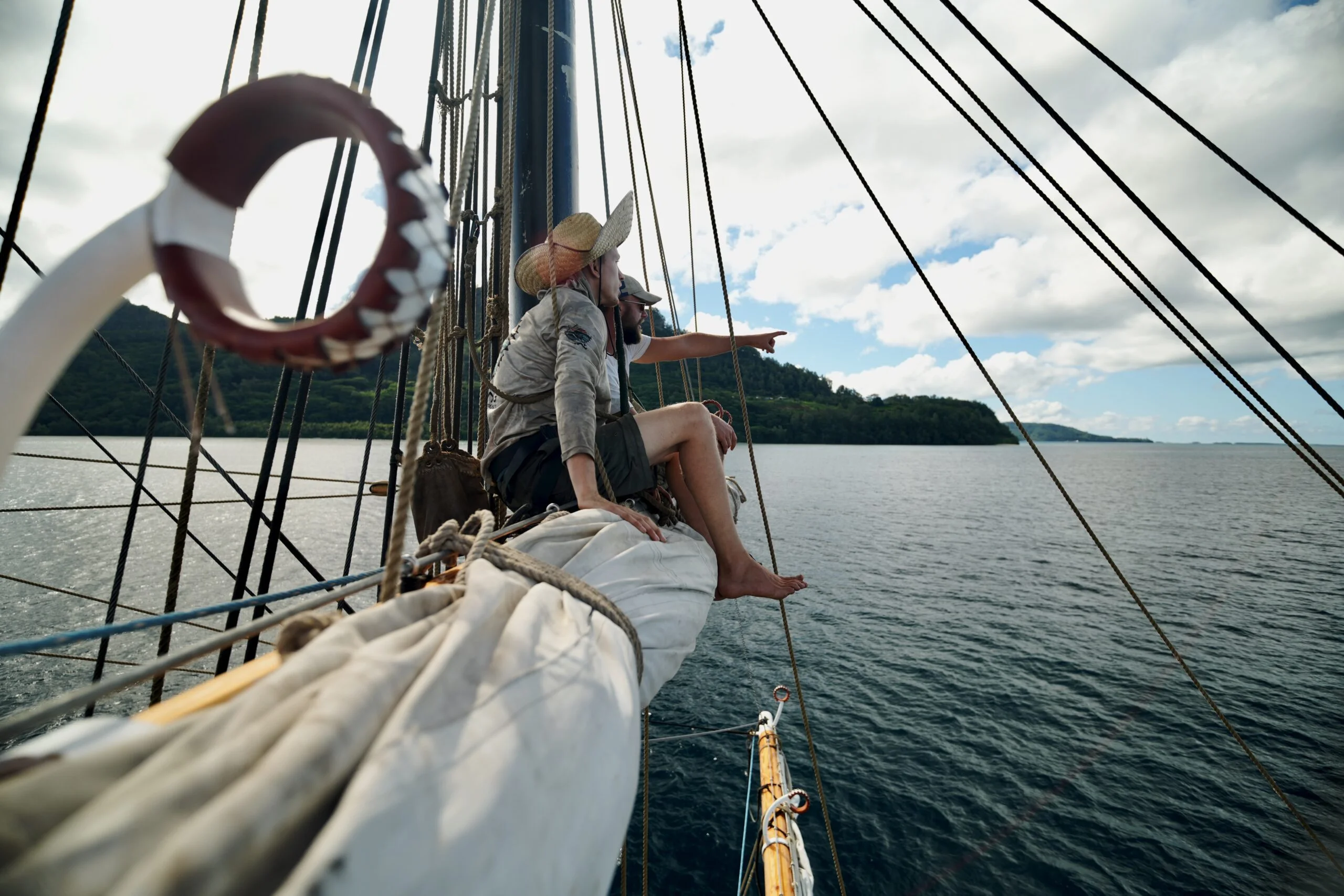
The brigantine NEPTUN is square-rigged on her foremast, eight yards of canvas above her deck, handled the traditional way. Trainees learn to set, furl, and brace the same sails that crossed every ocean in the Age of Sail.
The Mechanics of Square Sails
Square sails work by capturing the wind and converting its energy into forward motion. The sail is hoisted onto a mast using halyards, and is controlled by sheets and braces that allow it to be adjusted to different wind angles. When the wind blows against the sail, it creates a force known as lift that propels the ship forward.
The efficiency of a square sail depends on its orientation relative to the wind. When the sail is positioned directly into the wind, it is said to be "square-hauled" and receives the maximum amount of force. However, this also makes the ship difficult to maneuver. To tack or jibe (change direction), the sail must be sheeted to the opposite side, reducing its efficiency but allowing the ship to turn.
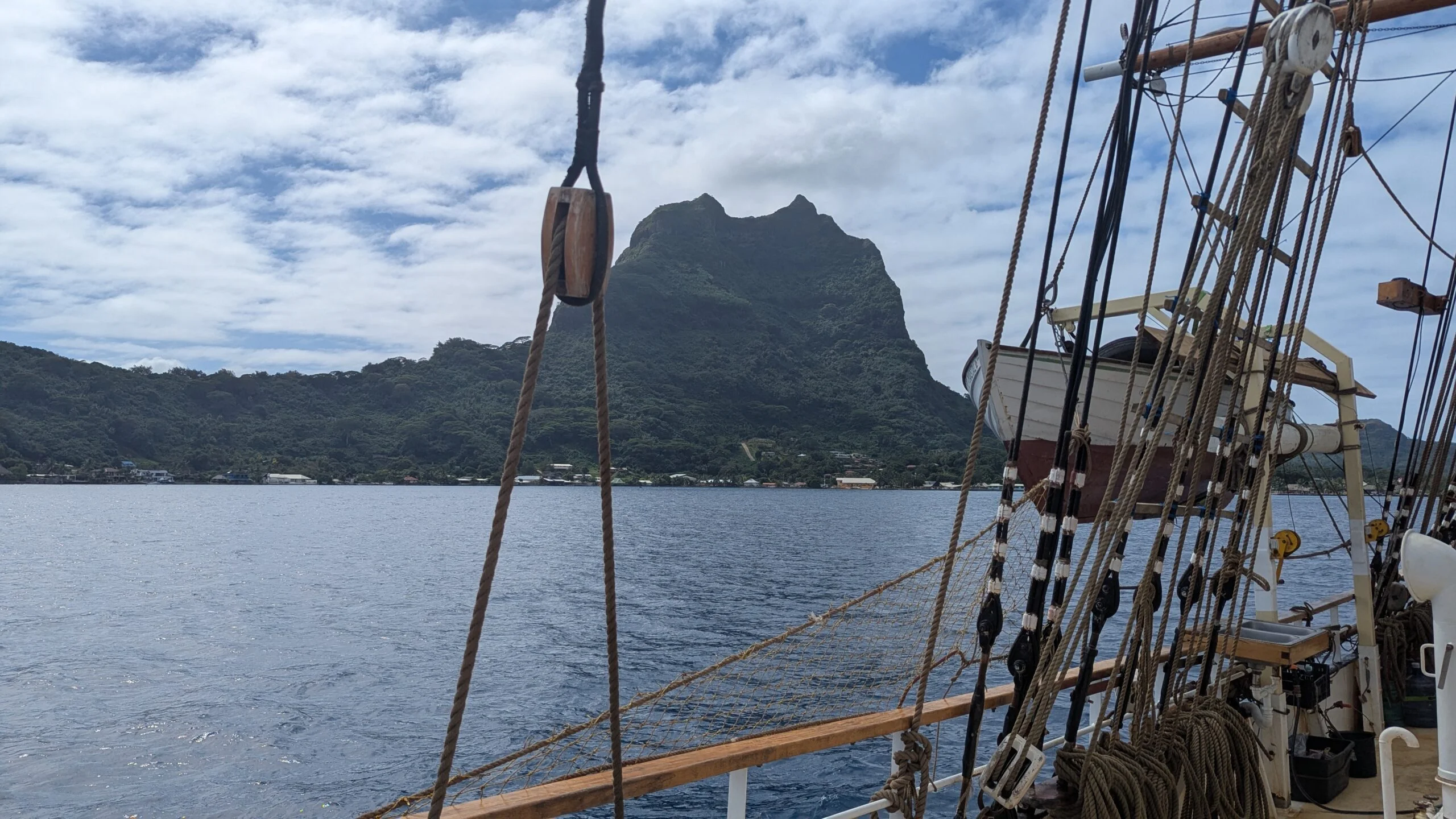
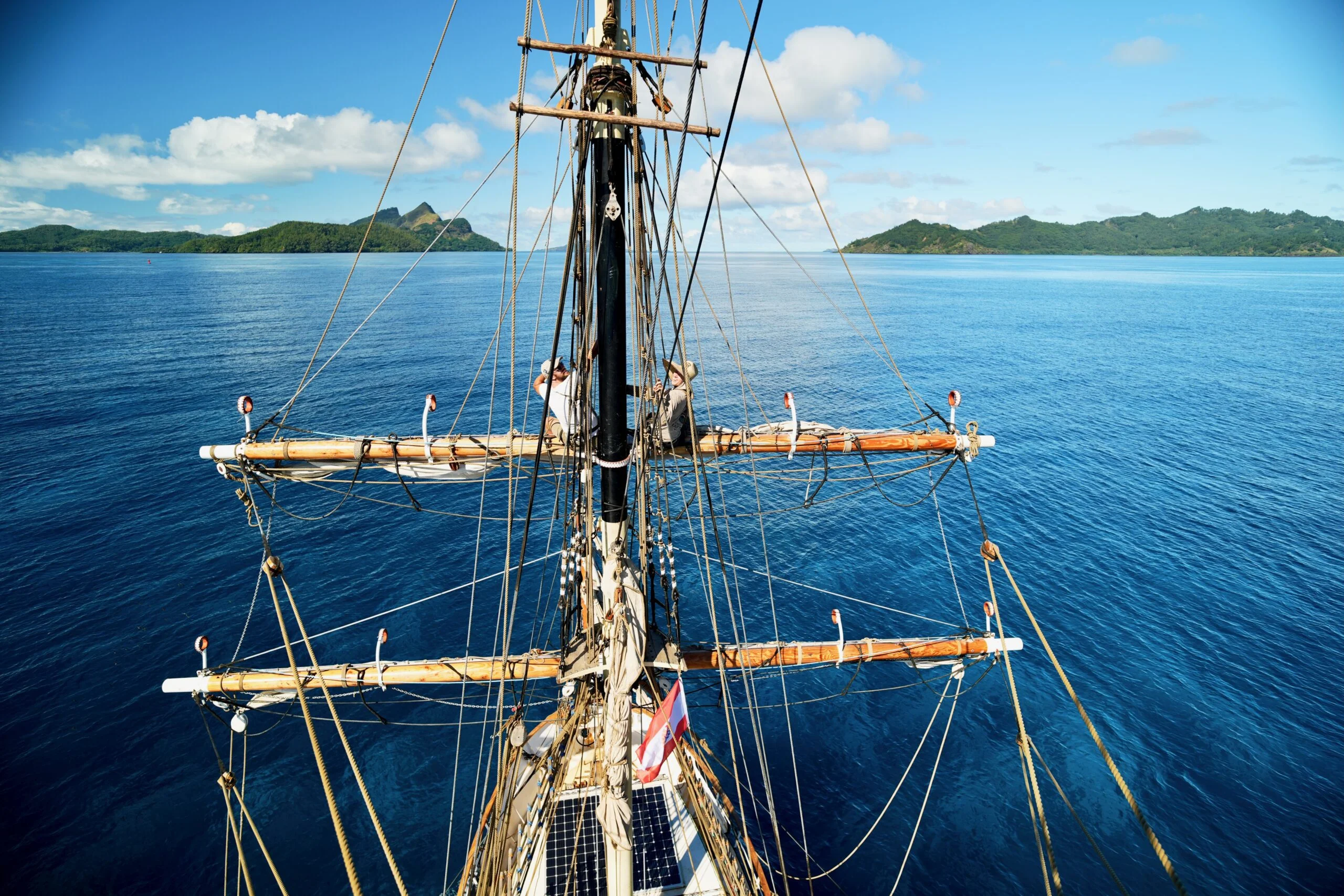
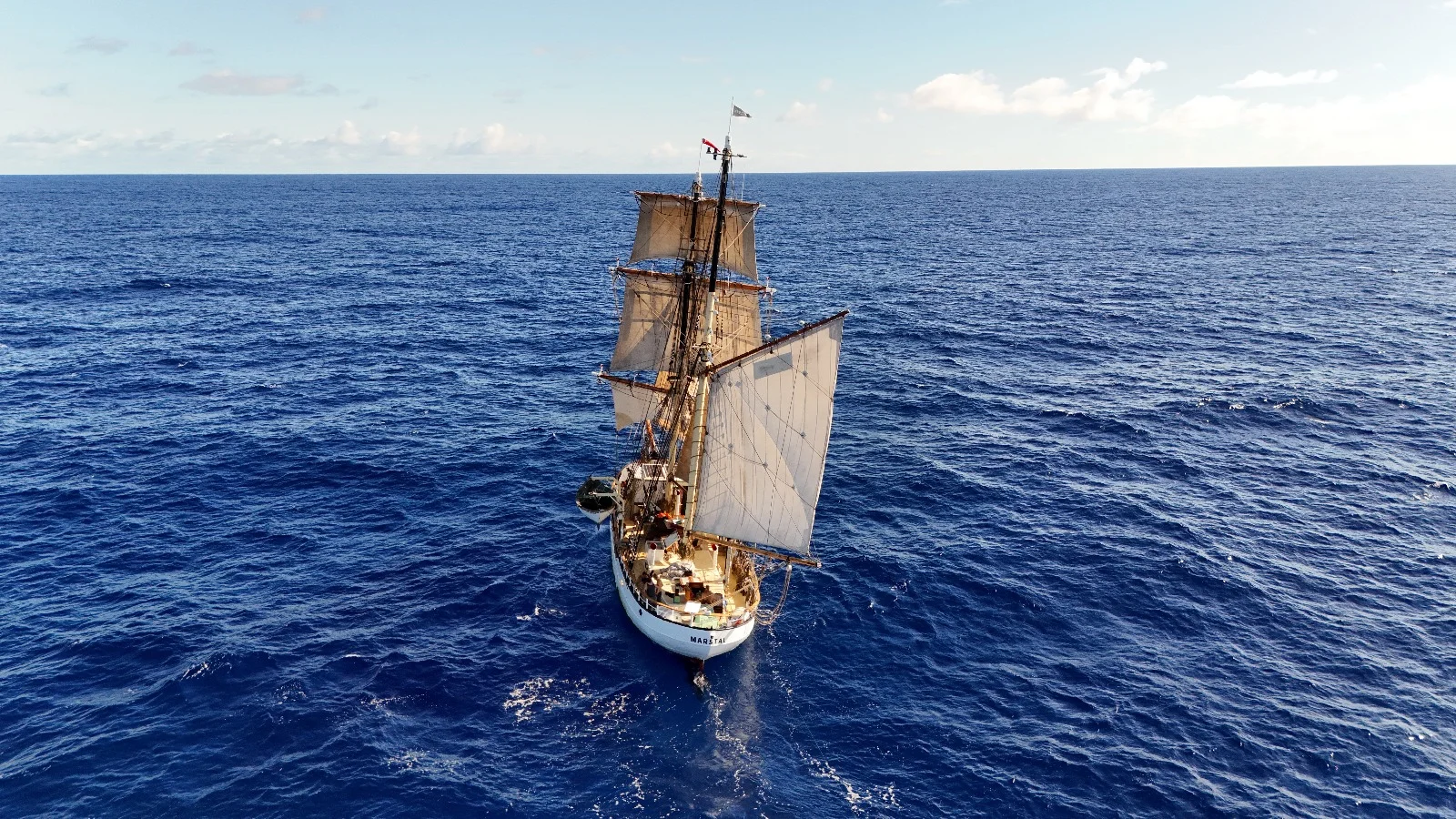
Want to handle a square sail yourself? No experience required, every NEPTUN voyage trains its crew on the rig. Apply for a berth or read about life onboard first.
Types of Square Sails
There are several different types of square sails used in maritime navigation, each with its own unique characteristics and applications. Some of the most common types include:
- Mainsail: The largest sail on the ship, located on the mainmast.
- Foremast sail: Located on the foremast, it is typically smaller than the mainsail.
- Mizzenmast sail: Located on the mizzenmast, it is often used for balancing the ship and providing additional propulsion.
- Topsail: A smaller sail that is hoisted above the main sail, foremast sail, or mizzenmast sail.
- Royal sail: The highest sail on the ship, located above the topsail.
- Flying jib: A triangular sail that is hoisted at the bow of the ship.
The full anatomy, sails are only one part of a tall ship. See the parts of a tall ship for the rig, hull, and deck terms in one place.
Advantages and Disadvantages of Square Sails
Square sails have several advantages that have contributed to their enduring popularity. They are relatively simple to construct and maintain, and they are highly efficient in certain wind conditions. Additionally, square sails can be easily reefed (reduced in size) to accommodate changing wind conditions.
However, square sails also have some disadvantages. They can be difficult to maneuver in light winds or when sailing close to the wind, and they are susceptible to damage in heavy weather. Furthermore, square-rigged ships require a large crew to handle the sails and maintain the vessel.
Where square sails shine
Trade-wind legs, the square rig at its best
Four legs of the 2026-2027 voyage cross steady, following winds, the conditions a square rig was built for.
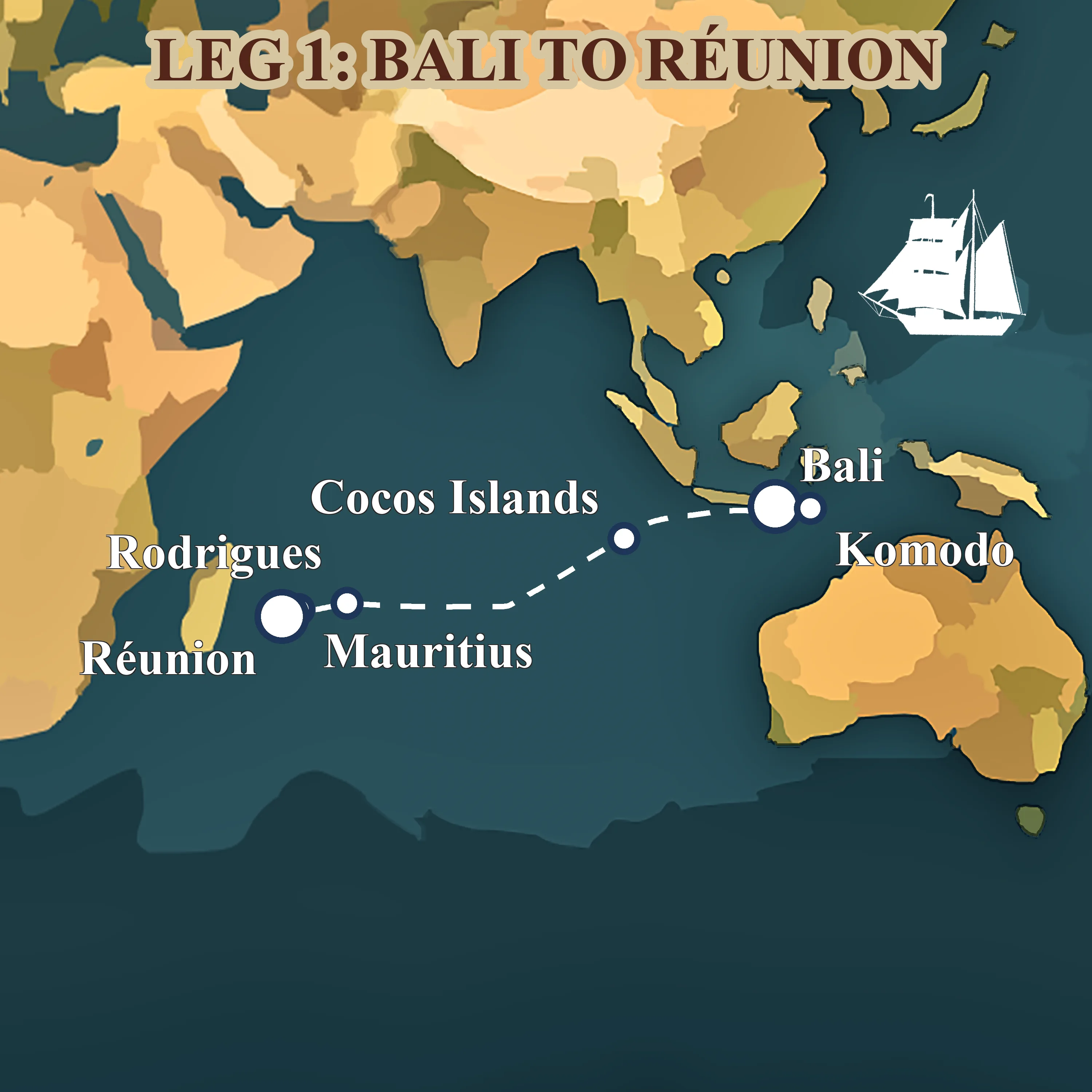
Leg 1: from Bali to Réunion across the Indian Ocean
May 2026 — Aug 2026 · Bali, Indonesia → Réunion, France
The opening chapter of Neptun's 482-day world voyage, a 4,078-nm trade-wind passage from the temples of Bali to the volcanic cliffs of Réunion.
Read more about this leg → about Leg 1: from Bali to Réunion across the Indian Ocean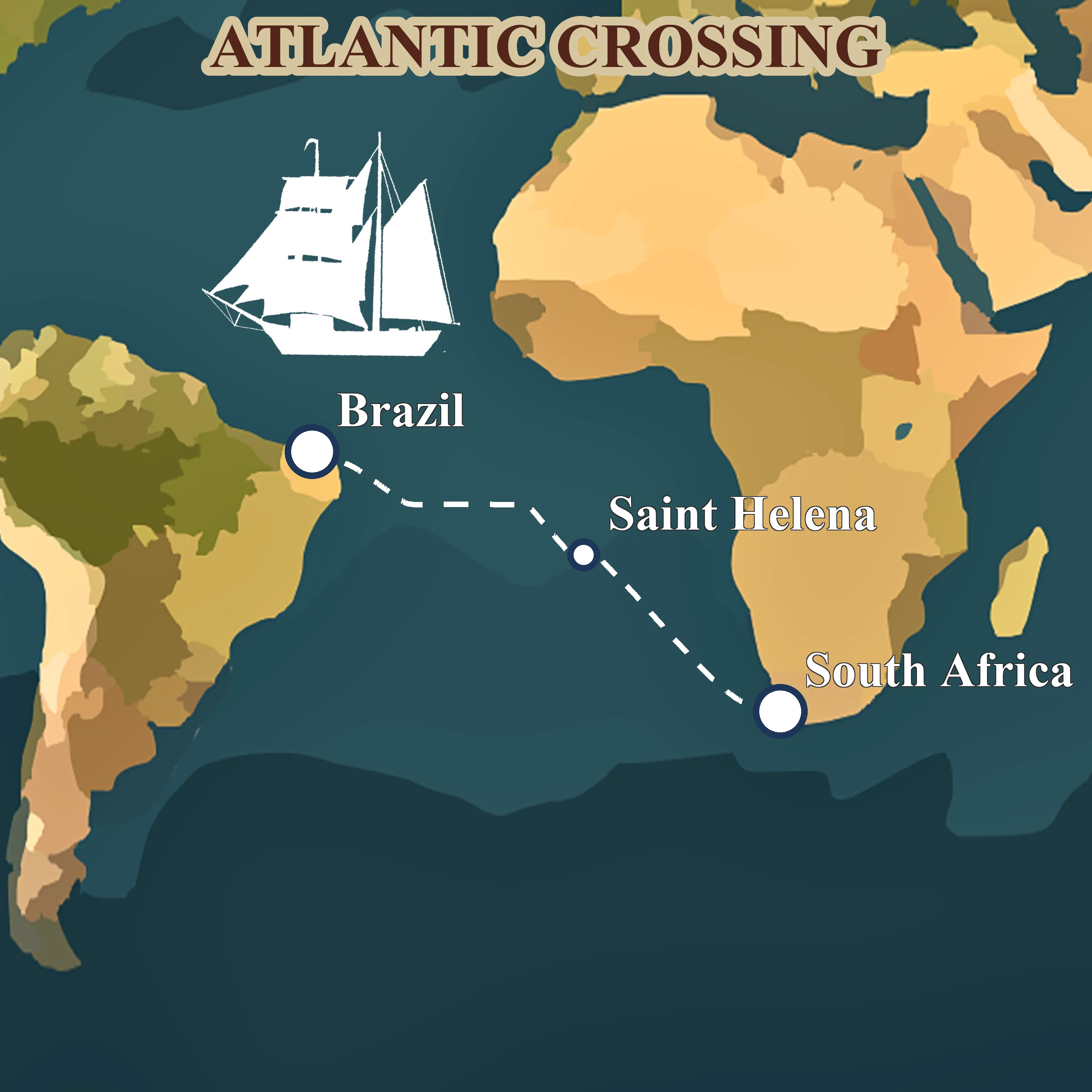
Leg 5: across the South Atlantic from Saldanha to Fortaleza
Jan 2027 — Mar 2027 · Saldanha Bay, South Africa → Fortaleza, Brazil
Forty-four days before the southeast trades, Napoleon's exile at St. Helena, the equator crossing, and landfall in tropical Brazil. The ocean chapter of the voyage.
Read more about this leg → about Leg 5: across the South Atlantic from Saldanha to Fortaleza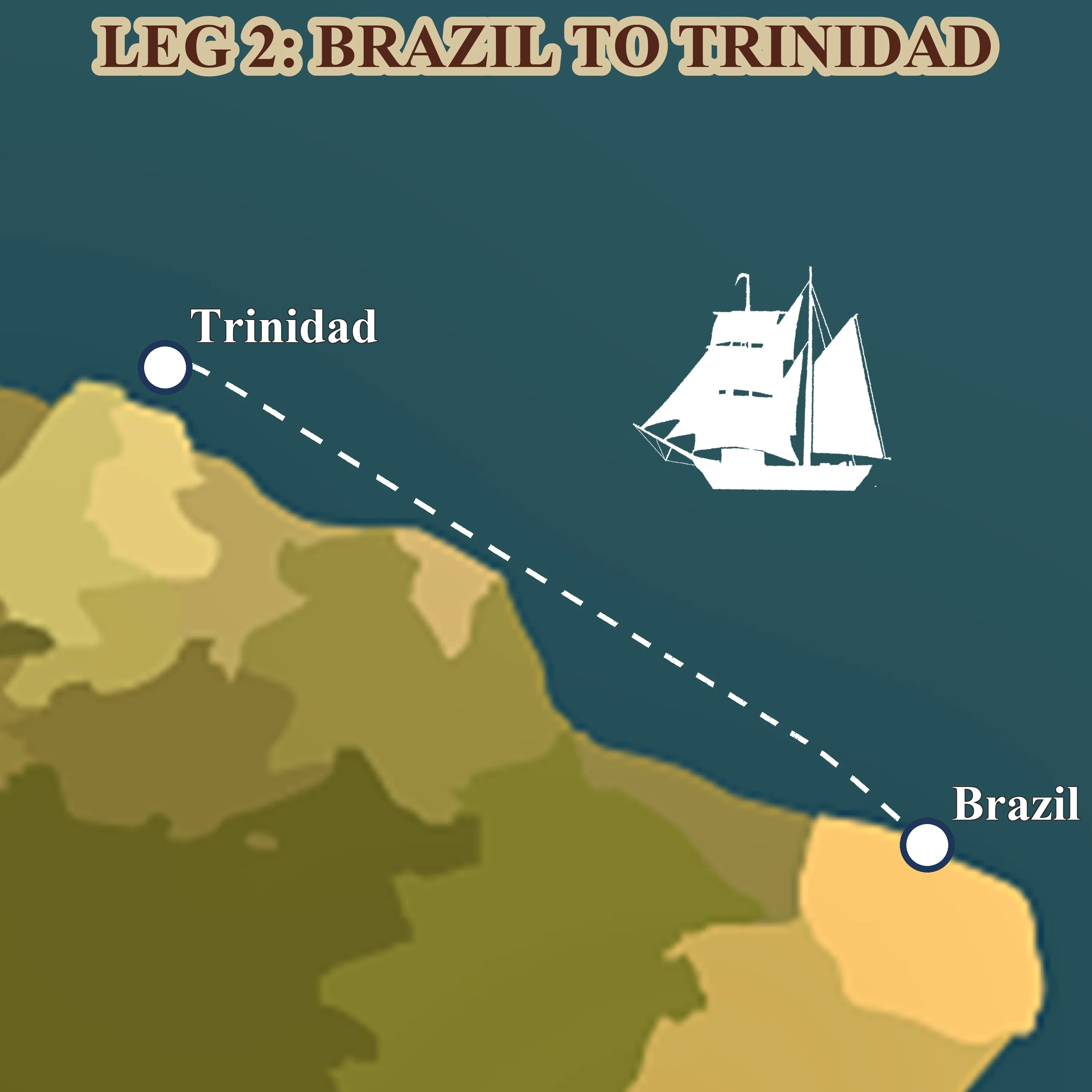
Leg 6: from Fortaleza to Trinidad along South America
Mar 2027 — Apr 2027 · Fortaleza, Brazil → Trinidad
A thousand miles of downwind trade running, the Amazon's brown water under the hull, the Guianas smudged on the horizon, and Trinidad's steelpan waiting at the end.
Read more about this leg → about Leg 6: from Fortaleza to Trinidad along South America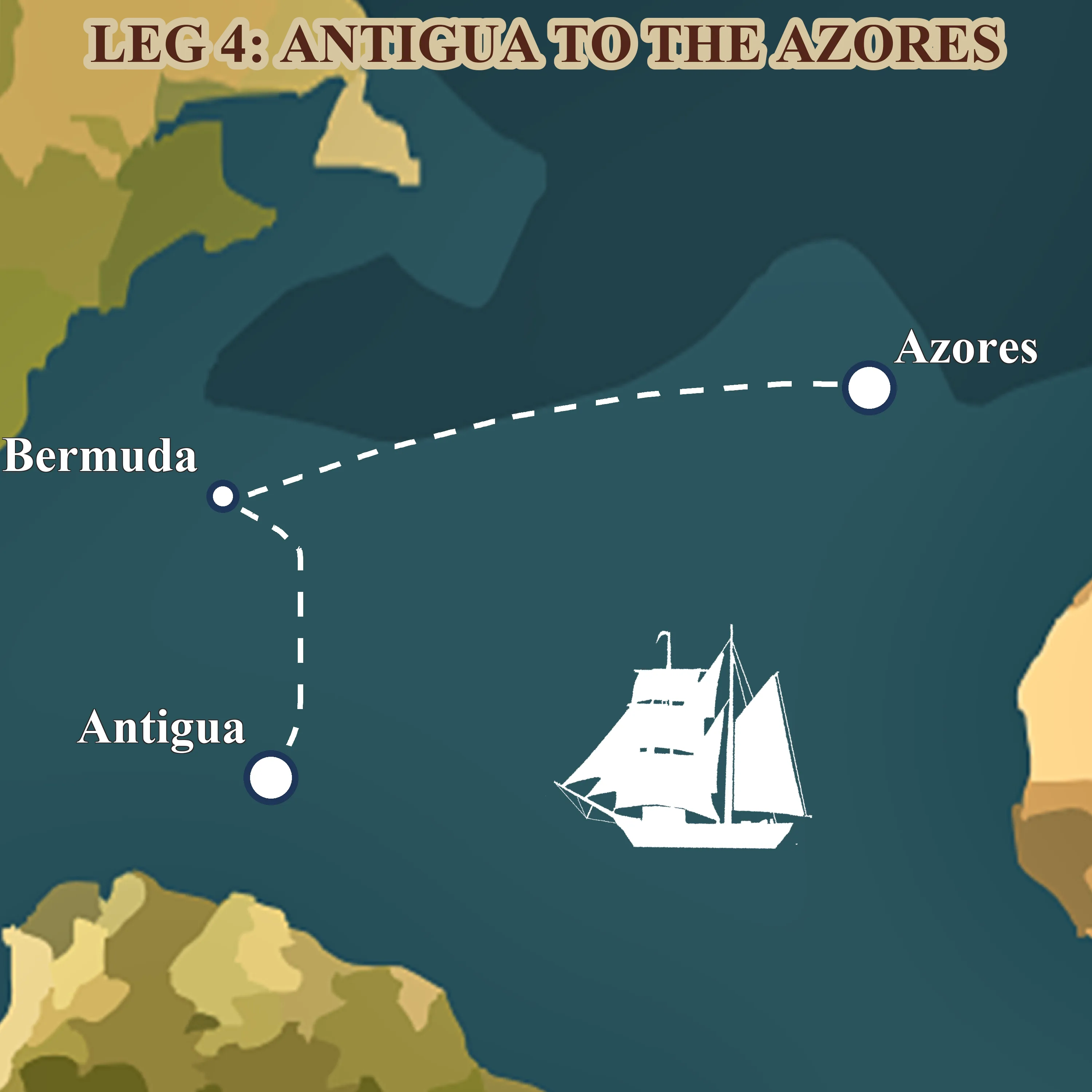
Leg 8: across the North Atlantic from Antigua to the Azores
May 2027 — Jul 2027 · Antigua → Ponta Delgada, Azores
Fifty-six days on the classic spring tall-ship route home, Antigua, a long reach to Bermuda's pink sand, then three weeks of open ocean to the volcanic Azores.
Read more about this leg → about Leg 8: across the North Atlantic from Antigua to the AzoresThe Square Sail Today
While modern ships are increasingly powered by engines, square sails continue to be used on traditional sailing vessels, such as tall ships and replica ships. These vessels provide a living link to the maritime heritage of the past and offer a unique and unforgettable sailing experience.
In addition to their historical significance, square sails also have a place in contemporary culture. They are often featured in literature, film, and art, and they continue to capture the imagination of people around the world.

The wind that crossed every ocean still works.
The Square Sail in Naval Warfare
Square sails played a significant role in naval warfare throughout history. During the age of sail, battles between opposing fleets often involved complex maneuvers and tactics designed to maximize the advantage of wind and sea conditions. Square-rigged ships were typically armed with cannons, which were used to bombard enemy vessels and force them to surrender.
The effectiveness of a square-rigged ship in combat depended on its ability to maneuver quickly and efficiently. A skilled captain could use the wind to gain the upper hand and deliver a devastating broadside attack. However, the complexity of handling square sails also made ships vulnerable to being outmaneuvered or boarded by enemy forces.
The Square Sail and Maritime Exploration
Square sails were essential for the Age of Exploration, enabling European powers to discover new lands and establish global trade routes. Large, multi-masted ships equipped with square sails, such as galleons and caravels, could carry vast quantities of cargo and sail long distances across the oceans. These vessels were capable of reaching remote parts of the world, leading to the discovery of new continents, islands, and trade routes.
The ability of square-rigged ships to navigate in open waters and withstand harsh weather conditions made them ideal for long-distance voyages. These vessels were often equipped with compasses, astrolabes, and other navigational instruments that allowed sailors to determine their location and course.
The same wind belts today, the trade-wind sailing routes the explorers used are exactly the routes NEPTUN follows in 2026 and 2027.
The Square Sail in Trade and Commerce
Square sails were also crucial for the development of global trade. Ships equipped with these sails were used to transport goods, such as spices, textiles, and precious metals, between different parts of the world. The ability of square-rigged ships to carry large quantities of cargo and sail long distances made them essential for the growth of international trade.
The development of trade routes and the exchange of goods between different cultures had a profound impact on the world. Square sails played a vital role in this process by providing the means for transportation and communication.
The Square Sail in Popular Culture
Square sails have captured the imagination of people around the world for centuries. They are often featured in literature, film, and art, and they continue to be a popular symbol of adventure, exploration, and the sea.
One of the most famous depictions of square sails in popular culture is in Robert Louis Stevenson's classic novel "Treasure Island." The pirate ship "Hispaniola," with its distinctive square-rigged masts, is a beloved image that has been adapted for countless films and television shows.
Square sails also appear in other works of fiction, such as Herman Melville's "Moby-Dick" and Jules Verne's "Twenty Thousand Leagues Under the Sea." These novels help to perpetuate the enduring appeal of square sails and their association with adventure and exploration.
In addition to literature and film, square sails are also featured in various forms of art, including painting, sculpture, and photography. The majestic beauty and power of square-rigged ships have inspired artists for centuries, and their images continue to be admired and appreciated today.
The Future of Square Sails
While modern ships are increasingly powered by engines, square sails continue to be used on traditional sailing vessels, such as tall ships and replica ships. These vessels provide a living link to the maritime heritage of the past and offer a unique and unforgettable sailing experience.
The use of square sails is also being explored for modern applications, such as renewable energy and sustainable transportation. Some researchers are investigating the possibility of using square sails to power ships or generate electricity. While these applications are still in the experimental stage, they demonstrate the enduring appeal and versatility of square sails.
See the square rig at sea, not in a museum
NEPTUN sails 482 days from Bali to Kiel in 2026-2027. Trainees join per leg, no experience needed.
FAQs
Common questions about square sails
What is a square sail?
A square sail is a four-sided sail set on a horizontal yard that crosses the mast at right angles to the keel. The sail hangs below the yard and is controlled by sheets at the lower corners and braces that swing the yard around the mast. It is the oldest known sail shape in continuous use.
How is a square rig different from a fore-and-aft rig?
A square rig is best on the wind from astern, running and broad reach. A fore-and-aft rig (sloop, schooner, ketch) is far better at sailing close to the wind. Tall ships like the brigantine combine both, square sails on the foremast for downwind power, fore-and-aft on the mainmast for upwind agility. See what is a brigantine for the full layout.
How many people does it take to handle a square sail?
A single course (the largest sail on a yard) typically takes four to six people aloft to furl or set, plus deck hands working sheets and braces. That is one reason a square-rigged tall ship carries a relatively large crew, and one reason sail training works so well as a teaching environment.
Can a square-rigged ship sail upwind?
Yes, but not as close to the wind as a modern Bermudan sloop. A well-trimmed square rig can sail roughly six points (about 67 degrees) off the wind. The fore-and-aft sails on a brigantine help close that gap on the mainmast.
Where on Earth do square sails work best?
In the trade-wind belts, steady easterly winds between roughly 5° and 30° latitude in both hemispheres. NEPTUN's 2026-2027 voyage rides those belts across the Indian Ocean, the South Atlantic, and the trade-wind return up the Atlantic. See trade-wind sailing routes.
Do you need experience to crew on a square-rigged ship?
No. Brigantine NEPTUN accepts trainees with no prior sailing experience, you learn the rig on the voyage itself, standing watches with mentors. The square rig is taught in the classroom of the open ocean.
Read also
- Parts of a tall ship, masts, yards, and rigging explained
- What is a brigantine? The two-mast hybrid rig
- Trade-wind sailing routes, where the square rig still rules
- How long does it take to sail around the world?
- How to join a tall ship crew without experience
- Voyages 2026, five legs, five oceans
- The full 2026-2027 voyage, all nine legs
- Apply now, join a leg as trainee crew
All nine legs of the world voyage
The 2026-2027 voyage spans 482 days, over 30,000 nautical miles, and four oceans, the square rig at work.
Leg 1: from Bali to Réunion across the Indian Ocean
May 2026 — Aug 2026 · Bali, Indonesia → Réunion, France
The opening chapter of Neptun's 482-day world voyage, a 4,078-nm trade-wind passage from the temples of Bali to the volcanic cliffs of Réunion.
Read more about this leg → about Leg 1: from Bali to Réunion across the Indian Ocean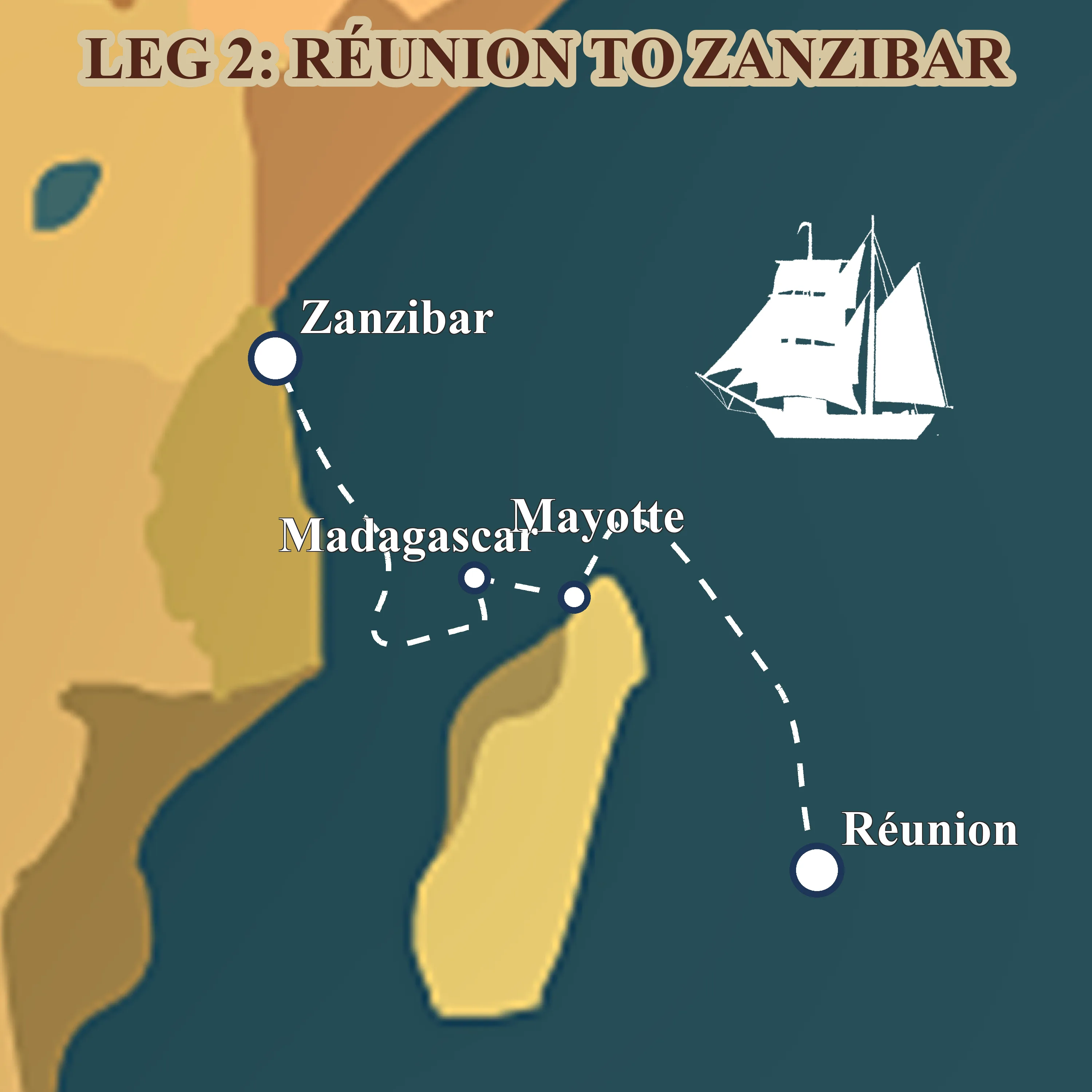
Leg 2: from Réunion to Zanzibar via Madagascar
Aug 2026 — Sept 2026 · Réunion, France → Zanzibar, Tanzania
Forty days across the western Indian Ocean, volcanic Réunion, lemur-haunted Nosy Be, the Mozambique Channel, and the spice-scented stone alleys of Zanzibar.
Read more about this leg → about Leg 2: from Réunion to Zanzibar via Madagascar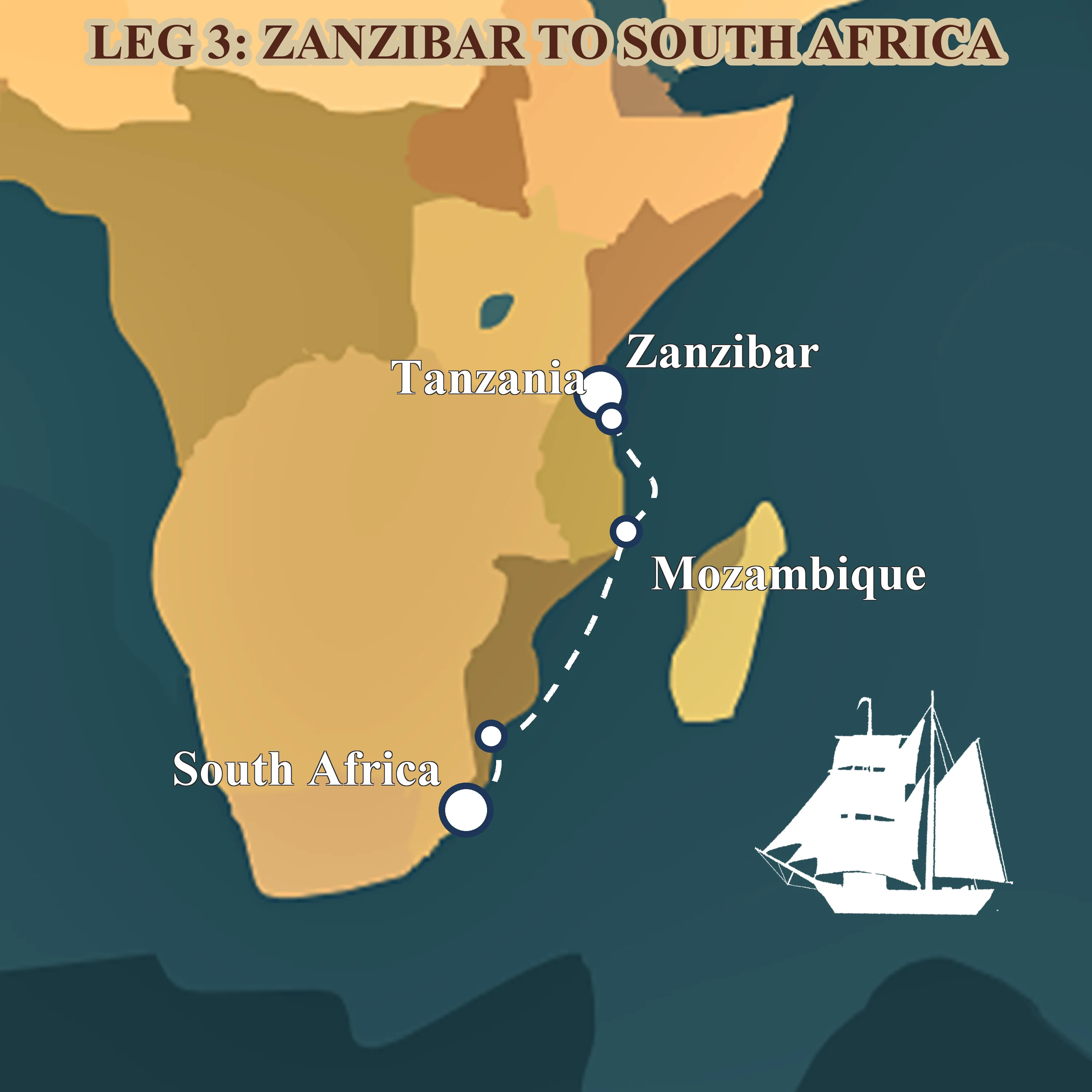
Leg 3: from Zanzibar to Durban down the Mozambique Channel
Sept 2026 — Nov 2026 · Zanzibar, Tanzania → Durban, South Africa
Sixty-three days coasting the African shore, spice islands, mangrove anchorages, Portuguese praças and the long trade-wind run down the Mozambique Channel to Durban.
Read more about this leg → about Leg 3: from Zanzibar to Durban down the Mozambique Channel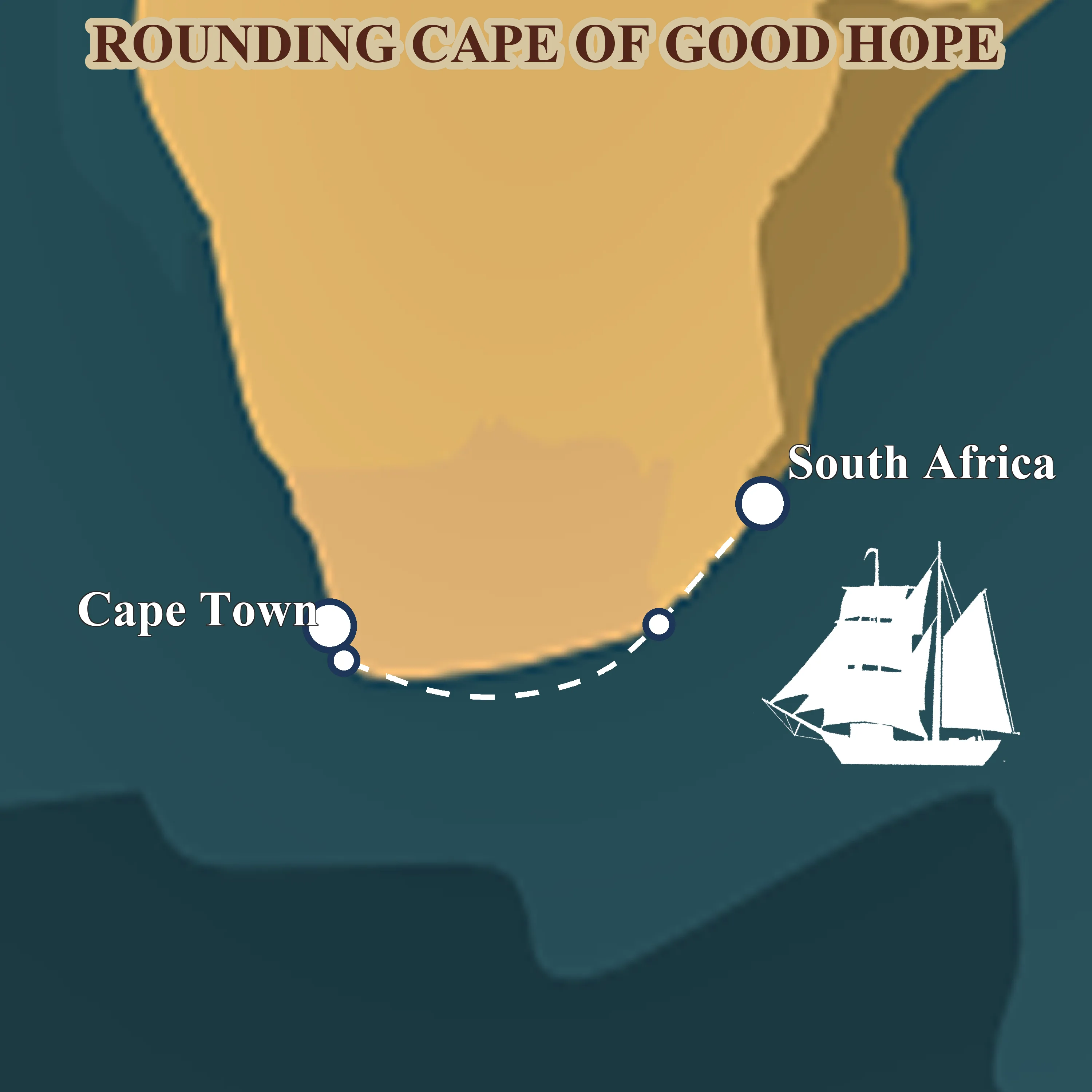
Leg 4: from Durban around the Cape of Good Hope
Nov 2026 — Dec 2026 · Durban, South Africa → Cape Town, South Africa
Thirty-eight days of serious seamanship, the Agulhas current, the Cape of Good Hope and the Southern Ocean at the tip of Africa, finishing quietly in Cape Town for Christmas.
Read more about this leg → about Leg 4: from Durban around the Cape of Good HopeLeg 5: across the South Atlantic from Saldanha to Fortaleza
Jan 2027 — Mar 2027 · Saldanha Bay, South Africa → Fortaleza, Brazil
Forty-four days before the southeast trades, Napoleon's exile at St. Helena, the equator crossing, and landfall in tropical Brazil. The ocean chapter of the voyage.
Read more about this leg → about Leg 5: across the South Atlantic from Saldanha to FortalezaLeg 6: from Fortaleza to Trinidad along South America
Mar 2027 — Apr 2027 · Fortaleza, Brazil → Trinidad
A thousand miles of downwind trade running, the Amazon's brown water under the hull, the Guianas smudged on the horizon, and Trinidad's steelpan waiting at the end.
Read more about this leg → about Leg 6: from Fortaleza to Trinidad along South America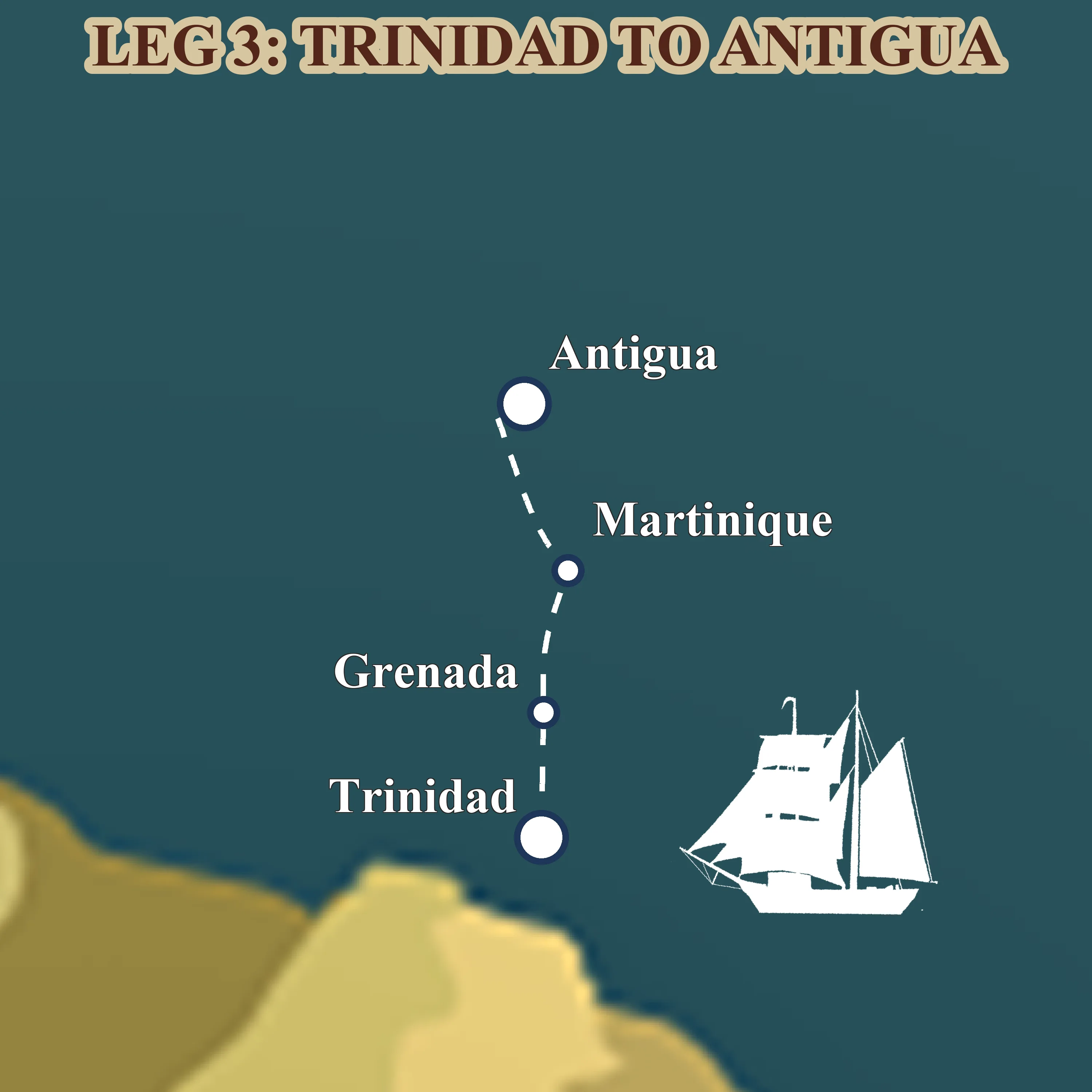
Leg 7: through the Windward Islands from Trinidad to Antigua
Apr 2027 — May 2027 · Trinidad → Antigua
Four weeks of short trade-wind daysails through the Lesser Antilles, turquoise anchorages, rum shops on the sand, French-Creole Martinique and the tall-ship scene in Antigua.
Read more about this leg → about Leg 7: through the Windward Islands from Trinidad to AntiguaLeg 8: across the North Atlantic from Antigua to the Azores
May 2027 — Jul 2027 · Antigua → Ponta Delgada, Azores
Fifty-six days on the classic spring tall-ship route home, Antigua, a long reach to Bermuda's pink sand, then three weeks of open ocean to the volcanic Azores.
Read more about this leg → about Leg 8: across the North Atlantic from Antigua to the Azores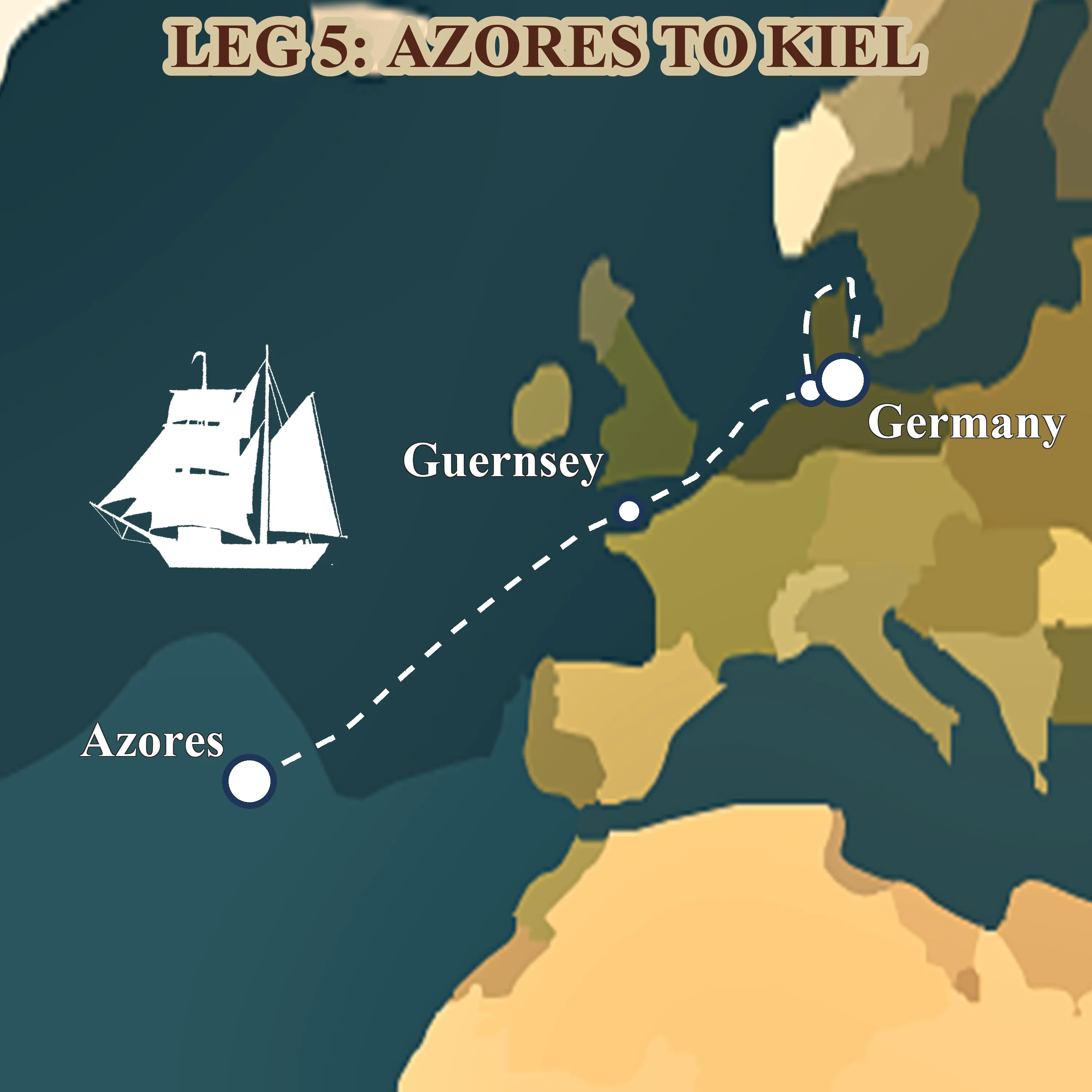
Leg 9: homecoming from the Azores to Kiel
Jul 2027 — Aug 2027 · Ponta Delgada, Azores → Kiel, Germany
The final 1,878 nm, from volcanic São Miguel to the Baltic, up the English Channel through the Dover TSS, past Helgoland's red cliffs and home to Kiel.
Read more about this leg → about Leg 9: homecoming from the Azores to KielWant to sail with us? Brigantine NEPTUN is a non-profit training ship, every voyage takes 10 crew members through real ocean sailing, no experience needed. Back to the knowledge base, or read sail with us for the crew overview, tall ship adventure for what a voyage actually feels like, parts of a tall ship for the vocabulary, what is a brigantine for the rig NEPTUN carries, and learn traditional seamanship for the curriculum. Or apply for a berth and join a leg.