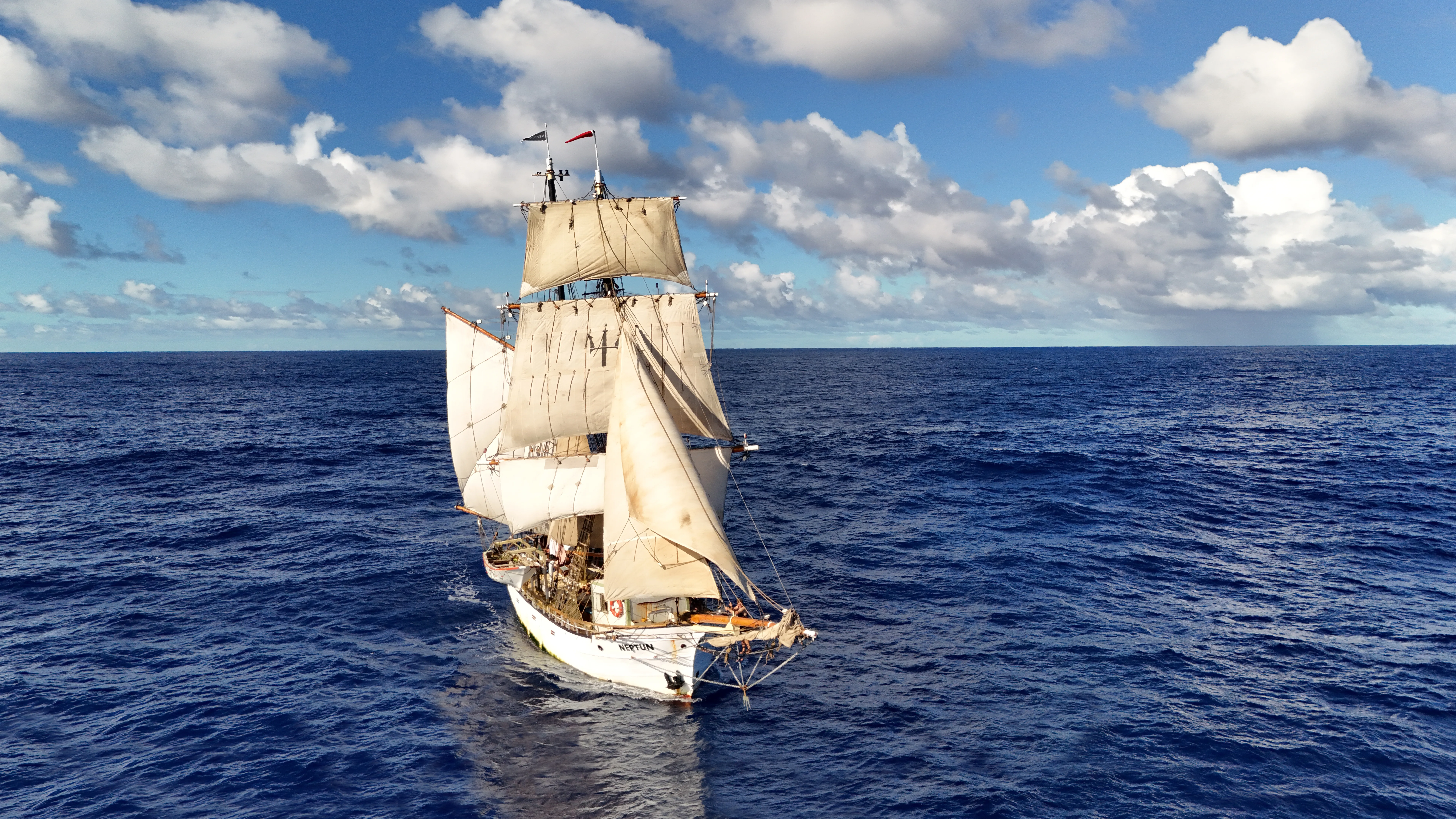
You learn traditional seamanship the same way it has been taught for four hundred years: on a working sailing ship, under people who already know it, by doing the job until it becomes second nature.
The rest of this article covers what the skills actually are, how a voyage teaches them, and what certification, if any, you can walk away with. If you already know this is the path you want, our sail training page covers how NEPTUN delivers it and sail with us covers how to join as a trainee.
Already decided you want to learn the old way? Apply for a berth on a 2026-2027 leg or browse the nine legs of the voyage first.
On this page
- What "traditional seamanship" means vs modern yachting
- The core skills
- How you actually learn it on a voyage
- Certifications available
- Is it worth learning today?
- FAQ
- Read also
What "traditional seamanship" means vs modern yachting
Traditional seamanship and modern yachting share an ocean, a compass, and a set of physical laws, but almost nothing else.
A modern yacht is a machine designed to reduce the crew's workload. Winches multiply the pull on every sheet. Roller furling lets you set or stow a headsail from the cockpit. Electric autopilots steer the course. Chart plotters overlay GPS, depth, radar, and AIS on one screen and tell you exactly where you are and when you will arrive. A well-equipped cruising boat can cross an ocean with two people who rarely leave the cockpit.
Traditional seamanship runs on the opposite logic. The work is done by the crew, not the equipment. To set a square sail you hoist the yard with a tail of people on a halyard, brace it to the wind, and sheet the canvas home. To furl it, you send crew aloft to gather the sail by hand. Course-keeping is done by eye and compass, in four-hour tricks at the wheel. Position is worked up from dead reckoning, course, distance, current, leeway, and confirmed by sextant when the sun or a star is available. Nothing is automatic and nothing is hidden. If a line fails, you can see which one.
Neither is better. A modern yacht will get a small crew across an ocean more comfortably. A tall ship will teach you what sailing actually is, and give you skills that transfer to any boat built in the last five hundred years. You are not steering a machine; you are working a ship.
It matters for a practical reason too: every surviving tall ship runs on traditional seamanship. If you want to crew on one of them, the learning starts with the skills in this article.
The classroom is the ship
No simulators, no shortcuts
Traditional seamanship is taught the way it has been taught since the eighteenth century, by working a real ship, under people who already know how. NEPTUN runs the watch-try-do progression on every leg of the 2026-2027 voyage.
The core skills
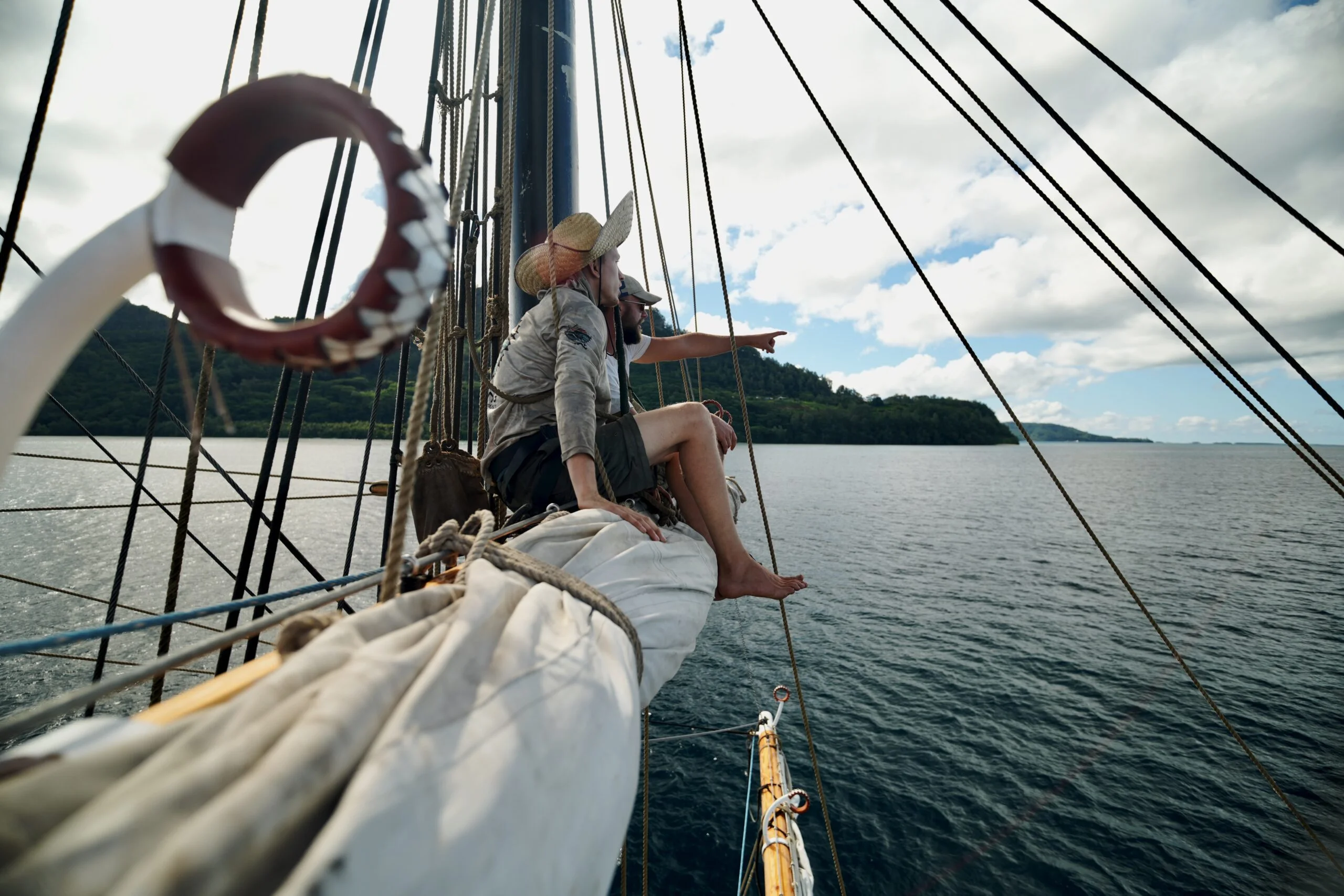
A trainee works across five skill areas. None require you to arrive as an expert. All will be drilled into you by the end of a voyage leg.
Knots and lines
Bowline, clove hitch, rolling hitch, round turn and two half hitches, figure-of-eight, reef knot, the six or seven knots the ship uses every day, tied without looking. Plus coiling every line you handle.
Square-sail handling
Setting, furling, reefing, bracing, the four operations that make a square-rigger move. Done on deck with teams on specific lines, coordinated by a mate calling the commands.
Celestial navigation
Sextant noon sights for latitude, morning and evening star sights when the officer has time, and the dead-reckoning plot that ties them together. The fallback when electronics fail, and the lens that makes a chartplotter make sense.
Weather reading
Barometer, wind shift, cloud type, swell direction, the inputs a master read for centuries before satellite forecasts. You learn to feel a front coming before the GRIB file says so.
Watchkeeping
Four hours on, eight hours off, rotated through the day. Lookout, helm, log and deck, the three jobs of the watch, and the rhythm that keeps a ship sailed twenty-four hours a day without burning out the crew.
Ship handling
Anchoring, mooring, tender work, what happens when the ship interacts with something other than open water. Every port visit drills it; over a leg you get plenty of practice.
Knots and lines
Ropework is the foundation. A working sailing ship carries miles of cordage, and every sail, spar, and fitting is held in place by line. You will not learn every knot in Ashley's, but you will learn the six or seven the ship uses every day and you will tie them without looking.
First is the bowline, the loop knot that does not slip and does not jam. You use it to attach a sheet to a sail and to make a temporary eye on any line. Second is the clove hitch, for belaying a line to a rail or spar when you need it to hold but not permanently. Third is the rolling hitch, which grips under load and is what you reach for when a sheet jams and you need to take the weight off it. Beyond those you will use a round turn and two half hitches, a figure-of-eight stopper, and a reef knot constantly.
Then there is coiling. Coiling a line properly, laying it down so it will run free when called away, looks trivial until you watch an untrained crew foul a halyard in the dark and lose a sail because of it. You coil every line you handle. It becomes automatic.
Square-sail handling
Square sails are the characteristic work of a tall ship, and the reason you came. The skills break into four operations. Setting is hoisting the yard and sheeting the sail home. Furling is gathering it up onto the yard and securing it with gaskets. Reefing is reducing the sail area to match rising wind, by tying in a reef band or striking the upper sail entirely. Bracing is rotating the yards so the sails take the wind from a new direction, which you do every time the ship changes tack or the wind shifts.
All four happen on deck with teams on specific lines, coordinated by a mate calling the commands. For how the canvas itself works, the clews, buntlines, reef points, see square sails explained.
Traditional navigation
A tall ship carries electronic aids, but traditional methods are still taught, as the fallback when electronics fail, and because they sharpen judgment in a way a chartplotter cannot. You will learn the magnetic compass, including correcting for deviation and variation. You will run dead reckoning, plotting position from course steered and distance run, updated hourly on the chart. You will keep a deck log with the same columns the Royal Navy used two hundred years ago: time, course, speed, wind, barometer, weather.
If the voyage is long enough and the officer willing, you will also get a basic celestial introduction: a sextant noon sight for latitude, and if time allows, a morning or evening star sight. Celestial is not mastered in a week, but even a few sights teach you more about what your position really means than a GPS ever will. For how the sextant work itself fits into a voyage, see celestial navigation on a tall ship.
Watchkeeping
A tall ship is sailed twenty-four hours a day, and the way to do that without burning out the crew is the watch system, four hours on deck, eight hours off, rotated through the day so no watch team always has the worst hours. On NEPTUN, trainees are split into two or three watches across a twenty-four-hour cycle.
Watch duty has three jobs. Lookout, eyes forward, reporting any vessel, light, land, or object sighted. Helm, steering the compass course, harder in a seaway than it looks. Log and deck, hourly log entries, trimming sails as the wind shifts, responding to the officer's orders. You rotate through all three during a watch, and over a voyage you get competent at each. The full breakdown of how the rotation actually works is in watch systems on a tall ship.
Ship handling
Ship handling is what happens when the ship interacts with something other than open water. Anchoring, choosing a spot, letting go with the right amount of chain, riding to it safely, weighing without fouling. Mooring, coming alongside a dock under sail or with the engine, managing lines ashore, fendering the hull. Tender work, rowing or motoring the ship's boat between the tall ship and shore, a skill in its own right. Every port visit involves them, so you get plenty of practice.
Five skill areas, one voyage leg
Where the skills get drilled
Three ocean-crossing legs that build seamanship fastest
Long offshore passages give you the watch hours, sail handling, and celestial sights that shorter coastal legs cannot.
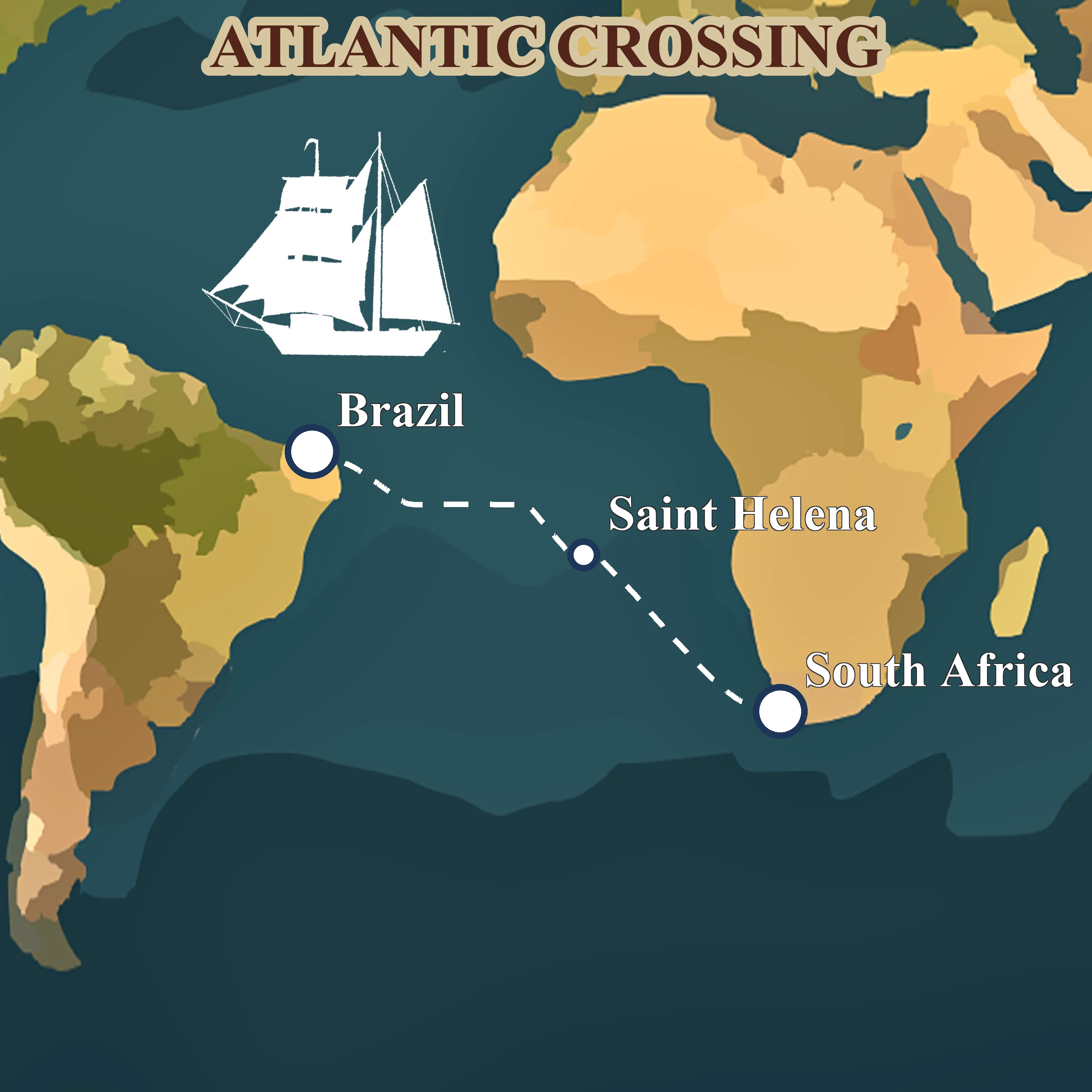
Leg 5: across the South Atlantic from Saldanha to Fortaleza
Jan 2027 — Mar 2027 · Saldanha Bay, South Africa → Fortaleza, Brazil
Forty-four days before the southeast trades, Napoleon's exile at St. Helena, the equator crossing, and landfall in tropical Brazil. The ocean chapter of the voyage.
Read more about this leg → about Leg 5: across the South Atlantic from Saldanha to Fortaleza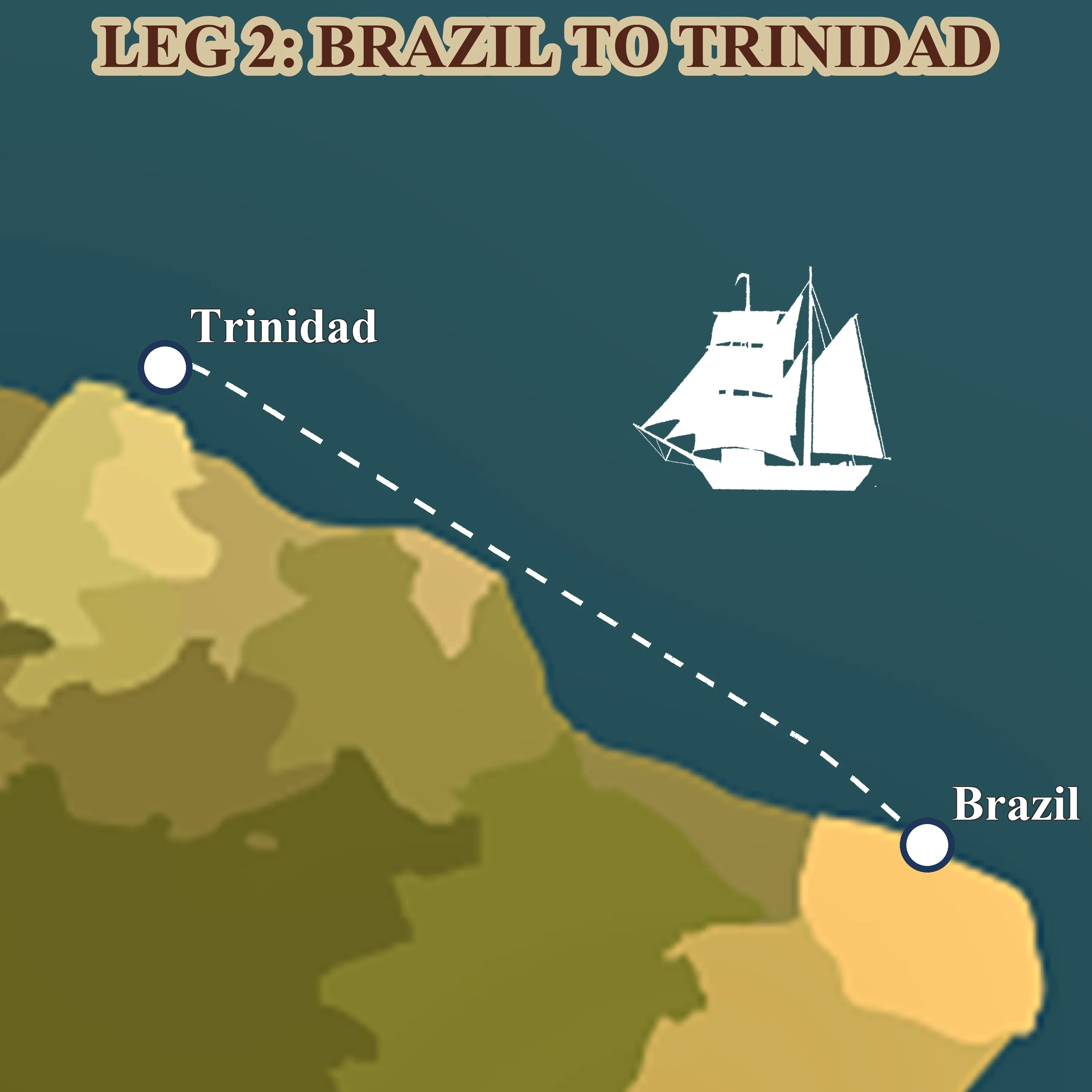
Leg 6: from Fortaleza to Trinidad along South America
Mar 2027 — Apr 2027 · Fortaleza, Brazil → Trinidad
A thousand miles of downwind trade running, the Amazon's brown water under the hull, the Guianas smudged on the horizon, and Trinidad's steelpan waiting at the end.
Read more about this leg → about Leg 6: from Fortaleza to Trinidad along South America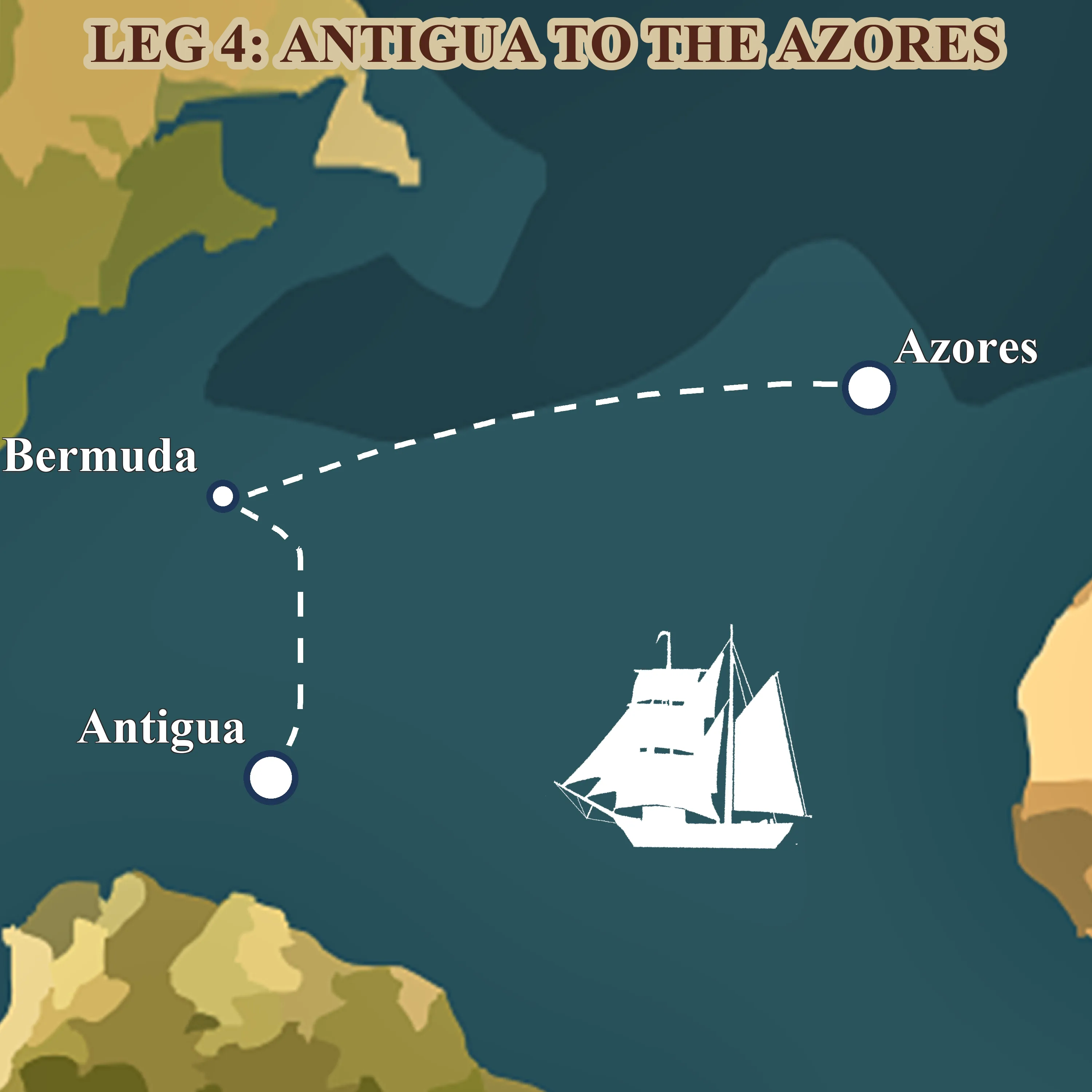
Leg 8: across the North Atlantic from Antigua to the Azores
May 2027 — Jul 2027 · Antigua → Ponta Delgada, Azores
Fifty-six days on the classic spring tall-ship route home, Antigua, a long reach to Bermuda's pink sand, then three weeks of open ocean to the volcanic Azores.
Read more about this leg → about Leg 8: across the North Atlantic from Antigua to the AzoresHow you actually learn it on a voyage
The learning progression has not changed in centuries: watch, try, do.
You arrive knowing nothing. For the first day or two you watch. The permanent crew handles every operation while you stand back far enough to see how the mate calls the commands, where each crew member goes, which lines run where. You ask questions. You learn the name of every rope you can see.
Then you try, under supervision. On the second or third day you are standing on a line in a sail-handling team, with someone more experienced telling you when to pull, when to hold, when to ease. After a few more days you are on the helm with the officer watching your course. After a week you are going aloft to help furl a sail with a bosun alongside.
Then you do it. By the middle of a three-week leg, you are running operations with the crew rather than being shown them. By the end, you are teaching the next newcomer what you learned in week one.
This is what a classroom cannot give you: real weather, real distance, real consequences. A shore course teaches you to tie a bowline. A voyage teaches you to tie a bowline on a pitching deck at 0300 in the rain while a watchmate is waiting for the other end. The skills are the same; the knowing is different. That is why every serious sail training programme puts trainees on actual ocean passages, not weekend harbour sails.
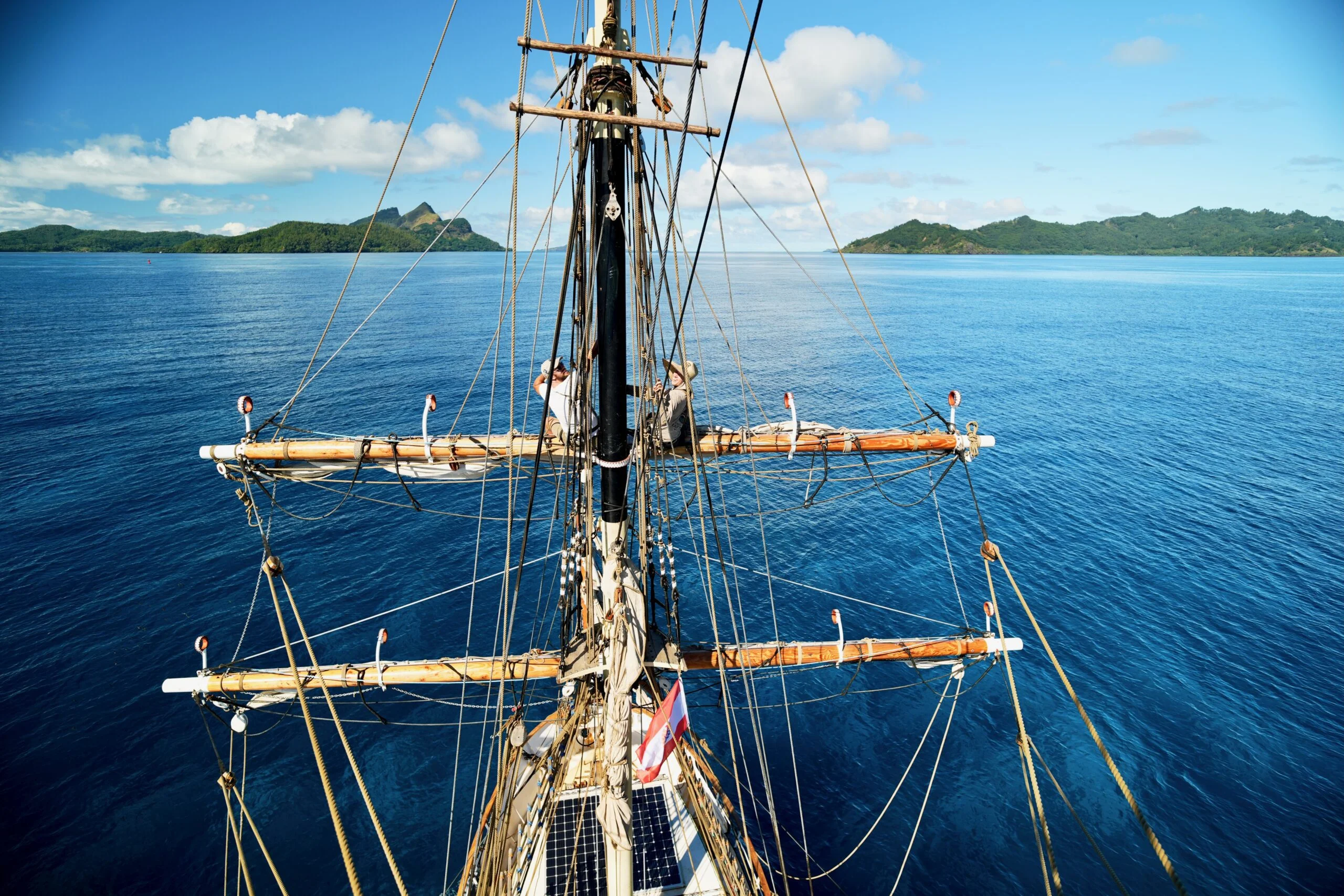
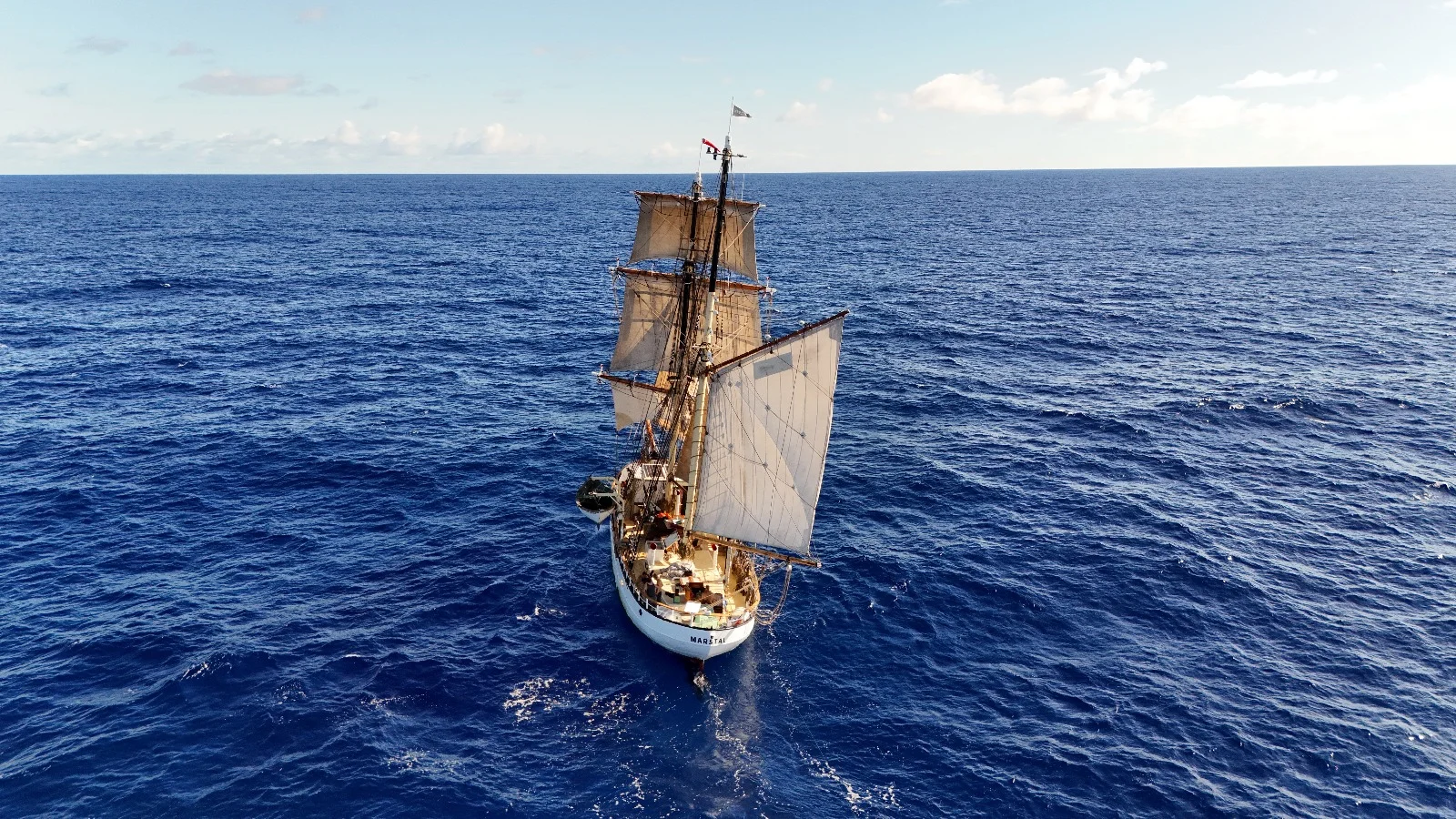

Three weeks at sea will teach you more than three years of weekend sailing.
Start the watch-try-do cycle on a 2026 leg
No experience required, you arrive knowing nothing, you leave with logged sea miles and a voyage testimonial.
Certifications available
Honest answer: NEPTUN is not a certifying school and you will not leave with a licence. What you do leave with is logged sea miles and a voyage testimonial, both of which count toward the qualifications that matter.
Your logged miles from a NEPTUN voyage count toward the mileage requirements for the Royal Yachting Association Yachtmaster (Coastal, Offshore, or Ocean) certification and the American Sailing Association equivalents, provided they are signed off by the captain. The Ocean ticket requires a qualifying passage of at least six hundred miles non-stop, and full ocean legs on NEPTUN qualify. You still take the separate shoreside course and exam to get the certificate, the miles are one of several prerequisites.
You will also get informal exposure to the content of STCW Basic Safety Training, firefighting, personal survival, basic first aid, social responsibility. STCW is the international baseline for working seafarers and a prerequisite for any paid berth on a commercial vessel. Your exposure on NEPTUN is not certified; if you want the actual ticket, you take a five-day STCW course ashore. NEPTUN gives you the context so the shore course makes sense when you sit it.
NEPTUN teaches seamanship. The certification pathway starts here but finishes somewhere else.
Is it worth learning today?
Yes, for three reasons.
First, for the craft itself. Traditional seamanship is one of the oldest continuously practised skills in human history. Learning it puts you in a line that runs back through every ocean that has been sailed.
Second, for the context it gives you on any modern boat. Once you have set a square sail in a seaway, a modern mainsail feels simple. Once you have stood a four-hour trick at the wheel, holding a chartplotter course on a cruising yacht is trivial. Traditional seamanship makes every other form of sailing easier because you already understand the physics underneath it.
Third, because the tradition only survives if people keep learning it. There are perhaps a few dozen tall ships actively sailing in the world, all dependent on a pipeline of trainees becoming crew, becoming officers, becoming captains. If you learn it, you become part of the reason it will still be here in fifty years.
Become part of why the tradition survives
Every trainee on NEPTUN is one more link in the chain that keeps square-rig sailing alive into the next generation.
FAQs
Common questions about learning traditional seamanship
Do I need any prior sailing experience?
No. Trainees on NEPTUN arrive with no prior experience routinely. The watch-try-do progression is built for it, you watch the operation on day one, you stand on a line under supervision by day three, and you are running operations with the crew by the middle of a three-week leg.
What is the fastest way to learn traditional seamanship?
A continuous offshore voyage. Three weeks at sea on a working sailing ship will teach you more than three years of weekend coastal sailing, because you stand watches twenty-four hours a day and every operation gets repeated until it is automatic. See sail training for how NEPTUN structures it.
Will I leave with a sailing certificate?
Not from NEPTUN directly, we are not a certifying school. You leave with logged sea miles and a voyage testimonial, both of which count toward the RYA Yachtmaster mileage requirement and equivalents. The actual ticket is issued after a separate shoreside course and exam.
How is this different from a shore-based sailing school?
A shore school teaches you to tie a bowline. A voyage teaches you to tie a bowline on a pitching deck at 0300 in the rain while a watchmate is waiting for the other end. The skills are the same; the knowing is different. Real weather, real distance, real consequences are what a classroom cannot give you.
Will I learn celestial navigation?
On any leg long enough, yes, at least a sextant noon sight for latitude, and on longer ocean legs morning and evening star sights when the officer has time. It is taught as the fallback when electronics fail and as the lens that makes a chartplotter make sense. Full detail in celestial navigation on a tall ship.
Will I have to climb the rigging?
You can, and most trainees do, but it is not compulsory. Going aloft to help furl a sail is one of the operations you grow into during the leg, with a bosun alongside the first time. Plenty of seamanship work happens on deck if heights are not for you.
Read also
- Celestial navigation on a tall ship, the sextant work in detail
- Watch systems on a tall ship, how the four-on, eight-off rotation actually works
- Parts of a tall ship, the vocabulary, with diagrams
- Square sails explained, the canvas in detail
- What is a brigantine, the rig you will be working on
- Sail training, how NEPTUN's programme delivers the skills
- Apply now, join a leg as trainee crew
All nine legs of the world voyage
The 2026-2027 voyage spans 482 days, over 30,000 nautical miles, and four oceans, every leg drills the same five skills.
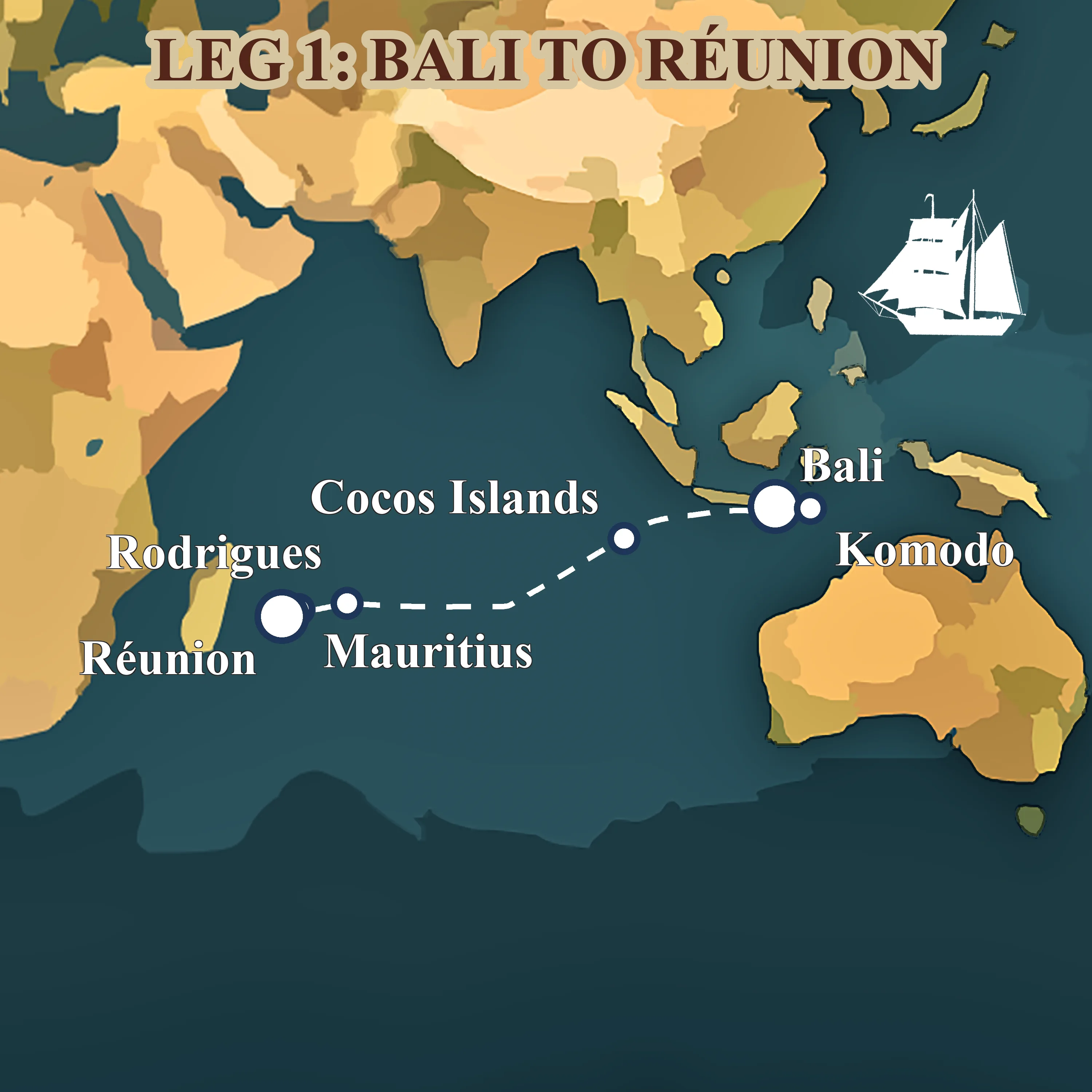
Leg 1: from Bali to Réunion across the Indian Ocean
May 2026 — Aug 2026 · Bali, Indonesia → Réunion, France
The opening chapter of Neptun's 482-day world voyage, a 4,078-nm trade-wind passage from the temples of Bali to the volcanic cliffs of Réunion.
Read more about this leg → about Leg 1: from Bali to Réunion across the Indian Ocean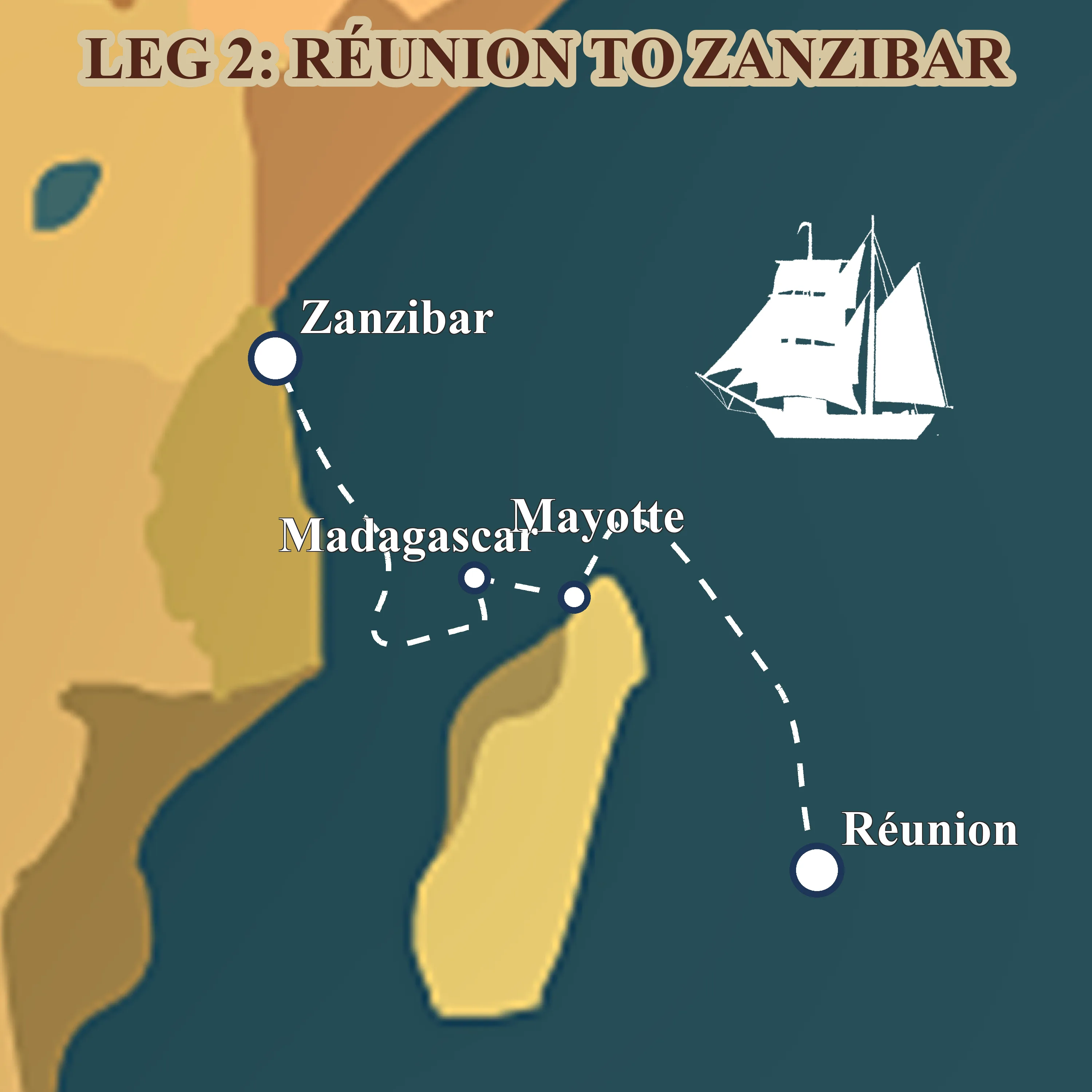
Leg 2: from Réunion to Zanzibar via Madagascar
Aug 2026 — Sept 2026 · Réunion, France → Zanzibar, Tanzania
Forty days across the western Indian Ocean, volcanic Réunion, lemur-haunted Nosy Be, the Mozambique Channel, and the spice-scented stone alleys of Zanzibar.
Read more about this leg → about Leg 2: from Réunion to Zanzibar via Madagascar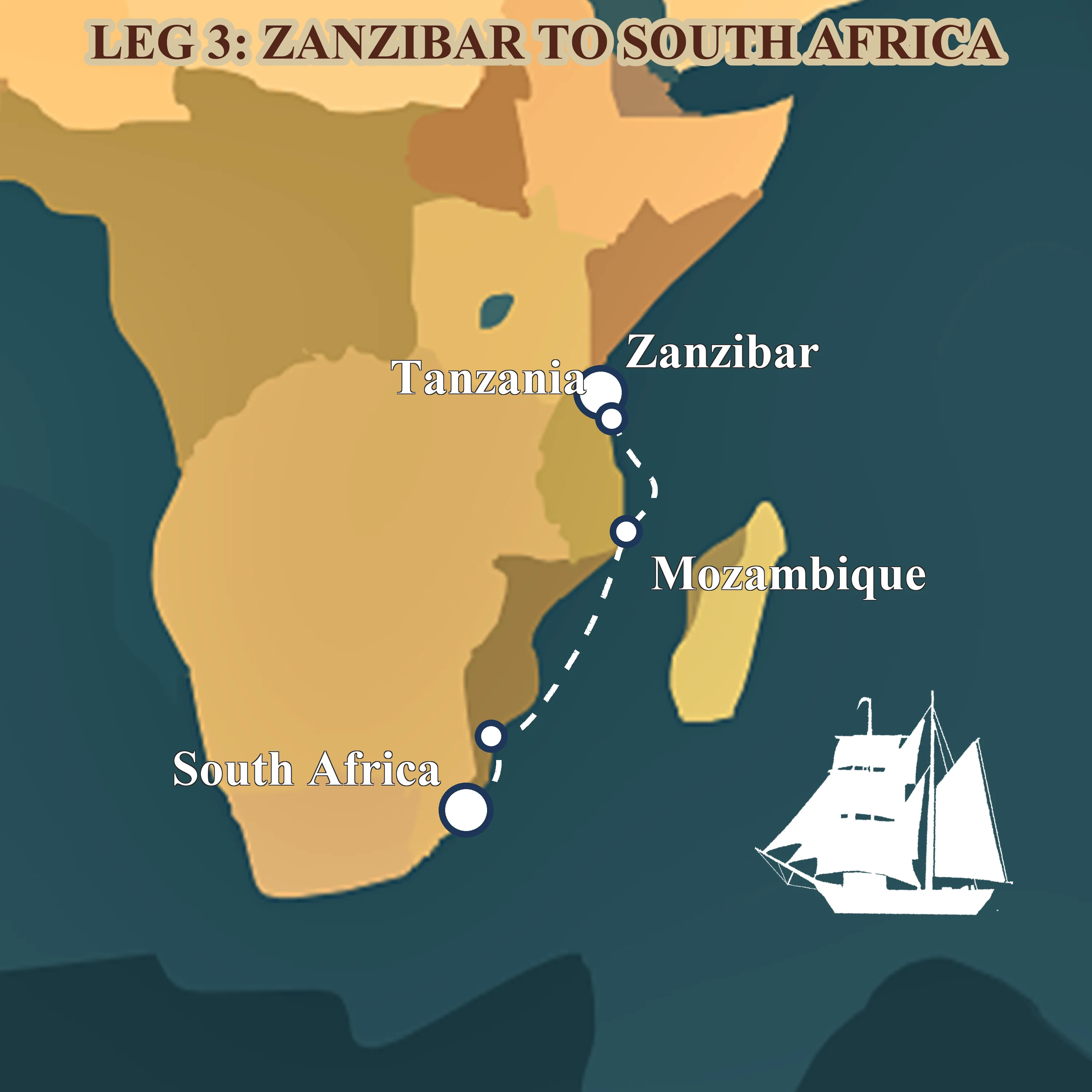
Leg 3: from Zanzibar to Durban down the Mozambique Channel
Sept 2026 — Nov 2026 · Zanzibar, Tanzania → Durban, South Africa
Sixty-three days coasting the African shore, spice islands, mangrove anchorages, Portuguese praças and the long trade-wind run down the Mozambique Channel to Durban.
Read more about this leg → about Leg 3: from Zanzibar to Durban down the Mozambique Channel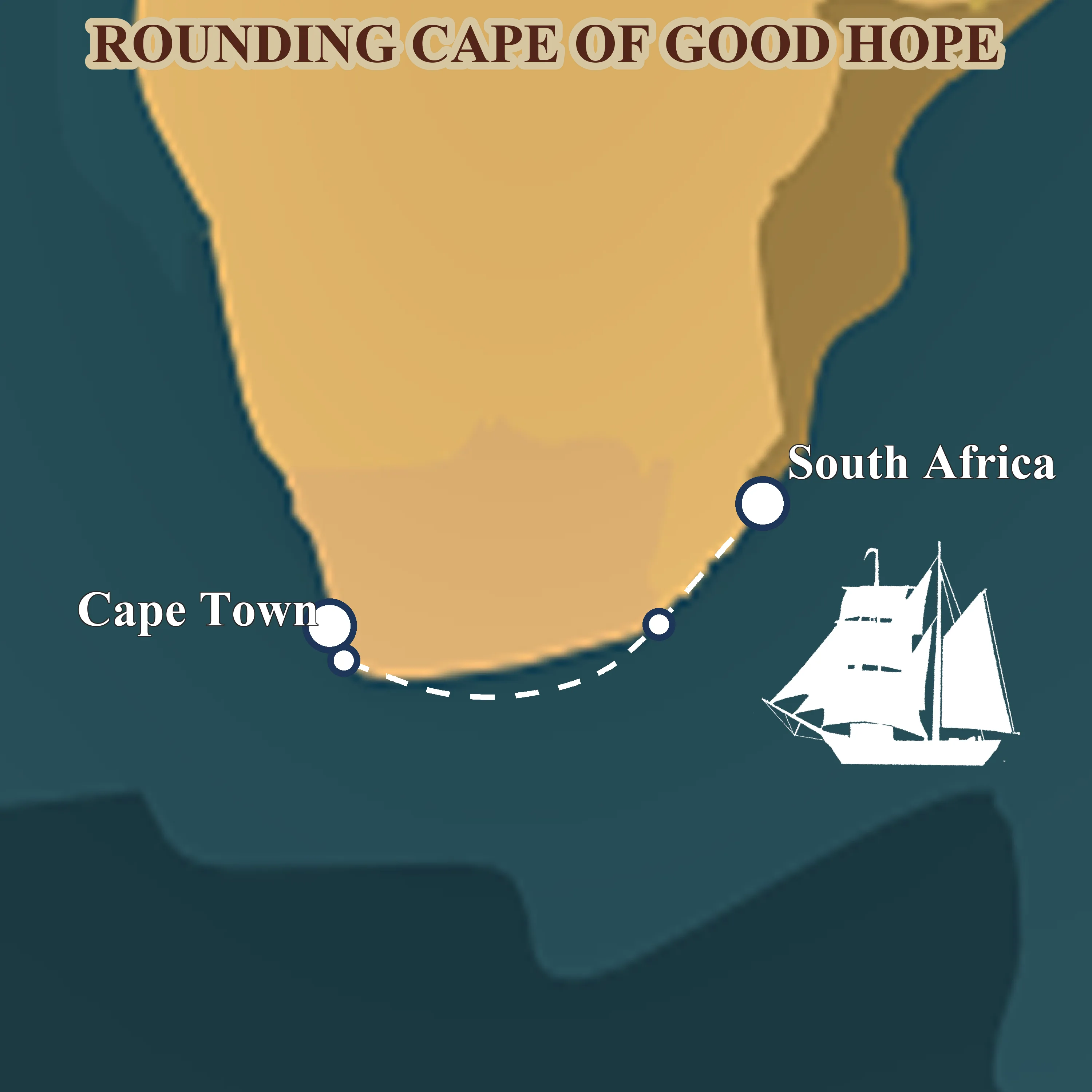
Leg 4: from Durban around the Cape of Good Hope
Nov 2026 — Dec 2026 · Durban, South Africa → Cape Town, South Africa
Thirty-eight days of serious seamanship, the Agulhas current, the Cape of Good Hope and the Southern Ocean at the tip of Africa, finishing quietly in Cape Town for Christmas.
Read more about this leg → about Leg 4: from Durban around the Cape of Good HopeLeg 5: across the South Atlantic from Saldanha to Fortaleza
Jan 2027 — Mar 2027 · Saldanha Bay, South Africa → Fortaleza, Brazil
Forty-four days before the southeast trades, Napoleon's exile at St. Helena, the equator crossing, and landfall in tropical Brazil. The ocean chapter of the voyage.
Read more about this leg → about Leg 5: across the South Atlantic from Saldanha to FortalezaLeg 6: from Fortaleza to Trinidad along South America
Mar 2027 — Apr 2027 · Fortaleza, Brazil → Trinidad
A thousand miles of downwind trade running, the Amazon's brown water under the hull, the Guianas smudged on the horizon, and Trinidad's steelpan waiting at the end.
Read more about this leg → about Leg 6: from Fortaleza to Trinidad along South America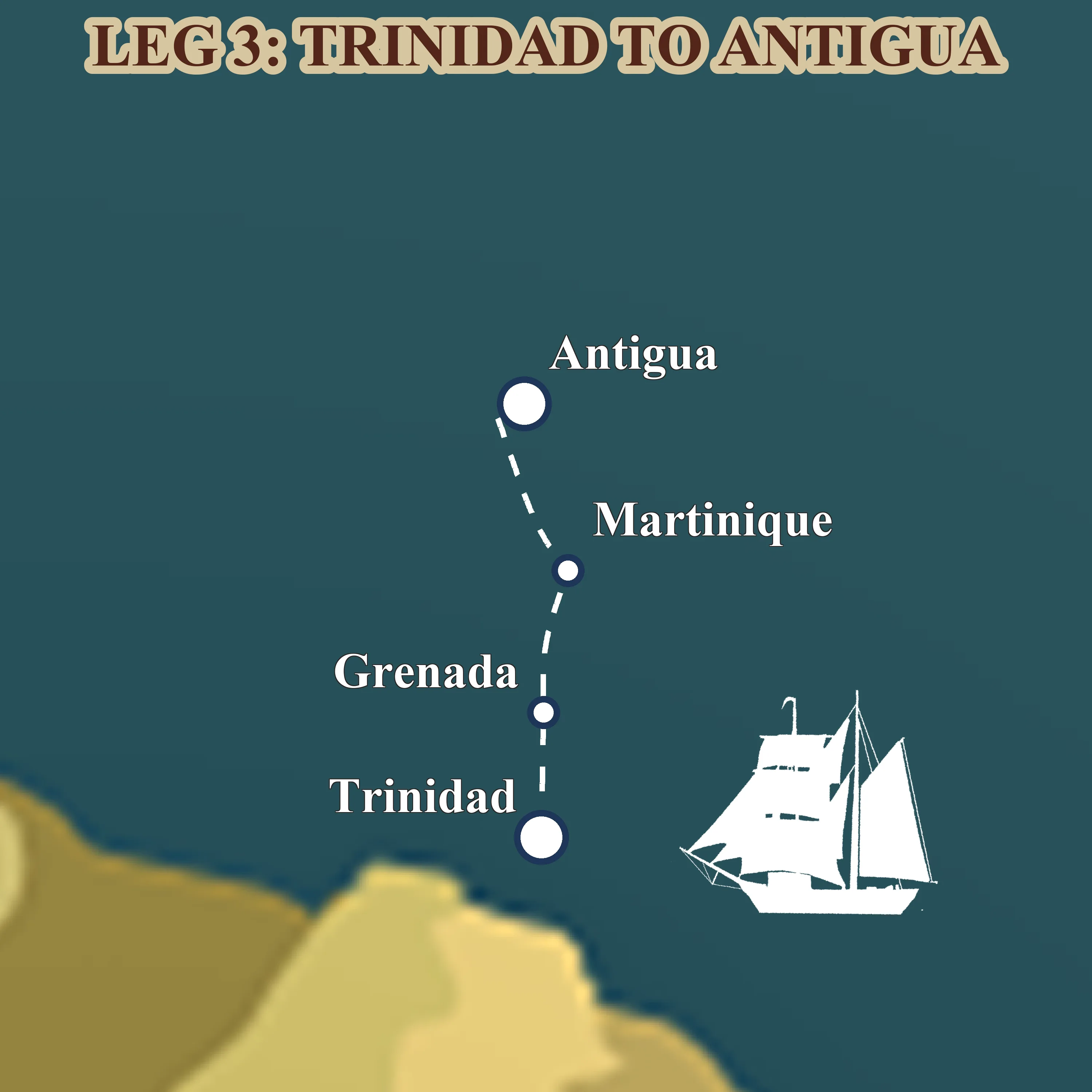
Leg 7: through the Windward Islands from Trinidad to Antigua
Apr 2027 — May 2027 · Trinidad → Antigua
Four weeks of short trade-wind daysails through the Lesser Antilles, turquoise anchorages, rum shops on the sand, French-Creole Martinique and the tall-ship scene in Antigua.
Read more about this leg → about Leg 7: through the Windward Islands from Trinidad to AntiguaLeg 8: across the North Atlantic from Antigua to the Azores
May 2027 — Jul 2027 · Antigua → Ponta Delgada, Azores
Fifty-six days on the classic spring tall-ship route home, Antigua, a long reach to Bermuda's pink sand, then three weeks of open ocean to the volcanic Azores.
Read more about this leg → about Leg 8: across the North Atlantic from Antigua to the Azores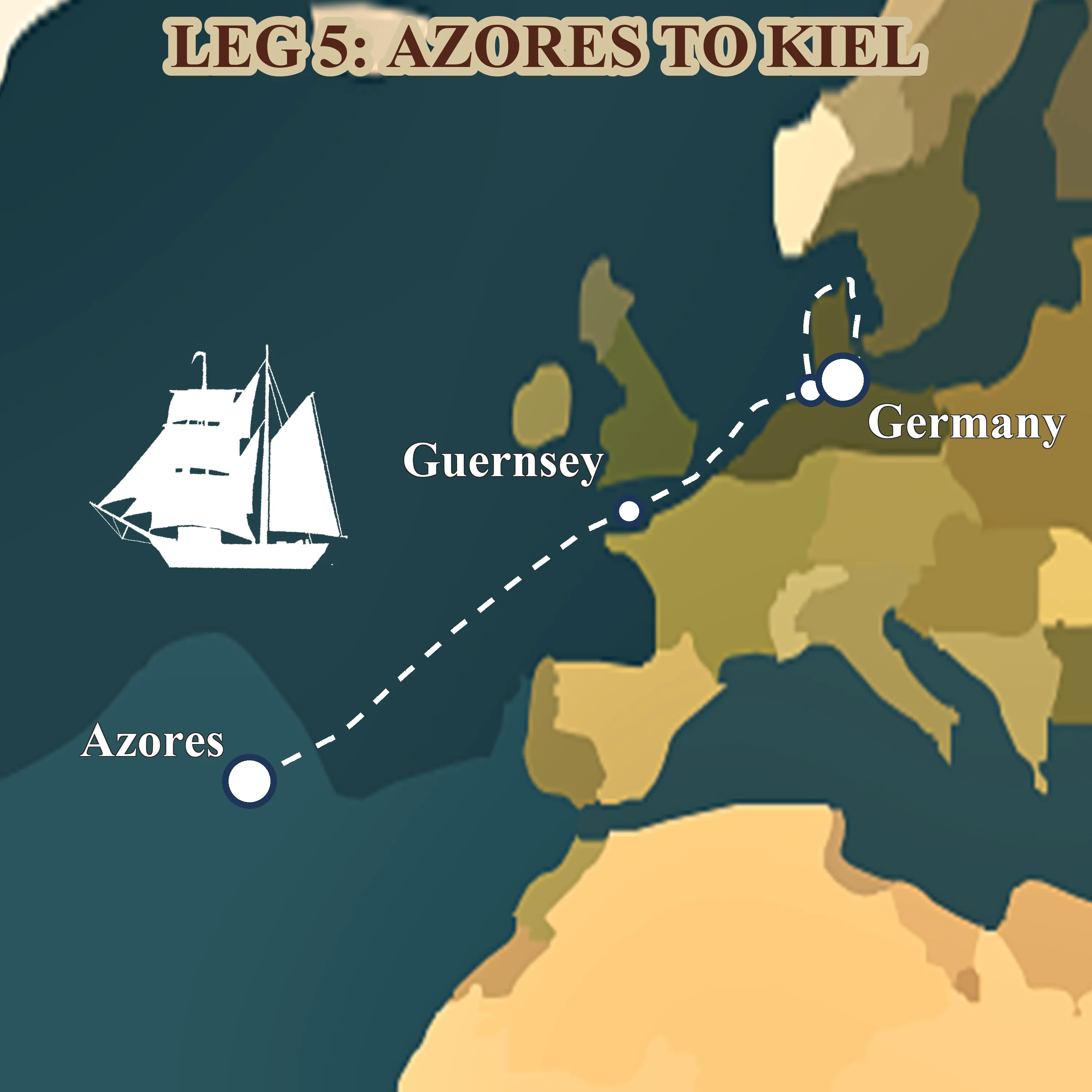
Leg 9: homecoming from the Azores to Kiel
Jul 2027 — Aug 2027 · Ponta Delgada, Azores → Kiel, Germany
The final 1,878 nm, from volcanic São Miguel to the Baltic, up the English Channel through the Dover TSS, past Helgoland's red cliffs and home to Kiel.
Read more about this leg → about Leg 9: homecoming from the Azores to KielWant to sail with us? Back to the knowledge base for more reference articles, or read on. Brigantine NEPTUN is a non-profit training ship, every voyage takes 10 crew members through real ocean sailing, no experience needed. Apply for a berth or read about the voyages first.