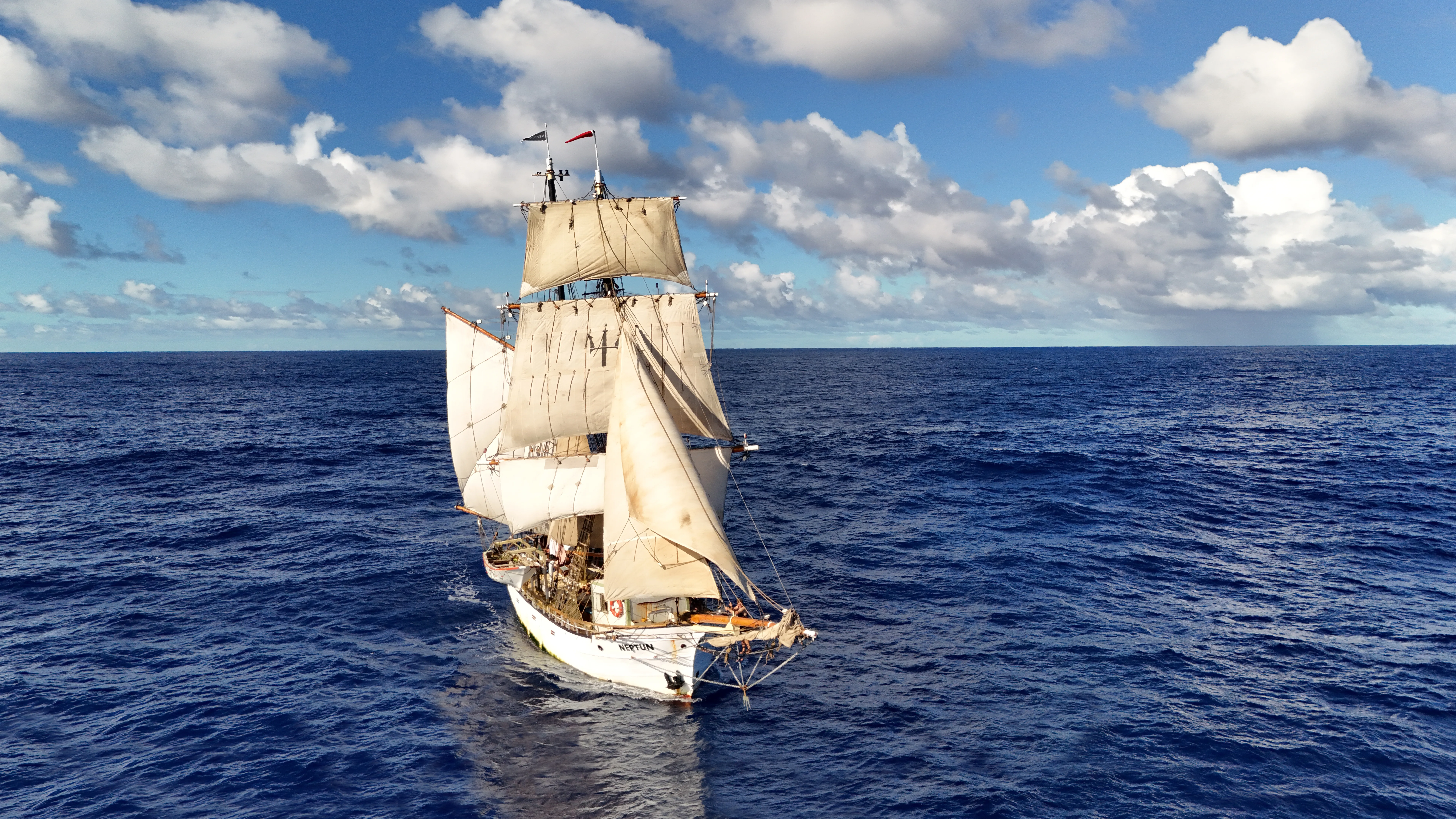
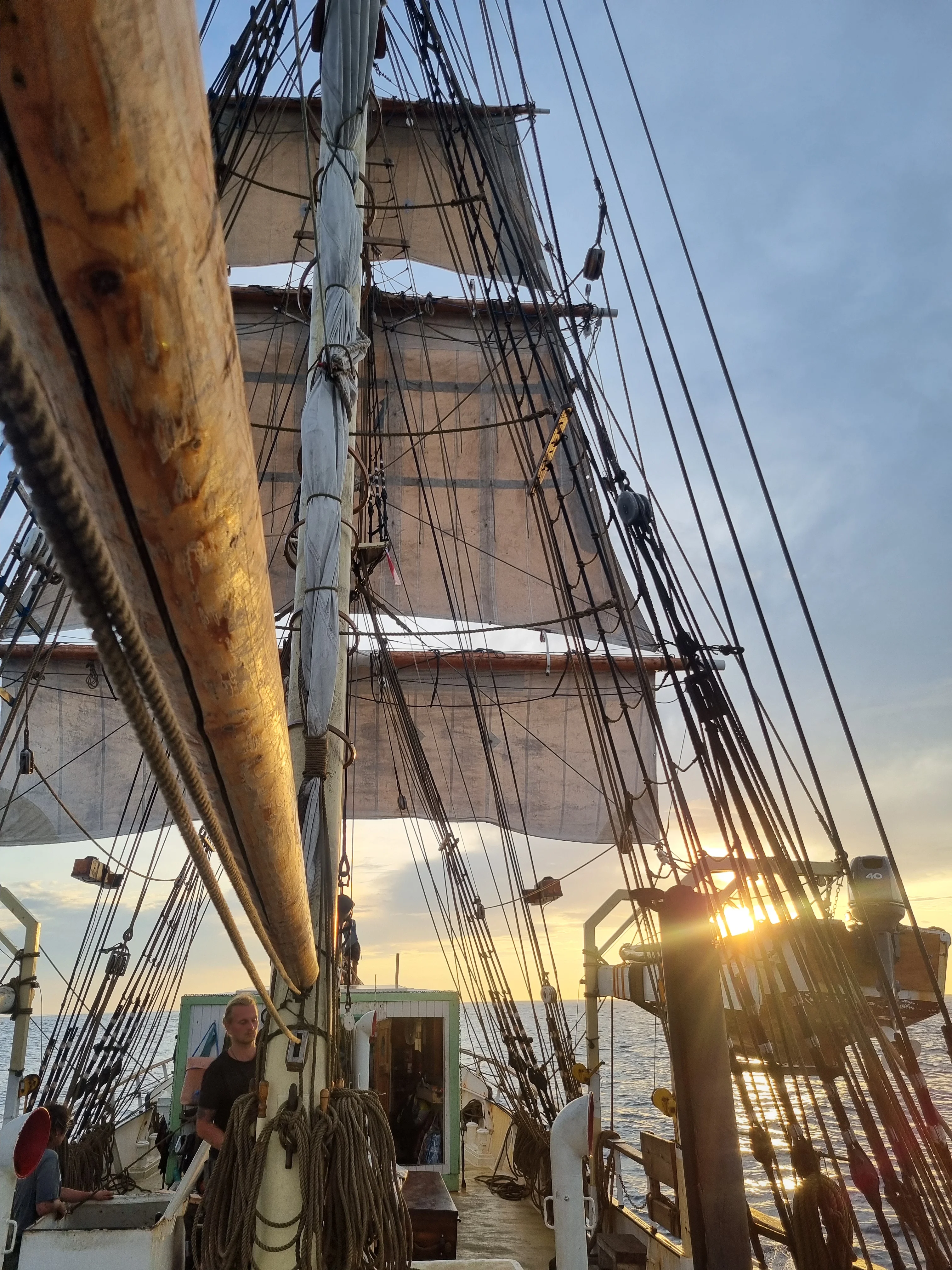
This article is a plain-English tour of the main parts of a tall ship, from keel to royal yard, so the rest of our knowledge base and our voyage pages read clearly no matter how much sailing vocabulary you bring.
A tall ship has hundreds of named bits. Most fall into a small number of regions: the hull beneath your feet, the masts and spars above you, the rigging that holds it all up, the sails, the gear on deck, and the spaces below. Walk the ship with that map in your head and the terminology settles down fast.
Want to learn the names by hauling on the lines? Apply for a berth on a 2026-2027 leg or browse the nine legs of the voyage first.
On this page
- Hull and structure
- The eight regions at a glance
- Masts and spars
- Rigging
- Sails
- NEPTUN by the numbers
- Deck features and gear
- Below decks
- Three angles on the same ship
- Where to see this for yourself
- FAQ
- Read also
Hull and structure
The hull is the body of the ship, the part that keeps the water out and everyone aboard. On a traditional wooden or steel tall ship it is a single hollow shell built up over an internal skeleton.
Keel
Keel. The long backbone running down the centreline from bow to stern. Everything else is built off it. The keel gives the ship its longitudinal strength and, together with the hull shape, keeps her tracking straight rather than sliding sideways under sail.
Stem
Stem. The upright timber or plate at the very bow, where the two sides of the hull meet at the front. Its outer edge is the leading curve of the bow, and it takes the first slam from every wave the ship meets.
Stern
Stern. The back end of the ship. On a traditional hull it often curves outward and upward, carrying the name board. The shape of the stern has a large effect on how the ship sits when running downwind in a big sea.
Bulwark
Bulwark. The raised wall of the hull that rises above the deck along each side, waist-high or so. It keeps waves and crew on the correct sides of the ship. The top of the bulwark is the rail.
Deck
Deck. The near-horizontal platform you walk on. A tall ship usually has one main deck running most of the length, broken by raised sections at bow and stern, the forecastle and the quarterdeck, and by hatches down to the spaces below.
Hatch
Hatch. A large opening in the deck, closable with a hatch cover. Hatches are how cargo, stores, and crew move between the deck and the spaces below. In rough weather they are closed and secured.
Hold
Hold. The main below-deck space for cargo and stores. On a modern sail training vessel the hold is usually broken up into accommodation, galley, workshop, and tank spaces rather than bulk cargo.
The eight regions at a glance
If the glossary above is the long-form tour, this is the map. Every named part on a tall ship belongs to one of these eight regions, point at any line, spar, or fitting and it lives under one of these icons.
Hull
Keel, stem, stern, bulwark, the body of the ship that keeps the sea out.
Masts
Foremast and mainmast, the vertical poles carrying the sails.
Yards
Horizontal spars across the foremast that hold the square sails out.
Bowsprit
The spar projecting forward from the bow, anchoring the forestays.
Rigging
Standing and running ropework, the lines that hold the masts up and move the sails.
Sails
Square sails, jibs, gaff mainsail, the canvas that converts wind into miles.
Rudder
The hinged blade beneath the stern that turns the ship.
Helm
The wheel on deck that the helmsman turns to move the rudder.
Masts and spars
A tall ship is tall because of her rig. The masts are the vertical poles that carry the sails. The spars are the horizontal and angled poles that hold the sails out into the wind. If the hull is the chassis, the masts and spars are the engine bay.
Foremast
Foremast. The forward mast, closest to the bow. On a brigantine like NEPTUN the foremast is square-rigged, meaning its sails are hung horizontally across the ship on yards. The foremast is the working mast: most of the pulling power downwind comes from it.
Mainmast
Mainmast. The aft mast on a two-masted ship, or the middle mast on three-masted rigs. On a brigantine the mainmast is fore-and-aft rigged, its sail runs along the line of the ship rather than across it, which is what lets the ship point up into the wind.
Mizzenmast
Mizzenmast. The aft mast on a three-masted rig. A brigantine has only two masts, so NEPTUN has no mizzen, but the term is everywhere on a barque, a ship-rigged vessel, or most full-size historic tall ships.
Yard
Yard. The horizontal spar fixed across a mast that carries a square sail. The outer ends of a yard are the yardarms. A brigantine's foremast stacks several yards one above the other, course yard at the bottom, topsail yard above, topgallant yard above that, and sometimes a royal yard at the top.
Bowsprit
Bowsprit. The spar projecting forward from the bow, tilted slightly upward. It carries the jibs and gives the forestays something to anchor to, which is how the masts get their forward support.
Boom
Boom. The horizontal spar along the foot of a fore-and-aft sail. On a brigantine's mainmast, the boom runs aft from the mast and holds the bottom edge of the mainsail out. It swings side to side when the ship tacks or gybes.
Gaff
Gaff. The angled spar along the top edge of a gaff-rigged fore-and-aft sail. The gaff is hoisted up the mast on its own halyards and gives the sail a four-sided shape rather than the triangle of a modern sloop, it is why a brigantine's mainsail looks the shape it does.
Want to climb the foremast yourself? Sail with us, no prior sailing experience is required to join NEPTUN as trainee crew.
Rigging
Rigging is all the ropework that holds the masts up and moves the sails around. It splits into two halves: the standing rigging, which is fixed in place and holds the rig up, and the running rigging, which is the working lines the crew pulls on to set, trim, and take in sail. Our companion article goes deeper into how you actually handle the running rigging at sea.
Shroud
Shroud. A standing rigging line, wire or rope, running from each side of the ship up to the mast, supporting it sideways. Shrouds come in pairs and are what a crew climbs when going aloft, using the horizontal ratlines lashed across them as steps.
Stay
Stay. A standing rigging line supporting a mast fore-and-aft. The forestay runs from the top of the mast forward to the bowsprit or bow; the backstay runs aft to the deck. Between them, forestay and backstay stop the mast from pitching forward and back.
Halyard
Halyard. A running line used to hoist a sail or a yard. Every sail on the ship has at least one halyard. Hauling on the halyards is one of the first jobs a new trainee learns, it is hard physical work and it is how sails go up.
Sheet
Sheet. A running line attached to the bottom corner of a sail, used to pull the sail in or let it out. Sheets control sail trim, the angle of the sail to the wind. "Easing the sheet" means letting the sail out; "hauling the sheet" means pulling it in.
Brace
Brace. A running line attached to the end of a yard, used to rotate the yard around the mast. Braces let the crew swing the square sails to catch the wind from different directions without changing course. Tacking a square-rigger is, in large part, a long coordinated pull on the braces.
Sails
Sails are the whole point. A tall ship typically carries a mix of sail types so she can work in different winds and different conditions. For a deeper dive on the traditional square sail in particular, see square sails explained.
Square sail
Square sail. A four-sided sail hung horizontally from a yard, pulling best when the wind is behind or on the quarter. Square sails are the classic tall ship look, horizontal canvas stacked up a mast in tiers.
Fore-and-aft sail
Fore-and-aft sail. A sail set along the line of the ship rather than across it, usually triangular or four-sided with a gaff. Fore-and-aft sails let the ship sail closer to the wind than square sails can manage.
Jib
Jib. A triangular fore-and-aft sail set forward of the foremast, on stays running from the bowsprit. A ship usually carries several jibs of different sizes; which ones are up depends on the weather.
Gaff sail
Gaff sail. A four-sided fore-and-aft sail with its top edge held out by a gaff. The gaff mainsail is the main working sail on a brigantine's mainmast.
Topsail
Topsail. A square sail set above the course (the lowest square sail) on the foremast. On a brigantine you will usually hear "upper topsail" and "lower topsail", the topsail is often split into two separate sails for easier handling.
Royal
Royal. The highest square sail on the mast, above the topgallant. Royals are set in light, steady winds, they are the first to come in when the weather builds, and the last to go up again when it drops.
NEPTUN by the numbers
Once you can name the parts, the next question is always the same: how big? Here are the working dimensions of Brigantine NEPTUN, the ship every word in this glossary describes.
Brigantine NEPTUN, working dimensions
The ship herself
29 metres of working tall ship
NEPTUN is a steel-hulled brigantine, square-rigged on the foremast, gaff-rigged on the main. She carries 290 m² of canvas, climbs 24 m above the waterline, and runs more than two and a half kilometres of working rope. Trainee crew learn every line by hauling on it.
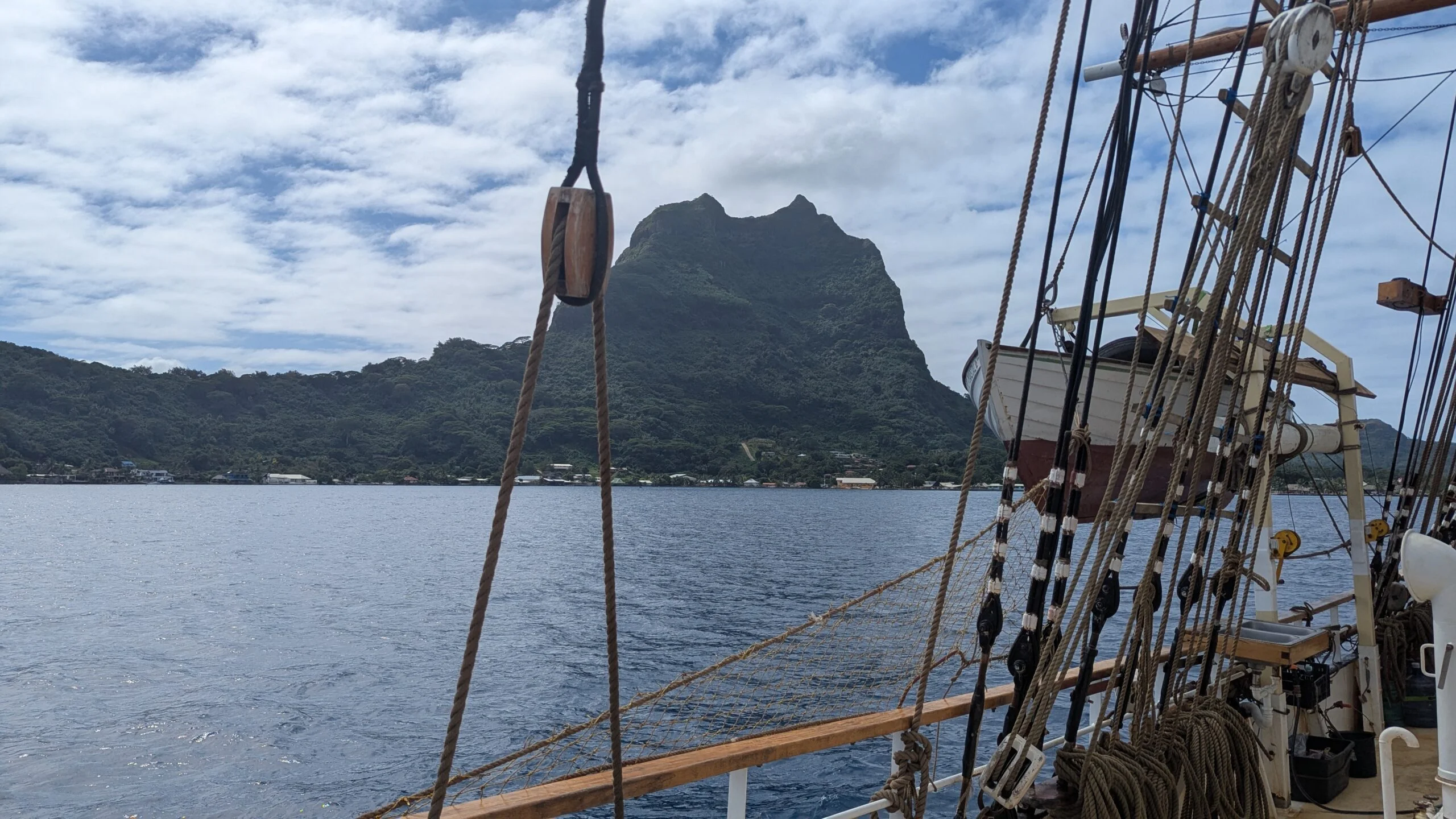
Where the rig gets its workout
The voyages where every part earns its name
Trade-wind runs, ocean crossings, and harbour manoeuvres, each leg uses a different combination of the parts you just read about.
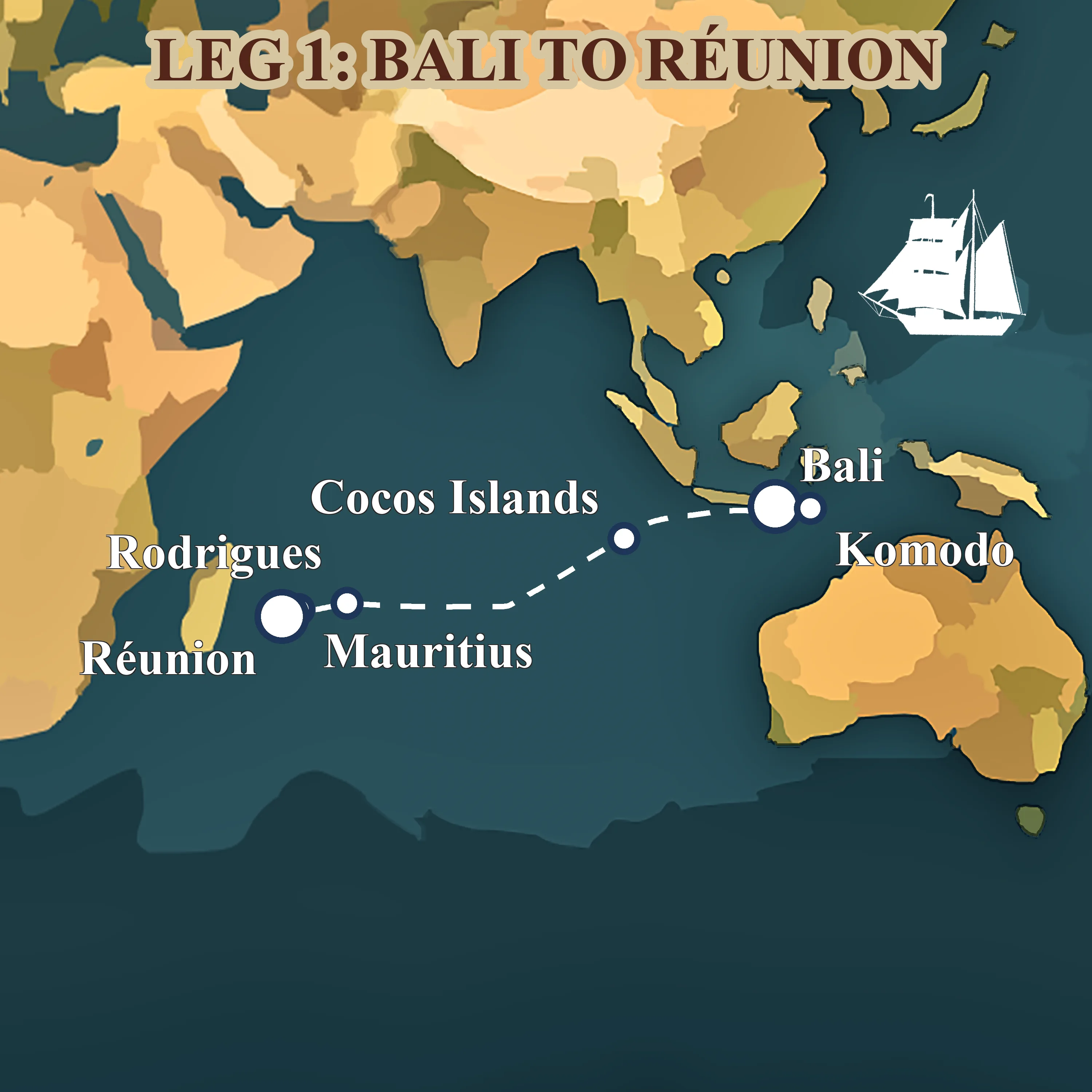
Leg 1: from Bali to Réunion across the Indian Ocean
May 2026 — Aug 2026 · Bali, Indonesia → Réunion, France
The opening chapter of Neptun's 482-day world voyage, a 4,078-nm trade-wind passage from the temples of Bali to the volcanic cliffs of Réunion.
Read more about this leg → about Leg 1: from Bali to Réunion across the Indian Ocean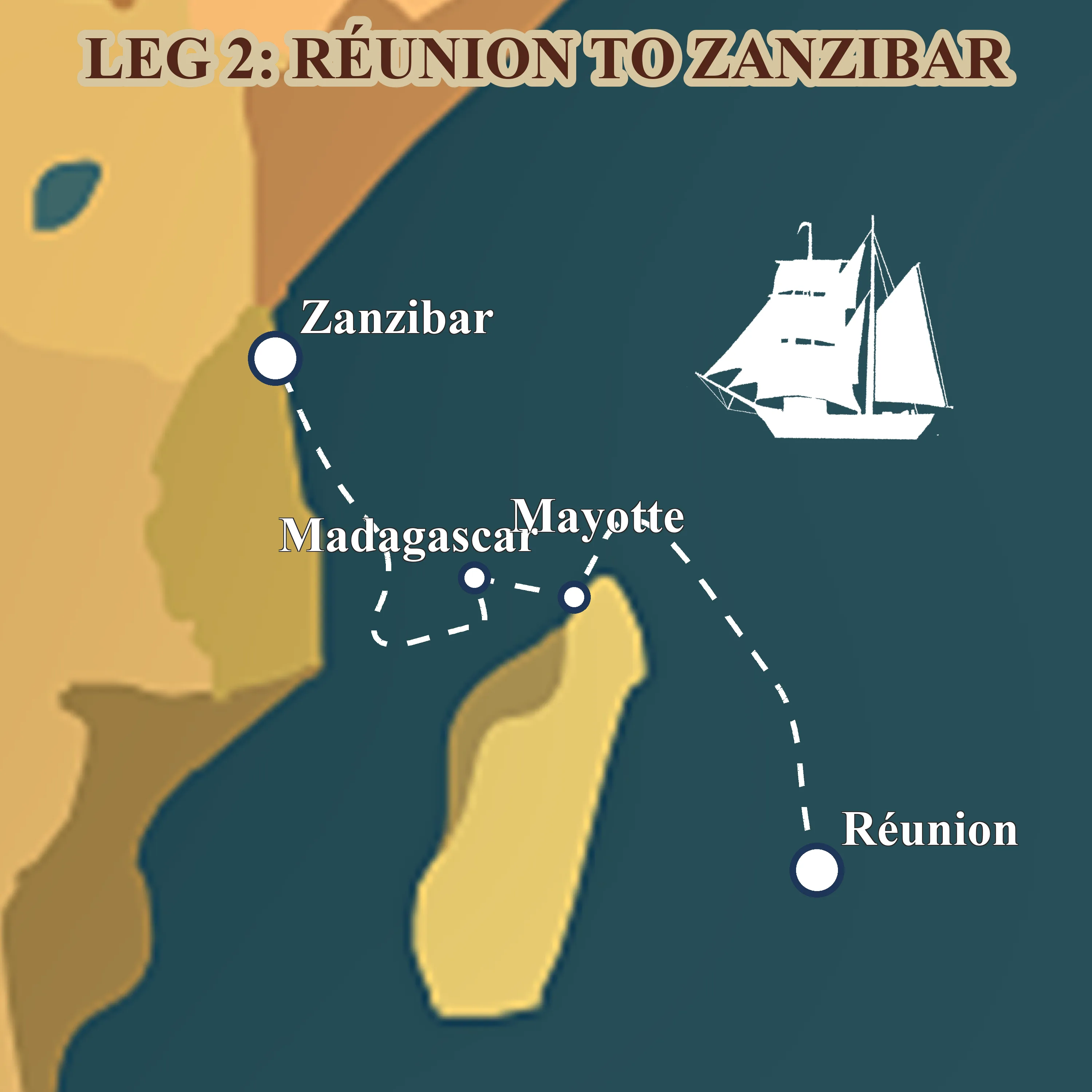
Leg 2: from Réunion to Zanzibar via Madagascar
Aug 2026 — Sept 2026 · Réunion, France → Zanzibar, Tanzania
Forty days across the western Indian Ocean, volcanic Réunion, lemur-haunted Nosy Be, the Mozambique Channel, and the spice-scented stone alleys of Zanzibar.
Read more about this leg → about Leg 2: from Réunion to Zanzibar via Madagascar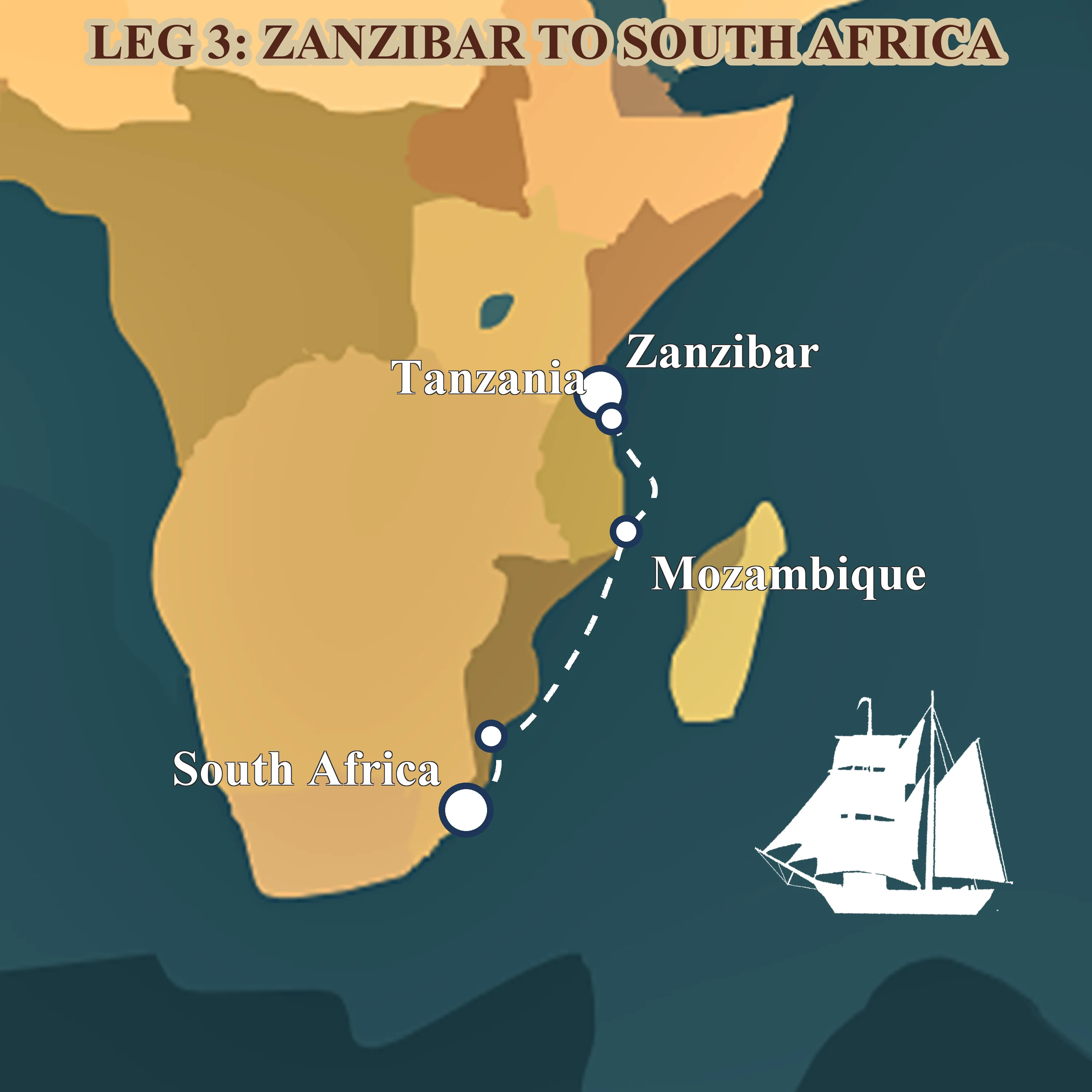
Leg 3: from Zanzibar to Durban down the Mozambique Channel
Sept 2026 — Nov 2026 · Zanzibar, Tanzania → Durban, South Africa
Sixty-three days coasting the African shore, spice islands, mangrove anchorages, Portuguese praças and the long trade-wind run down the Mozambique Channel to Durban.
Read more about this leg → about Leg 3: from Zanzibar to Durban down the Mozambique Channel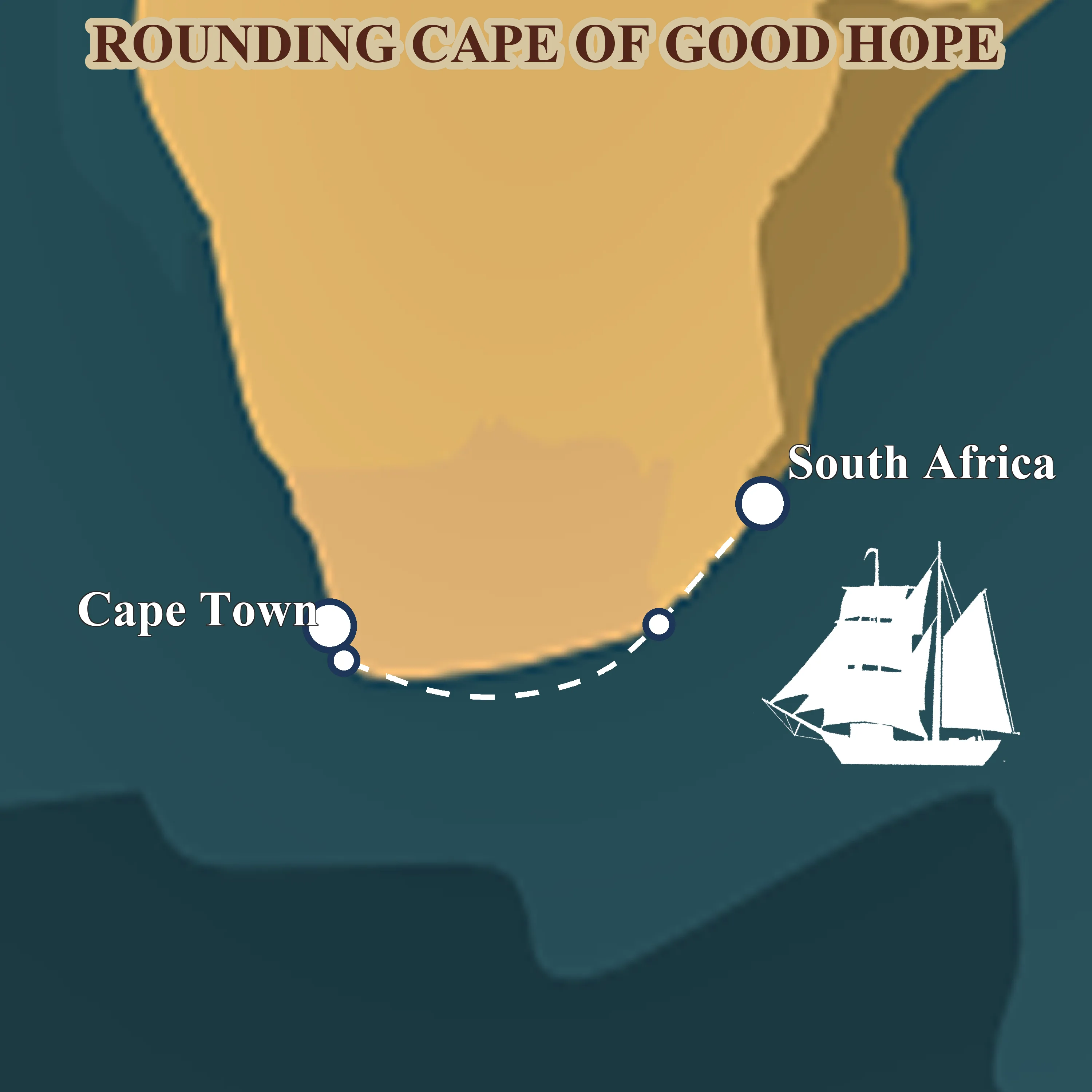
Leg 4: from Durban around the Cape of Good Hope
Nov 2026 — Dec 2026 · Durban, South Africa → Cape Town, South Africa
Thirty-eight days of serious seamanship, the Agulhas current, the Cape of Good Hope and the Southern Ocean at the tip of Africa, finishing quietly in Cape Town for Christmas.
Read more about this leg → about Leg 4: from Durban around the Cape of Good HopeDeck features and gear
The deck is the workspace. Between the masts and the bulwarks sits the gear the crew actually uses to steer, navigate, and handle the ship.
Wheel / helm
Wheel (helm). The ship's steering wheel, usually mounted near the stern. Turning the wheel moves the rudder beneath the hull. Steering a tall ship is a feel job, the ship is large, slow to respond, and balanced by sail trim as much as by rudder.
Binnacle
Binnacle. The housing for the ship's compass, mounted near the helm. A traditional binnacle is a waist-high wooden or brass stand with a lit compass on top so the helmsman can see the course by night.
Companionway
Companionway. A covered stairway leading from the deck down to the spaces below. You go up and down the companionway dozens of times a day on a voyage.
Winch
Winch. A mechanical drum that multiplies hand-power, used to haul on heavy lines such as halyards and sheets. Winches made shorthanded sailing possible on working ships a century ago, and they still save crews today.
Capstan
Capstan. A vertical winch turned by pushing on wooden bars. Traditionally used for raising the anchor and for hauling on very heavy lines. The capstan is also where shanties began, the rhythm of the song kept the crew pushing together.
Anchor
Anchor. The heavy hook on the end of a long chain, dropped from the bow to hold the ship in place. On a traditional ship the anchor is handled through the hawsepipe at the bow, and flaked out on deck with care, a runaway chain is one of the more dangerous things on board.
Curious what a watch on deck actually feels like? Read about life onboard or apply for a berth.
Below decks
Below the main deck is where the crew lives. Spaces are small, efficient, and have specific names, even the toilet has its own word.
Berth. A bunk, a single person's sleeping place. Berths are usually arranged in pairs or stacks, with a curtain for privacy.
Galley. The kitchen. Compact, with a sea-going stove that stays roughly level even when the ship heels, and everything else tied down so it stops where you put it.
Head. The toilet. The word comes from the old practice of siting the crew's heads forward at the bow, the "head" of the ship.
Saloon. The main shared indoor space below decks, equivalent to a living room. The saloon is where you eat, brief watch changes, dry out, and talk through the day.
Forepeak. The space right up at the bow, forward of the accommodation. Often used for storing sails, ropes, and gear that you do not need in a hurry.
Three angles on the same ship
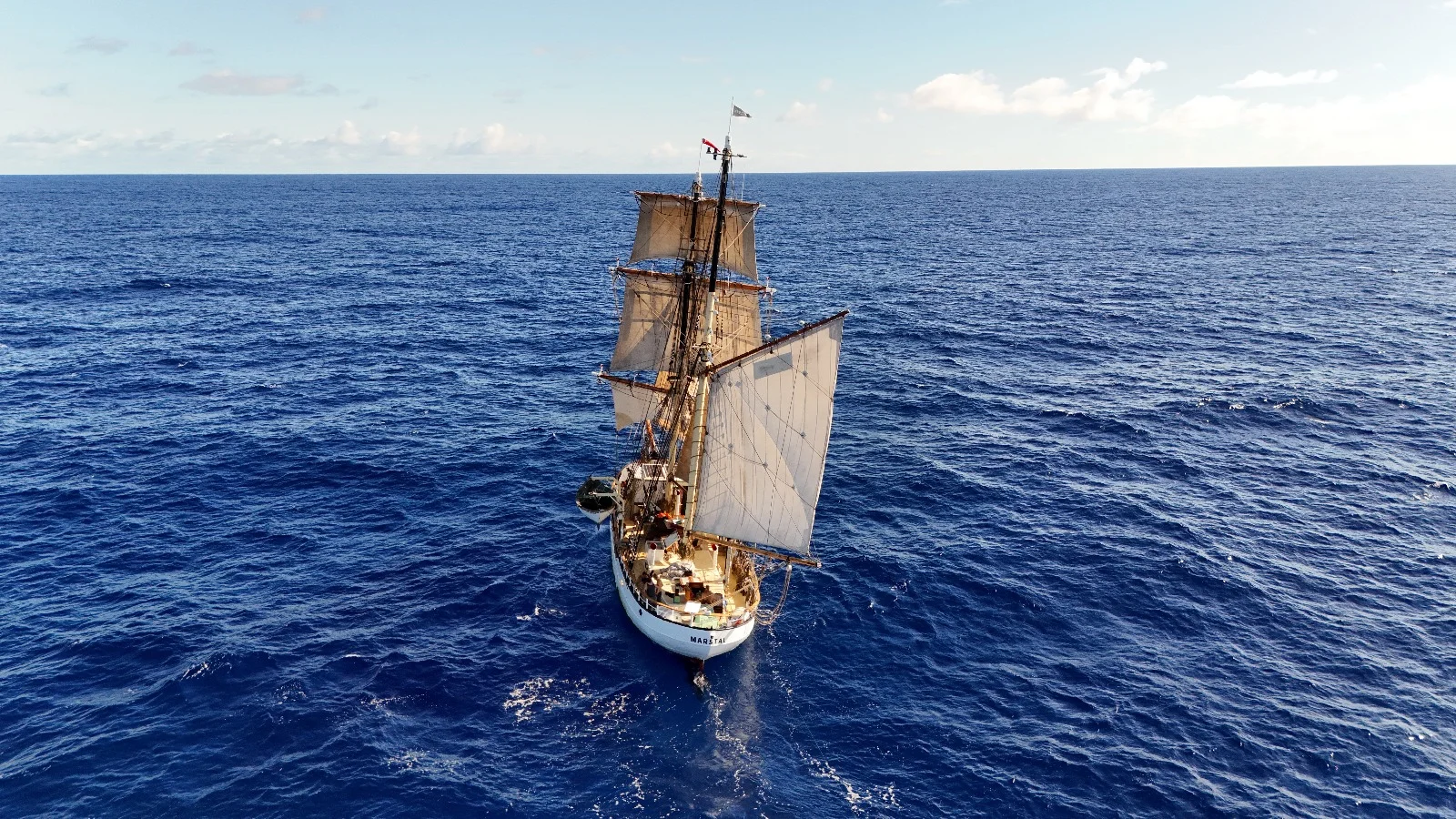
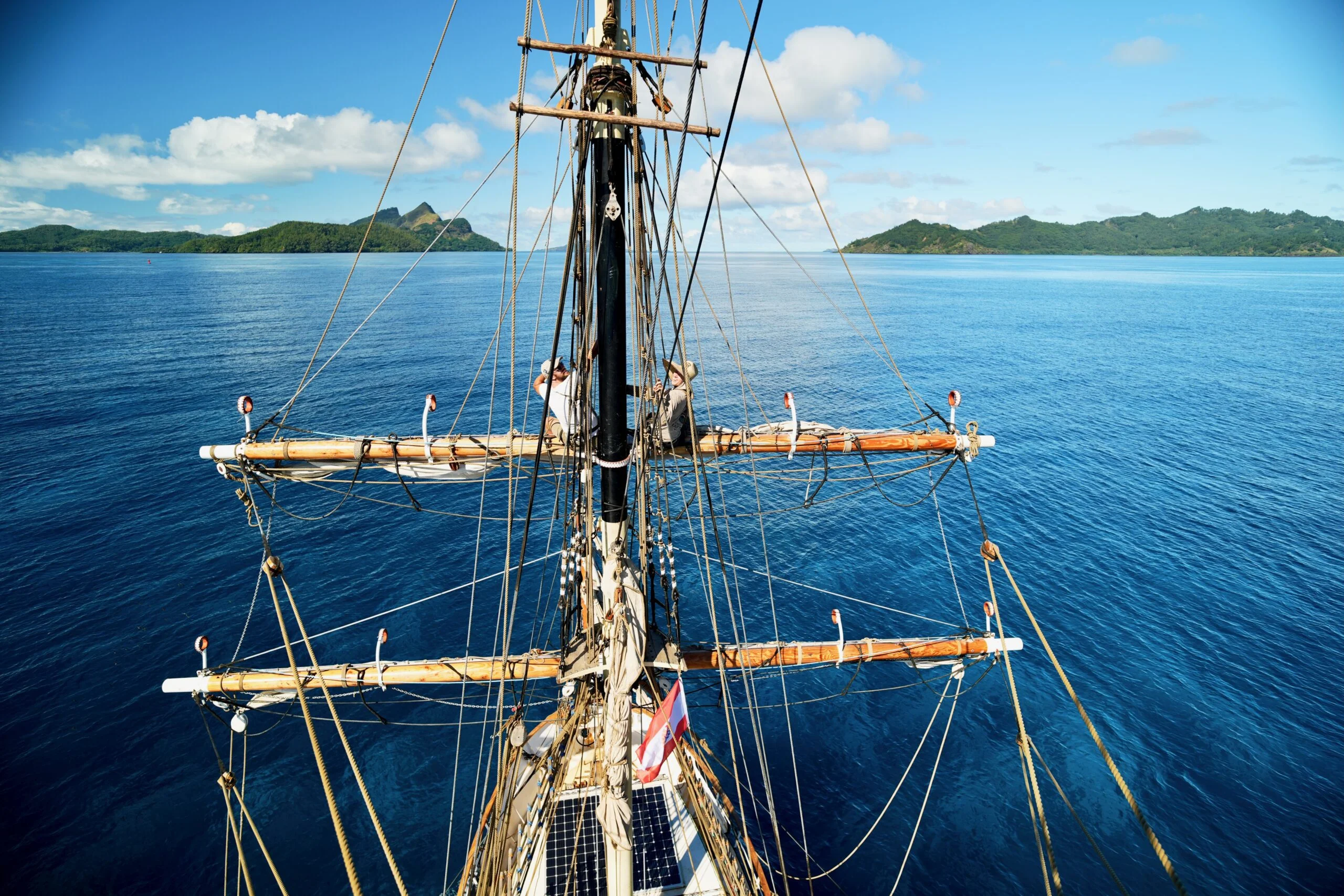
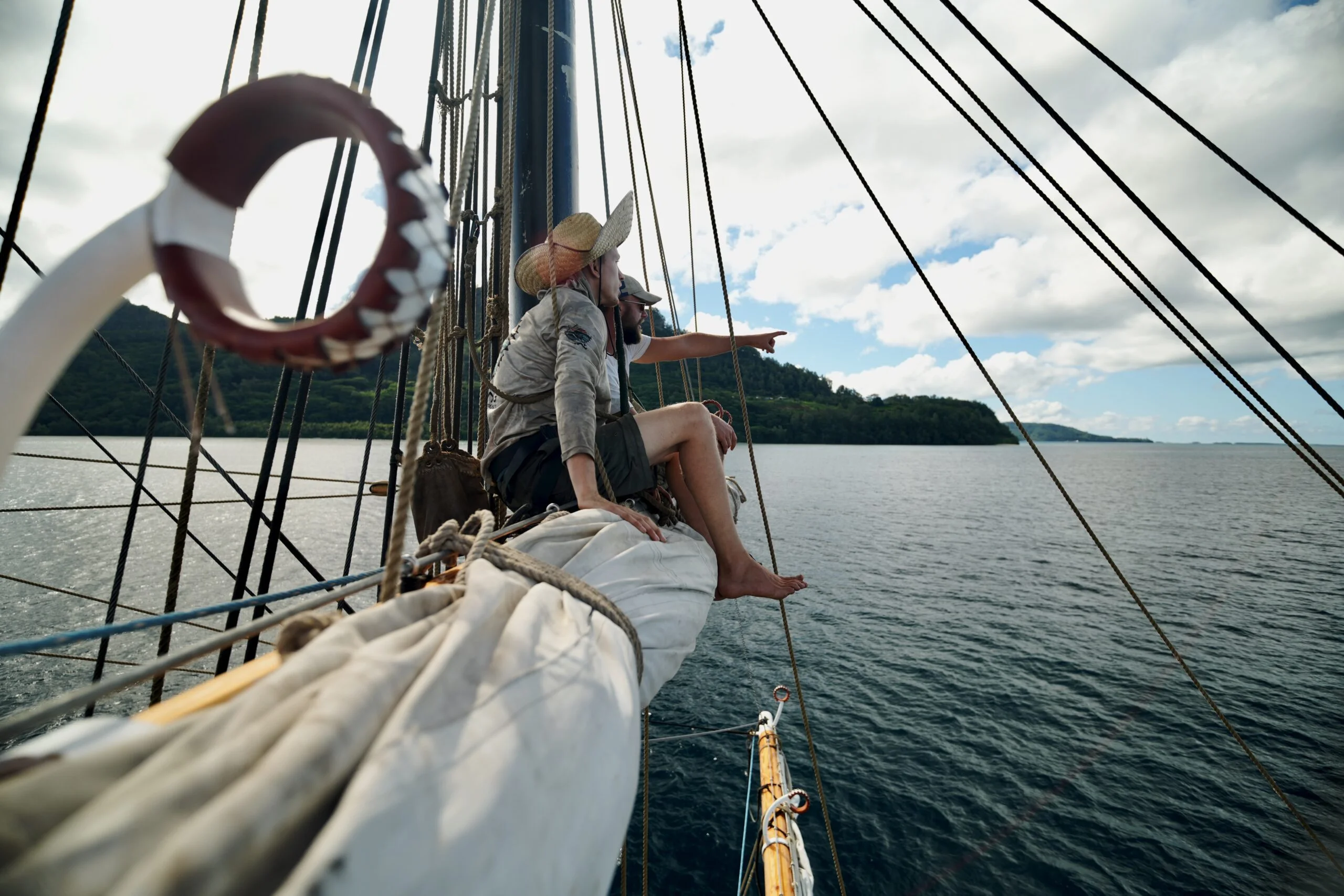
A glossary works in 2D. A ship works in 3D. Here is NEPTUN from three angles, full-side, from-aloft, and deck-view, so you can locate every term you just read in actual space.
Where to see this for yourself
A glossary only gets you so far. The fastest way to turn these words into real objects is to stand on the deck of a working tall ship and point at them.
- About NEPTUN, the ship herself, with photos and basic specs.
- Brigantine NEPTUN history, how the ship came to carry the rig she has today.
- Tall ship adventure, what it is actually like to sail a traditional ship.
- Voyages, upcoming legs you can join.
Learn the names by hauling on the lines
Every part of NEPTUN earns its name on a real voyage. No prior sailing experience required, trainees learn the rig by working it.
FAQs
Common questions about tall ship anatomy
What is the difference between a mast and a spar?
A mast is the vertical pole that rises from the hull and carries the sails. A spar is any of the horizontal or angled poles that hold the sails out into the wind, yards, booms, gaffs, and the bowsprit are all spars. So every mast carries spars, and a brigantine like NEPTUN has two masts and a stack of spars on each.
What rig does Brigantine NEPTUN carry?
NEPTUN is a brigantine, square-rigged on the foremast (yards stacked one above the other carrying horizontal sails) and fore-and-aft rigged on the mainmast (a gaff mainsail running along the line of the ship). The combination gives the ship downwind power from the squares and the ability to point closer to the wind from the gaff main. See what is a brigantine for the full breakdown.
How tall is a tall ship?
There is no fixed legal height, but most tall ships are at least 9.14 m (30 ft) long on the waterline, the threshold used by Sail Training International. Their masts typically stand 18 to 60 m above the deck. NEPTUN is 29 m long with a 24 m main mast and over 660 m of standing rigging holding it up.
What is the difference between standing and running rigging?
Standing rigging is fixed, wire or rope lines that hold the masts up. Shrouds, stays, backstays, and forestays are standing rigging; you do not pull on them, you just check them. Running rigging is the working ropework, halyards, sheets, braces, and downhauls, that the crew hauls on every watch to set, trim, and take in sail.
How many sails does a brigantine carry?
A typical brigantine like NEPTUN carries between eight and twelve named sails. On the foremast: course, lower topsail, upper topsail, topgallant, sometimes a royal. On the mainmast: a gaff mainsail and one or more topsails above it. Forward of the foremast: two to four jibs on stays running from the bowsprit. The exact set depends on the weather.
Where does the term "head" come from?
On historic sailing ships the crew's toilets were sited forward at the bow, the "head" of the ship, because the spray and wash kept them clean. The word stuck. Today on NEPTUN the head is a proper marine toilet below decks, but the name has survived three centuries of plumbing improvements.
Read also
- Square sails explained, how a tall ship actually works
- What is a brigantine?, the specific rig NEPTUN carries
- Brigantine vs schooner, how NEPTUN differs from her closest cousin
- Learn traditional seamanship, what you will pick up on a voyage
- About NEPTUN, full ship specs and photos
- Voyages 2026, five legs from Bali to South Africa
- Apply now, join a leg as trainee crew
All nine legs of the world voyage
The 2026-2027 voyage spans 482 days, over 30,000 nautical miles, and four oceans, every line in this glossary gets pulled on every passage.
Leg 1: from Bali to Réunion across the Indian Ocean
May 2026 — Aug 2026 · Bali, Indonesia → Réunion, France
The opening chapter of Neptun's 482-day world voyage, a 4,078-nm trade-wind passage from the temples of Bali to the volcanic cliffs of Réunion.
Read more about this leg → about Leg 1: from Bali to Réunion across the Indian OceanLeg 2: from Réunion to Zanzibar via Madagascar
Aug 2026 — Sept 2026 · Réunion, France → Zanzibar, Tanzania
Forty days across the western Indian Ocean, volcanic Réunion, lemur-haunted Nosy Be, the Mozambique Channel, and the spice-scented stone alleys of Zanzibar.
Read more about this leg → about Leg 2: from Réunion to Zanzibar via MadagascarLeg 3: from Zanzibar to Durban down the Mozambique Channel
Sept 2026 — Nov 2026 · Zanzibar, Tanzania → Durban, South Africa
Sixty-three days coasting the African shore, spice islands, mangrove anchorages, Portuguese praças and the long trade-wind run down the Mozambique Channel to Durban.
Read more about this leg → about Leg 3: from Zanzibar to Durban down the Mozambique ChannelLeg 4: from Durban around the Cape of Good Hope
Nov 2026 — Dec 2026 · Durban, South Africa → Cape Town, South Africa
Thirty-eight days of serious seamanship, the Agulhas current, the Cape of Good Hope and the Southern Ocean at the tip of Africa, finishing quietly in Cape Town for Christmas.
Read more about this leg → about Leg 4: from Durban around the Cape of Good Hope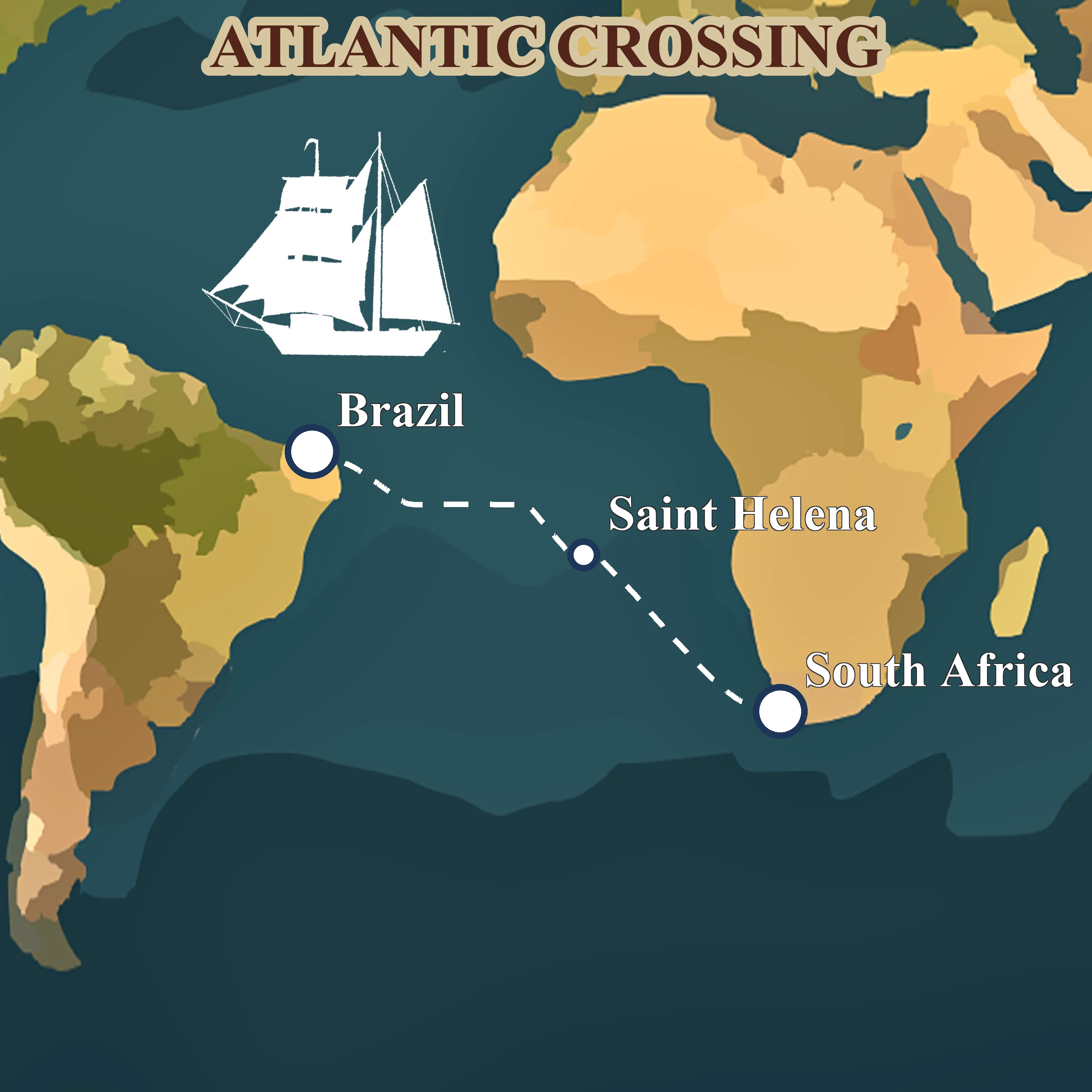
Leg 5: across the South Atlantic from Saldanha to Fortaleza
Jan 2027 — Mar 2027 · Saldanha Bay, South Africa → Fortaleza, Brazil
Forty-four days before the southeast trades, Napoleon's exile at St. Helena, the equator crossing, and landfall in tropical Brazil. The ocean chapter of the voyage.
Read more about this leg → about Leg 5: across the South Atlantic from Saldanha to Fortaleza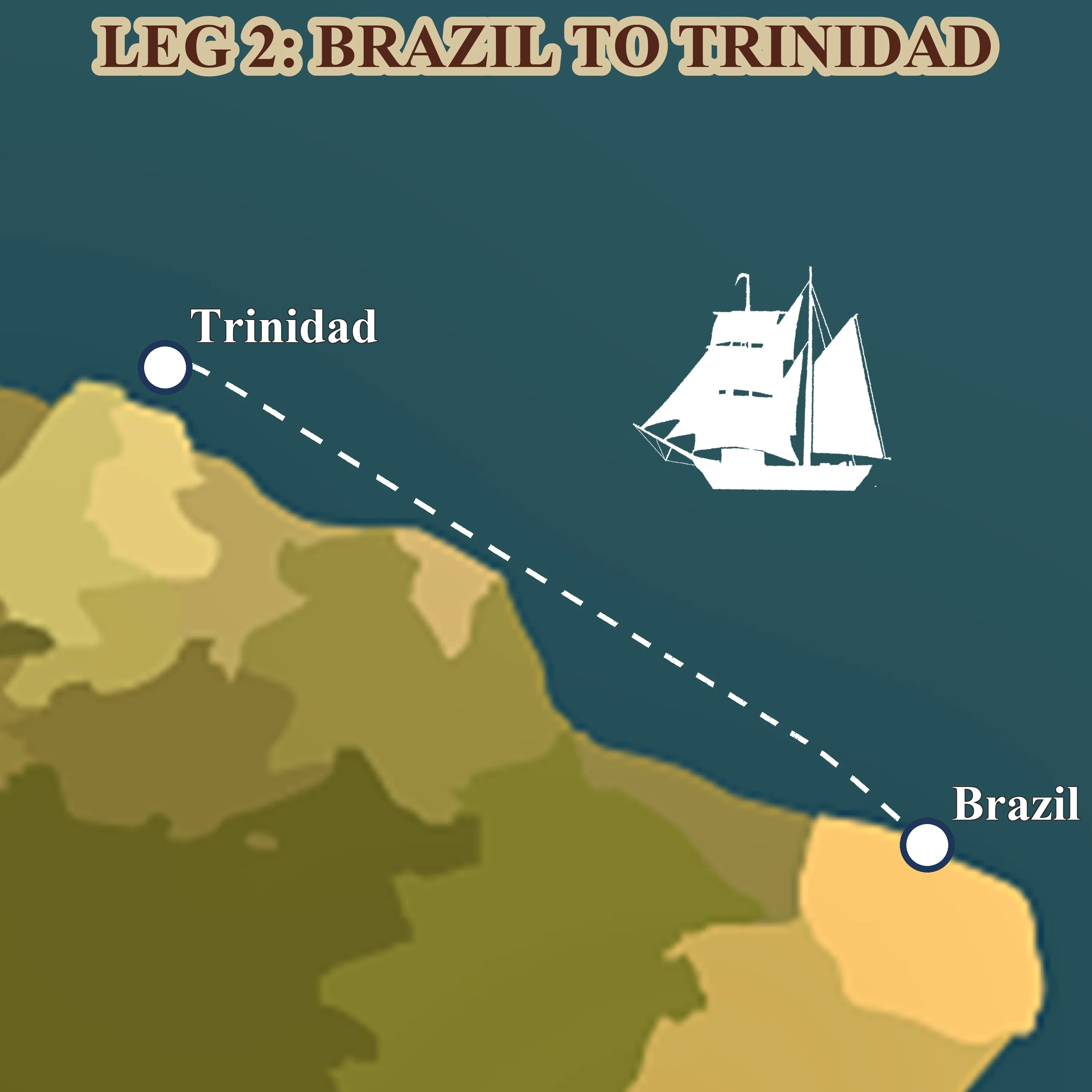
Leg 6: from Fortaleza to Trinidad along South America
Mar 2027 — Apr 2027 · Fortaleza, Brazil → Trinidad
A thousand miles of downwind trade running, the Amazon's brown water under the hull, the Guianas smudged on the horizon, and Trinidad's steelpan waiting at the end.
Read more about this leg → about Leg 6: from Fortaleza to Trinidad along South America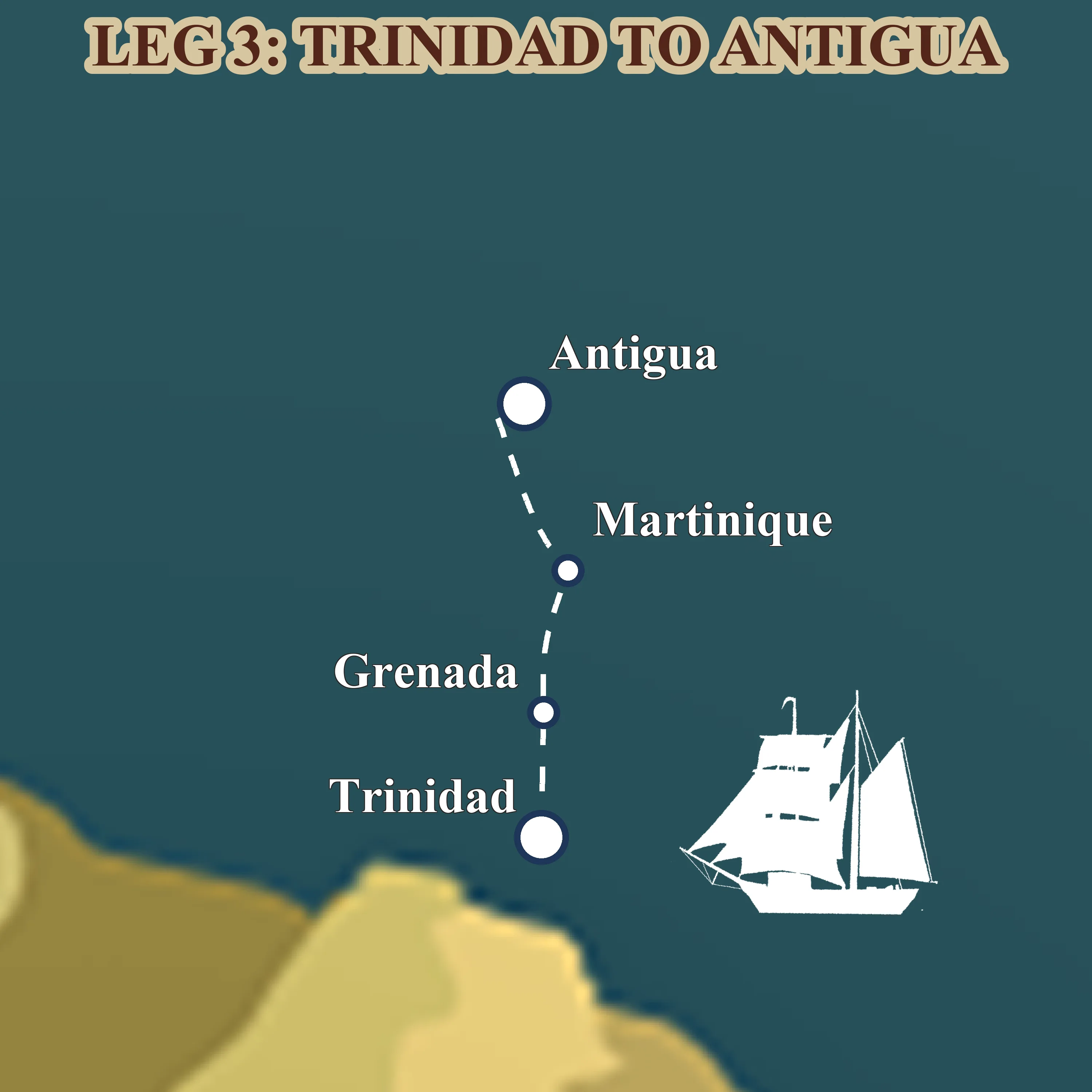
Leg 7: through the Windward Islands from Trinidad to Antigua
Apr 2027 — May 2027 · Trinidad → Antigua
Four weeks of short trade-wind daysails through the Lesser Antilles, turquoise anchorages, rum shops on the sand, French-Creole Martinique and the tall-ship scene in Antigua.
Read more about this leg → about Leg 7: through the Windward Islands from Trinidad to Antigua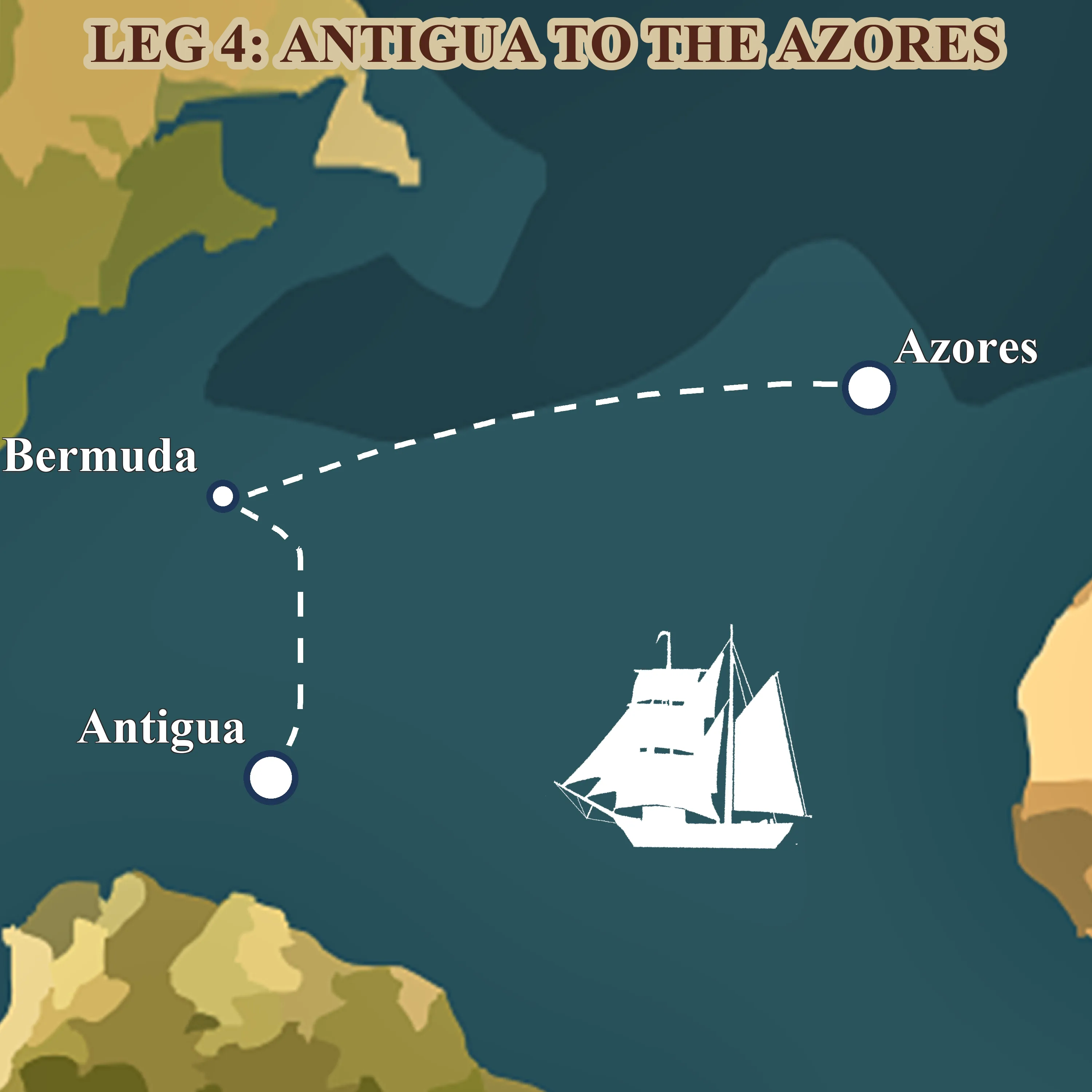
Leg 8: across the North Atlantic from Antigua to the Azores
May 2027 — Jul 2027 · Antigua → Ponta Delgada, Azores
Fifty-six days on the classic spring tall-ship route home, Antigua, a long reach to Bermuda's pink sand, then three weeks of open ocean to the volcanic Azores.
Read more about this leg → about Leg 8: across the North Atlantic from Antigua to the Azores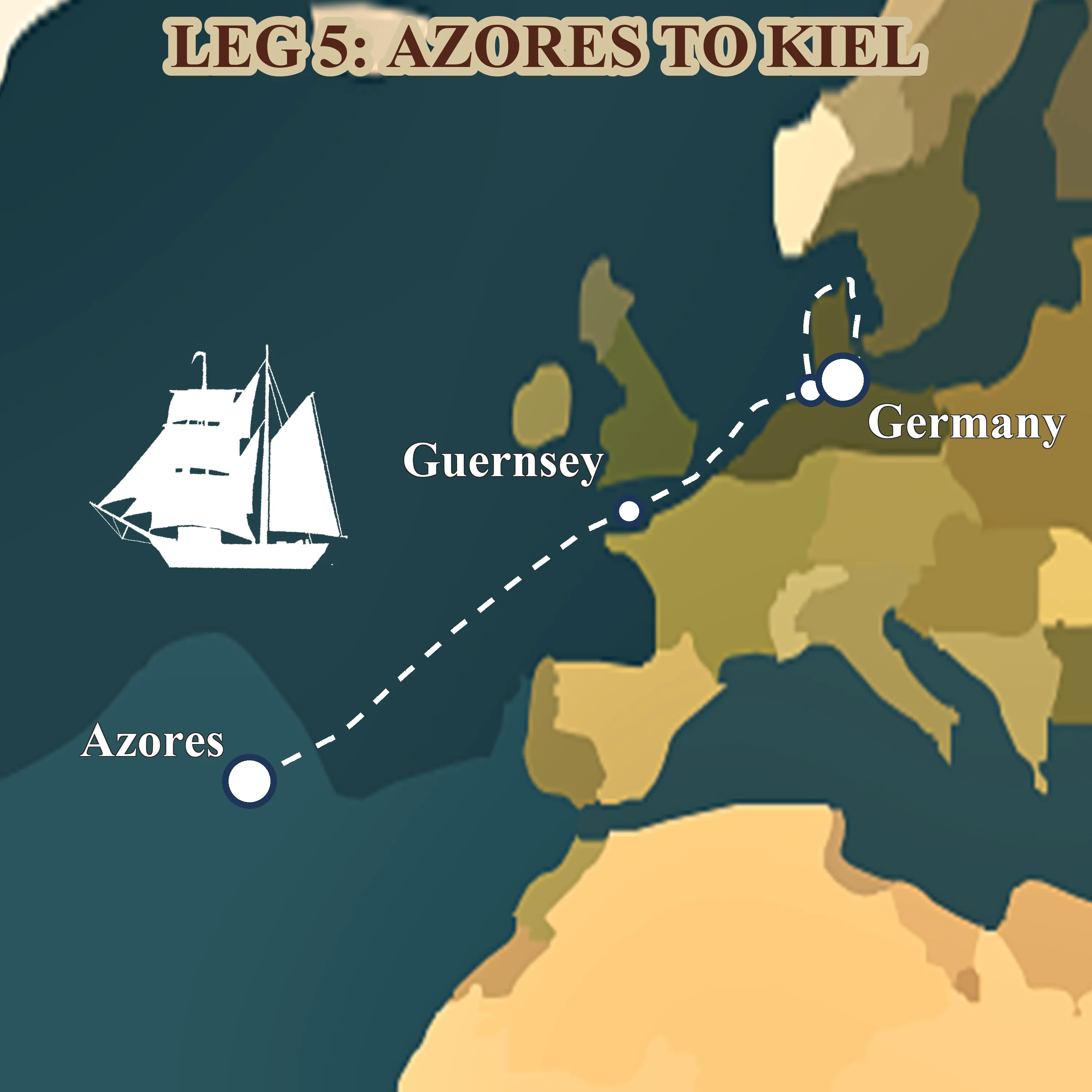
Leg 9: homecoming from the Azores to Kiel
Jul 2027 — Aug 2027 · Ponta Delgada, Azores → Kiel, Germany
The final 1,878 nm, from volcanic São Miguel to the Baltic, up the English Channel through the Dover TSS, past Helgoland's red cliffs and home to Kiel.
Read more about this leg → about Leg 9: homecoming from the Azores to KielWant to sail with us? Brigantine NEPTUN is a non-profit training ship, every voyage takes 10 crew members through real ocean sailing, no experience needed. Apply for a berth or read about the voyages first.