What "sail around the world" actually means on NEPTUN
Most people who dream of sailing around the world imagine a closed loop, a line that starts at a home port, tracks east or west, and eventually crosses itself on the way back in. That kind of strict circumnavigation takes two or three years, a boat you own or a crew spot you fight for, and the calendar of a retiree or a full-time sailor.
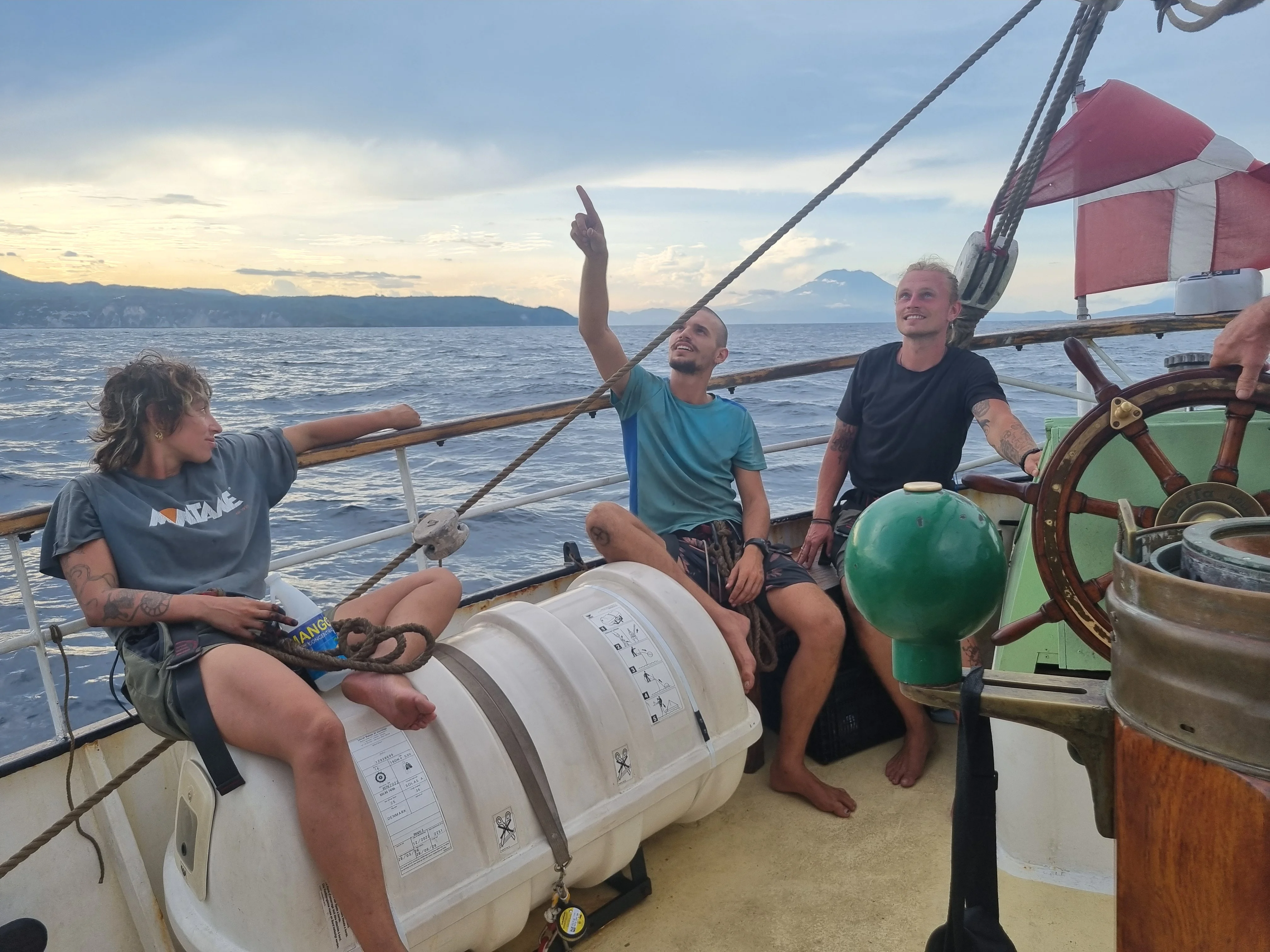
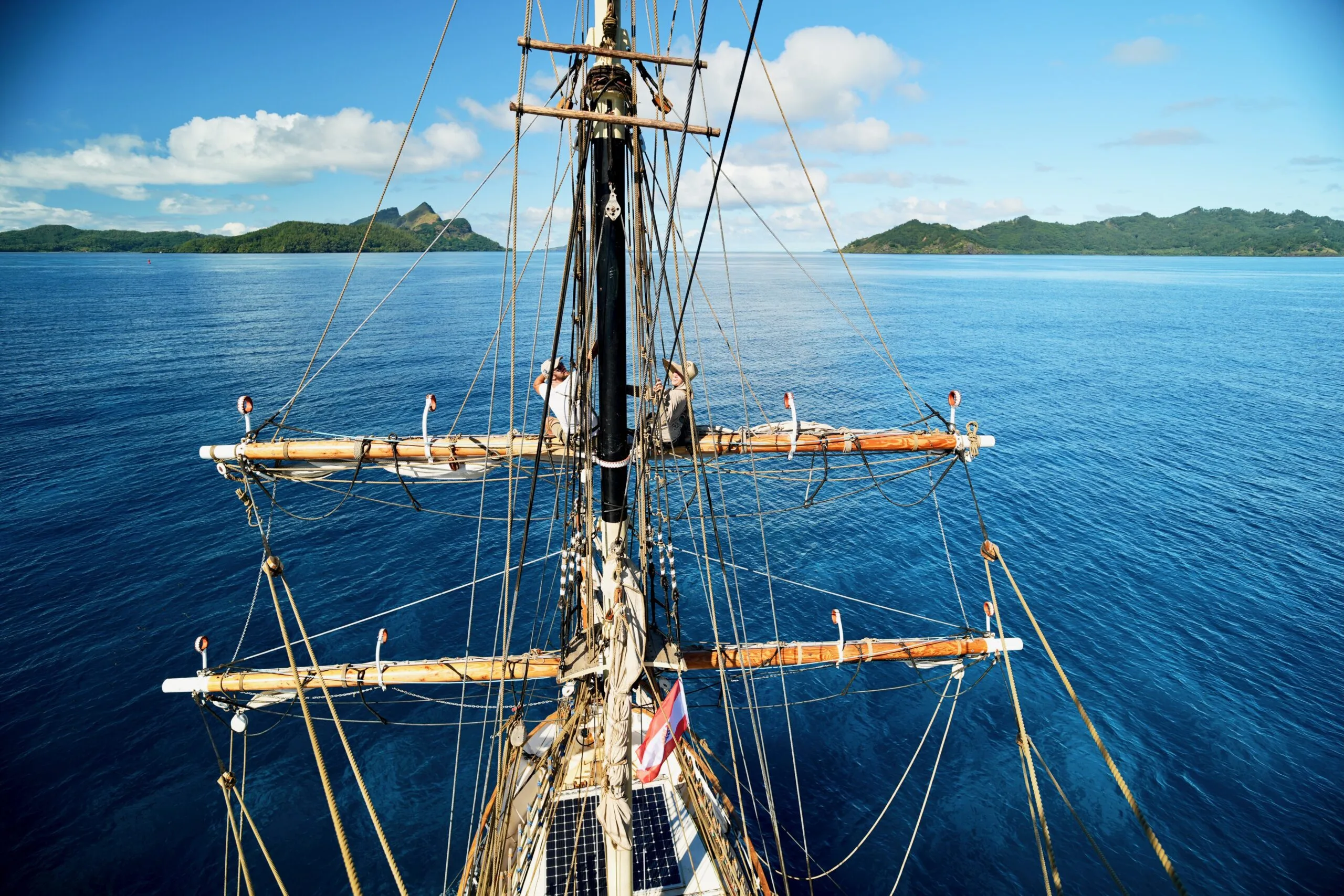
Brigantine NEPTUN's 2026–2027 voyage is something more realistic. Over 482 days the ship sails from Bali across three oceans to a homecoming berth in Kiel, three-quarters of the way around the planet, Indian Ocean, South Atlantic, North Atlantic. Not a closed loop, but a world-spanning blue-water arc, and in practical terms the closest thing to sailing around the world that most people will ever have a real chance to join.
The full route
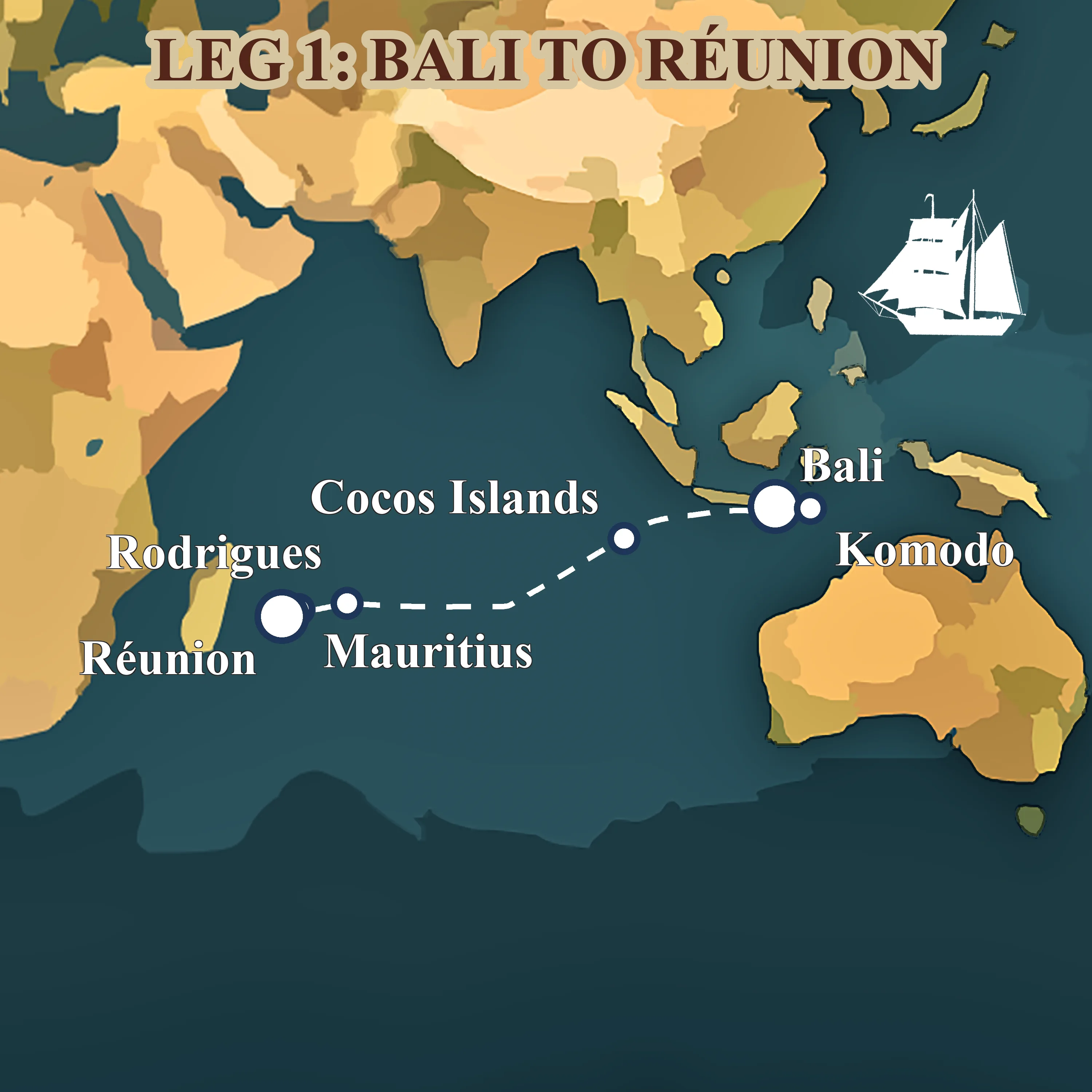
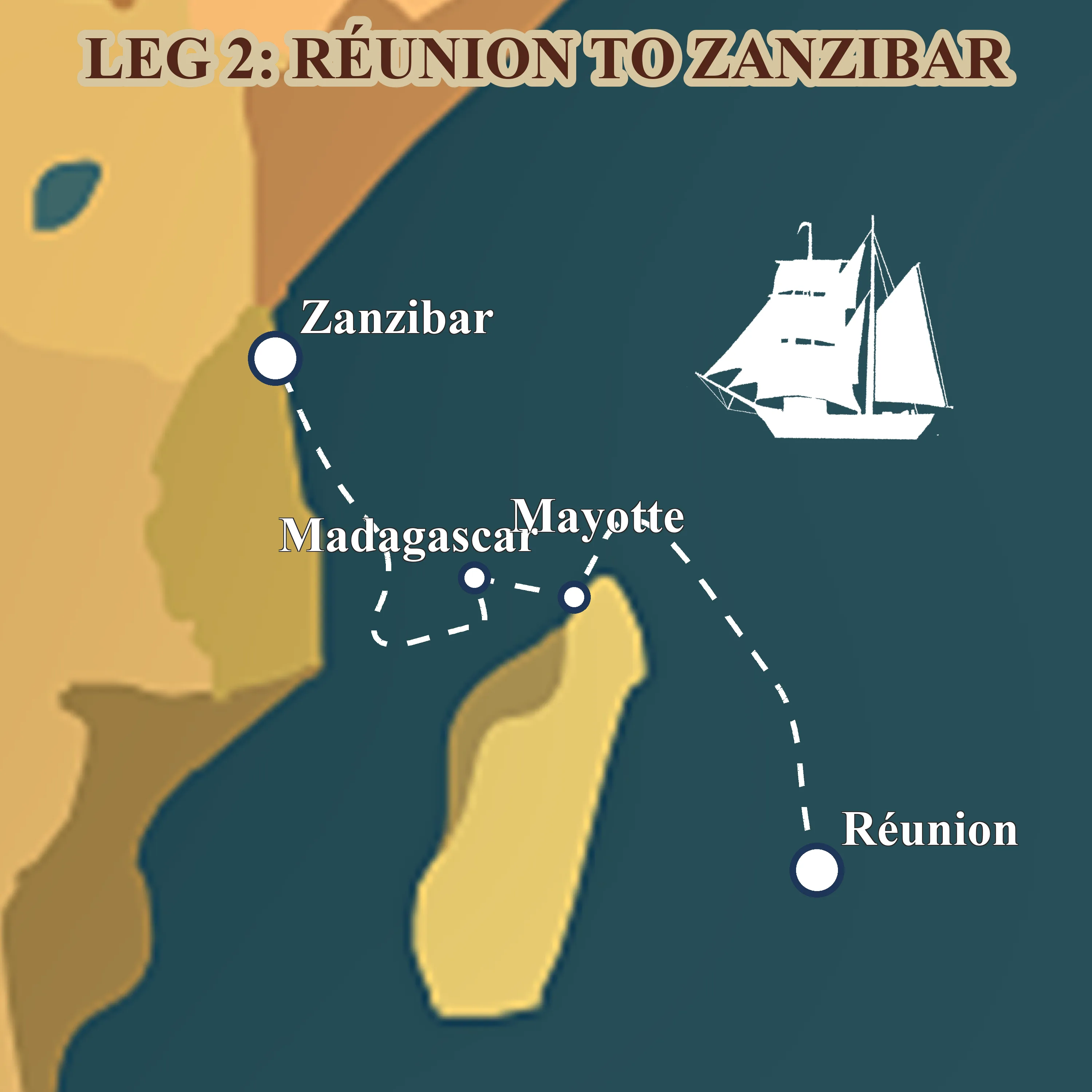
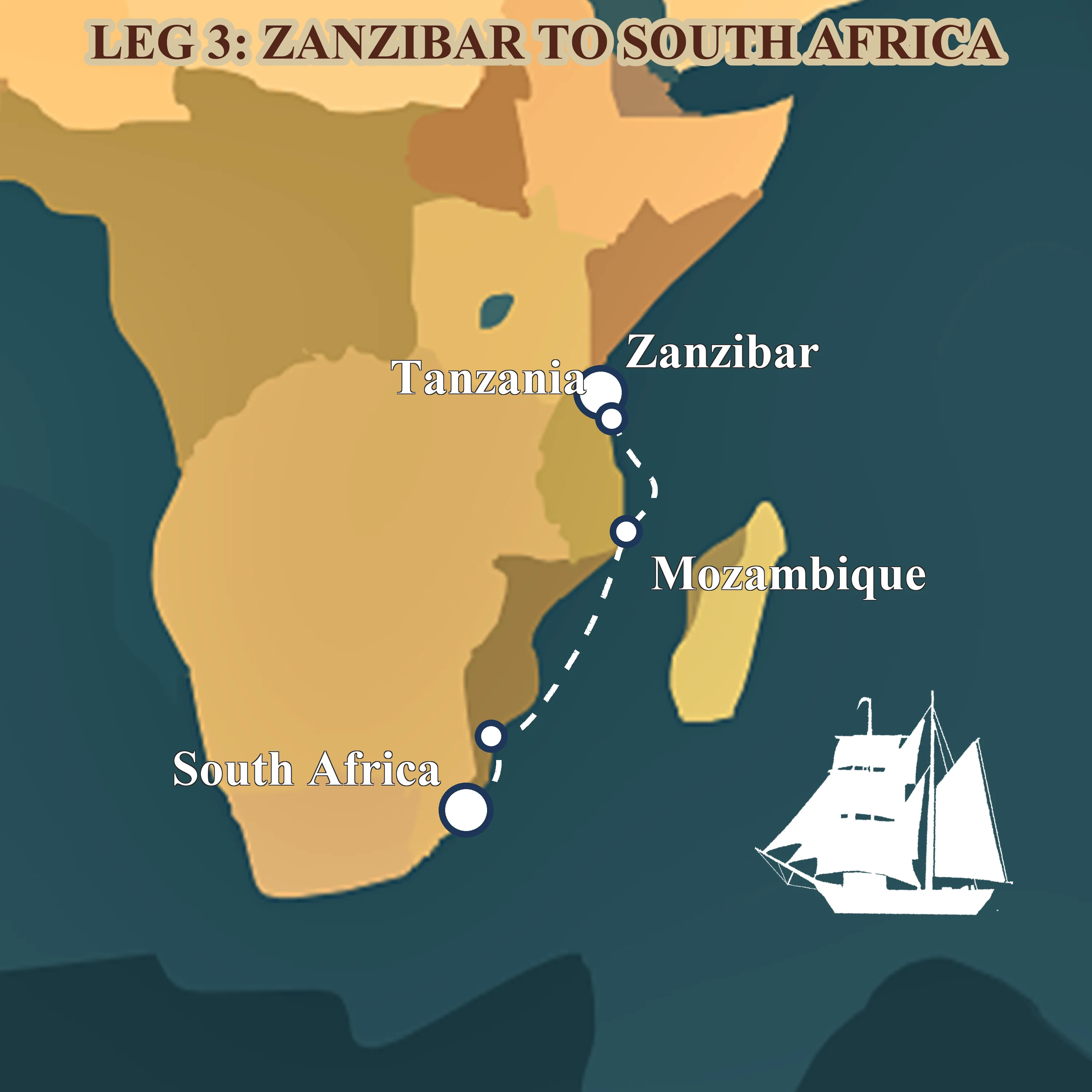
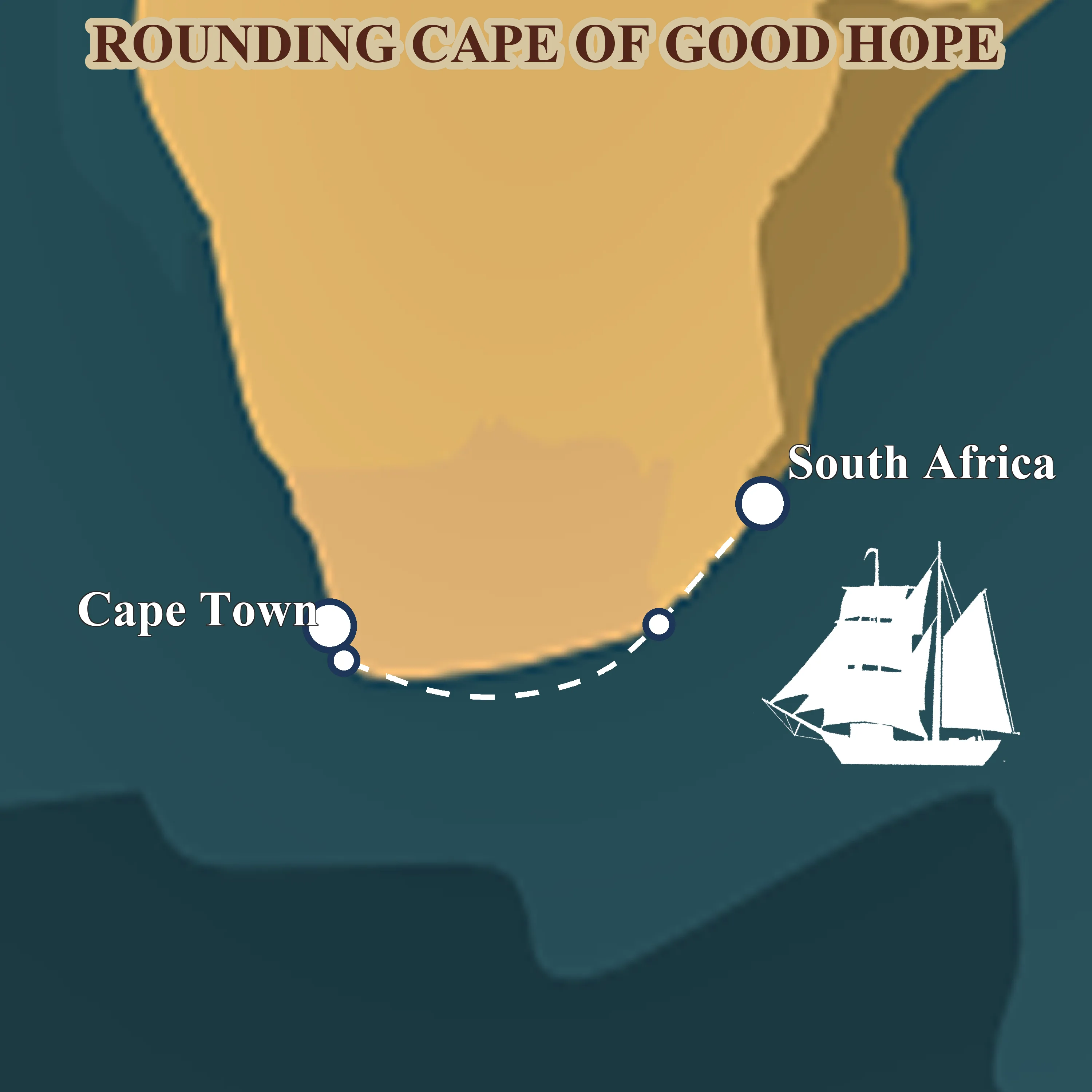
The voyage opens in Bali on 1 May 2026. Leg 1 crosses the Indian Ocean via Komodo, Cocos (Keeling), Rodrigues and Mauritius to Réunion. Leg 2 swings north to Madagascar and Mayotte, then to Swahili Zanzibar. Leg 3 runs south down the Mozambique Channel through some of the richest cetacean waters on the planet. Leg 4 rounds the Cape of Good Hope and ties up in Cape Town just before Christmas. 8,186 nautical miles, four legs, eight months of sailing on the 2026 voyage page.
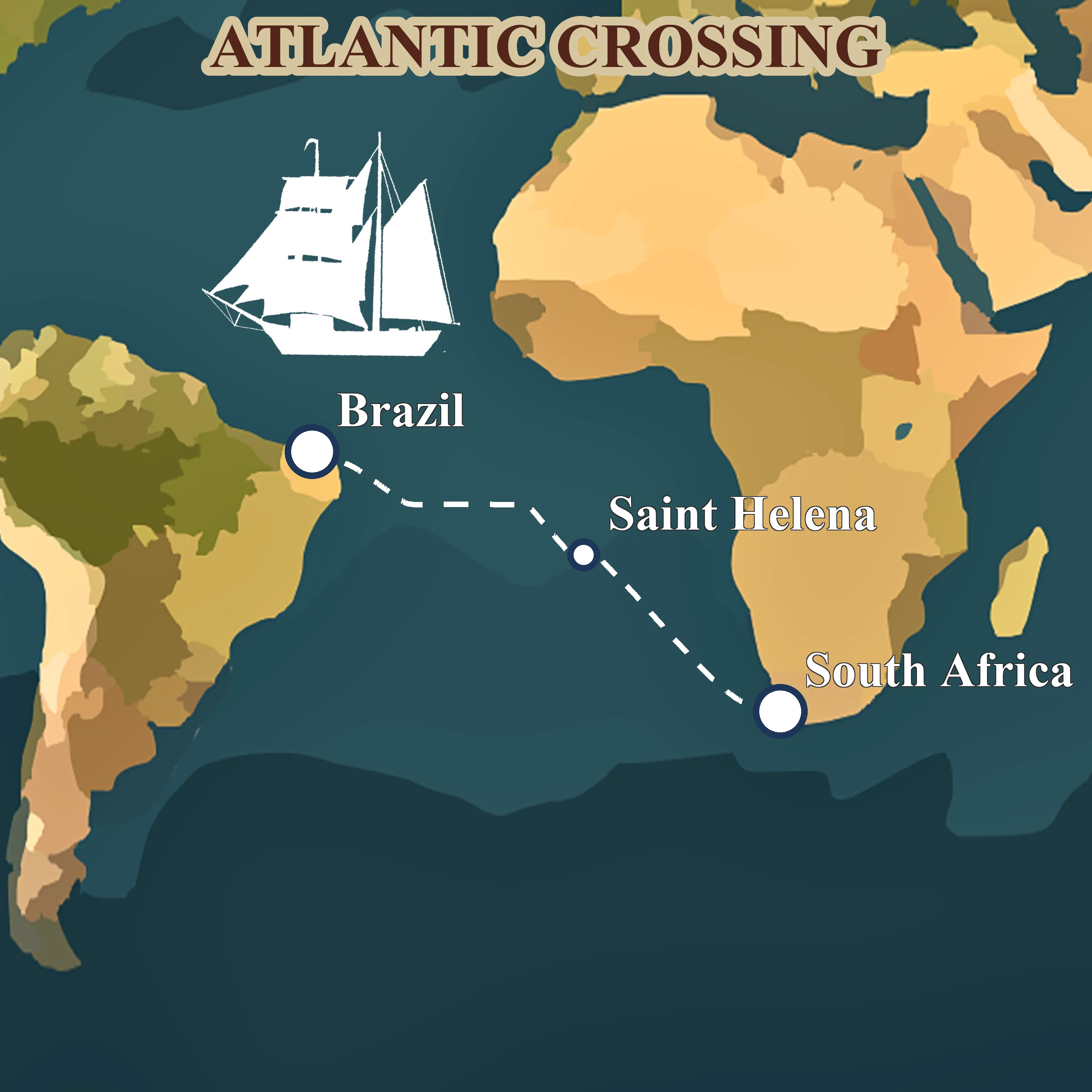
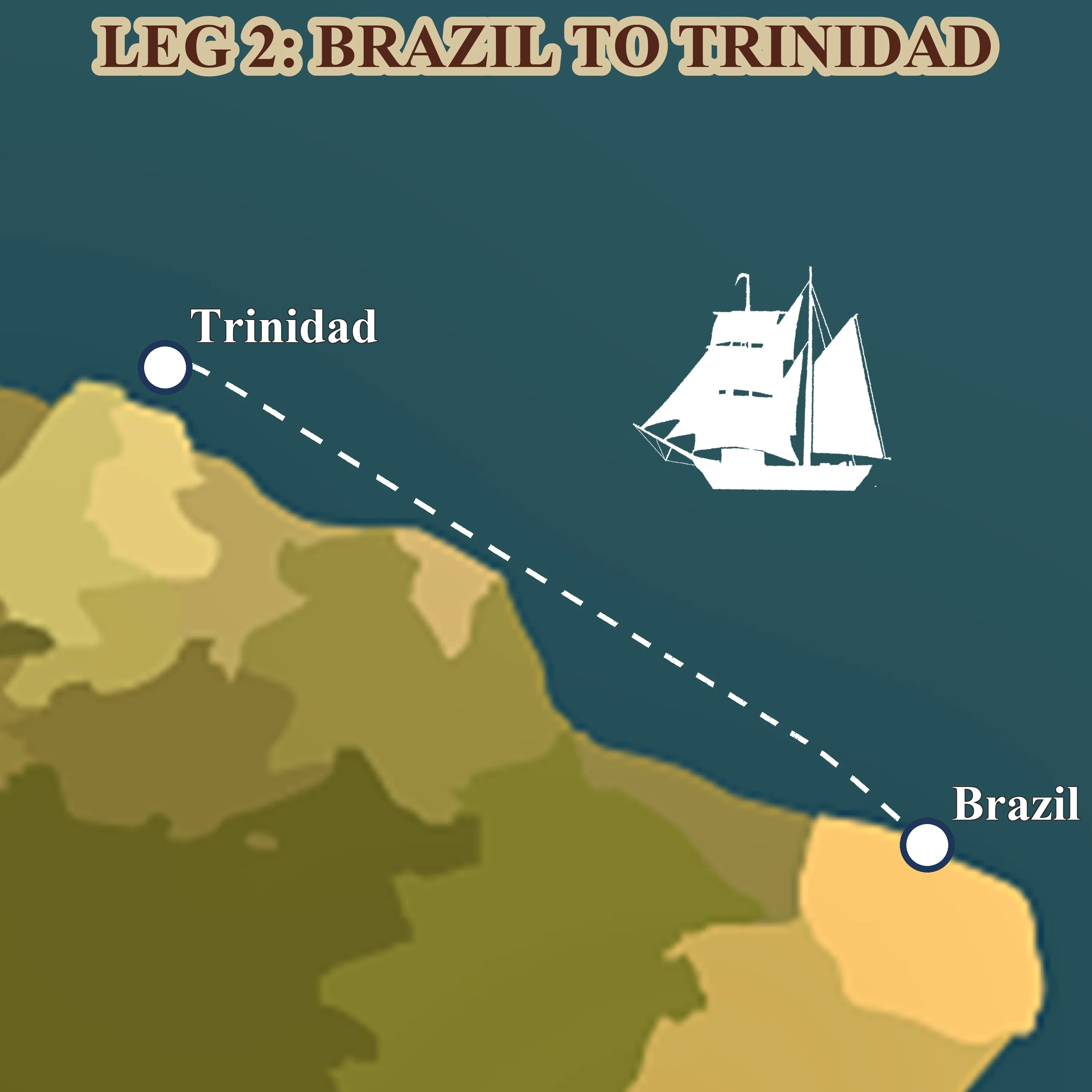
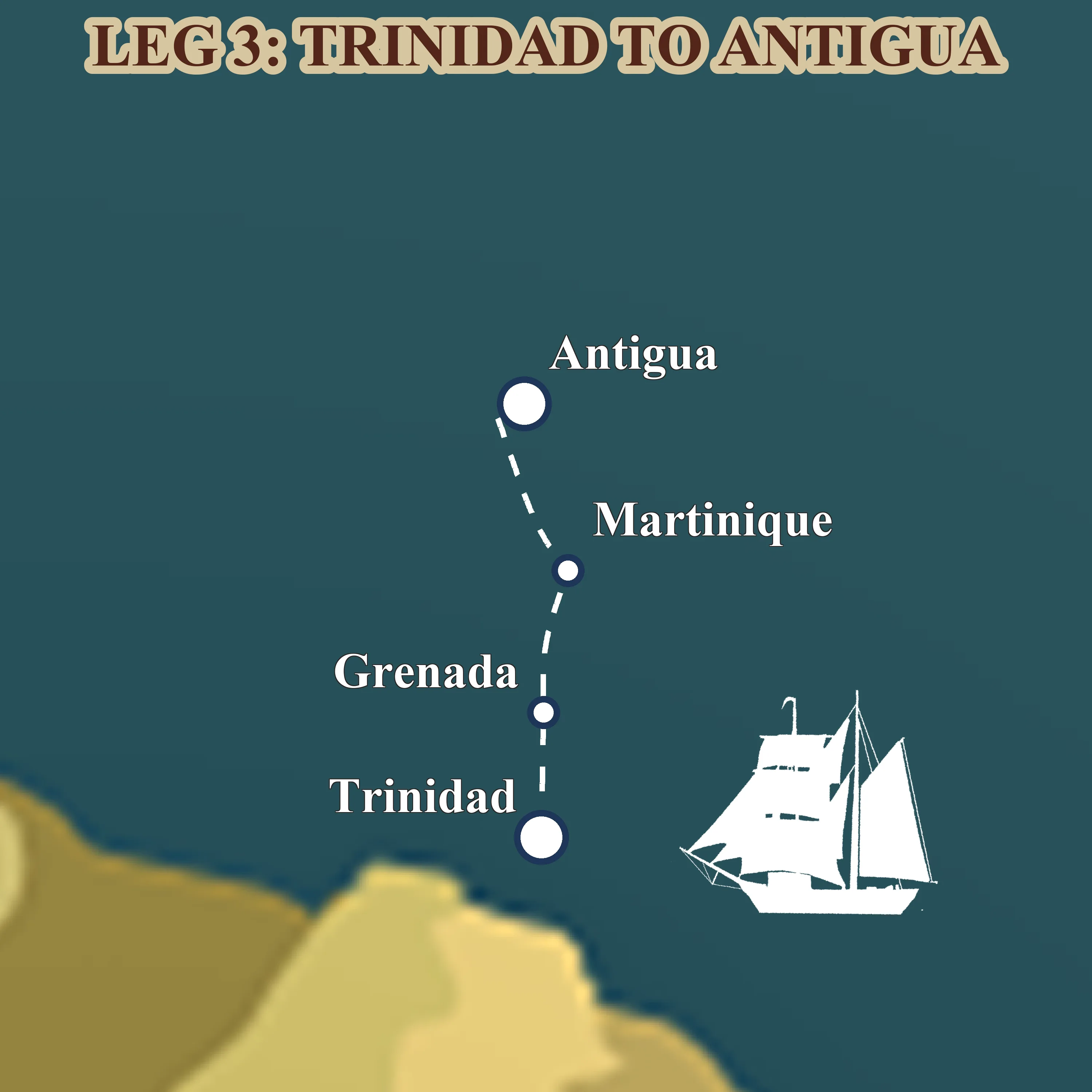
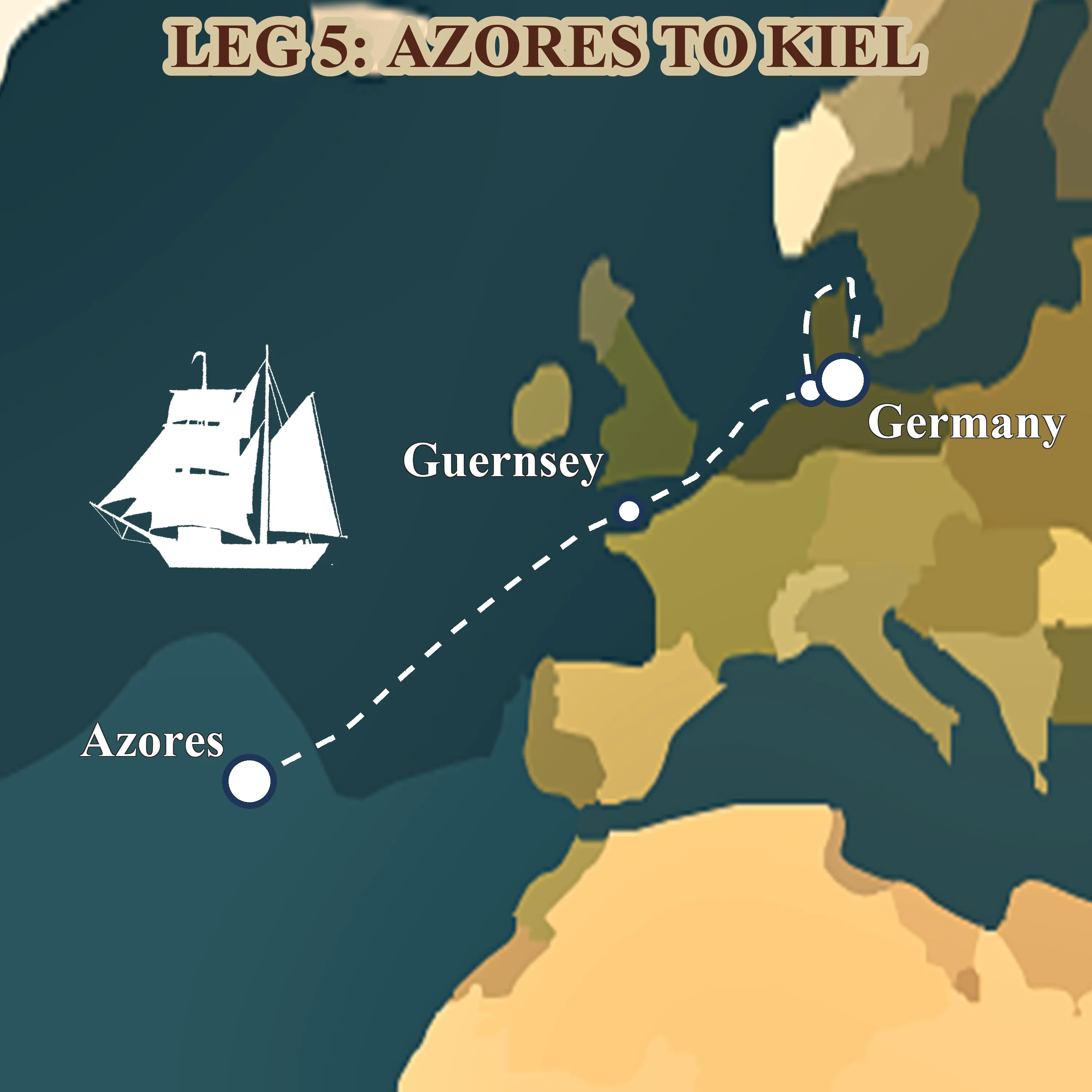
Leg 5 opens 2027 with a 44-day South Atlantic crossing via Saint Helena to Fortaleza. Leg 6 rides the north coast of South America to Trinidad. Leg 7 island-hops the Windward Islands to Antigua. Leg 8 is the classic spring transatlantic to the Azores. Leg 9 closes the voyage through Guernsey and Helgoland to Kiel on 25 August. Full itinerary and pricing for the closing half on the 2027 voyage page.
The Caribbean weeks in the middle are their own chapter, see sailing in the Caribbean. If the two ocean crossings are what you came for, start with sailing across the Atlantic.
You don't have to do the whole thing
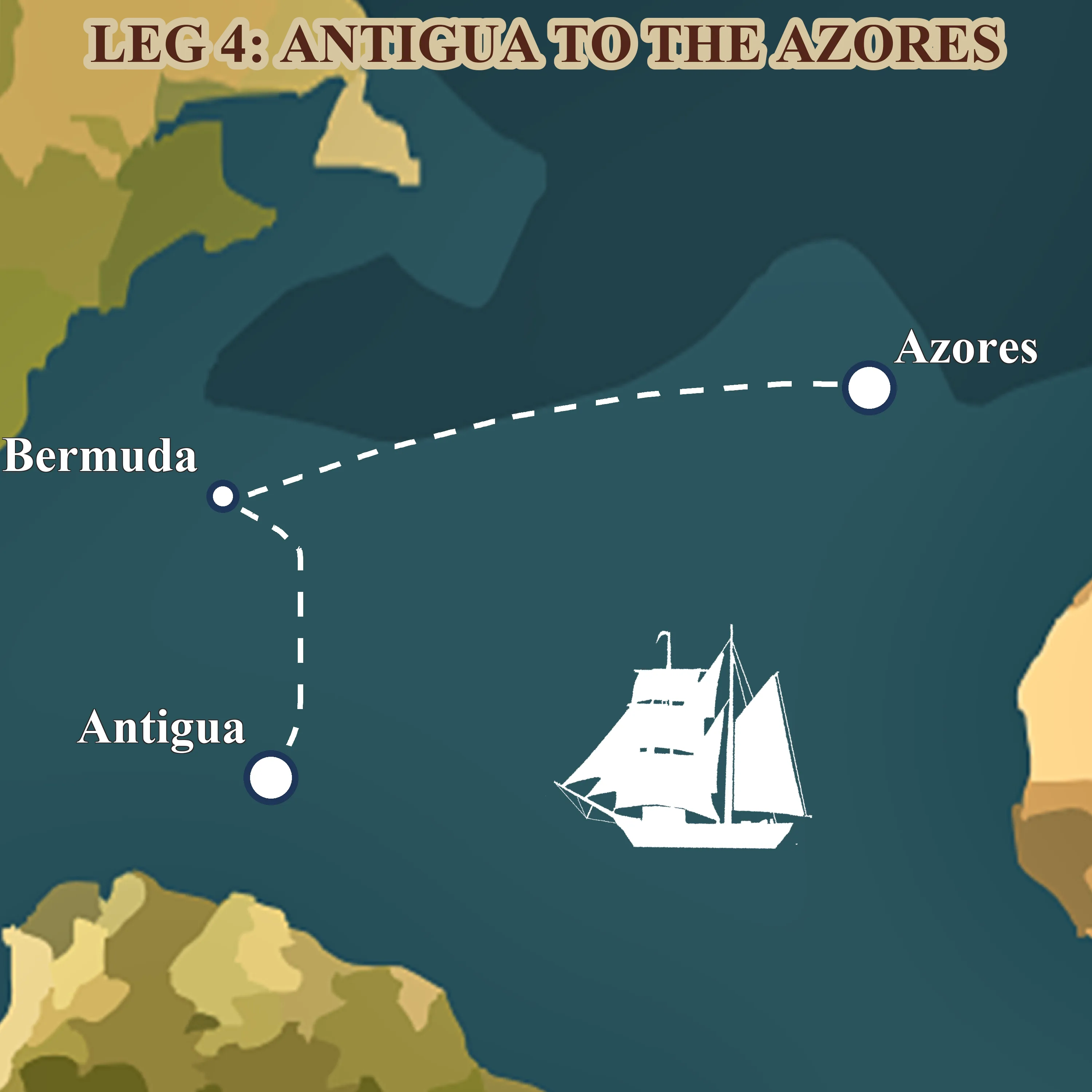
The world voyage is modular by design. Each of the nine legs is sold as its own trainee berth, with its own dates, distance, and price. You join where you can get to, you sail the leg, you step off at the next landfall. Most people do one leg. Some do two or three back-to-back. A handful stitch together most of the voyage across the two seasons.
Two or three weeks is a typical leg length; a full trade-wind crossing like Leg 5 or Leg 8 runs closer to six. You can honestly say you sailed a piece of the world voyage on anything from a short sabbatical window to a full gap year. The trainees on Leg 1 hand the ship to trainees on Leg 2, who hand it on to Leg 3. That is how the whole thing actually gets around the planet.